
















































































































































Sports Business in 2026: Media Rights, Investment & Global Impact
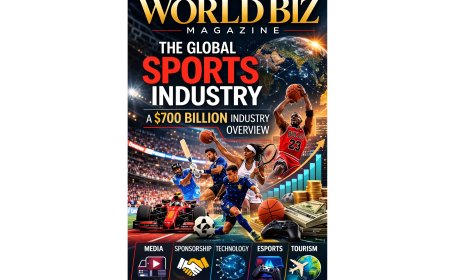
World Biz Magazine examines the economic and commercial impact of global sports tournaments in 2026.

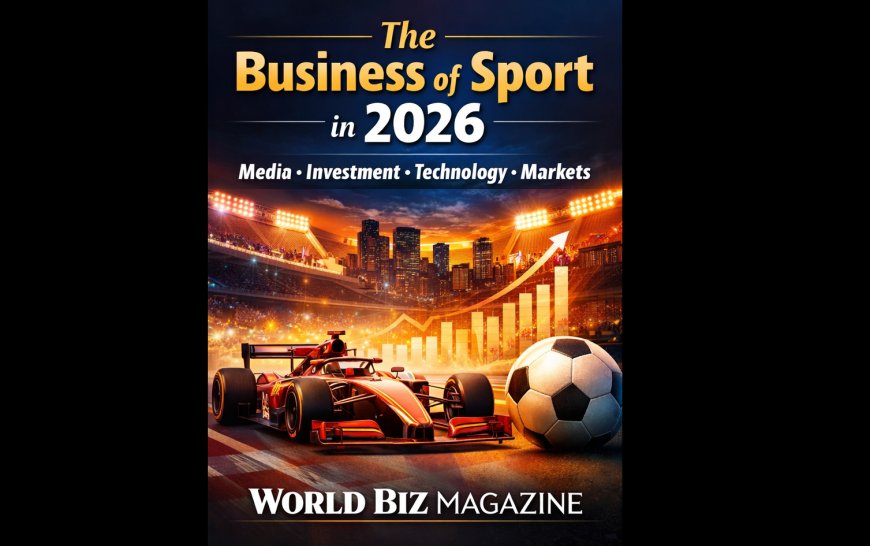
The Business of Sport in 2026
How Global Tournaments Are Reshaping Media, Markets, and the World Economy
World Biz Magazine: Sports Business & Economy
When Sports Become an Economic Engine
In 2026, global sports will extend far beyond competition and entertainment. Major tournaments are evolving into multi-billion-dollar economic ecosystems, influencing industries such as media, advertising, tourism, technology, real estate, finance, and digital commerce.
From the FIFA World Cup 2026 to the Olympic Winter Games Milano-Cortina, the sports calendar of 2026 represents a convergence of capital, culture, and commerce. For governments, brands, investors, and media companies, sport is no longer a passion sector it is a strategic business asset.
This companion analysis explores how major sports events in 2026 are shaping the global sports economy, redefining media rights, accelerating sports tech adoption, and opening new investment frontiers.
Global Sports Events as Economic Catalysts
FIFA World Cup 2026: A Trilateral Economic Powerhouse
Hosted across the United States, Canada, and Mexico, the 2026 FIFA World Cup is the largest in history, featuring 48 teams and expanded match schedules.
Business impact highlights:
· Billions in broadcasting and streaming rights
· Massive infrastructure upgrades in host cities
· Tourism inflows across North America
· Sponsorship activation at unprecedented scale
· Expansion of sports hospitality and fan experience markets
The tournament is expected to generate long-term economic value, particularly in urban development, transport networks, and digital fan engagement platforms.
Olympic & Multi-Sport Events: Legacy Over Spectacle
The Milano-Cortina Winter Olympics and Commonwealth Games 2026 are increasingly measured not by medals, but by post-event economic sustainability.
Key trends include:
· Smart venue reuse strategies
· Public-private investment models
· Sports-led regional branding
· Growth of winter sports tourism and lifestyle real estate
Governments are now positioning sports events as long-term economic policy tools, not one-time spectacles.
Media Rights, Streaming & the Sports Content Economy
The Rise of Digital-First Sports Broadcasting
By 2026, sports broadcasting is no longer dominated solely by traditional television. Streaming platforms, OTT services, and platform-owned sports channels are reshaping monetization.
Key shifts:
· Short-form sports content for mobile audiences
· Regionalized digital rights
· Direct-to-consumer (DTC) sports subscriptions
· AI-driven content personalization
· Interactive viewing and real-time analytics
Sports leagues are increasingly acting as media companies, owning production, distribution, and audience data.
Sponsorship, Branding & the New Sports Marketing Model
From Logos to Experiences
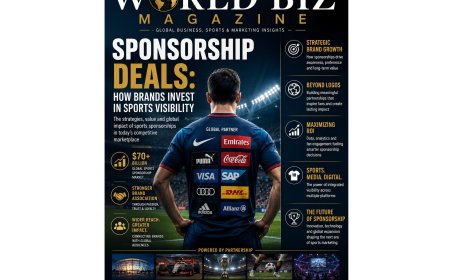
In 2026, sponsorship is no longer about visibility it’s about engagement, data, and community.
Brands are investing in:
· Immersive fan zones
· Influencer-athlete partnerships
· Metaverse and virtual activations
· Performance-based sponsorship metrics
· ESG-aligned sports initiatives
Sports sponsorship has become a strategic branding platform, especially for technology firms, fintech companies, and global consumer brands.
Sports Technology & Data-Driven Performance
The Business of Sports Innovation
Sports technology is one of the fastest-growing verticals within the global tech economy.
Major areas of growth include:
· Performance analytics & wearables
· AI-assisted coaching systems
· Smart stadium infrastructure
· Fan data platforms & CRM
· Blockchain-based ticketing and collectibles
By 2026, elite sports organizations operate as data-centric enterprises, creating opportunities for startups, software firms, and cloud service providers.
Fan Data Platforms & Sports CRM Ecosystem
As sports organizations evolve into data-driven enterprises, fan relationship management has become a core commercial and strategic function. Modern sports CRM platforms integrate ticketing data, digital engagement, merchandising, sponsorship analytics, and personalized fan experiences across channels.
Key Technology Providers Powering Sports CRM & Fan Intelligence:
- Salesforce Sports Cloud (USA / Global)
Used by major leagues and franchises to manage fan engagement, sponsorship data, and omnichannel experiences. - Oracle CX & Sports Data Solutions (USA / Global)
Provides enterprise-grade CRM, data analytics, and cloud infrastructure for large-scale sporting organizations and events. - SAP Sports One & SAP Customer Experience (Germany / Global / Emerging Markets)
Widely adopted by football clubs and leagues for performance data, fan insights, and commercial operations. - Microsoft Dynamics 365 (USA)
Powers CRM and fan engagement platforms for clubs, stadium operators, and global sports federations. - IBM Sports & Entertainment Solutions (USA)
Focused on data analytics, fan personalization, and AI-driven insights for major global tournaments. - Hudl & Wyscout (USA / Europe)
While performance-centric, these platforms increasingly integrate fan data and commercial analytics for clubs. - Fanatics Data Platform (USA)
Combines e-commerce, merchandising, and fan behavior analytics at scale. - SeatGeek & Ticketmaster (USA)
Advanced CRM-linked ticketing platforms capturing fan lifecycle data and monetization insights. - Messenger2050 Technologies (UK / Global / Emerging Markets)
Provides custom-built sports CRM, fan engagement platforms, digital ticketing integration, and data-driven marketing solutions tailored for leagues, clubs, and sports media organizations particularly in emerging and fast-growth sports markets.
Investment, Private Equity & Sports Ownership
Sport as an Asset Class
Sports franchises, leagues, and media rights are increasingly attracting:
· Private equity firms
· Sovereign wealth funds
· Institutional investors
· Family offices
Key drivers:
· Predictable long-term revenue
· Global fan bases
· Media monetization potential
· Cross-border brand scalability
Sports ownership in 2026 is no longer emotional it’s portfolio-driven.
Emerging Markets & Global Sports Expansion
Beyond Traditional Powerhouses
Asia, the Middle East, and Africa are emerging as next-generation sports economies, driven by:
· Youth demographics
· Government-backed sports initiatives
· Infrastructure investment
· Digital-first fan engagement
These regions are not just hosting events they are building sports ecosystems, including leagues, academies, media platforms, and technology hubs.
Conclusion: Sport as a Strategic Industry
In 2026, sports stand at the intersection of business strategy, national branding, digital media, and global culture. Major tournaments are no longer endpoints they are platforms for economic growth, innovation, and global influence.
For businesses, investors, and policymakers, understanding the sports economy is no longer optional. It is a critical lens through which future markets, audiences, and opportunities are shaped.
Editorial Notes
· This article is part of World Biz Magazine’s Sports Business & Economy editorial series.
· The focus is on commercial, economic, and strategic implications of global sports events.
· Coverage is industry-oriented, not match or athlete-centric.
Disclaimer
This article is published for informational and analytical purposes only. It does not constitute financial, investment, legal, or commercial advice. Economic projections and industry trends discussed are based on publicly available data, expert analysis, and market observations as of 2026. Readers are advised to conduct independent research before making business or investment decisions.
What's Your Reaction?
 Like
0
Like
0
 Dislike
0
Dislike
0
 Love
0
Love
0
 Funny
0
Funny
0
 Angry
0
Angry
0
 Sad
0
Sad
0
 Wow
0
Wow
0