

















































































































































The Ascendant Dragon: Vietnam's Economic Trajectory from Assembly Hub to Innovation Gateway
A comprehensive analysis of Vietnam's past economic success, a 2025 snapshot, and the strategic outlook for 2026-2030. This report details key growth drivers, risks (including trade tariffs and concentration), and the critical policy reforms needed for the nation to upgrade its role in global value chains (GVCs) and sustain its high-growth trajectory toward high-income status.


From Assembly Hub to Innovation Gateway: Vietnam's Economic Ambitions Post-2025
By Phoebe Ong, Business & Economy Research Desk
World Biz Magazine
Publication Date: December 15, 2025
Vietnam has not just been an Asian growth story; it has been a masterclass in leveraging deep integration into the global economy. Over the past decade, the nation has engineered a near-complete transition, shedding its agrarian past to become a powerhouse in export-oriented manufacturing. Yet, as the economy matures, the future requires a strategic pivot: moving up the value chain from basic assembly to high-tech design and production.
A Look Back: The Turbocharged Decades (2010-2024)
Vietnam’s economic performance has been exceptional, often registering some of the highest real GDP growth rates globally.
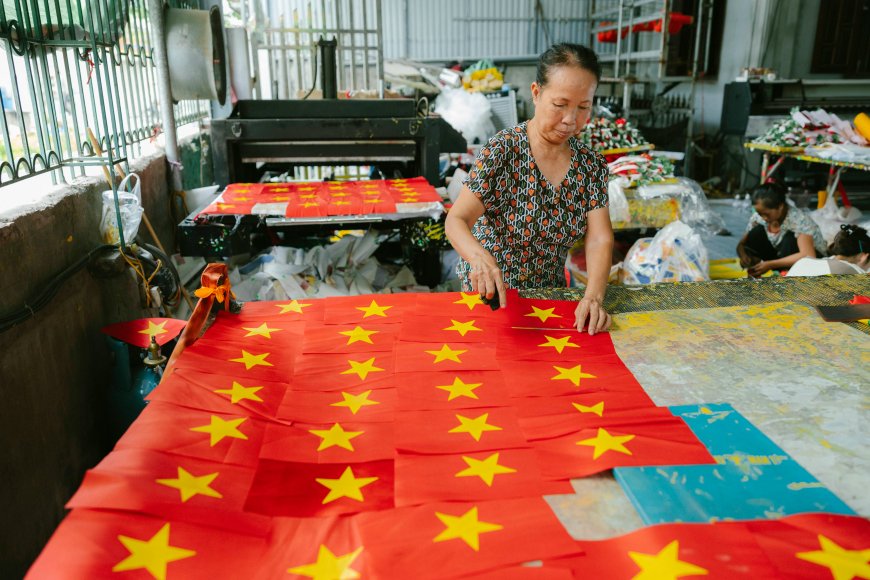
Export-FDI Nexus: Foreign-owned firms have consistently been the engine of this growth, accounting for approximately 70-75% of the nation’s merchandise exports in recent years (State Department). FDI concentrated heavily in manufacturing, creating a globally competitive base for goods like electronics, phones (e.g., Samsung's Vietnam operations), garments, and footwear. This deep linkage into Global Value Chains (GVCs) has been key to job creation and productivity gains.
Macro Resilience: Despite being highly exposed to global trade cycles, the economy demonstrated resilience.
2025 Snapshot: Momentum Meets Headwinds
The immediate term is defined by a strong post-shock recovery and emerging trade frictions.
2024-2025 Performance: The economy logged a robust rebound with 2024 full-year real GDP growth estimated around 7.1% (IMF).
Market Rumor/Fact: Rumors of a significant slowdown have been tempered by official data. Q3 2025 GDP growth surged to 8.23% (NSO), bringing the 9-month average to 7.85%, closely tracking the government’s ambitious full-year target of
Macro Stability: Inflation (CPI) remained contained, projected at around 3.4% for 2025 (IMF), allowing the central bank policy room. The current account balance remains strong, estimated to reach
Trade Risk: The mid-2025 reciprocal tariffs imposed by the US, a key export market, on Vietnamese and transshipped goods, are a significant downside risk.
2026-2030 Outlook: The Great Upgrade
The medium-term outlook is one of moderating, yet sustained, high growth, highly conditional on successful structural transformation.
|
Scenario |
2026–2030 Average Annual Real GDP Growth |
Key Drivers & Policy Requirements |
|
Baseline (Most Likely) |
$ approx 6.0% - 6.5% |
Continued FDI into core manufacturing, rising urban consumption, benefits from CPTPP/RCEP trade agreements. Growth moderates as the post-COVID rebound fades and requires modest, steady reform implementation. |
|
Upside (High Reform/High Tech) |
$ approx 6.5% - 7.5% |
Accelerated structural upgrading (semiconductors, EV components), decisive institutional reforms (logistics, business environment), and attracting high-value-added FDI. Requires significant policy execution. |
|
Downside (External Shock/Policy Slippage) |
$ approx 3.5% - 5.0% |
Severe global demand shock (e.g., in electronics), protracted trade war escalation, or failure to address power/logistics bottlenecks and financial sector vulnerabilities. Concentration risk is fully exposed. |
Multilateral forecasts for 2026 hover around 6.0%-6.2% (ADB: 6.0%, World Bank: 6.1%, OECD: 6.2%), reflecting a slight moderation from the peak 2024/2025 rebound, but remaining robust.

B. Key Strategic Drivers
The core strategy for 2026-2030 is captured by the national ambition to become a high-income country by 2045, necessitating a shift from quantity-driven to quality-driven growth.
GVC Upgrading (The Semiconductor Gambit): Vietnam is aggressively pursuing a role beyond assembly, targeting higher value-added segments.
Infrastructure and Green Transition: Targeted public investment in large-scale infrastructure (e.g., ports, expressways) is critical to cut logistics costs.
Structural Strengths, Risks, and Policy Imperatives
A. Foundational Strengths
Trade Integration: An unparalleled network of Free Trade Agreements (FTAs), including CPTPP and RCEP, offers diversified market access and competitive advantage.
Demographics & Costs: A large, relatively young workforce with competitive labor costs remains a draw for manufacturers.
Macro Buffers: Moderate public debt (Government Gross Debt
B. Major Risks to the Outlook
Concentration & External Shocks: Heavy reliance on the export of a few product categories (electronics/phones, textiles) and the dominance of a few large foreign firms creates significant exposure to single-product cycles, global demand shocks, and protectionist measures, as highlighted by the late 2025 export volatility.
Productivity and Institutional Gaps: OECD and World Bank analyses are clear: sustaining approx 6.5% plus growth requires addressing deep-seated issues. Informality affects roughly two-thirds of the workforce, limiting social protection and holding back productivity growth.
C. Policy Imperatives (Research-Backed)
To achieve the Upside Scenario, policymakers must:
|
Policy Pillar |
Actionable Priority |
Impact on 2026–2030 Growth |
|
Productivity |
Institutional and Land Reform: Streamline business approvals, reduce administrative burdens, and enhance the clarity of land-use rights to lower compliance costs. |
Boosts domestic private investment and operational efficiency for FDI. |
|
GVC Upgrading |
Skills and R&D Investment: Scale vocational and university training for high-demand sectors (semiconductors, digital, AI). Link investment incentives to technology transfer and local R&D spending. |
Critical for attracting higher-value FDI and deepening local-firm linkages. |
|
Macro/Financial |
Monetary Policy Modernization: Move towards a more price-based monetary policy framework, enhancing the operational independence of the central bank. Mitigate financial sector risks from high corporate indebtedness. |
Improves macroeconomic resilience and efficiency of capital allocation. |
|
Green Transition |
Accelerate Renewable Energy Rollout: Phase out coal and remove bottlenecks for solar and wind power projects to ensure stable, clean energy supply. |
Essential for attracting high-quality, green-focused manufacturing FDI and climate resilience. |
Bottom Line: A Credible but Conditional Trajectory
Vietnam’s success is a fact of modern history. The question now is not if it will grow, but how fast and how sustainably.
· Short-Term Focus (2025–2026): Investors should track monthly export fluctuations (especially electronics), FDI disbursement rates, and the government’s progress on public investment execution. These indicators will confirm if the recovery momentum is strong enough to counter global slowdowns.
· Medium-Term Focus (2027–2030): The true measure of success will be Vietnam’s ability to move up the GVC ladder. Success is not automatic; it is conditional upon policymakers delivering difficult, deeper structural and institutional reforms to foster productivity, skill development, and a reliable operating environment. A sustained $ approx 6.5% growth path is available, but only with concerted effort.
Economy & Business News Briefs (Late 2025)
· Tariff Watch: Following the mid-2025 US tariff announcement on Vietnamese goods (20%) and transshipped goods (40%), major global technology firms are reportedly reviewing their supply chain strategies. Exporters of sensitive goods like textiles, footwear, and consumer electronics are lobbying for government support, such as targeted tax breaks and credit packages, to cushion the impact. The US-Vietnam relationship remains a critical swing factor in trade policy. (Reuters)
· Administrative Reform: The completion of the controversial provincial merger, consolidating 63 provinces and cities down to 34 in less than a year, is a powerful signal of the government's resolve for institutional efficiency.
· Real Estate Rebound: Rumors of a faster-than-anticipated recovery in the real estate market are gaining traction.
Disclaimer
This article is based on a synthesis of publicly available economic data, reports, and projections from reputable institutions including the IMF, World Bank, ADB, and OECD, as of December 14, 2025. Economic forecasts are inherently subject to global and domestic policy changes, external shocks, and market volatility. This content is for informational purposes only and does not constitute financial or investment advice. Readers should conduct their own due diligence.
References (Selected for Magazine Publication)
|
Source |
Reference Type |
Key Data Point / Focus |
|
IMF (October 2025) |
World Economic Outlook & Article IV Consultations |
GDP Growth (2025: 6.5%), Inflation, Fiscal & Debt Metrics |
|
ADB (September 2025) |
Asian Development Outlook |
GDP Growth (2025: 6.7%, 2026: 6.0%), Inflation, Tariff Impact |
|
World Bank (March/September 2025) |
Viet Nam Economic Updates & 2045 Strategy |
Infrastructure Gaps, Structural Reforms, Green Transition |
|
OECD (December 2025) |
Economic Survey of Viet Nam |
Productivity, Institutional Gaps, GVC Upgrading Reforms |
|
Vietnam NSO/MoF |
Official Statistical Releases |
Q3 2025 GDP Data, Export/Import Volumes, Policy Targets |
|
SEMI/Deloitte (Late 2025) |
Industry Analysis/Consulting Reports |
Semiconductor Strategy, Workforce Development, Rare-Earths |
|
Reuters/Vietnam Briefing |
Financial/Business News Reporting |
Market Sentiment, Export Volatility, Real-Time Economic Performance |
What's Your Reaction?
 Like
1
Like
1
 Dislike
0
Dislike
0
 Love
0
Love
0
 Funny
0
Funny
0
 Angry
0
Angry
0
 Sad
0
Sad
0
 Wow
1
Wow
1