



























































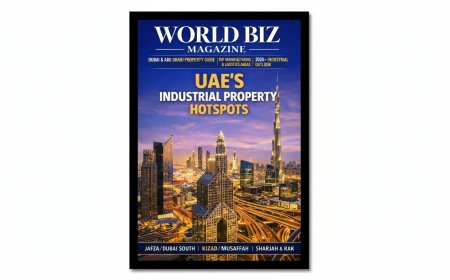

















































UAE Industrial Property Market: Best Areas for Manufacturing, Warehousing & Logistics (2026+)
A detailed guide to UAE industrial real estate, covering Dubai, Abu Dhabi, Sharjah, and emerging logistics hubs.

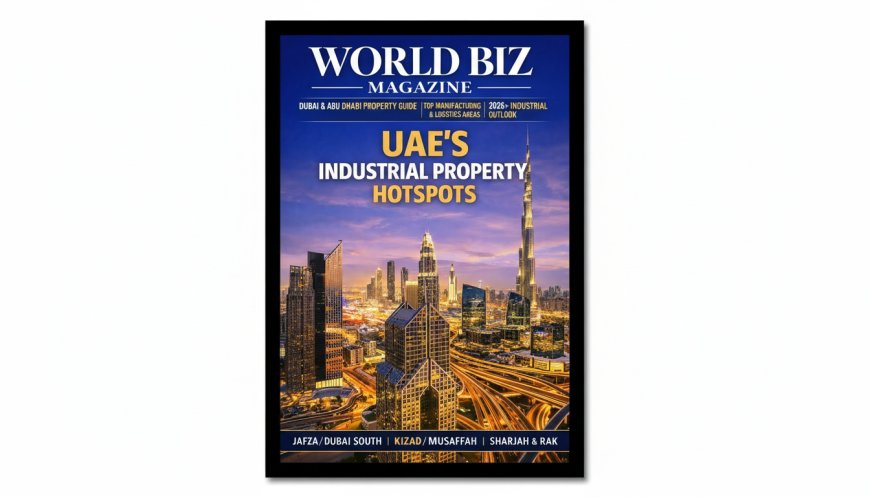
UAE Industrial Property Market: Where to Invest in Manufacturing, Warehousing & Logistics Hubs (2026+ Outlook)
World Biz Magazine | Global Real Estate Insights
Inside the UAE’s Industrial Property Boom: Key Investment Locations & Future Growth
The United Arab Emirates has emerged as the industrial and logistics backbone of the Middle East, driven by its strategic geographic position, world-class ports, free zones, and pro-business regulatory framework. As global supply chains realign and near-shoring accelerates, industrial real estate manufacturing facilities, warehousing, and logistics hubs has become one of the UAE’s strongest-performing asset classes.
From Dubai and Abu Dhabi to Sharjah and emerging northern emirates, industrial property demand is expanding rapidly, supported by trade, e-commerce, energy transition, and regional manufacturing growth.
This article explores where to invest in UAE industrial property, with detailed coverage of key locations, asset types, and growth assumptions from 2026 onwards.
UAE Industrial Real Estate: Macro Overview
The UAE’s industrial property market benefits from several structural advantages:
· Gateway between Asia, Europe, and Africa
· Advanced port, airport, and free-zone infrastructure
· Investor-friendly ownership laws
· Zero or low corporate tax zones (select free zones)
· Strong government push for economic diversification
Unlike traditional office or residential sectors, industrial assets in the UAE are supply-constrained and demand-driven, resulting in rising rents and high occupancy in prime zones.
Dubai: Core Industrial & Logistics Investment Zones
Dubai is the UAE’s industrial powerhouse, hosting some of the most mature and globally connected logistics ecosystems in the region.
Jebel Ali Free Zone (JAFZA)
Best for: Large-Scale Manufacturing | Global Logistics | Export-Oriented Warehousing
JAFZA is the largest and most established industrial free zone in the Middle East, adjacent to Jebel Ali Port.
Why Invest
· Direct access to the region’s busiest container port
· 100% foreign ownership and tax advantages
· Strong demand from global manufacturers, FMCG, and logistics firms
2026+ Outlook
JAFZA will remain a core institutional investment zone, with continued rental growth driven by limited land availability and rising trade volumes.
Dubai South (Dubai World Central - DWC)
Best for: Logistics Hubs | Aviation-Linked Warehousing | E-Commerce Fulfilment
Dubai South is a future-focused logistics and industrial city built around Al Maktoum International Airport.
Why Invest
· Integrated air-sea-land logistics connectivity
· Strong government backing
· Rapid growth in e-commerce and freight forwarding demand
2026+ Outlook
Dubai South is expected to become the UAE’s primary logistics expansion zone, attracting regional distribution centers and last-mile operators.
Al Quoz Industrial Area
Best for: Light Manufacturing | Urban Warehousing | Creative-Industrial Assets
Located close to central Dubai, Al Quoz serves SMEs and urban logistics needs.
Why Invest
· Proximity to residential and commercial districts
· Strong demand for refurbished and flexible industrial units
· Limited redevelopment land increases asset value
2026+ Outlook
Al Quoz will increasingly transition toward higher-value light industrial and mixed-use industrial formats.
Abu Dhabi: Industrial Scale & Long-Term Stability
Abu Dhabi focuses on heavy industry, advanced manufacturing, and energy-linked logistics, supported by sovereign investment.
Khalifa Industrial Zone Abu Dhabi (KIZAD)
Best for: Heavy Manufacturing | Industrial Mega Projects | Export Manufacturing
KIZAD is one of the region’s largest industrial zones, integrated with Khalifa Port.
Why Invest
· Competitive land pricing for large plots
· Strong government incentives
· Anchor tenants in metals, chemicals, food processing
2026+ Outlook
KIZAD will benefit from industrial diversification and clean-energy manufacturing, positioning it as a long-term growth engine.
Mussafah Industrial Area
Best for: Manufacturing Clusters | Warehousing | Construction Supply Chains
Mussafah remains Abu Dhabi’s most active industrial zone.
Why Invest
· High occupancy and tenant stickiness
· Diverse industrial user base
· Lower volatility compared to commercial offices
2026+ Outlook
Continued demand for mid-sized warehouses and production facilities, especially from regional suppliers.
Sharjah: Cost-Efficient Industrial Investment Hub
Sharjah offers lower entry costs and strong connectivity to Dubai, making it ideal for SMEs and logistics operators.
Sharjah Airport International Free Zone (SAIF Zone)
Best for: SMEs | Trading Companies | Light Manufacturing
Why Invest
· Competitive rental rates
· Quick company setup
· High demand from regional distributors
2026+ Outlook
Sharjah will attract growing SME and cross-border trade demand as Dubai rents rise.
Hamriyah Free Zone
Best for: Heavy Industry | Petrochemicals | Port-Based Manufacturing
Why Invest
· Direct port access
· Large industrial plots
· Strong export-driven tenant base
2026+ Outlook
Hamriyah will remain critical for industrial-scale manufacturing and bulk logistics.
Emerging Industrial Regions
Ras Al Khaimah (RAK Economic Zone)
Best for: Manufacturing | Cost-Sensitive Industrial Projects
· Affordable land and utilities
· Growing manufacturing ecosystem
· Increasing foreign investor interest
Fujairah
Best for: Energy Storage | Oil & Gas Logistics | Port Warehousing
· Strategic position outside the Strait of Hormuz
· Growing energy and maritime demand
2026 Onwards: Key Industrial Property Assumptions
Manufacturing
· Growth in food processing, clean energy, and advanced manufacturing
· Increased demand for purpose-built facilities
Warehousing
· High demand for Grade-A, temperature-controlled, and automated warehouses
· Rising rents due to limited supply
Logistics Hubs
· E-commerce and regional trade drive last-mile and regional distribution centers
· Integration with ports and airports becomes critical
Key Risks to Monitor
· Rising construction costs
· Energy price volatility
· Global trade disruptions
However, industrial assets remain more resilient than office or retail real estate.
Conclusion: Where Smart Capital Is Moving
From 2026 onwards, UAE industrial property will remain one of the most defensive and growth-oriented real estate asset classes in the region. Zones like JAFZA, Dubai South, KIZAD, and Sharjah Free Zones will continue to attract institutional capital, while emerging emirates offer upside for value-driven investors.
Investors focused on logistics efficiency, tenant quality, and infrastructure connectivity will be best positioned to benefit from the UAE’s next industrial expansion cycle.
Disclaimer
The information provided in this article is published by World Biz Magazine for general informational purposes only. While reasonable efforts have been made to ensure accuracy, the content does not constitute financial, legal, or investment advice. Market conditions, regulations, and economic factors may change without notice and may impact future outcomes.
Readers are advised to conduct independent research and consult with qualified professionals before making investment decisions. World Biz Magazine, its editors, and contributors accept no liability for losses arising from reliance on this information.
What's Your Reaction?
 Like
0
Like
0
 Dislike
0
Dislike
0
 Love
0
Love
0
 Funny
0
Funny
0
 Angry
0
Angry
0
 Sad
0
Sad
0
 Wow
0
Wow
0