


















































































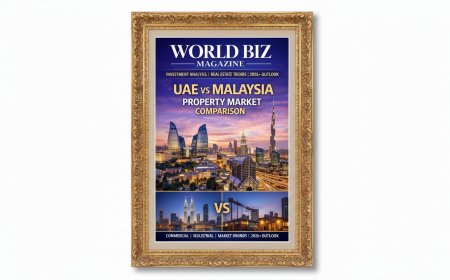






































































UAE vs Malaysia Industrial Property: Comparative Market Analysis & Future Outlook (2026+)
Compare the UAE and Malaysia industrial property markets manufacturing, warehousing, logistics with insights on demand, investment hotspots, and 2026 outlook.

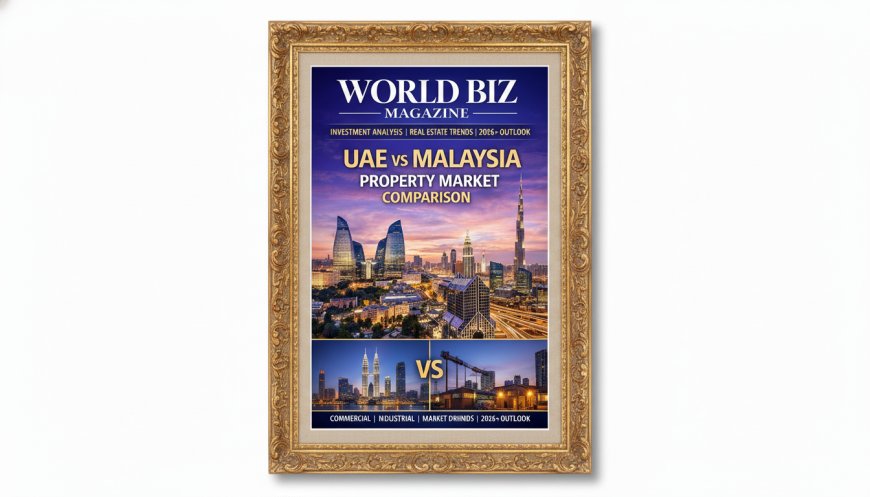
Where to Invest: UAE vs Malaysia Industrial Property Insights (Manufacturing & Distribution)
World Biz Magazine | Global Real Estate Insights
Manufacturing, Warehousing & Logistics - Historical, Current and Future Outlook (2026 and Beyond)
Industrial real estate which includes manufacturing facilities, warehousing space, and logistics hubs is increasingly recognized as a strategic property subtype globally, driven by economic diversification, supply chain restructuring, and e-commerce expansion. This comprehensive comparison examines the industrial property landscapes in the United Arab Emirates (UAE) and Malaysia two fast-growing hubs in their respective regions and outlines investment opportunities, performance metrics, and future outlooks post-2026.
Overview: Industrial Real Estate in UAE and Malaysia
UAE Industrial Market
The UAE has rapidly evolved into a global trade and logistics powerhouse, leveraging its strategic position between Asia, Europe, and Africa and best-in-class infrastructure to fuel industrial growth. Industrial property here includes integrated logistics hubs, world-class free zones, and purpose-built manufacturing facilities.
· Demand for industrial and logistics space in emirates such as Dubai and Abu Dhabi surged sharply in recent years, with Dubai’s industrial and logistics requirements increasing by more than 225 % in 2024, driven by robust trade growth and e-commerce expansion.
· Vacancy remains low (about 3 %), and rents have consistently risen year-over-year across major hubs like Al Quoz, Dubai Investments Park (DIP), and Dubai Industrial City.
· Institutional investment is on the rise, with global capital entering large-scale logistics platforms and economic zones, reflecting strong confidence in long-term asset performance.
Malaysia Industrial Market
Malaysia’s industrial real estate is anchored by strong manufacturing growth, strategic ports and transport links, and regional distribution centers. Industrial zones near Port Klang, Shah Alam, and Johor’s Iskandar region have seen rising demand for large-format warehouses, logistics facilities, and built-to-suit factories meeting modern specifications.
· Investment flows have supported modernization of industrial facilities, while infrastructure projects such as rail links and expressways have boosted land values in industrial corridors.
· Malaysia’s industrial space absorption is strong, supported by diversified foreign investment, growth in e-commerce and logistics, and increasing manufacturing output.
Key Industrial Sub-Segments & Demand Drivers
Manufacturing
UAE: Manufacturing is a growing pillar of the economy, contributing significantly to non-oil GDP. The UAE Industrial Strategy 2030 and schemes like “Make It In The Emirates” are attracting foreign industrial players and fostering advanced industries.
Malaysia: Manufacturing property continues to expand, buoyed by global supply chain diversification and investments in electronics, automotive components, consumer goods, and advanced manufacturing. While Malaysia’s facilities are often land-intensive factory spaces near key transport nodes, there is rising demand for sophisticated built-to-suit facilities.
Comparison: The UAE’s manufacturing property is increasingly linked to high-technology and export sectors, supported by free-zone incentives and global trade agreements, while Malaysia’s manufacturing hubs benefit from strong regional connectivity and cost competitiveness.
Warehousing & Logistics
UAE: Warehousing and logistics are standout performers. Industrial rents have risen with demand (e.g., 13 % YoY growth in warehouse rates), and occupiers like 3PLs, e-commerce operators, and global logistics firms dominate take-up.
· Dubai’s robust logistics strategy and infrastructure projects such as Etihad Rail and Al Maktoum International Airport enhance connectivity and capacity for freight movement.
Malaysia: Logistics and warehouse property in Malaysia is also expanding, driven by e-commerce and regional distribution needs. Increasingly sophisticated facilities are being developed near ports and airports to support faster delivery cycles.
Comparison: Both markets show strong warehousing demand, but the UAE’s logistics hubs benefit from global air/sea connectivity and larger scale international trade, whereas Malaysia’s strengths lie in regional distribution and ASEAN servicing facilities.
Geographic Investment Hotspots
UAE Hotspots
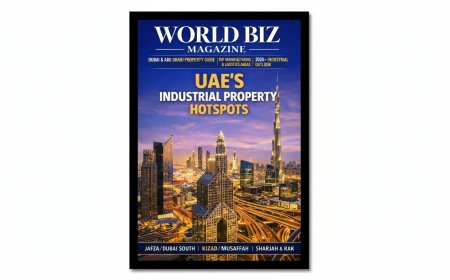
· Jebel Ali Free Zone (JAFZA), Dubai: Premium logistics and manufacturing base with global port connectivity.
· Dubai South (DWC): Logistics and aviation-linked supply chain hub.
· Abu Dhabi (KEZAD, Mussafah): Large-scale industrial estate focusing on heavy manufacturing and global export facilities.
· Sharjah Free Zones: Cost-efficient warehouses and SME industrial spaces.
Malaysia Hotspots
· Port Klang & Pulau Indah Industrial Park: Core manufacturing and logistics zones adjacent to Malaysia’s busiest port.
· Shah Alam & Klang Valley: Growing warehouse and distribution demand near population centers.
· Johor (Iskandar Malaysia): Emerging export-oriented industrial belt with modern facilities.
Infrastructure & Future Growth Drivers (2026+)
UAE
· Trade Megaprojects & Connectivity: Continued expansion of logistics corridors, ports, and rail infrastructure under national development plans will fuel industrial demand.
· Smart/Tech Warehousing: Adoption of automation, AI logistics systems, and digital infrastructure is shaping new industrial space standards in Dubai and beyond.
· Institutional Investment: Deepening capital inflows from global funds and strategic partnerships aiming at Grade-A logistics assets.
Malaysia
· Transport Linkages: Rail and expressway projects bolster connectivity to ports and consumption centers, improving logistics efficiency.
· Greenfield & Build-to-Suit Trends: Developers increasingly design facilities that meet advanced occupier specifications and ESG standards.
· ASEAN Trade Dynamics: Rising ASEAN economic integration enhances Malaysia’s position as a regional industrial platform.
Risks & Investment Considerations
UAE
· Supply constraints can push up acquisition and rental costs.
· Economic diversification depends on continued FDI and trade growth.
· Competition among free zones requires careful site selection.
Malaysia
· Industrial land availability and infrastructure delivery timelines influence absorption rates.
· Investors need to assess long-term lease security and duty structures.
· Global trade volatility can impact demand for manufacturing space.
Comparative Future Outlook (2026 Onwards)
|
Aspect |
UAE |
Malaysia |
|
Industrial Demand |
Very strong, export/logistics-led |
Growing, regionally balanced |
|
Rental Growth |
Sustained upward pressure |
Moderate but steady |
|
Investment Capital |
Global institutional inflows |
Regional and global investors |
|
Technology Adoption |
Very high (smart warehouses) |
Increasing but gradual |
|
Connectivity |
World-class logistics network |
ASEAN regional links |
The UAE market is projected to remain a global industrial real estate center, powered by trade flows and innovation. Malaysia’s market, meanwhile, offers stable regional growth with attractive cost profiles and strong demand from e-commerce and manufacturing sectors making it a complementary alternative for diversified industrial portfolios.
Disclaimer
The content provided in this article is published by World Biz Magazine for informational purposes only and does not constitute financial, investment, legal, or real estate advice. While reasonable efforts have been made to ensure accuracy and reliability, market conditions, economic circumstances, and property dynamics may change without notice, affecting present assumptions and future outcomes.
Readers should conduct independent research and consult with qualified professional advisors before making any investment decisions. World Biz Magazine, its contributors, and affiliates disclaim any liability for losses arising from the use of, or reliance on, the information contained herein.
What's Your Reaction?
 Like
0
Like
0
 Dislike
0
Dislike
0
 Love
0
Love
0
 Funny
0
Funny
0
 Angry
0
Angry
0
 Sad
0
Sad
0
 Wow
0
Wow
0