

































































































































































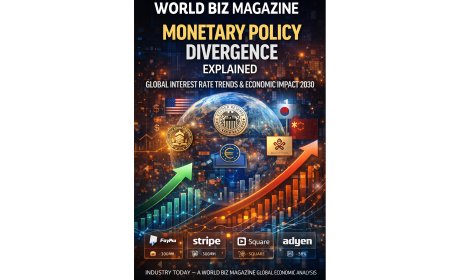



































Global Payment APIs 2025-2030: Infrastructure, Innovation & Embedded Finance
How Payment APIs power global commerce, fintech innovation, embedded finance, and secure digital transactions worldwide.

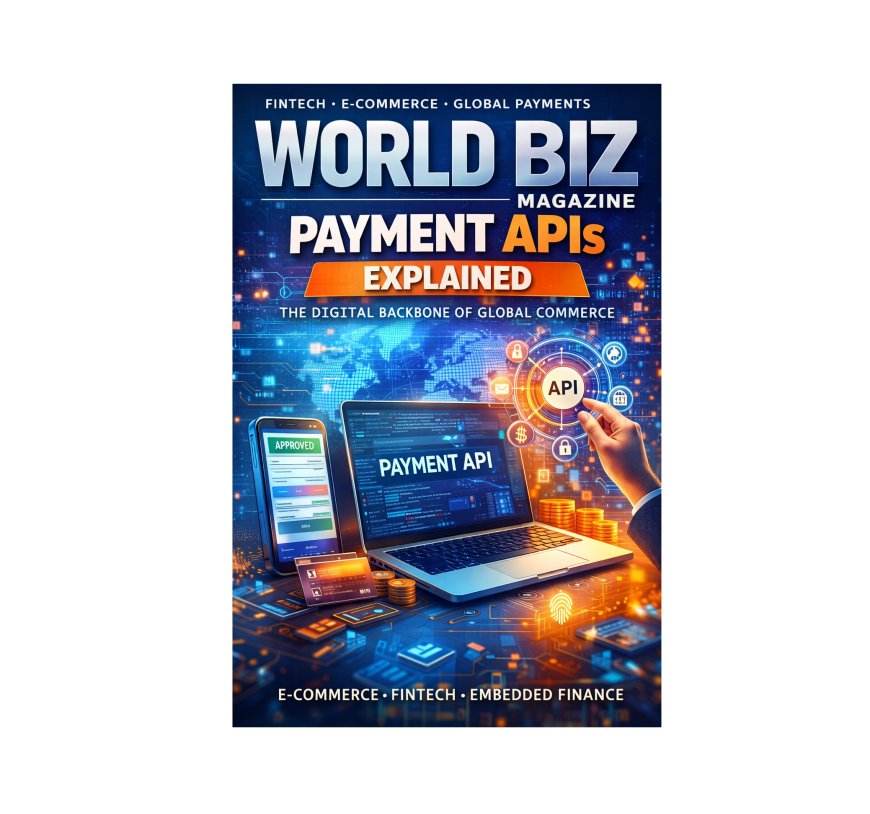
Payment APIs Explained
The Digital Backbone of Global Commerce
World Biz Magazine | Fintech & Infrastructure Intelligence
In today’s digital economy, Payment APIs (Application Programming Interfaces) are the invisible engines powering global commerce. From e-commerce checkouts and ride-hailing apps to subscription platforms and cross-border marketplaces, Payment APIs enable businesses to securely connect with banks, card networks, digital wallets, and financial institutions in real time.
As global digital payments are projected to exceed $15-20 trillion annually by 2030, Payment APIs are no longer technical utilities they are strategic infrastructure shaping financial innovation, embedded finance, and global trade.
This World Biz Magazine industry feature explores:
- What Payment APIs are
- How they work
- Types of payment APIs
- Market size & growth trends
- Key players & ecosystems
- Regulatory frameworks
- Security architecture
- Industry use cases
- Risks & future outlook through 2030
What Are Payment APIs?
A Payment API is a software interface that allows applications, websites, and platforms to communicate with payment processors, banks, and financial networks.
In simple terms:
Payment APIs allow businesses to accept, send, verify, and manage payments digitally.
They handle:
- Payment authorization
- Payment capture
- Refunds
- Subscription billing
- Fraud detection
- Tokenization
- Wallet integrations
- Currency conversion
Without Payment APIs, modern e-commerce and fintech ecosystems would not exist.
How Payment APIs Work (Technical Flow)
When a customer makes a payment online:
- Customer enters payment details.
- Merchant’s system sends request via Payment API.
- API forwards to payment gateway.
- Gateway connects to acquiring bank.
- Card network (e.g., Visa/Mastercard) verifies.
- Issuing bank authorizes or declines.
- API returns response to merchant system.
- Funds settle via clearing process.
This entire flow happens in seconds.
Modern APIs are REST-based and use JSON over HTTPS with authentication tokens (OAuth, API keys).
Types of Payment APIs
1. Payment Processing APIs
Enable card payments, wallets, and bank transfers.
2. Subscription & Recurring Billing APIs
Used by SaaS, streaming, telecom.
3. Payout APIs
Enable mass disbursements (gig workers, affiliates).
4. Wallet APIs
Integration with Apple Pay, Google Pay, Alipay.
5. Open Banking APIs
Allow direct bank-to-bank transfers (PSD2 compliant in Europe).
6. Fraud & Risk APIs
Real-time transaction risk scoring.
Market Size & Industry Growth
Global Market Snapshot (2025)
- Global digital payments market: $9-10 trillion+
- API-driven fintech services: Rapidly growing segment
- Embedded finance market: Expected to exceed $7 trillion by 2030
- API economy projected to grow at 15-20% CAGR
Key growth drivers:
- E-commerce expansion
- Super apps & digital wallets
- Open banking regulations
- Cross-border trade digitization
- Subscription economy
- Gig economy payouts
Key Global Payment API Providers
Global Leaders
- Stripe
- PayPal
- Adyen
- Square
- Checkout.com
- Worldpay
Open Banking & API Banking
- Plaid
- Tink
Regional Leaders
- Asia: Razorpay, Paytm APIs
- Africa: Flutterwave APIs
- Middle East: PayTabs
- Latin America: Mercado Pago
Payment APIs & Embedded Finance
Embedded finance is transforming non-financial companies into financial platforms.
Examples:
- Ride-hailing apps offering wallets
- Marketplaces providing merchant financing
- SaaS platforms embedding subscription billing
- B2B platforms offering instant credit
Payment APIs make this possible.
Regulatory & Compliance Landscape
Payment APIs operate under strict regulatory frameworks:
- PCI DSS (Card security compliance)
- PSD2 (Europe open banking)
- AML/KYC laws
- Data localization requirements
- ISO 20022 messaging standards
- Central bank oversight
Countries leading API banking:
- UK (Open Banking Initiative)
- EU
- Singapore
- Australia
- India (UPI ecosystem)
Security Architecture
Modern Payment APIs rely on:
- End-to-end encryption
- Tokenization
- Multi-factor authentication
- AI-driven fraud detection
- Secure webhooks
- Zero-trust architecture
Cybersecurity spending in payments infrastructure is rising sharply due to increasing fraud sophistication.
Industry Use Cases
E-commerce
Seamless checkout & one-click payments.
SaaS Platforms
Automated recurring billing.
Gig Economy
Instant payouts.
Travel & Airlines
Multi-currency payment handling.
B2B Platforms
Automated invoice settlement.
Government
Digital tax & fee collection.
Risks & Challenges
- Regulatory fragmentation
- Cybersecurity threats
- Cross-border compliance complexity
- API downtime risks
- Vendor concentration risk
- Chargeback disputes
- Data privacy regulations (GDPR-like frameworks)
Political & Economic Impact
Payment APIs:
- Increase tax transparency
- Reduce shadow economy
- Support digital GDP growth
- Enable cross-border commerce
- Improve financial inclusion
However, they also raise geopolitical questions around:
- Data sovereignty
- Digital currency competition
- Cross-border settlement control
The Future of Payment APIs (2030 Outlook)
By 2030:
- APIs will dominate 90%+ of digital transactions.
- CBDC integration will become common.
- Real-time cross-border settlement will expand.
- AI-driven fraud detection will be default.
- Biometric authentication will rise.
- Embedded finance will reshape global commerce.
The winners will be those offering:
- Developer-friendly ecosystems
- Global coverage
- Strong compliance frameworks
- Real-time analytics
- Seamless user experience
Conclusion
Payment APIs are not just technical tools they are strategic financial infrastructure powering the modern digital economy.
From startups to multinational corporations, from banks to super apps, Payment APIs define how money moves in a connected world.
As fintech innovation accelerates and regulatory frameworks evolve, Payment APIs will remain at the center of global economic transformation.
Disclaimer
This article is published for informational and editorial purposes only. It does not constitute financial, legal, or policy advice. Market assessments and projections are based on publicly available data and institutional reports. Actual outcomes may vary due to regulatory decisions, technological developments, geopolitical events, and macroeconomic conditions.
World Biz Magazine assumes no liability for decisions made based on this publication.
What's Your Reaction?
 Like
0
Like
0
 Dislike
0
Dislike
0
 Love
0
Love
0
 Funny
0
Funny
0
 Angry
0
Angry
0
 Sad
0
Sad
0
 Wow
0
Wow
0