





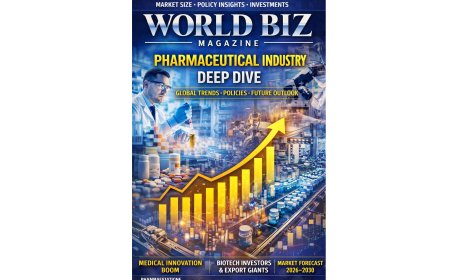




























































































































































Pharmaceutical Industry Deep Dive: Global Market Size, Policy Impact, Investments & Future Outlook to 2030
Global pharmaceutical industry: market size, investments, pricing trends, policies, country analysis, exports, and forecast to 2030.

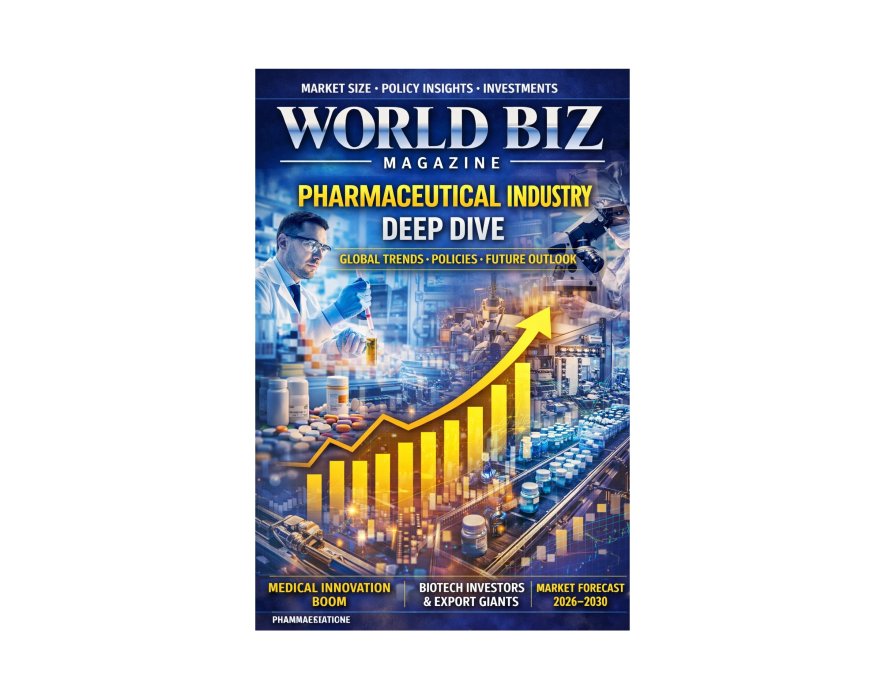
Pharmaceutical Industry Deep Dive: Today’s Market, Policy Impact, and Future Growth
World Biz Magazine - Industry Intelligence Feature
The global pharmaceutical industry is one of the most essential and rapidly evolving sectors in the world economy. It encompasses development, production, and distribution of medications, vaccines, biologics, and advanced therapies that treat diseases, support public health, and drive wellness outcomes.
Driven by technological innovation, aging populations, pandemic-inspired demand, and chronic disease prevalence, the pharmaceutical market’s economic footprint is vast influencing national healthcare spending, trade balances, labor markets, and global investment flows.
The industry also sits at the intersection of public policy, intellectual property rights, global supply chain dynamics, and geopolitical competition, making its evolution critically relevant to both business leaders and policymakers.
Industry Structure & Segments
The pharmaceutical industry broadly comprises:
R&D and Innovation
- Discovery science
- Clinical trials
- Biotech and biologics development
Manufacturing & Production
- Small-molecule drugs
- Biologic drugs and vaccines
- Generic and branded pharmaceuticals
Distribution & Retail
- Wholesalers
- Pharmacy chains
- Online and e-commerce platforms
Services & Support
- Contract research organizations (CROs)
- Contract manufacturing organizations (CMOs)
- Regulatory consultants
Segments such as vaccines, oncology therapies, cell & gene therapies, and digital health products are among the fastest-growing.
Global Market Size & Growth
According to industry estimates:
- The global pharmaceutical market was valued at over $1.6 trillion in 2024 and exceeded $1.75 trillion in 2025.
- Forecasts project the market could reach $2.5 trillion by 2030, driven by innovation, demographic shifts, and emerging market expansion.
Growth drivers include:
- Increased healthcare spending
- Aging populations in developed economies
- Rising access to medicines in emerging markets
- Expansion of specialty drugs and biologics
The industry’s growth outpaces many traditional sectors, reflecting its societal and economic importance.
Regional Market Dynamics
North America
- Largest regional market, fueled by high prices, pharmaceutical R&D leadership, and strong healthcare infrastructure.
- The U.S. pharmaceutical industry represents a significant portion of global sales.
Europe
- Second biggest market with strong regulatory frameworks and generics presence.
- Investment incentives for biotech innovation (e.g., Germany, Switzerland, UK).
Asia-Pacific
- Fastest-growing region, driven by China, India, and Southeast Asia.
- Rising middle class healthcare demand and expanding manufacturing capacity.
Latin America & Middle East/Africa
- Growth potential tied to improved healthcare access and public sector reform.
- Investments increasing in local production and imports of advanced therapies.
Key Global Players
Major multinational pharmaceutical companies include:
- Pfizer (U.S.)
- Roche (Switzerland)
- Novartis (Switzerland)
- Merck & Co. (U.S.)
- Johnson & Johnson (U.S.)
- Sanofi (France)
- AstraZeneca (UK/Sweden)
- GlaxoSmithKline (UK)
These firms lead in R&D investment, global market share, and innovation pipelines.
In addition, major biotech companies such as Regeneron, Amgen, Biogen, Moderna, and Gilead have become central to breakthrough therapies.
Policy Environment & Political Influences
The pharmaceutical industry is deeply shaped by public policy and geopolitics:
Regulation & Compliance
- Drug approval and safety oversight by regulatory bodies like the U.S. FDA, EMA (Europe), PMDA (Japan), and others.
- Regulations influence patent protection, clinical trial approval, and market entry.
Intellectual Property & Pricing
- Patent laws determine exclusivity periods and generic entry.
- Government pricing controls and reimbursement policies affect profitability.
Trade & Supply Chain Policy
- Policies on import/export impact supply security, especially for APIs (active pharmaceutical ingredients).
- Trade agreements shape market access.
Public Health Policy
- Vaccination strategies, pandemic response funding, and national health insurance frameworks influence demand.
Political decisions on drug pricing, national procurement, and regulatory harmonization directly affect industry economics and global competitiveness.
Investment Trends & Major Investors
Pharmaceutical investment flows include:
- Private equity and venture capital fueling biotech startups
- Public funding for vaccines and pandemic preparedness (government grants)
- Strategic partnerships between big pharma and biotech innovators
- Mergers & acquisitions to enhance pipelines and therapeutic portfolios
In recent years:
- Investment in cancer therapies, gene editing, and personalized medicine has surged.
- Governments have increased funding for vaccine infrastructure and pandemic response.
Country-by-Country Market Influence
United States
- Largest pharmaceutical market globally, with heavy R&D investment, high drug prices, and robust regulatory environment.
China
- Fast-growing market with expanding domestic innovation and manufacturing.
India
- Major generics producer; global supplier of affordable medicines and APIs.
European Union
- Mature markets with strong regulatory harmonization and high innovation outputs.
Japan & South Korea
- Significant markets with aging populations and advanced pharmaceutical ecosystems.
Growth in emerging markets (Latin America, Southeast Asia, Middle East/Africa) complements traditional powerhouses, signaling broad based industry expansion.
E-commerce & Digital Transformation
Digital health and e-commerce are reshaping pharmaceutical distribution:
- Online pharmacies and digital prescription platforms
- Telemedicine integration
- Supply chain tracking using blockchain and IoT
- AI-driven drug discovery workflows
These trends enhance access, reduce costs, and improve data-driven care delivery.
New Projects & Emerging Players
Emerging industry participants include:
- Biotech startups focusing on gene therapy, immunotherapy, and rare diseases
- Digital therapeutic firms
- Contract research and manufacturing firms expanding capacity
- AI-focused drug discovery startups
New projects include expansion of manufacturing facilities, global clinical trial networks, and strategic alliances between pharmaceutical and technology firms.
Prices, Inflation & Market Volatility
Drug Pricing Dynamics
- Drug prices have experienced upward pressures in many markets due to R&D costs and regulatory environments.
- Inflation in healthcare costs influences government budgets and insurance premiums.
Historical Pricing Trends
- Over the last decade, the industry saw stable growth in pricing in developed markets.
- Emerging markets experienced price reforms to enhance affordability.
Forecasts to 2030 anticipate:
- Continued pressure on pricing from governments and payers.
- Growth in high-value specialty drugs which may command premium pricing despite policy scrutiny.
Countries Facing Investment Declines
Some markets face reduced pharmaceutical investment due to:
- Regulatory constraints
- Reimbursement pressures
- Economic challenges reducing local manufacturing incentives
These pressures highlight the importance of favorable policy environments and investment incentives.
Future Outlook
The pharmaceutical industry’s future will be shaped by:
Innovation
- Continued breakthroughs in biologics, oncology, vaccines, and precision medicine.
Regulatory Harmonization
- Cross-border cooperation to speed approvals and enhance safety.
Sustainability & Supply Security
- Efforts to diversify supply chains for APIs and critical drug components.
Digital Integration
- Widespread adoption of AI, real-world evidence, and digital patient engagement tools.
Emerging Market Growth
- Expansion of healthcare access in developing economies.
World Biz Magazine Insight:
In the new era of precision medicine, digital health, and global connectivity, pharmaceuticals will accelerate the intersection of public health outcomes and economic growth making it one of the most dynamic and impactful sectors of the 21st century.
World Biz Magazine’s Strategic Insight
The pharmaceutical industry is more than a healthcare sector it is a global economic engine. Its growth fuels job creation, technological innovation, and cross-border trade. Its products underpin public health systems, economic resilience, and global well-being.
Key takeaways for investors and policymakers:
- Big Pharma remains a global leader in innovation and capital deployment.
- Biotech and digital health are changing the innovation landscape.
- Policy frameworks especially pricing and regulatory regimes shape competitive advantage.
- Supply chain diversification is critical for future resilience.
Conclusion
The pharmaceutical industry is uniquely positioned at the crossroads of science, technology, economics, and public policy. As global health priorities expand and populations age, demand for safe, effective, and accessible medicines will only increase. Innovation, investment, and strategic public policies are the key drivers that will define the sector’s trajectory through 2030 and beyond.
Editorial & Investment Disclaimer
This article is published for informational and editorial purposes only. The content reflects market research, industry analysis, and publicly available data at the time of publication. It does not constitute financial, investment, legal, or medical advice.
Readers should conduct independent research or consult licensed financial advisors, healthcare professionals, or regulatory experts before making business, investment, or healthcare decisions.
Market projections, forecasts, and economic estimates mentioned in this article are based on current industry trends and analytical models. Actual results may vary due to regulatory changes, geopolitical developments, supply chain disruptions, macroeconomic conditions, and unforeseen global events.
World Biz Magazine assumes no responsibility for business decisions made based on the information presented in this publication.
What's Your Reaction?
 Like
0
Like
0
 Dislike
0
Dislike
0
 Love
0
Love
0
 Funny
0
Funny
0
 Angry
0
Angry
0
 Sad
0
Sad
0
 Wow
0
Wow
0