














































































































































































































Cross-Platform Booking Experience: The Future of Seamless Travel Technology
A detailed World Biz Magazine research guide to seamless booking across devices, platforms, and travel ecosystems.

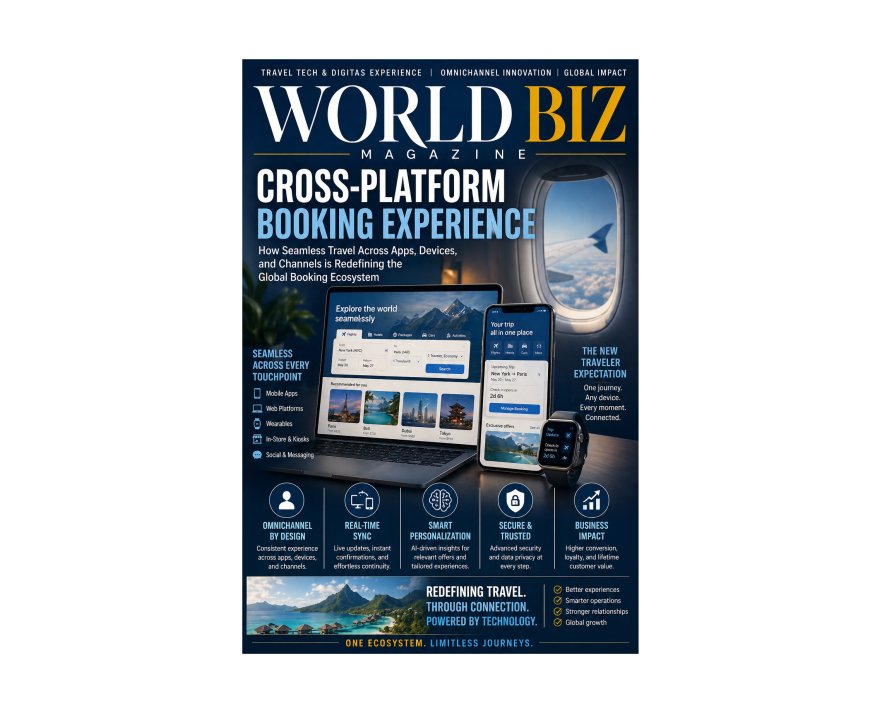
Cross-Platform Booking Experience
How Seamless Travel Across Apps, Devices, and Channels is Redefining the Global Booking Ecosystem
World Biz Magazine | Travel Tech & Digital Experience | Omnichannel Innovation
The Rise of Seamless Travel Journeys
Modern travelers no longer rely on a single platform to plan their journeys. Instead, they move fluidly across multiple devices and channels searching flights on mobile apps, comparing hotels on desktops, and finalizing bookings through travel agencies or digital wallets. This shift has given rise to the cross-platform booking experience, a critical component of the digital travel ecosystem.
Leading companies such as Booking.com, Expedia Group, Airbnb, and Google are investing heavily in creating unified, seamless experiences across platforms to enhance user engagement and maximize conversions.
What is Cross-Platform Booking Experience?
Cross-platform booking experience refers to the ability for users to:
- Search, compare, and book travel services across multiple devices and channels
- Maintain continuity in their journey without disruption
- Access consistent data and personalized recommendations It ensures a unified user experience across mobile apps, websites, and third-party platforms.
Why Cross-Platform Experience Matters
The modern travel customer journey is fragmented. A typical traveler might:
- Search on a smartphone
- Compare on a laptop
- Book through an app or OTA
Without seamless integration, this journey becomes inefficient.
Key Benefits
- Improved user experience
- Higher conversion rates
- Increased customer loyalty
- Better data utilization
How Cross-Platform Booking Works
Unified User Profiles
Platforms create centralized profiles that store:
- Preferences
- Booking history
- Payment methods
Cloud-Based Data Synchronization
User data is synced across:
- Mobile apps
- Desktop platforms
- APIs and third-party systems
API Integration
APIs connect:
- Airlines
- Hotels
- Travel agencies
Session Continuity
Users can:
- Start a search on one device
- Continue on another without losing progress
Payment Integration
Supports:
- Digital wallets
- Multi-currency transactions
- Secure checkout
Key Technologies Enabling Cross-Platform Booking
Cloud Computing
Enables:
- Real-time data access
- Scalability across devices
Artificial Intelligence (AI)
AI personalizes:
- Recommendations
- Pricing
- Offers
APIs & Microservices
Allow platforms to:
- Integrate multiple services
- Deliver modular functionality
Data Analytics
Tracks:
- User behavior
- Conversion patterns
- Engagement metrics
Industry Examples
Booking.com
Booking.com offers:
- Seamless transitions between devices
- Personalized recommendations
- Unified booking experience
Expedia Group
Expedia Group integrates:
- Flights
- Hotels
- Packages
Across multiple platforms.
Airbnb
Airbnb focuses on:
- Mobile-first experience
- Consistent UI across devices
Google Travel
Google connects:
- Search
- Maps
- Booking options
Into a unified ecosystem.
Challenges in Cross-Platform Booking
Data Fragmentation
Different systems may store inconsistent data.
Security & Privacy
Handling sensitive user data across platforms.
Integration Complexity
Connecting multiple systems and APIs.
Performance Issues
Ensuring fast and reliable experience across devices.
Future Trends in Cross-Platform Travel
Super Apps
Platforms combining:
- Travel
- Payments
- Lifestyle services
AI-Driven Personalization
Hyper-personalized travel experiences.
Voice & Conversational Booking
Integration with:
- Voice assistants
- Chatbots
Blockchain for Identity & Payments
Secure and transparent transactions.
Impact on Travel Businesses
For Companies
- Increased revenue
- Better customer insights
- Competitive advantage
For Customers
- Convenience
- Flexibility
- Personalized experiences
World Biz Magazine Insight
At World Biz Magazine, our analysis highlights:
“The future of travel booking lies in seamless, cross-platform experiences that eliminate friction and enhance personalization.”
Conclusion: The Future is Omnichannel
Cross-platform booking is no longer optional it is essential. As travelers demand convenience and personalization, companies must invest in technologies that deliver seamless experiences across all touchpoints.
Those that succeed will define the next generation of travel.
Final Thought
“In the digital travel economy, the journey begins long before the trip and it happens across every screen.”
Disclaimer
This article is intended for informational and educational purposes only and does not constitute financial, technological, legal, or business advice. The analysis of cross-platform booking systems, digital travel experiences, and omnichannel technologies is based on general industry practices, publicly available information, and research insights, which may vary across companies, platforms, and regions.
References to companies such as Booking.com, Expedia Group, Airbnb, and Google are for illustrative purposes only and do not imply endorsement or guarantee of similar outcomes.
Digital platforms, APIs, and user experience technologies are continuously evolving, and features such as personalization, pricing, and system integrations may change over time due to innovation, regulatory requirements, and market competition.
Readers, businesses, and technology stakeholders are advised to conduct independent research and consult qualified professionals before making decisions related to platform development, investment, or technology implementation.
World Biz Magazine does not guarantee the accuracy, completeness, or future performance of the information presented and shall not be held liable for any actions or decisions taken based on this content.
What's Your Reaction?
 Like
0
Like
0
 Dislike
0
Dislike
0
 Love
0
Love
0
 Funny
0
Funny
0
 Angry
0
Angry
0
 Sad
0
Sad
0
 Wow
0
Wow
0