

















































































The Future of Retail Real Estate: Market Forecasts and Investment Trends
Learn how consumer behavior, e-commerce, technology, and urban development are shaping retail property markets worldwide.

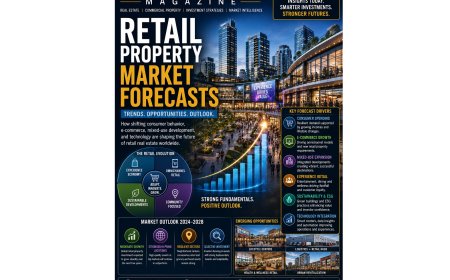
Retail Property Market Forecasts
Navigating the Future of Shopping Centers, High Streets, Mixed-Use Developments, and Retail Real Estate Investment
World Biz Magazine | Real Estate, Commercial Property & Investment Intelligence
The retail property sector has undergone one of the most significant transformations in modern real estate history. Once dominated by traditional shopping malls and standalone retail centers, the industry is now adapting to rapidly changing consumer behaviors, technological innovation, e-commerce growth, demographic shifts, and evolving urban development patterns. While the rise of online shopping initially created uncertainty across many retail property segments, the market has demonstrated remarkable resilience by evolving toward experience-driven destinations, mixed-use developments, convenience-focused retail formats, and omnichannel business models.
Retail real estate remains a critical component of the global property market. Retail properties generate substantial investment activity, support millions of jobs, contribute significantly to municipal tax revenues, and serve as important economic and social hubs within communities. From luxury shopping districts and regional malls to neighborhood retail centers and logistics-integrated retail spaces, retail property continues to play a vital role in the broader commercial real estate ecosystem.
Investors, developers, retailers, and financial institutions are increasingly focused on understanding where the retail property market is heading over the coming years. Forecasting future market conditions requires analyzing numerous factors, including consumer spending trends, inflation, interest rates, population growth, urbanization, digital commerce, supply chain evolution, and changing lifestyle preferences. While challenges remain, many industry experts believe that retail property is entering a new phase characterized by adaptation, innovation, and selective growth opportunities.
As global economies continue adjusting to post-pandemic realities and digital transformation accelerates, retail property market forecasts have become increasingly important for investors seeking long-term value creation and sustainable returns. Understanding these forecasts provides valuable insights into how retail assets may perform and which segments are likely to experience the strongest growth in the years ahead.
Understanding the Retail Property Market
Retail property refers to commercial real estate assets designed for the sale of goods and services directly to consumers.
Common retail property categories include:
· Shopping malls
· Retail parks
· Neighborhood centers
· High street properties
· Lifestyle centers
· Mixed-use retail developments
· Outlet centers
· Convenience retail locations
These properties generate income primarily through tenant leases and retail operations.
The health of the retail property market is closely tied to consumer spending and economic performance.
Retail real estate continues to evolve as consumer expectations and shopping behaviors change.
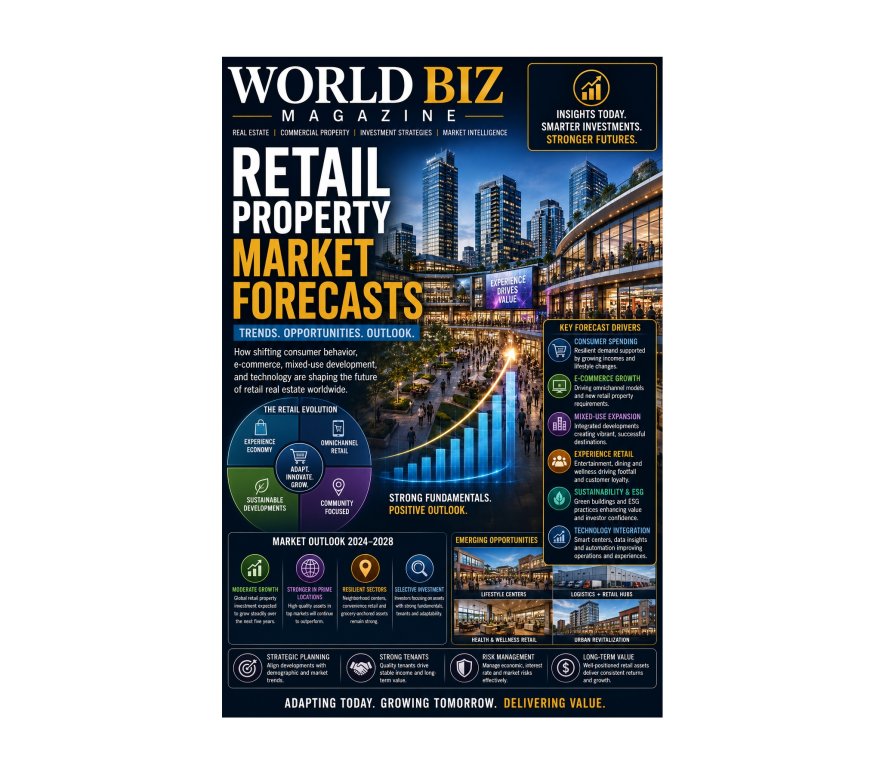
Key Drivers Shaping Retail Property Forecasts
Numerous factors influence future retail property performance.
Among the most important are:
Consumer Spending
Household spending remains the primary driver of retail demand.
Economic Growth
Stronger economies generally support retail sales and leasing activity.
Interest Rates
Financing costs influence both investors and developers.
Population Growth
Expanding populations create additional retail demand.
Urbanization
Growing cities increase demand for accessible retail services.
Technology Adoption
Digital commerce continues transforming retail strategies.
These variables collectively shape future market opportunities and risks.
The Evolution of Consumer Behavior
Consumer preferences have changed significantly over the past decade.
Today's shoppers increasingly prioritize:
· Convenience
· Experiences
· Personalization
· Digital integration
· Sustainability
Retailers must adapt to these expectations to remain competitive.
As a result, property owners are redesigning retail environments to create engaging customer experiences rather than simply facilitating transactions.
The shift toward experiential retail is expected to remain a major market trend.
The Impact of E-Commerce
E-commerce has fundamentally altered the retail landscape.
Online shopping continues capturing a growing share of retail sales globally.
However, rather than eliminating physical stores, digital commerce has accelerated the development of omnichannel retail models.
Many retailers now utilize stores as:
· Showrooms
· Fulfillment centers
· Pickup locations
· Customer service hubs
Physical retail remains important, particularly for categories requiring in-person experiences.
Future forecasts suggest that successful retail properties will increasingly integrate digital and physical shopping experiences.
Shopping Mall Transformation
Traditional shopping malls have experienced significant disruption.
Many owners are repositioning assets through:
· Mixed-use redevelopment
· Entertainment offerings
· Dining experiences
· Health and wellness facilities
· Residential integration
The future of malls is likely to depend on their ability to evolve into community destinations.
Prime malls in strong markets continue attracting investment, while weaker assets face redevelopment pressures.
Market forecasts indicate increasing differentiation between high-performing and underperforming retail centers.
Growth of Mixed-Use Retail Developments
Mixed-use developments are becoming increasingly popular.
These projects combine:
· Retail
· Residential
· Office space
· Hospitality
· Entertainment
Benefits include:
· Diversified revenue streams
· Higher foot traffic
· Increased property values
· Enhanced community engagement
Mixed-use environments align with modern urban planning objectives and changing lifestyle preferences.
Forecasts suggest continued growth in this segment worldwide.
Neighborhood and Convenience Retail Centers
Neighborhood retail centers have demonstrated resilience in recent years.
Consumers increasingly value proximity and convenience.
Popular tenants include:
· Grocery stores
· Pharmacies
· Medical services
· Restaurants
· Personal care businesses
These centers often benefit from stable demand and regular customer visits.
Retail market forecasts generally remain positive for convenience-oriented properties.
Many investors view these assets as defensive investments.
High Street and Urban Retail Forecasts
Prime urban retail districts continue attracting retailers and consumers.
Key drivers include:
· Tourism
· Population density
· Luxury retail demand
· Mixed-use development
Although some urban retail markets experienced disruption, many are recovering as economic activity normalizes.
High-quality locations remain highly desirable.
Forecasts indicate continued demand for premium urban retail assets.
Retail Property and Demographic Trends
Demographic shifts significantly influence retail demand.
Key trends include:
Urban Population Growth
Driving demand for mixed-use and neighborhood retail.
Aging Populations
Increasing demand for healthcare-related retail services.
Younger Consumers
Supporting experiential and technology-driven retail concepts.
Household Formation
Creating demand for community-focused retail amenities.
Understanding demographic changes is essential for long-term investment planning.
The Role of Technology in Retail Real Estate
Technology continues transforming retail property operations.
Innovations include:
· Smart building systems
· Customer analytics
· Digital signage
· Contactless payments
· Artificial intelligence
· Automated inventory systems
Technology enhances operational efficiency while improving customer experiences.
Retail properties that embrace innovation may gain competitive advantages.
Digital integration is expected to become increasingly important.
Sustainability and ESG Considerations
Environmental, Social, and Governance (ESG) factors are increasingly influencing investment decisions.
Retail property owners are adopting:
· Energy-efficient systems
· Renewable energy solutions
· Green building certifications
· Sustainable construction practices
Consumers and investors alike are placing greater emphasis on sustainability.
Forecasts suggest ESG-compliant assets may attract stronger tenant demand and investment interest.
Sustainability is becoming a core component of retail property strategies.
Retail Property Investment Outlook
Investor sentiment toward retail real estate has improved in many markets.
Investment activity is increasingly concentrated in:
· Prime retail locations
· Grocery-anchored centers
· Mixed-use developments
· Experience-focused properties
Investors are prioritizing quality assets with strong tenant profiles and long-term growth potential.
While challenges remain, selective opportunities continue emerging.
Retail property remains an important asset class within diversified portfolios.
Interest Rates and Capital Markets
Interest rate movements significantly impact retail real estate.
Higher rates may:
· Increase financing costs
· Reduce transaction activity
· Affect property valuations
Lower rates generally support:
· Investment demand
· Development activity
· Property acquisitions
Market forecasts often incorporate expectations regarding central bank policy and economic conditions.
Capital availability remains a key factor influencing future growth.
Challenges Facing Retail Property Markets
Despite positive developments, several risks remain.
These include:
· Economic uncertainty
· Inflation pressures
· Changing consumer behavior
· Retail bankruptcies
· Supply chain disruptions
· Rising construction costs
Investors and developers must carefully evaluate these factors when assessing opportunities.
Risk management remains essential.
Emerging Opportunities in Retail Real Estate
Several segments are expected to experience growth.
These include:
Experience-Based Retail
Entertainment and social destinations.
Food and Beverage Concepts
Dining-focused developments.
Healthcare Retail
Medical and wellness-oriented facilities.
Omnichannel Retail Hubs
Supporting online and offline commerce.
Community-Centered Developments
Serving local populations through integrated services.
These opportunities reflect broader shifts in consumer behavior and urban development.
Global Retail Property Market Outlook
Across global markets, retail property forecasts generally point toward gradual evolution rather than dramatic disruption.
Key themes include:
· Asset repositioning
· Mixed-use integration
· Digital transformation
· Sustainability adoption
· Experience-driven retail
Prime assets in strong locations are expected to outperform.
Retail properties that adapt to changing market conditions will likely remain competitive and valuable.
Flexibility and innovation are becoming defining characteristics of successful retail developments.
Retail Property and Urban Development
Retail real estate plays an important role in community development.
Successful retail projects contribute to:
· Job creation
· Economic activity
· Public amenities
· Urban revitalization
Future developments increasingly align with broader planning objectives focused on walkability, sustainability, and mixed-use environments.
Retail properties are becoming integrated components of larger community ecosystems.
This trend is expected to continue.
World Biz Magazine Insights
The retail property sector is no longer defined solely by shopping. Today's most successful retail assets function as destinations that combine commerce, entertainment, services, technology, and community engagement. While e-commerce has transformed consumer behavior, physical retail continues to play an essential role within modern economies. Investors and developers who embrace mixed-use concepts, digital integration, sustainability, and experiential design are likely to be best positioned for future success. The next chapter of retail real estate will be shaped not by the competition between online and offline commerce, but by their successful integration into a seamless consumer experience.
Conclusion
Retail property markets are undergoing a period of significant transformation driven by technological innovation, evolving consumer preferences, demographic changes, and economic shifts. While traditional retail models face challenges, new opportunities are emerging across mixed-use developments, convenience retail centers, experiential destinations, and omnichannel commerce environments.
Market forecasts suggest that retail real estate will continue evolving toward more flexible, integrated, and community-focused formats. Prime locations, sustainable developments, and digitally enabled properties are expected to remain attractive to both investors and tenants.
Ultimately, the future of retail property lies in adaptability. Those who understand emerging trends and align their strategies with changing market realities will be best positioned to create long-term value and capitalize on the next generation of retail real estate opportunities.
Disclaimer
This article is published for informational, educational, and industry analysis purposes only and does not constitute investment, financial, legal, tax, real estate, or professional advice. Retail property markets vary significantly by region, economic conditions, and regulatory frameworks. Readers should consult qualified real estate, financial, and legal professionals before making investment or development decisions.
What's Your Reaction?
 Like
0
Like
0
 Dislike
0
Dislike
0
 Love
0
Love
0
 Funny
0
Funny
0
 Angry
0
Angry
0
 Sad
0
Sad
0
 Wow
0
Wow
0