













































































































































































































The Social Impact of Housing Projects on Communities and Urban Development
Housing projects play a vital role in shaping communities, economies, and urban development. Explore the social impact of residential development worldwide.

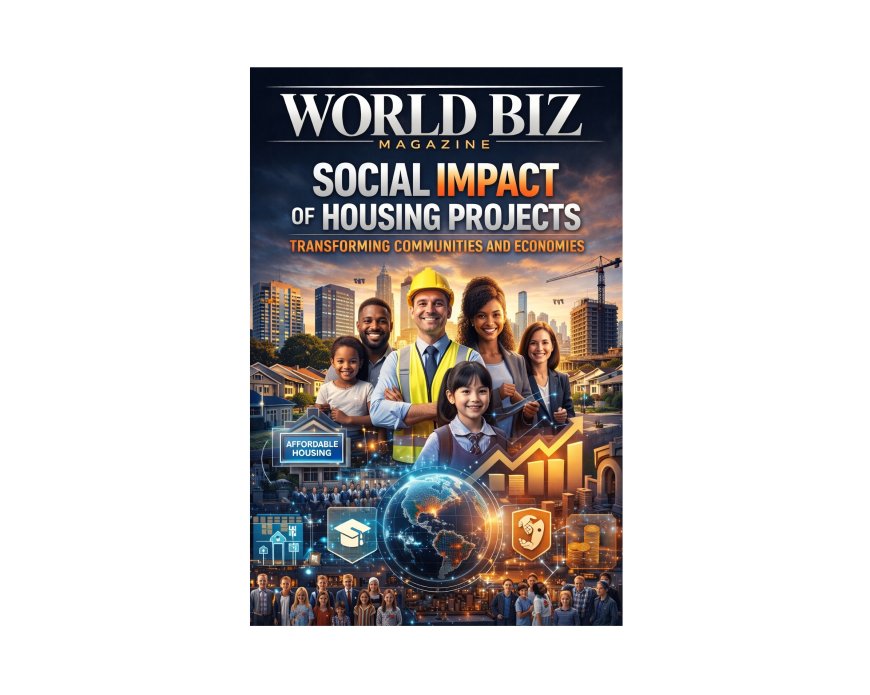
Social Impact of Housing Projects: Transforming Communities and Economies
World Biz Magazine | Global Business, Infrastructure, and Economic Insights
“World Biz Magazine delivers in-depth coverage of global industries, emerging markets, infrastructure development, and economic trends shaping the future of business worldwide”
Housing projects are more than just real estate developments they are powerful drivers of social transformation. Well-planned housing projects influence economic growth, social stability, urban development, and quality of life. Governments, urban planners, and private developers increasingly recognize that housing initiatives can reshape communities by improving living standards, reducing poverty, and creating sustainable environments.
Across the world, large-scale residential developments are playing a crucial role in addressing urbanization challenges, housing shortages, and social inequality. As cities expand and populations grow, the social impact of housing projects has become a central issue for policymakers and investors alike.
From affordable housing initiatives to smart residential communities, housing projects influence how people live, work, and interact within society.
Housing as a Foundation of Social Stability
Access to safe and affordable housing is widely recognized as a key factor in social stability. Stable housing provides individuals and families with a secure environment that supports education, employment, and community engagement.
When people have reliable housing, several social benefits emerge:
· Improved family health and well-being
· Better educational outcomes for children
· Increased employment stability
· Stronger community networks
Housing stability reduces social stress and contributes to a sense of belonging within communities.
In contrast, housing shortages or poorly planned developments can lead to overcrowding, urban poverty, and social inequality.
Economic Benefits for Local Communities
Housing projects stimulate economic activity by generating employment and supporting local industries. Construction, infrastructure development, and related services create jobs for thousands of workers.
Key Economic Impacts
Housing projects contribute to local economies through:
· Construction and engineering jobs
· Growth of retail and service industries
· Increased property values
· Expansion of local tax revenue
Large residential developments often lead to the creation of new business districts, transportation networks, and commercial zones.
For example, major housing developments frequently attract:
· supermarkets
· schools
· healthcare facilities
· entertainment centers
These developments turn residential areas into vibrant economic ecosystems.
Urban Development and Infrastructure Expansion
Housing projects are often catalysts for broader urban development. Governments frequently combine residential projects with infrastructure investments such as roads, public transportation, utilities, and digital connectivity.
Modern housing developments now incorporate:
· public parks and green spaces
· community centers
· healthcare facilities
· schools and educational institutions
This integrated approach improves urban planning and enhances the livability of cities.
Large-scale residential developments can also support smart city initiatives, where housing infrastructure is integrated with technology systems such as smart energy grids, digital connectivity, and urban monitoring systems.
Social Inclusion and Affordable Housing
Affordable housing initiatives are among the most important social policies implemented by governments worldwide. These programs aim to provide housing opportunities for low- and middle-income families who might otherwise be excluded from property markets.
Benefits of Affordable Housing Projects
Affordable housing programs help achieve several social objectives:
· Reduction of homelessness
· Support for low-income families
· Greater social mobility
· Reduction of urban inequality
Successful affordable housing projects promote social inclusion by ensuring that diverse income groups can live within the same urban areas.
However, poorly designed affordable housing developments can create segregation if communities become isolated from economic opportunities and services.
Community Development and Social Interaction
Housing projects influence how communities interact and function socially. Well-designed residential environments encourage social engagement and cooperation among residents.
Developers increasingly incorporate community-focused design elements such as:
· shared recreational spaces
· community gardens
· pedestrian-friendly streets
· cultural and social centers
These features encourage interaction between residents, helping build stronger communities and social trust.
Community-oriented housing designs also improve safety and reduce social isolation, particularly in densely populated urban environments.
Environmental and Sustainability Impacts
Modern housing projects are increasingly designed with sustainability in mind. Environmental considerations are now central to housing development strategies.
Key sustainability features include:
· energy-efficient buildings
· renewable energy integration
· water conservation systems
· green building materials
· urban green spaces
Sustainable housing projects help reduce carbon emissions and environmental impact while improving long-term living conditions.
Additionally, environmentally friendly housing projects can reduce energy costs for residents and support global climate goals.
Challenges and Social Risks
Despite their benefits, housing projects can also create social challenges if poorly managed.
Key Risks
Some potential risks associated with large housing developments include:
· displacement of existing communities
· rising property prices and gentrification
· urban congestion
· environmental degradation
Gentrification is a common concern in rapidly developing cities, where new housing developments increase property values and push lower-income residents out of traditional neighborhoods.
Governments and developers must carefully balance economic growth with social equity.
The Role of Government and Policy
Government policies play a critical role in ensuring that housing projects produce positive social outcomes.
Effective housing policies often include:
· zoning regulations
· affordable housing quotas
· infrastructure investment
· community engagement programs
Public-private partnerships have become a popular approach to housing development, combining government support with private sector investment.
These collaborations help accelerate housing construction while maintaining social responsibility standards.
Social Impact of Housing Projects - Global Comparison Chart
The chart below compares how housing projects influence society, economy, infrastructure, and communities across different regions. It highlights the main social outcomes of large residential developments and urban housing initiatives.
Global Social Impact of Housing Projects Comparison
|
Region / Country |
Housing Project Type |
Social Impact on Communities |
Economic Impact |
Infrastructure Development |
Key Social Challenges |
|
Malaysia |
Gated communities & mixed-income housing |
Improved safety, stronger neighborhood communities |
Increased property investment and job creation |
Expansion of smart city infrastructure |
Rising housing prices in urban areas |
|
Dubai (UAE) |
Luxury residential and smart city projects |
High living standards and advanced community services |
Major real estate investment and tourism growth |
Advanced transport, utilities, and smart systems |
High cost of housing for middle-income residents |
|
Thailand |
Condominium developments and urban housing |
Urban lifestyle improvements and modern housing access |
Boost in construction sector and urban retail |
Transport and urban infrastructure upgrades |
Urban congestion and affordability issues |
|
European Countries |
Affordable housing and mixed-use developments |
Social inclusion and improved living conditions |
Stable real estate markets and employment growth |
Strong public infrastructure and community facilities |
Gentrification and migration pressures |
|
Azerbaijan |
Modern residential complexes |
Urban modernization and improved housing standards |
Real estate development supporting economic diversification |
Infrastructure development in growing urban districts |
Income inequality between urban and rural areas |
|
Indonesia |
Large-scale urban housing and community-based housing |
Reduction of informal settlements and improved living conditions |
Job creation and urban economic activity |
Expansion of roads, utilities, and services |
Population density and environmental risks |
|
Uzbekistan |
Government-supported housing programs |
Increased access to modern housing |
Growing property sector and construction industry |
Development of new residential districts |
Affordability challenges in major cities |
|
Tajikistan |
Basic urban residential projects |
Gradual improvement in urban living conditions |
Local construction industry growth |
Slow infrastructure expansion |
Limited investment and modernization |
Key Social Benefits of Housing Projects
|
Impact Area |
Social Benefits |
|
Housing Stability |
Reduces homelessness and overcrowding |
|
Community Development |
Encourages social interaction and neighborhood cohesion |
|
Economic Growth |
Creates jobs and stimulates local businesses |
|
Urban Development |
Supports city expansion and infrastructure modernization |
|
Quality of Life |
Improves health, safety, and living standards |
Major Social Risks of Housing Projects
|
Risk |
Description |
|
Gentrification |
Rising property prices displacing lower-income residents |
|
Urban Congestion |
Increased population density in major cities |
|
Environmental Impact |
Construction affecting natural ecosystems |
|
Social Inequality |
Unequal access to modern housing |
Social Impact Strength Ranking
High Social Impact
Dubai
European Countries
Malaysia
Moderate Social Impact
Thailand
Indonesia
Uzbekistan
Developing Social Impact
Azerbaijan
Tajikistan
The Future of Housing and Social Impact
The future of housing development is expected to focus on sustainable, inclusive, and technology-driven communities.
Emerging trends include:
· smart residential communities
· mixed-income housing developments
· eco-friendly urban housing
· integrated transportation and housing planning
Technology will also play a significant role in shaping housing projects, with smart home systems, digital infrastructure, and AI-powered urban management becoming increasingly common.
As global urban populations continue to grow, housing projects will remain central to shaping the social and economic landscape of cities.
Key Insight
Housing projects significantly shape urban economies, social structures, and quality of life. Countries that integrate housing development with infrastructure, social services, and economic planning tend to generate the strongest positive social outcomes.
Developing economies are increasingly using housing projects as tools to reduce poverty, modernize cities, and support long-term economic growth.
Conclusion
Housing projects are powerful instruments of social change. When planned effectively, they improve living standards, stimulate economic growth, and strengthen community cohesion. By integrating affordable housing, sustainable design, and inclusive urban planning, housing developments can create long-term benefits for society.
However, achieving positive social impact requires careful planning, responsible development practices, and strong government oversight. Balancing economic growth with social equity will be essential to ensuring that housing projects contribute to resilient, inclusive, and sustainable communities around the world.
In the coming decades, housing developments will not only shape cities but also define the social fabric of modern societies.
Disclaimer
The information presented in this article is intended for informational and editorial purposes only. The analysis reflects publicly available information, industry research, and editorial insights at the time of publication.
Housing policies, urban development strategies, and social outcomes may vary significantly between countries, cities, and communities. Readers are encouraged to conduct independent research and consult relevant professionals before making investment, development, or policy decisions based on the information provided.
World Biz Magazine and its contributors are not responsible for any decisions or actions taken based on this content.
What's Your Reaction?
 Like
0
Like
0
 Dislike
0
Dislike
0
 Love
0
Love
0
 Funny
0
Funny
0
 Angry
0
Angry
0
 Sad
0
Sad
0
 Wow
0
Wow
0