













































































































































What Defines a Mega Tourism Event: Global Economic Impact and Tourism Industry Outlook
Explore what defines mega tourism events and their global economic impact, including tourism growth, infrastructure investment, and international event hosting trends.

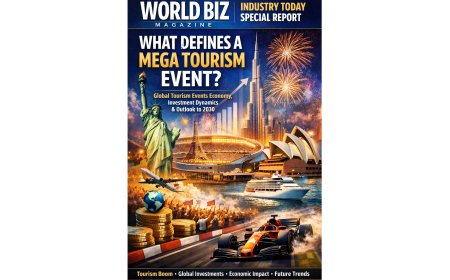
What Defines a Mega Tourism Event
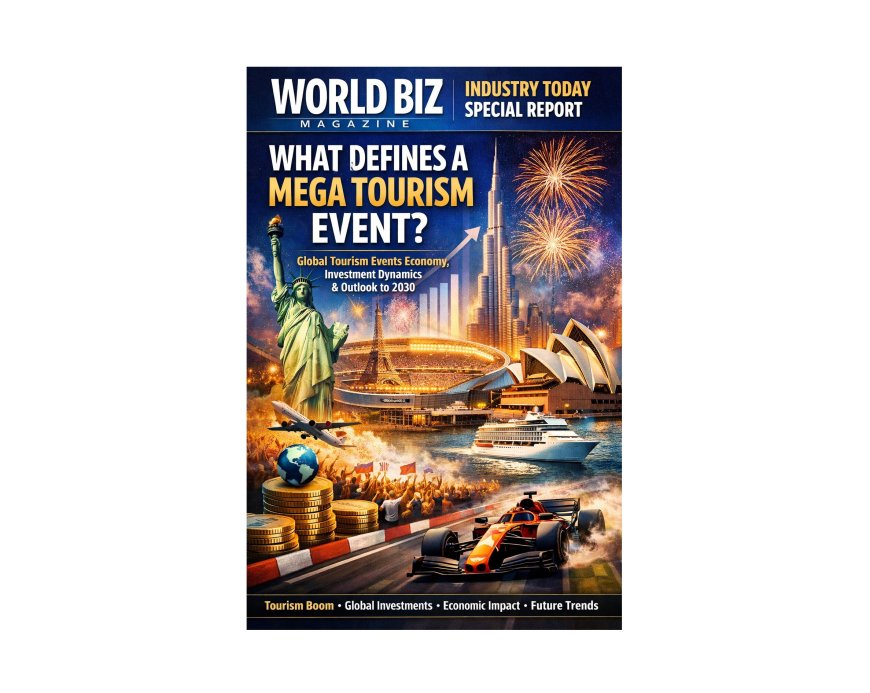
Global Tourism Events Economy, Investment Dynamics & Outlook to 2030
World Biz Magazine | Industry Today Special Report
Mega tourism events are among the most powerful drivers of global travel, infrastructure investment, and international branding. Events such as global sporting tournaments, world expos, international festivals, and large cultural gatherings attract millions of visitors, generate billions in economic activity, and reshape host cities for decades.
Governments increasingly compete to host these events because they deliver international exposure, boost tourism revenue, and stimulate infrastructure development. However, hosting mega tourism events also involves substantial financial investment, complex logistics, and political decision-making.
This World Biz Magazine Industry Today report explores what defines a mega tourism event, including global market size, key stakeholders, economic impacts, policy influence, investment trends, and industry forecasts through 2030.
What Defines a Mega Tourism Event?
A mega tourism event refers to a large-scale international gathering that attracts significant global attention, media coverage, and visitor inflows.
Typical characteristics include:
- international audience and participants
- large economic impact on host cities
- massive media broadcasting reach
- significant infrastructure investment
- multi-year planning and government involvement
Mega events often involve complex organization and can influence economic, social, cultural, and political systems within host regions.
Examples of Mega Tourism Events
Mega tourism events occur across several sectors:
Sports Events
- FIFA World Cup
- Olympic Games
- Formula 1 Grand Prix
- Cricket World Cup
Global Exhibitions
- World Expo
- International trade fairs
Cultural and Entertainment Events
- Cannes Film Festival
- Edinburgh Festival
- Rio Carnival
These events attract millions of visitors and global media audiences.
Global Events Tourism Industry Overview
Mega tourism events are part of the broader sports and events tourism sector, which has become one of the fastest-growing segments of global tourism.
Market Size
|
Sector |
Market Value |
|
Global sports tourism |
$707 billion (2025) |
|
2034 forecast |
$1.98 trillion |
The sports tourism market alone could grow rapidly as international events drive travel demand worldwide.
Similarly, the global sports events industry itself could reach $884 billion by 2033, highlighting the economic scale of major events.
Economic Impact of Mega Tourism Events
Mega tourism events generate economic activity through:
- tourism spending
- hospitality services
- transportation
- retail and entertainment
- media broadcasting rights
For example, the 2016 Rio Olympics attracted more than 500,000 international visitors and generated around $1.2 billion in tourism revenue.
Large sporting events can also boost international tourism numbers and improve a destination’s global image.
Infrastructure and Urban Development
Hosting mega events often leads to major infrastructure development:
- stadium construction
- airport expansion
- transportation upgrades
- hotel and tourism facilities
Countries frequently invest billions in preparation. For instance, the 2022 FIFA World Cup in Qatar required approximately $220 billion in infrastructure investment.
These projects aim to create long-term tourism capacity.
Key Players and Stakeholders
Mega tourism events involve multiple stakeholders.
Event Organizers
- International Olympic Committee (IOC)
- Fédération Internationale de Football Association (FIFA)
- Formula One Group
Host Governments
- national tourism boards
- city governments
- economic development agencies
Commercial Partners
- global sponsors
- media networks
- hospitality companies
These organizations coordinate complex event operations.
Political Influence and Policy Decisions
Mega tourism events are heavily influenced by politics.
Governments make strategic decisions about:
- bidding for events
- infrastructure investment
- tourism marketing campaigns
- security and logistics
Hosting mega events can also serve geopolitical objectives, helping countries strengthen international reputation and national branding.
Investment Trends
Hosting major global events requires significant investment.
Major Funding Sources
- government spending
- sovereign wealth funds
- private infrastructure investors
- global sponsors
Major events such as the Olympics and World Cup involve investments in stadiums, transportation systems, and tourism infrastructure.
Countries Gaining Mega Event Investments
Countries increasingly hosting mega tourism events include:
- United States
- Qatar
- Saudi Arabia
- United Arab Emirates
- China
These countries are investing heavily in tourism infrastructure and global event hosting.
Countries Losing Hosting Opportunities
Some countries face declining opportunities due to:
- high hosting costs
- political instability
- public opposition to large-scale spending
In several regions, voters have rejected hosting Olympic bids due to concerns about financial risks.
Tourism Demand Impact
Mega tourism events can significantly increase visitor arrivals.
Studies show that major sporting events increase international tourism demand, though the scale varies depending on the event and host destination.
Events also improve destination image and encourage repeat visits from international tourists.
Economic Risks and Challenges
Despite their benefits, mega events also involve financial risks.
Some events generate lower revenue than expected because of high infrastructure costs and operational expenses.
In some cases, hosting costs exceed revenue in the short term, though long-term tourism benefits may still emerge.
Price Inflation and Tourism Demand
Major events often increase local prices due to:
- hotel demand surges
- increased airline ticket prices
- event ticket pricing
- temporary housing demand
Local hospitality industries often benefit from higher revenue during the event period.
New Trends in Mega Tourism Events
Several trends are reshaping the industry:
Hybrid Digital Events
Global broadcasting and digital streaming extend audience reach beyond physical attendees.
Sustainable Event Planning
Cities are focusing on environmentally sustainable infrastructure.
Multi-City Hosting Models
Some mega events are now shared across multiple cities or countries to reduce costs.
Comparison with Other Tourism Segments
|
Sector |
Market Size |
|
Global tourism |
$10+ trillion |
|
Hospitality |
$5+ trillion |
|
Events tourism |
$700B+ |
|
Sports events industry |
$485B |
Mega events represent a key driver of global tourism demand.
Forecast: Mega Tourism Events Outlook to 2030
Growth Drivers
- rising international travel
- digital media broadcasting
- government tourism promotion strategies
- global sports and entertainment demand
- infrastructure investment in emerging markets
Market Forecast
|
Sector |
2030 Forecast |
|
sports tourism |
$1.2T+ |
|
global events tourism |
$900B+ |
|
mega-event hosting market |
strong growth |
Global competition to host major events is expected to intensify over the next decade.
World Biz Magazine Insights
Mega tourism events are increasingly viewed as strategic economic tools rather than simple sporting or cultural gatherings.
Countries that successfully integrate event hosting with long-term tourism infrastructure development will gain the greatest economic benefits.
The next generation of mega tourism events will likely combine global media reach, digital engagement, and sustainable urban development.
Conclusion
Mega tourism events represent one of the most powerful engines of tourism growth in the modern global economy. While hosting such events requires significant investment and careful planning, the potential benefits include increased tourism, global visibility, and long-term infrastructure improvements.
As international travel continues expanding and global audiences demand large-scale experiences, mega tourism events will remain central to tourism strategy for many nations through 2030 and beyond.
Disclaimer
The information presented in this article is for informational and educational purposes only. Market statistics, projections, and forecasts are based on publicly available industry data and analytical estimates at the time of publication. While every effort has been made to ensure accuracy, World Biz Magazine does not guarantee future market performance or investment outcomes. Readers should consult professional advisors before making financial or strategic decisions based on the information contained in this report. All trademarks and company names mentioned belong to their respective owners.
What's Your Reaction?
 Like
0
Like
0
 Dislike
0
Dislike
0
 Love
0
Love
0
 Funny
0
Funny
0
 Angry
0
Angry
0
 Sad
0
Sad
0
 Wow
0
Wow
0