















































































































































How Public-Private Partnerships Are Revolutionizing Rail Infrastructure Financing
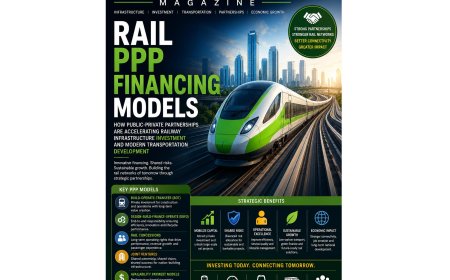
Rail PPP financing models are helping governments attract investment, improve transportation networks, and accelerate infrastructure development worldwide.

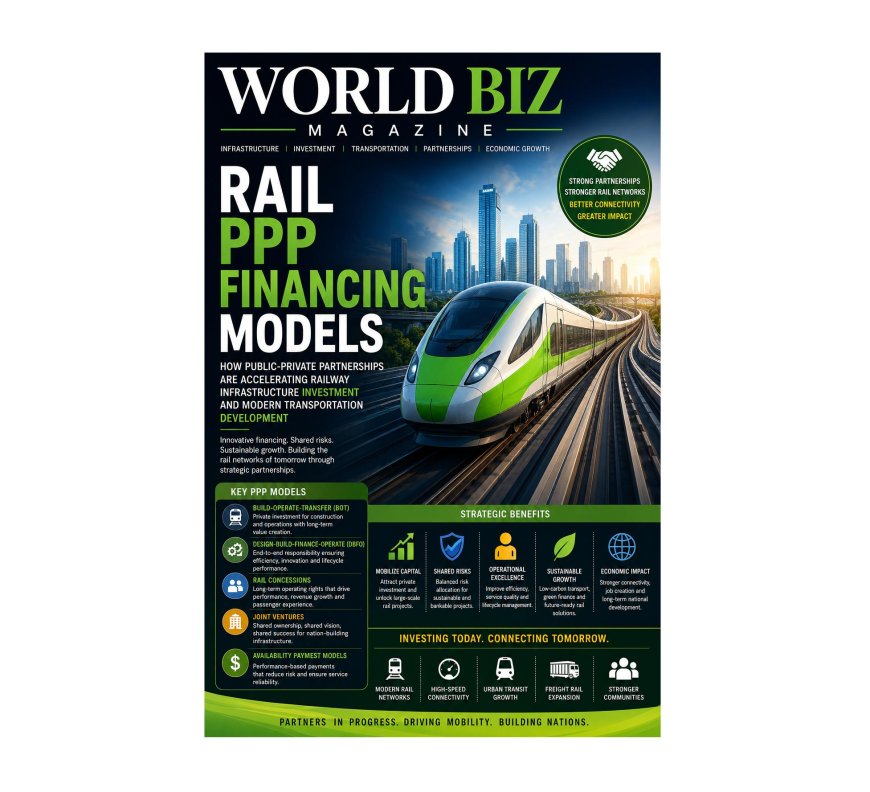
Rail PPP Financing Models
How Public-Private Partnerships Are Accelerating Railway Infrastructure Investment and Modern Transportation Development
World Biz Magazine | Rail Infrastructure, Transportation Finance & Economic Development
As nations seek to modernize transportation networks, reduce congestion, strengthen economic competitiveness, and support sustainable mobility, rail infrastructure has emerged as a strategic investment priority. However, the immense capital requirements associated with railway development are driving governments to increasingly adopt Public-Private Partnership (PPP) financing models that combine public oversight with private sector investment, expertise, and innovation.
The Growing Importance of Rail Infrastructure Investment
Railways remain one of the most efficient, sustainable, and economically valuable transportation systems in the world. They facilitate passenger mobility, support freight transportation, strengthen regional connectivity, and contribute significantly to economic development. As urbanization accelerates and sustainability goals become more important, governments are expanding investments in metro systems, commuter rail, high-speed rail, freight corridors, and intercity transportation networks.
Despite their long-term benefits, railway projects often require substantial capital expenditures, lengthy development timelines, and complex operational management. Large-scale rail projects can involve billions of dollars in investment, creating financing challenges for governments facing fiscal constraints and competing infrastructure priorities.
Public-Private Partnerships have emerged as a critical solution, enabling governments to mobilize private capital while accelerating project delivery and improving operational efficiency.
Understanding Rail PPP Financing Models
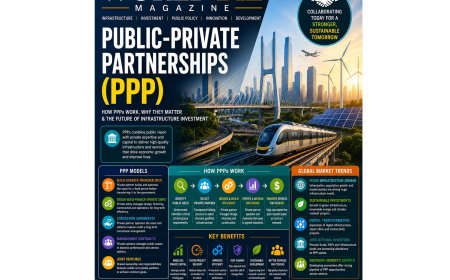
Rail PPP financing models are structured agreements between public authorities and private sector entities that share responsibilities for financing, designing, constructing, operating, maintaining, or managing railway infrastructure.
Unlike traditional public procurement models where governments fund and operate infrastructure directly, PPP structures distribute risks and responsibilities among stakeholders based on their expertise and capabilities.
The primary objective of rail PPPs is to attract private investment while ensuring that transportation infrastructure continues to serve public interests. Successful partnerships create value for governments, investors, operators, and passengers alike.
PPP arrangements vary significantly depending on project scope, financing requirements, regulatory frameworks, and policy objectives.
Why Governments Are Turning to Rail PPPs
Several factors are driving increased adoption of PPP financing in railway development. First, rail infrastructure projects often require funding levels that exceed government budget capacities. Private sector participation provides access to additional capital resources, enabling projects to move forward more quickly.
Second, private investors often bring specialized technical expertise, project management capabilities, and operational efficiencies that improve project outcomes.
Third, PPP models allow governments to transfer specific risks such as construction delays, cost overruns, and operational performance to private partners better positioned to manage them.
By leveraging both public and private sector strengths, rail PPPs can improve infrastructure delivery while reducing fiscal pressures on governments.
Build-Operate-Transfer (BOT) Models
One of the most widely used rail PPP structures is the Build-Operate-Transfer model. Under BOT arrangements, private investors finance, design, and construct railway infrastructure before operating the system for a predetermined concession period.
During the operational phase, investors recover their capital and generate returns through passenger fares, freight revenues, government availability payments, or other revenue mechanisms. At the end of the concession period, ownership of the infrastructure transfers back to the government.
BOT models are particularly suitable for metro systems, urban rail networks, commuter rail projects, and high-speed rail developments where long-term revenue potential supports private investment participation.
Design-Build-Finance-Operate (DBFO) Structures
The Design-Build-Finance-Operate model represents a comprehensive PPP framework that integrates multiple project responsibilities into a single contractual arrangement.
Private partners assume responsibility for project design, construction, financing, and operations, while governments establish performance requirements and maintain regulatory oversight.
DBFO structures create strong incentives for lifecycle optimization because investors are responsible not only for construction but also for long-term operational performance. This approach often results in higher-quality infrastructure and more efficient asset management.
Many modern rail PPP projects utilize DBFO models to maximize efficiency and accountability throughout the project lifecycle.
Availability Payment Models
In some rail projects, passenger demand uncertainty may discourage private investment based solely on fare revenues. Availability payment models address this challenge by providing fixed government payments to private operators based on infrastructure performance and service availability.
Under this structure, investors receive payments if the railway system meets agreed performance standards related to safety, reliability, maintenance, and service quality.
Availability payments reduce revenue risk while encouraging private sector participation in projects that deliver significant public benefits but may not generate sufficient commercial returns independently.
This model is increasingly common in socially important transportation projects where accessibility and public service objectives are prioritized.
Rail Concession Agreements
Long-term rail concessions represent another important PPP financing approach. Under concession agreements, private operators receive rights to manage, maintain, upgrade, and operate railway infrastructure for an extended period.
Concessionaires generate revenue through fares, freight services, station operations, commercial development, advertising, and ancillary services. Governments retain ownership of the underlying infrastructure while benefiting from private sector investment and operational expertise.
Concession models are particularly effective for modernizing existing rail networks and improving service performance without requiring full public financing.
Joint Venture Financing Structures
Joint ventures create shared ownership arrangements between governments and private investors. These structures align interests while enabling both parties to participate in decision-making and financial returns.
Governments may contribute land, infrastructure assets, regulatory support, or funding, while private partners provide capital, technology, management expertise, and operational capabilities.
Joint ventures are often used in large-scale rail developments where long-term collaboration and strategic alignment are essential for project success.
Revenue Sources Supporting Rail Investments
Successful rail PPP projects depend on diversified revenue streams capable of supporting long-term financial sustainability. While passenger fares remain important, modern rail financing strategies increasingly incorporate additional income sources.
Potential revenue streams include:
- Passenger ticket sales
- Freight transportation services
- Government subsidies
- Availability payments
- Transit-oriented development revenues
- Retail and commercial leasing
- Advertising and sponsorships
- Real estate development opportunities
- Station management revenues
- Parking and mobility services
Diversified revenue structures reduce financial risk and improve project bankability for investors.
Transit-Oriented Development as a Financing Tool
Transit-Oriented Development (TOD) has become an increasingly important component of rail PPP financing strategies. Rail stations often stimulate significant commercial and residential development in surrounding areas, creating opportunities for value capture.
Governments and investors can generate additional revenues through land development rights, commercial property investments, retail spaces, office developments, and mixed-use projects integrated with transportation infrastructure.
TOD strategies enhance project economics while promoting sustainable urban development and increased public transit utilization.
Risk Allocation in Rail PPP Projects
Effective risk allocation is one of the most important factors determining PPP success. Risks should be assigned to the party best equipped to manage them.
Private partners often assume responsibility for:
- Construction risks
- Cost overruns
- Operational performance
- Maintenance obligations
- Technology implementation
Governments typically retain responsibility for:
- Regulatory frameworks
- Land acquisition
- Policy decisions
- Force majeure events
- Certain demand-related risks
Balanced risk-sharing arrangements create incentives for efficiency while protecting long-term project viability.
The Role of Institutional Investors
Institutional investors are playing an increasingly important role in rail PPP financing. Pension funds, infrastructure funds, sovereign wealth funds, insurance companies, and development finance institutions are actively investing in transportation infrastructure.
These investors are attracted by the stable, long-term cash flows often associated with rail projects. As infrastructure becomes recognized as a distinct investment asset class, institutional participation is expected to continue expanding.
The availability of long-term capital from institutional investors is helping close global infrastructure funding gaps while supporting transportation modernization initiatives.
Sustainability and Green Finance
Environmental sustainability is increasingly influencing rail investment strategies. Rail transportation generally produces lower emissions than road and air transportation, making it a key component of sustainable mobility policies.
Many rail PPP projects now qualify for green financing instruments such as green bonds, sustainability-linked loans, climate finance programs, and environmental investment funds.
Governments and investors are incorporating environmental performance targets into financing agreements while leveraging sustainability objectives to attract capital and improve project economics.
Global Trends in Rail PPP Development
Rail PPP activity is expanding across developed and emerging markets. Asia continues to lead large-scale railway investments driven by urbanization, economic growth, and regional connectivity initiatives. Europe remains focused on sustainable transportation modernization, while the Middle East is investing heavily in rail infrastructure to support economic diversification and regional integration.
Africa and Latin America are increasingly utilizing PPP structures to develop rail corridors that support trade, industrial development, and economic growth. Across all regions, governments are recognizing that PPP models can accelerate infrastructure delivery while enhancing efficiency and financial sustainability.
World Biz Magazine Insights
Rail PPP financing models are becoming essential tools for addressing the growing demand for transportation infrastructure in an increasingly connected and urbanized world. By combining public oversight with private capital, operational expertise, and innovative financing structures, PPPs enable governments to accelerate rail development while maintaining fiscal responsibility. The most successful rail partnerships are those that align long-term economic, social, and environmental objectives while delivering sustainable value for all stakeholders.
Conclusion
Public-Private Partnership financing models are transforming the future of rail infrastructure development. Through innovative financing structures, risk-sharing mechanisms, diversified revenue strategies, and private sector participation, governments can accelerate railway modernization and expand transportation capacity. As rail systems become increasingly important for sustainable mobility, economic competitiveness, and regional connectivity, PPP models will continue to play a critical role in shaping the next generation of global transportation infrastructure.
Disclaimer
This article is published by World Biz Magazine for informational and educational purposes only. The content reflects general industry perspectives regarding railway infrastructure, transportation finance, public-private partnerships, and investment strategies. It does not constitute financial, legal, engineering, investment, or policy advice. Readers should conduct independent research and consult qualified professionals before making decisions related to infrastructure financing, PPP agreements, transportation investments, or public policy matters. World Biz Magazine assumes no responsibility for actions taken based on the information presented in this publication.
What's Your Reaction?
 Like
1
Like
1
 Dislike
0
Dislike
0
 Love
0
Love
0
 Funny
0
Funny
0
 Angry
0
Angry
0
 Sad
0
Sad
0
 Wow
0
Wow
0