




























































































































































































Resort Destination Economics: Global Tourism Investment and Market Outlook to 2035
A World Biz Magazine analysis of resort destination economics, covering tourism infrastructure investment, hospitality market growth, and global tourism trends.

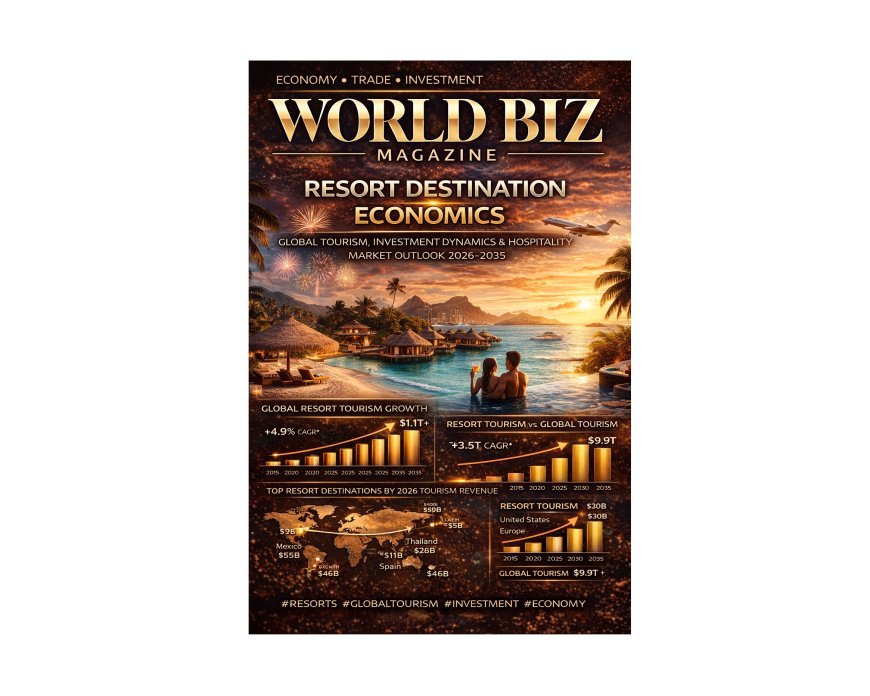
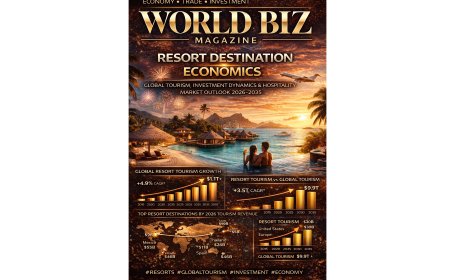
Resort Destination Economics
Global Tourism, Investment Dynamics & Hospitality Market Outlook to 2035
World Biz Magazine | Industry Today Special Report
Resort destinations are among the most powerful drivers of the global tourism economy. From tropical beach resorts and mountain retreats to luxury island developments and integrated tourism cities, resort destinations combine hospitality, real estate, infrastructure, and entertainment into a single economic ecosystem.
These destinations generate revenue through accommodation, tourism services, food and beverage, retail, entertainment, transportation, and real estate development. Governments increasingly view resort development as a strategic tool for attracting foreign investment, boosting employment, and strengthening national tourism industries.
This World Biz Magazine Industry Today report analyzes the economics of resort destinations, including market size, investment trends, supply-demand dynamics, policy impacts, political influence, price inflation, and industry forecasts through 2035.
Global Resort Tourism Industry Overview
Resort destinations operate within the broader tourism and hospitality ecosystem.
Key components of resort economies include:
- luxury hotels and resorts
- vacation properties and second homes
- tourism infrastructure
- entertainment and leisure services
- transportation and logistics
The global tourism industry is one of the largest economic sectors worldwide.
Global Tourism Market Size
|
Year |
Market Size |
|
2024 |
$9.9 trillion |
|
2026 |
$10.7 trillion |
|
2030 (forecast) |
$12.5 trillion |
|
2035 (forecast) |
$15 trillion+ |
Resort destinations represent one of the fastest-growing segments of the tourism industry.
What Defines a Resort Destination Economy?
A resort destination economy refers to regions where tourism is the primary driver of economic activity.
Examples include:
- island resorts
- beach tourism regions
- mountain ski destinations
- integrated entertainment resorts
- eco-tourism destinations
These economies rely heavily on tourism spending and hospitality infrastructure.
Major Global Resort Destinations
Several regions dominate the global resort tourism market.
Asia-Pacific
- Bali (Indonesia)
- Phuket (Thailand)
- Maldives
- Langkawi (Malaysia)
Middle East
- Dubai
- Abu Dhabi
- Red Sea tourism projects (Saudi Arabia)
Europe
- Mediterranean coastal resorts
- Alpine ski resorts
- Greek island tourism destinations
Americas
- Caribbean resort islands
- Mexican Riviera tourism zones
- Florida coastal resorts
These destinations attract millions of tourists annually and generate billions in tourism revenue.
Global Resort Market Size
|
Segment |
Market Value |
|
Luxury resorts |
$200B+ |
|
Integrated resort developments |
$150B+ |
|
Resort real estate |
$400B+ |
Resort tourism contributes significantly to the broader hospitality industry.
Key Industry Players
Major hospitality groups and developers dominate resort destination markets.
Leading resort operators include:
- Marriott International
- Hilton Worldwide
- Hyatt Hotels Corporation
- Accor Group
- InterContinental Hotels Group
These companies operate large networks of resort properties worldwide.
Investment Trends in Resort Destinations
Resort development attracts significant global investment due to high tourism demand and long-term real estate value.
Major Investors
- sovereign wealth funds
- private equity firms
- hospitality companies
- global real estate developers
Large-scale tourism infrastructure projects often involve billions of dollars in investment.
Mega Resort Development Projects
Several massive resort developments are reshaping global tourism.
Examples
- Saudi Arabia’s Red Sea tourism projects
- UAE luxury resort islands
- Southeast Asian integrated resort developments
- Caribbean luxury tourism expansion
These projects combine hospitality, real estate, and entertainment industries.
Political Influence and Tourism Policy
Government policies play a critical role in shaping resort destination economies.
Key Policy Areas
- tourism visas
- land development regulations
- environmental protection laws
- infrastructure investment
- foreign investment incentives
Countries that actively promote tourism development often experience faster growth in resort markets.
Countries Gaining Resort Investment
Several countries are rapidly expanding their resort tourism industries.
High Growth Markets
- Saudi Arabia
- United Arab Emirates
- Thailand
- Indonesia
- Vietnam
These countries are investing heavily in tourism infrastructure.
Countries Losing Tourism Investment
Some destinations experience declining resort investment due to economic or political factors.
Examples include:
- regions with political instability
- destinations with environmental restrictions
- markets facing tourism saturation
Investors tend to favor destinations with strong tourism growth potential.
Resort Real Estate Economics
Resort destinations often combine hospitality with real estate development.
Revenue Sources
- hotel accommodation
- vacation home sales
- timeshare properties
- tourism services
- entertainment and retail
Luxury resort real estate can significantly increase property values in tourism destinations.
Price Inflation in Resort Tourism
Resort pricing has increased over the past decade due to:
- rising construction costs
- higher labor expenses
- increased tourism demand
- luxury travel trends
Price Trend (2015-2025)
|
Segment |
Price Increase |
|
Luxury resorts |
40-50% |
|
vacation rentals |
30-40% |
|
resort real estate |
35-60% |
Premium tourism experiences continue to command high prices.
Emerging Trends in Resort Destinations
Several major trends are reshaping resort economics.
Luxury Tourism
High-net-worth travelers are driving demand for ultra-luxury resorts.
Sustainable Tourism
Eco-friendly resorts and sustainable tourism practices are becoming increasingly important.
Digital Nomad Destinations
Some resort destinations are attracting remote workers seeking long-term stays.
Integrated Tourism Cities
Mega tourism developments combine resorts, entertainment, and residential communities.
Comparison with Other Tourism Sectors
|
Sector |
Market Size |
|
Global tourism |
$10+ trillion |
|
Hospitality |
$5+ trillion |
|
Resort tourism |
$750B+ |
|
Luxury resorts |
$200B+ |
Resort destinations represent a major segment of global tourism revenue.
Forecast: Resort Tourism Outlook to 2035
Key Growth Drivers
- rising global tourism demand
- expanding middle-class travel markets
- luxury tourism expansion
- government tourism development policies
- infrastructure investment in emerging markets
Market Forecast
|
Segment |
2035 Forecast |
|
Resort tourism |
$1 trillion+ |
|
luxury resorts |
$350B |
|
resort real estate |
$800B |
Resort destinations will continue expanding as global tourism grows.
World Biz Magazine Insights
Resort destinations are increasingly becoming strategic economic assets for national governments and global investors.
Countries investing heavily in tourism infrastructure will likely dominate future resort markets.
Successful resort destinations will focus on:
- sustainable tourism development
- luxury hospitality experiences
- integrated tourism ecosystems
Conclusion
Resort destination economies represent one of the most dynamic sectors within the global tourism industry. By combining hospitality, real estate, and tourism services, resort destinations generate significant economic value for both governments and investors.
As global tourism continues to expand and luxury travel demand increases, resort destinations will play an increasingly important role in the global economy.
By 2035, resort tourism could exceed $1 trillion in annual economic value, making it one of the most influential segments of the global hospitality industry.
Disclaimer
The information presented in this article is intended for informational and educational purposes only. Market statistics, projections, and forecasts are based on publicly available industry data and analytical estimates at the time of publication. While every effort has been made to ensure accuracy, World Biz Magazine does not guarantee future market performance or investment outcomes. Readers should consult professional advisors before making financial or strategic decisions based on the information contained in this report. All trademarks and company names mentioned remain the property of their respective owners.
What's Your Reaction?
 Like
0
Like
0
 Dislike
0
Dislike
0
 Love
0
Love
0
 Funny
0
Funny
0
 Angry
0
Angry
0
 Sad
0
Sad
0
 Wow
0
Wow
0