




















































































































































































Why Jordan Is Emerging as a Safe Haven for Investors During Regional Conflict

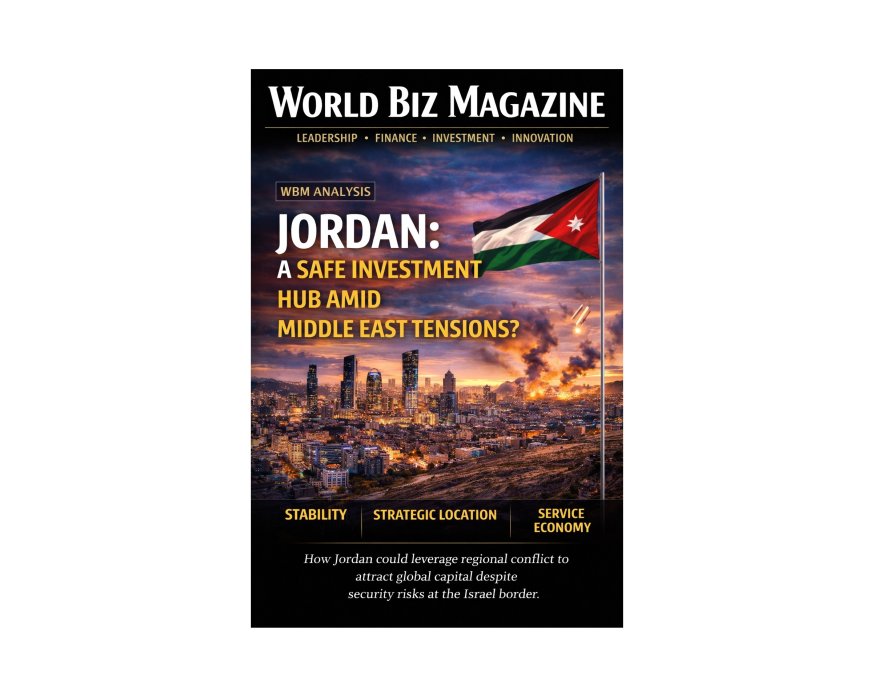
Jordan: Stability at the Edge - A Strategic Investment Haven Amid Middle East Tensions
How Jordan Can Capture Capital Flows, Strengthen Its Investment Case, and Manage Border Risks
World Biz Magazine | Global Investment, Geopolitics & Emerging Markets Intelligence
As geopolitical tensions escalate across the Middle East particularly involving Iran and the wider Gulf capital is shifting away from perceived risk zones toward stable, neutral, and well-governed economies.
Positioned at the crossroads of the Levant, Jordan is emerging as a defensive investment destination not for speculative returns, but for capital preservation, operational continuity, and regional access.
This World Biz Magazine deep analysis examines how Jordan can benefit from regional instability, what policy moves are critical, and how investors should evaluate opportunity versus risk especially given Jordan’s border proximity to Israel.
Why Jordan Can Benefit in a Conflict Scenario
A Reputation for Stability in a Volatile Neighborhood
Jordan’s most valuable asset is predictable stability:
- Longstanding political continuity under the monarchy
- Strong internal security framework
- Strategic alliances with Western and Gulf partners
In times of crisis, investors prioritize:
- Safety of capital
- Operational predictability
Jordan becomes a regional “safe operating base”
Strategic Geographic Position
Jordan borders:
- Israel
- Iraq
- Saudi Arabia
- Syria
While this creates risk (discussed later), it also provides:
- Access to multiple regional markets
- Position as a logistics and coordination hub
Companies relocating from high-risk zones can rebase operations in Amman
Service-Based Economy Advantage
Unlike oil-dependent economies, Jordan’s strengths lie in:
- Financial services
- IT and outsourcing
- Education and healthcare
These sectors are:
- Less exposed to physical infrastructure risk
- More resilient in conflict scenarios
Jordan becomes ideal for:
- Regional headquarters
- Back-office operations
Investment Environment & Policies
Business Climate
Jordan has made steady improvements in its investment environment:
- Simplified company registration processes
- Digitalization of government services
- Investment-friendly regulatory reforms
The government actively promotes:
- Foreign direct investment (FDI)
- SME growth
- Technology sector expansion
Incentives & Economic Zones
Jordan offers:
- Tax incentives in development zones
- Customs exemptions
- Sector-specific incentives (IT, tourism, healthcare)
Key zones:
- Aqaba Special Economic Zone (ASEZ)
- Development zones across the country
Designed to attract:
- Logistics
- Manufacturing
- Export-oriented businesses
Ease of Doing Business
While not top-tier globally, Jordan provides:
- Transparent processes compared to regional peers
- Relatively efficient licensing systems
Particularly attractive for:
- Small to mid-sized investors
- Regional expansion strategies
Why Investors Should Consider Jordan
Stability Over Speculation
Jordan is not a “boom market” it is a capital protection market.
Ideal for:
- Wealth preservation
- Low-volatility investments
Regional Base for Operations
Companies can:
- Operate in Jordan
- Serve wider Middle East markets
Especially useful during instability
Skilled Workforce
Jordan offers:
- Educated, English-speaking talent
- Strong IT and service sector workforce
Lower Entry Costs vs Gulf
Compared to Dubai or Doha:
- Lower operational costs
- Affordable real estate
Political & Economic Landscape
Jordan maintains:
- Stable governance under the monarchy
- Strong diplomatic relations with:
- Western countries
- Gulf states
This ensures:
- Continued economic support
- Policy continuity
Critical Risk Analysis: Border with Israel
Geopolitical Proximity Risk
Jordan shares a border with Israel, making it:
- Vulnerable to spillover tensions
- Sensitive to regional escalation
Key concerns:
- Refugee flows
- Security incidents
- Trade disruptions
Perception Risk
Even if Jordan remains stable:
- Investors may perceive it as “near conflict”
- This can temporarily reduce inflows
Economic Dependency Risk
Jordan relies on:
- External aid
- Regional trade
Conflict could disrupt:
- Trade routes
- Investment flows
Tourism Sensitivity
Tourism is a key sector:
- Highly sensitive to regional instability
- Immediate impact during conflict periods
Broader Challenges
Limited Natural Resources
- No major oil reserves
- Reliance on imports
Fiscal Pressure
- Public debt levels
- Budget constraints
Market Size Limitations
- Smaller domestic market
- Limited consumer base
Strategic Steps Jordan Must Take (CRITICAL)
Position as “Neutral Safe Hub”
- Market itself globally as:
- Stable
- Neutral
- Business-friendly
Strengthen Investor Confidence
- Enhance legal protections
- Improve dispute resolution systems
Expand Economic Zones
- Offer:
- Zero-tax incentives
- Fast-track approvals
Focus on Services & Digital Economy
- Scale:
- IT outsourcing
- Fintech
- Remote services
Enhance Security Communication
- Actively communicate:
- Stability
- Security measures
Perception management is key
Future Outlook
Short-Term (0-2 Years)
- Increased attention as a safe base
- Moderate capital inflow
Medium-Term (3-5 Years)
- Growth in:
- Services sector
- Regional headquarters relocation
Long-Term (5-10 Years)
- Potential to become:
- A regional service hub
- A stability anchor economy
Strategic Insight
Jordan’s strength is not in competing with:
- UAE (scale)
- Qatar (capital)
But in offering:
- Stability
- Reliability
- Operational continuity
Final World Biz Magazine Insight
“In times of conflict, the most valuable asset is not growth but certainty. Jordan’s quiet strength lies in being the region’s most reliable platform for continuity.”
Final Conclusion
In a Middle East conflict scenario:
Jordan’s Role:
- A defensive investment destination
Key Strengths:
- Stability
- Skilled workforce
- Strategic location
Key Risks:
- Border proximity to Israel
- Economic limitations
Bottom Line:
Jordan represents a low-risk, moderate-return environment, ideal for investors prioritizing security, continuity, and regional positioning over aggressive growth.
Disclaimer:
This publication by World Biz Magazine is intended for informational, analytical, and educational purposes only. The content reflects current geopolitical and economic conditions, which are subject to rapid change and uncertainty. The analysis presented does not constitute financial, investment, legal, or professional advice.
Readers are strongly advised to conduct independent research and consult with licensed financial advisors, legal professionals, or investment consultants before making any investment decisions. While every effort has been made to ensure accuracy and reliability, World Biz Magazine does not guarantee the completeness, accuracy, or future performance of any data, projections, or opinions expressed.
World Biz Magazine shall not be held liable for any direct or indirect losses arising from the use of this information. Investments in emerging and geopolitically sensitive regions involve inherent risks, including political instability, regulatory changes, currency fluctuations, and market volatility.
What's Your Reaction?
 Like
0
Like
0
 Dislike
0
Dislike
0
 Love
0
Love
0
 Funny
0
Funny
0
 Angry
0
Angry
0
 Sad
0
Sad
0
 Wow
0
Wow
0