







































































































































































































Global Natural Gas Markets and Industrial Competitiveness in a Time of War
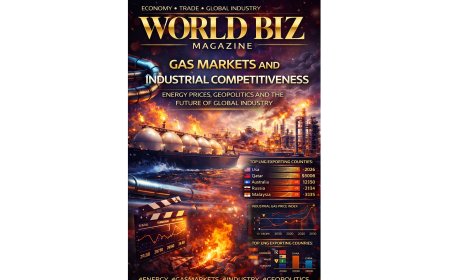
A World Biz Magazine analysis of natural gas markets, industrial energy costs, and global competitiveness during the 2026 energy crisis.

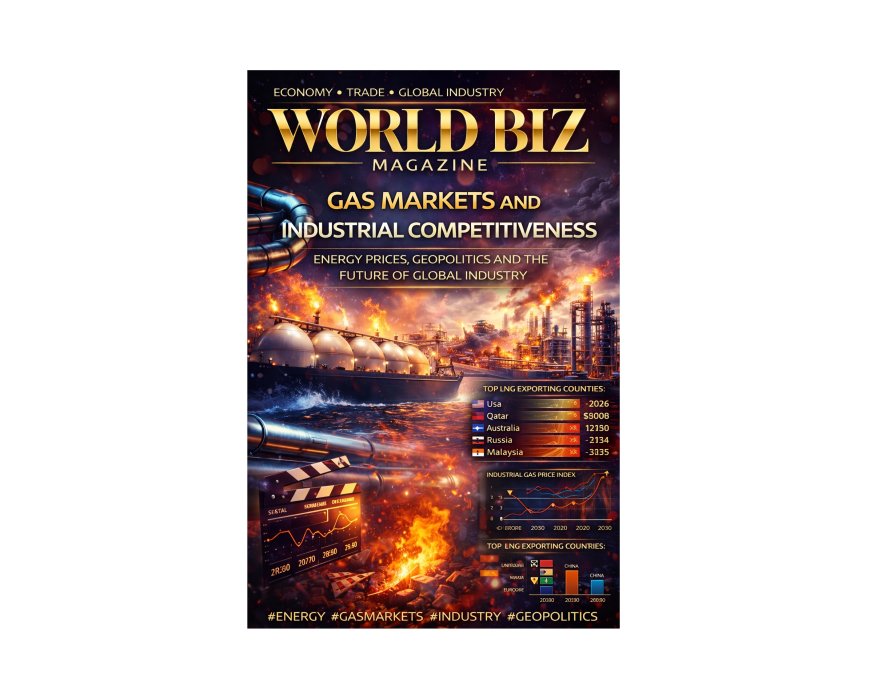
Gas Markets and Industrial Competitiveness
Energy Prices, Geopolitics and the Future of Global Industry
World Biz Magazine | Industry Today Special Report
Natural gas markets have become one of the most strategic components of the global industrial economy. Gas fuels power plants, heats factories, and serves as a critical feedstock for industries such as steel, chemicals, fertilizers, and manufacturing.
In recent years, geopolitical conflicts, supply disruptions, and energy transitions have dramatically reshaped gas markets. The Russia-Ukraine war, tensions in the Middle East, and competition for LNG supplies have created volatile gas prices and major shifts in industrial competitiveness across regions.
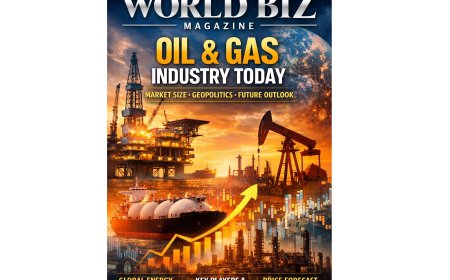
This World Biz Magazine Industry Today report examines global gas markets, their impact on industrial competitiveness, and the evolving risks and opportunities through 2030.
Global Gas Market Overview
Natural gas is one of the most widely used energy sources globally.
Major Uses of Natural Gas
- power generation
- industrial heating
- chemical feedstock (ammonia, fertilizers)
- residential heating
- LNG export markets
The global gas industry forms a core part of the broader energy system.
Global Gas Market Size
|
Year |
Market Value |
|
2015 |
$900B |
|
2020 |
$1.2T |
|
2025 |
$1.8T |
|
2030 (forecast) |
$2.3T+ |
The LNG market alone is expanding rapidly as countries diversify supply sources.
Key Gas Producing Countries
The global gas market is dominated by several major producers.
Largest Producers
|
Country |
Production Strength |
|
United States |
shale gas production |
|
Russia |
pipeline gas exports |
|
Qatar |
LNG exports |
|
Iran |
large reserves |
|
China |
domestic production growth |
The United States has emerged as the world’s largest LNG exporter, reshaping global supply.
Key Gas Exporting Regions
Global gas trade flows through both pipelines and LNG shipping routes.
Major Export Regions
- United States (LNG)
- Qatar (LNG)
- Russia (pipeline & LNG)
- Australia (LNG)
- Norway (pipeline to Europe)
New LNG infrastructure is expected to expand global gas supply significantly over the next decade.
Gas Prices and Industrial Competitiveness
Energy costs directly affect industrial competitiveness.
Industries most dependent on gas include:
- chemicals
- fertilizers
- aluminum
- steel
- glass manufacturing
The surge in gas prices during recent energy crises significantly increased industrial costs.
For example, rising gas prices pushed European ammonia production costs three times higher than global averages during the energy crisis, weakening competitiveness.
Industrial Impact of High Gas Prices
Energy-intensive industries are extremely sensitive to gas prices.
Industrial Consequences
- factory shutdowns
- reduced production capacity
- relocation of manufacturing
- higher product prices
European industries have struggled with higher energy prices compared with competitors such as the United States and China.
Current Market Situation: War and Energy Disruptions (Feb-March 2026)
In early 2026, geopolitical tensions have again shaken global gas markets.
Middle East Conflict Impact
The escalation of conflict involving Iran has disrupted energy supply routes and pushed global energy prices higher.
One of the most critical risks is disruption in the Strait of Hormuz, a key global energy shipping route. The conflict has pushed gas prices sharply higher and created supply uncertainty.
Analysts warn that extended conflict could increase inflation and slow economic growth globally.
Industrial Disruptions in 2026
The ripple effects of gas supply disruptions are already being felt.
For example:
- industrial gas supplies in some regions of India have been cut by up to 50%, forcing factories to reduce production.
- chemical and textile manufacturers are operating at reduced capacity due to supply shortages.
These disruptions demonstrate the vulnerability of global industry to energy shocks.
Russia-Europe Gas Conflict
The Russia-Ukraine war continues to reshape European gas markets.
Europe has reduced dependence on Russian gas, but tensions remain high.
Russia has warned that it could redirect gas supplies away from Europe as geopolitical tensions escalate.
Meanwhile, the European Union plans to phase out Russian gas imports by 2026-2027, further reshaping the market.
LNG Market Expansion
Liquefied Natural Gas (LNG) is becoming the dominant global gas trade mechanism.
Major LNG suppliers include:
- United States
- Qatar
- Australia
- Russia
Global LNG supply capacity could increase dramatically over the next decade as new projects come online.
This expansion may help stabilize gas prices in the long term.
Gas Price Trends (2015-2026)
|
Period |
Market Trend |
|
2015-2019 |
stable prices |
|
2020 |
demand collapse during pandemic |
|
2022 |
energy crisis after Russia invasion |
|
2023-2024 |
extreme volatility |
|
2025 |
partial stabilization |
|
2026 |
geopolitical price surge |
Price volatility remains significantly higher than pre-2019 levels.
Global Competitiveness Gap
Energy prices differ dramatically across regions.
Industrial Gas Price Comparison
|
Region |
Relative Cost |
|
United States |
lowest (shale gas) |
|
China |
moderate |
|
Europe |
highest |
At peak crisis levels, European gas prices were more than five times higher than US prices, severely affecting industrial competitiveness.
Countries Gaining Industrial Advantage
Countries with cheaper energy are gaining industrial investment.
Winners
- United States (shale gas advantage)
- China (large industrial ecosystem)
Lower energy costs attract manufacturing and chemical production.
Countries Losing Competitiveness
Regions facing high energy costs risk losing industrial capacity.
At-Risk Regions
- Europe
- Japan
- South Korea
High energy prices are driving some companies to relocate production to cheaper energy markets.
Future Energy Transition
While natural gas remains important, the world is gradually transitioning toward alternative energy sources.
Emerging Energy Alternatives
- hydrogen
- renewable energy
- nuclear power
- electrification of industry
However, gas is expected to remain a critical transition fuel for decades.
Market Outlook to 2030
Key Drivers
- LNG supply expansion
- geopolitical tensions
- energy transition policies
- industrial demand growth
- climate regulations
Price Forecast
Analysts expect gas prices to gradually decline as new LNG supply enters the market, potentially reducing European gas prices by nearly half by 2030.
Key Industry Beneficiaries
Several sectors benefit from gas market dynamics.
Beneficiaries
- LNG exporters
- pipeline infrastructure companies
- shipping companies
- defense industries during geopolitical tensions
Energy companies remain among the largest global investors.
World Biz Magazine Insights
The gas market has evolved into a geopolitical battlefield where energy security, industrial competitiveness, and national economic strategies intersect.
Countries with access to cheap and stable energy supplies will continue attracting industrial investment, while high-cost regions risk deindustrialization.
The next decade will likely see a combination of LNG expansion, geopolitical competition, and energy transition policies shaping the global gas market.
Conclusion
Natural gas markets remain central to the global industrial economy. While the energy transition toward renewables is underway, gas will continue playing a crucial role in powering industries and stabilizing energy systems.
However, geopolitical conflicts, supply disruptions, and price volatility pose ongoing risks.
As global economies adapt to these challenges, energy security and competitive energy pricing will remain key determinants of industrial success through 2030.
Disclaimer
The information presented in this article is for informational and educational purposes only. Market statistics, projections, and industry insights are based on publicly available research and analytical estimates at the time of publication. While every effort has been made to ensure accuracy, World Biz Magazine does not guarantee future market performance or investment outcomes. Readers should consult professional advisors before making financial or strategic decisions based on the information contained in this report. All trademarks and company names mentioned belong to their respective owners.
What's Your Reaction?
 Like
0
Like
0
 Dislike
0
Dislike
0
 Love
0
Love
0
 Funny
0
Funny
0
 Angry
0
Angry
0
 Sad
0
Sad
0
 Wow
0
Wow
0