



























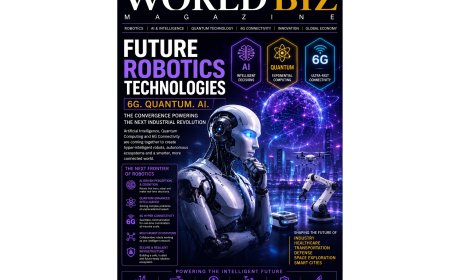












































































































































Robot Control Systems: The Brain of Modern Robotics and Automation
A World Biz Magazine report explaining robot control systems, including robotics software, motion control technologies, and AI-powered automation.

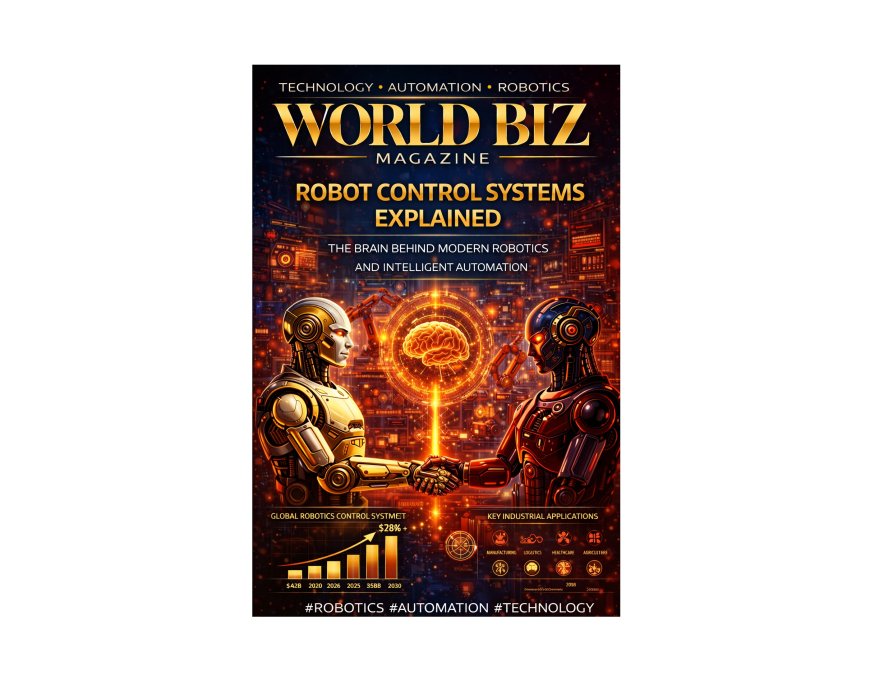
Robot Control Systems Explained
The Brain Behind Modern Robotics and Intelligent Automation
World Biz Magazine | Robotic Technologies Special Report
Robots are rapidly transforming industries worldwide, from manufacturing plants and logistics warehouses to healthcare systems and autonomous transportation. While robotic hardware such as sensors, actuators, and mechanical structures receive much attention, the real intelligence of robotic machines lies in their control systems.
Robot control systems act as the central nervous system of modern robots, allowing machines to interpret sensor data, execute movements, adapt to changing environments, and perform complex tasks with precision. As robotics technology advances, control systems are becoming increasingly sophisticated, incorporating artificial intelligence, real-time computing, and advanced algorithms.
This World Biz Magazine Robotic Technologies report explains robot control systems, their architecture, key technologies, industrial applications, major companies developing control platforms, and the future outlook for intelligent robotics control technologies through 2035.
What Is a Robot Control System?
A robot control system is the combination of hardware and software that manages a robot's movement, decision-making, and interaction with its environment.
Control systems perform several critical functions:
· interpreting sensor input
· controlling robot motion
· managing task execution
· monitoring system performance
· communicating with external devices or networks
Without control systems, robots would be unable to operate autonomously or perform complex tasks.
Core Components of Robot Control Systems
Robot control systems consist of several essential components.
Controller
The robot controller is the main computing unit that processes instructions and coordinates robotic actions.
Sensors
Sensors collect information about the robot's environment, including position, temperature, pressure, and object detection.
Actuators
Actuators convert control signals into mechanical movement, enabling robots to move arms, wheels, or other components.
Software Algorithms
Control algorithms determine how robots react to sensor input and execute tasks.
Communication Interfaces
Robots communicate with other machines, industrial networks, and cloud systems through communication modules.
Types of Robot Control Systems
Different types of control systems are used depending on the application and complexity of the robot.
Open-Loop Control
In open-loop systems, the robot executes commands without feedback from sensors.
These systems are simple but less accurate.
Closed-Loop Control
Closed-loop control systems use feedback from sensors to continuously adjust robot movements and improve precision.
Most modern robots use closed-loop systems.
Adaptive Control
Adaptive control systems modify robot behavior based on changing conditions in the environment.
Intelligent Control
Advanced robots use AI-powered control systems capable of learning and optimizing performance over time.
Motion Control and Path Planning
One of the most critical tasks of robot control systems is managing movement.
Motion Control Functions
· trajectory planning
· velocity control
· force control
· collision avoidance
Advanced control systems ensure that robotic movements are smooth, precise, and safe.
Robot Programming and Control Software
Control systems rely heavily on software programming.
Common Programming Methods
· teach pendant programming
· offline programming using simulation software
· AI-driven autonomous programming
Modern robots increasingly use software platforms that allow engineers to simulate and optimize robotic operations before deployment.
Artificial Intelligence in Robot Control
Artificial intelligence is revolutionizing robot control systems.
AI Capabilities
· object recognition
· autonomous navigation
· predictive maintenance
· adaptive task learning
AI allows robots to operate in dynamic environments such as warehouses, hospitals, and urban infrastructure.
Key Companies Developing Robot Control Systems
Several major technology companies specialize in robotics control platforms.
Industry Leaders
· Fanuc
· ABB
· KUKA
· Yaskawa Electric
· Nvidia
These companies develop robotic control hardware, motion control software, and AI-powered automation platforms.
Industrial Applications of Robot Control Systems
Robot control technologies are widely used across industries.
Manufacturing
Robots perform welding, assembly, painting, and packaging operations.
Logistics
Automated warehouses use robot fleets to move goods and manage inventory.
Healthcare
Surgical robots rely on precision control systems for delicate medical procedures.
Agriculture
Agricultural robots use autonomous navigation systems for harvesting and crop monitoring.
Aerospace
Robots perform precision manufacturing tasks in aircraft production.
Global Robotics Control Systems Market
The market for robotics control systems is expanding rapidly as automation adoption increases.
Market Growth
|
Year |
Market Size |
|
2020 |
$8B |
|
2025 |
$15B |
|
2030 forecast |
$35B+ |
Control software and AI algorithms represent the fastest-growing segment.
Government Policies and Robotics Innovation
Governments worldwide are investing heavily in robotics research and automation technologies.
Major Programs
· national robotics initiatives in Japan
· European robotics research programs
· China’s robotics manufacturing strategy
· United States robotics and AI research funding
These initiatives aim to strengthen national competitiveness in robotics technology.
Challenges in Robot Control Systems
Despite rapid innovation, several challenges remain.
Key Challenges
· software complexity
· cybersecurity vulnerabilities
· high system integration costs
· interoperability between robotics platforms
Addressing these issues will be crucial for future robotics deployment.
Future Trends in Robot Control Systems
Several technological trends will shape next-generation robotics.
AI-Driven Autonomous Robots
Robots capable of making independent decisions.
Cloud Robotics
Robots connected to cloud computing platforms for shared learning.
Swarm Robotics
Multiple robots coordinating tasks through decentralized control systems.
Human-Robot Collaboration
Control systems designed for safe interaction between robots and humans.
Industry Outlook to 2035
Key Growth Drivers
1. global automation demand
2. advances in artificial intelligence
3. manufacturing digitization
4. labor shortages in industrial sectors
5. logistics and e-commerce growth
Market Forecast
|
Segment |
2035 Forecast |
|
robotics control systems |
$50B+ |
|
AI robotics software |
rapid growth |
|
autonomous robotics platforms |
major expansion |
Robot control technologies will become the foundation of next-generation intelligent machines.
World Biz Magazine Insights
Robot control systems represent the technological backbone of modern robotics. As AI and computing technologies advance, robots will become increasingly intelligent, autonomous, and capable of performing complex tasks across industries.
Companies that develop advanced control platforms will play a key role in shaping the future of automation.
Conclusion
Robot control systems are the central intelligence that allows robotic machines to operate effectively in industrial and real-world environments. By combining sensors, actuators, software algorithms, and artificial intelligence, control systems enable robots to perform tasks with precision, efficiency, and adaptability.
As robotics continues to evolve, advanced control systems will remain a critical component of the next generation of intelligent automation technologies.
Disclaimer
The information presented in this article is intended for informational and educational purposes only. Market statistics, projections, and forecasts are based on publicly available industry data and analytical estimates at the time of publication. While every effort has been made to ensure accuracy, World Biz Magazine does not guarantee future market performance or investment outcomes. Readers should consult professional advisors before making financial or strategic decisions based on the information contained in this report. All trademarks and company names referenced remain the property of their respective owners.
What's Your Reaction?
 Like
0
Like
0
 Dislike
0
Dislike
0
 Love
0
Love
0
 Funny
0
Funny
0
 Angry
0
Angry
0
 Sad
0
Sad
0
 Wow
0
Wow
0