










































































































































































































Global Banking System Overview: How Modern Finance Powers the World
Understand the evolution of global banking through fintech, AI, blockchain finance, central bank digital currencies, and intelligent financial infrastructure.

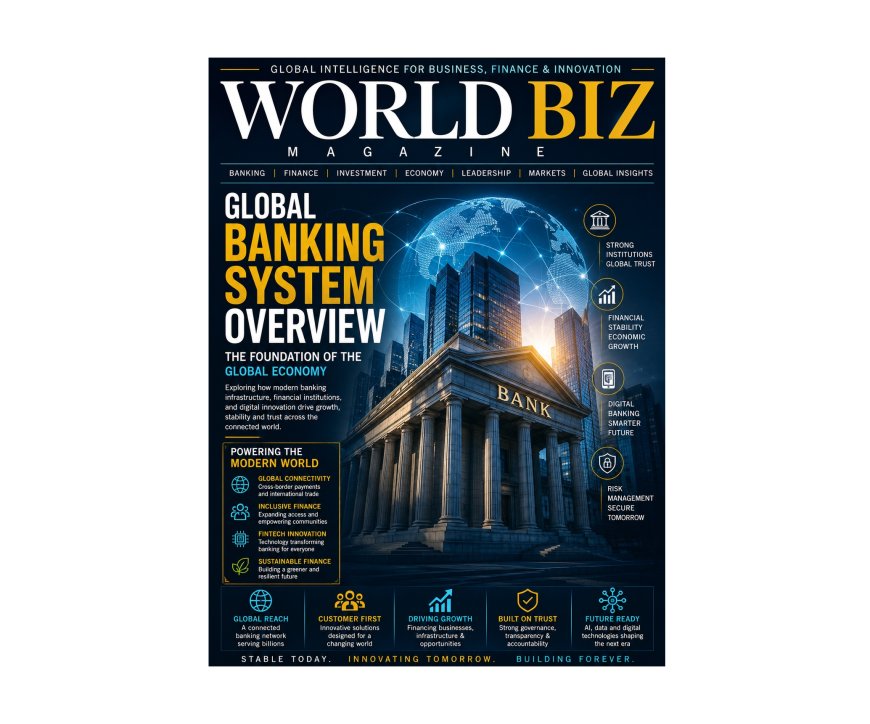
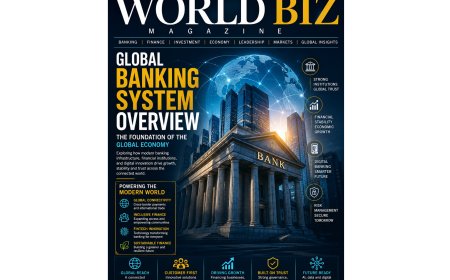
Global Banking System Overview
How Modern Banking Infrastructure Shapes the Global Economy, Financial Stability, International Trade, and the Future of Digital Finance
From central banks and commercial banking networks to digital finance, cross-border payment systems, and financial regulation, the global banking system remains one of the most powerful infrastructures in the modern economy
World Biz Magazine | Banking, Global Finance & Economic Intelligence
The Financial Infrastructure Behind the Global Economy
The modern global economy depends heavily on trust, liquidity, capital movement, and financial coordination. Every day, trillions of dollars move across borders through financial systems supporting:
- International trade
- Corporate financing
- Government operations
- Consumer banking
- Investment markets
- Currency exchange
- Digital payments
- Infrastructure development
Behind this enormous flow of capital lies one of the most important institutional frameworks in modern civilization:
The global banking system.
Banking systems are far more than places where individuals store money or businesses secure loans. Modern banks operate as foundational economic infrastructure supporting:
- Monetary stability
- Credit creation
- Financial intermediation
- Global investment
- Economic growth
- Liquidity management
- Payment processing
- Risk distribution
The banking system influences nearly every sector of the economy, including:
- Real estate
- Technology
- Manufacturing
- Healthcare
- Transportation
- Energy
- International commerce
At the same time, banking systems also carry significant systemic importance because financial instability inside major banking networks can rapidly affect entire economies and global markets.
Events such as:
- The 2008 global financial crisis
- Sovereign debt instability
- Banking collapses
- Currency crises
- Inflation shocks
- Digital banking disruptions
demonstrate how deeply interconnected global finance has become.
Today, the banking industry is entering another major transformation driven by:
- Digital finance
- Artificial intelligence
- fintech innovation
- blockchain infrastructure
- cybersecurity concerns
- central bank digital currencies
- global regulation modernization
The future banking system may increasingly evolve from:
Traditional institutional finance toward intelligent digital financial ecosystems.
Understanding the Global Banking System
The global banking system refers to the worldwide network of financial institutions, regulatory authorities, payment infrastructures, and monetary systems that facilitate the movement, storage, lending, and management of money.
This system includes:
- Central banks
- Commercial banks
- Investment banks
- Retail banking networks
- International financial institutions
- Payment systems
- Digital banking platforms
- Cross-border settlement systems
Banking systems perform several core economic functions:
- Safeguarding deposits
- Extending credit
- Facilitating transactions
- Supporting trade
- Managing liquidity
- Enabling investment activity
Modern economies rely heavily on banks because banking systems create the financial circulation mechanisms necessary for economic activity.
Without functioning banking infrastructure, economies would struggle to support:
- Consumer spending
- Business expansion
- Infrastructure financing
- International trade
- Investment markets
The banking system therefore acts as:
The circulatory system of the global economy.
Central Banks: The Core of Monetary Stability
At the center of every national banking system sits the central bank.
Central banks are responsible for:
- Monetary policy
- Currency stability
- Inflation management
- Financial system oversight
- Banking supervision
- Liquidity provision
Major global central banks include:
- Federal Reserve
- European Central Bank
- Bank of England
- People's Bank of China
- Bank of Japan
Central banks influence economies primarily through:
- Interest rate policy
- Money supply management
- Reserve requirements
- Financial market operations
Their decisions can significantly affect:
- Inflation
- Employment
- Currency value
- Lending activity
- Housing markets
- Stock markets
- Investment flows
Modern central banking has become increasingly complex due to globalization and interconnected financial markets.
Spotlight: Why Central Banks Matter Globally
Central banks play a critical role during periods of financial instability.
During crises, central banks may:
- Inject liquidity into markets
- Support failing financial institutions
- Stabilize currency systems
- Reduce borrowing costs
- Prevent systemic collapse
The 2008 financial crisis demonstrated how central banks became essential stabilizing forces within global markets.
More recently, inflationary pressures, pandemic-related disruptions, and geopolitical instability have further increased the importance of monetary policy coordination globally.
The future global economy may increasingly depend on:
Central banks balancing financial stability with technological transformation.
Commercial Banks and Everyday Finance
Commercial banks are the institutions most individuals and businesses interact with directly.
These banks provide:
- Deposit accounts
- Personal loans
- Business financing
- Mortgages
- Payment services
- Credit cards
- Trade financing
Commercial banking supports economic growth by channeling deposits into productive lending activity.
Banks earn revenue primarily through:
- Interest income
- Transaction fees
- Financial services
- Investment products
Modern commercial banking increasingly combines:
- Physical branch systems
- Digital banking infrastructure
- Mobile financial platforms
- AI-powered financial services
Consumer expectations are rapidly transforming banking toward:
Faster, more intelligent, and fully digital financial experiences.
Investment Banking and Capital Markets
Investment banks operate differently from retail and commercial banks.
These institutions primarily support:
- Corporate financing
- Mergers and acquisitions
- Capital raising
- Securities issuance
- Trading operations
- Institutional investment
Investment banks play major roles in:
- IPO markets
- Bond markets
- Global investment flows
- Large-scale corporate restructuring
Major international investment banks significantly influence:
- Global liquidity
- Capital allocation
- Financial market stability
- Cross-border investment ecosystems
Investment banking remains deeply connected to the broader global financial architecture.
Cross-Border Banking and International Finance
Modern banking systems operate globally.
International banking supports:
- Trade finance
- Currency exchange
- Foreign direct investment
- International lending
- Global capital movement
Large multinational banks increasingly operate across:
- North America
- Europe
- Asia
- Middle East
- Africa
- Latin America
This global interconnectedness improves economic integration but also creates:
- Contagion risk
- Systemic exposure
- Cross-border financial vulnerability
The modern banking system has become deeply interdependent.
Spotlight: SWIFT and Global Payment Infrastructure
One of the most important components of international banking is the global payment messaging system known as:
SWIFT
SWIFT enables banks worldwide to communicate securely regarding:
- International payments
- Financial settlements
- Transaction instructions
Although SWIFT itself does not directly move money, it provides the communication infrastructure behind global banking coordination.
Future payment systems increasingly face competition from:
- Blockchain settlement systems
- Real-time payment networks
- Central bank digital currencies
- fintech platforms
The future of cross-border finance may increasingly evolve toward:
Faster, decentralized, and AI-driven payment ecosystems.
Digital Banking and Fintech Transformation
The banking industry is undergoing rapid digital transformation.
Fintech innovation increasingly influences:
- Mobile banking
- Digital wallets
- AI-powered lending
- Online payments
- Automated investing
- Real-time settlements
Consumers increasingly expect:
- Instant financial access
- Low-cost transactions
- Personalized banking services
- Fully digital financial experiences
Banks are investing heavily in:
- Artificial intelligence
- cloud infrastructure
- cybersecurity systems
- digital identity verification
- automation platforms
Digital banking may eventually reduce dependence on traditional physical branch models.
Artificial Intelligence and Smart Banking
Artificial intelligence is rapidly reshaping banking operations.
AI systems increasingly support:
- Fraud detection
- Credit analysis
- Customer service automation
- Risk management
- Financial forecasting
- Compliance monitoring
AI-powered banking infrastructure may significantly improve:
- Efficiency
- Security
- Customer personalization
- Operational scalability
However, AI also introduces challenges involving:
- Data privacy
- algorithmic bias
- cybersecurity
- regulatory oversight
The future banking industry may increasingly combine:
Human financial oversight with machine-driven operational intelligence.
Blockchain, CBDCs, and the Future of Money
Blockchain technology is increasingly influencing banking infrastructure globally.
Central banks worldwide are exploring:
- Central bank digital currencies (CBDCs)
- blockchain settlement systems
- tokenized payment infrastructure
CBDCs represent government-backed digital currencies operating through modernized financial infrastructure.
Supporters argue CBDCs may improve:
- Payment efficiency
- Financial inclusion
- Monetary control
- Cross-border transactions
Critics raise concerns involving:
- Surveillance risk
- financial centralization
- cybersecurity vulnerabilities
The future monetary system may involve:
Hybrid ecosystems combining traditional banking with digital financial infrastructure.
Banking Regulation and Financial Stability
Because banks play systemic economic roles, regulation remains critically important.
Financial regulators aim to:
- Protect consumers
- Maintain stability
- Prevent fraud
- Reduce systemic risk
- Ensure liquidity adequacy
Major international regulatory frameworks include:
- Basel Accords
- anti-money laundering regulations
- capital reserve requirements
- stress testing systems
Following the 2008 financial crisis, banking regulation intensified significantly worldwide.
Modern banking oversight increasingly focuses on:
- Cybersecurity
- fintech risk
- digital asset exposure
- AI governance
- operational resilience
Cybersecurity and Banking Infrastructure
As banking becomes more digital, cybersecurity has become one of the industry’s most critical operational concerns.
Banks increasingly face threats involving:
- Ransomware
- identity theft
- payment fraud
- phishing attacks
- data breaches
- infrastructure disruption
Financial institutions now invest heavily in:
- AI cybersecurity systems
- biometric authentication
- fraud analytics
- secure cloud infrastructure
The future banking system may depend heavily on:
Digital trust and cybersecurity resilience.
Country-Wise Global Banking Influence
United States: Global Financial Leadership
The United States remains the world’s most influential banking and financial market ecosystem.
The U.S. banking system benefits from:
- Dollar dominance
- deep capital markets
- global investment flows
- major institutional banks
The U.S. dollar continues functioning as the dominant global reserve currency.
China: Rapid Banking Expansion and Digital Finance Growth
China has built one of the world’s largest banking systems through:
- state-backed banking infrastructure
- digital payments expansion
- fintech ecosystems
- industrial financing systems
China also aggressively explores CBDC infrastructure through the digital yuan initiative.
European Union: Regulatory Coordination and Banking Integration
The European Union operates one of the world’s most interconnected financial systems through:
- eurozone coordination
- banking supervision frameworks
- digital finance regulation
United Kingdom: International Banking and Financial Services Hub
The United Kingdom remains highly influential in:
- investment banking
- foreign exchange markets
- international finance
- global insurance systems
London continues functioning as one of the world’s largest financial centers.
Singapore: Smart Financial Infrastructure and Fintech Leadership
Singapore increasingly positions itself as a major hub for:
- digital banking
- fintech innovation
- blockchain finance
- smart payment infrastructure
Financial Inclusion and Emerging Economies
Banking systems remain uneven globally.
Millions of people worldwide still lack access to:
- bank accounts
- credit systems
- digital payments
- financial infrastructure
Fintech and mobile banking increasingly help expand financial inclusion across emerging economies.
Digital banking may significantly improve access to:
- microfinance
- digital payments
- cross-border remittances
- entrepreneurial financing
Financial inclusion may become one of the most important social impacts of future banking innovation.
The Future of the Global Banking System: 2025-2035
Between 2025 and 2035, banking systems may undergo some of the largest transformations in modern financial history.
Future developments may increasingly include:
- AI-driven financial systems
- central bank digital currencies
- blockchain settlement infrastructure
- autonomous financial analytics
- fully digital banking ecosystems
- biometric financial authentication
- embedded finance platforms
- decentralized financial integration
The future banking system may increasingly shift from:
Institution-centered finance toward intelligent digital financial ecosystems.
World Biz Magazine Insights
WBJ Insight 01 - Banking Remains Core Global Economic Infrastructure
Modern economies depend heavily on stable banking systems for liquidity, investment, and financial circulation.
WBJ Insight 02 - Digital Finance is Rapidly Reshaping Banking Models
AI, fintech, blockchain, and mobile platforms are transforming how financial services operate globally.
WBJ Insight 03 - Central Banks Will Remain Strategically Powerful
Monetary policy and digital currency development will continue influencing global financial stability.
WBJ Insight 04 - Cybersecurity is Becoming Financial Infrastructure
Digital trust and operational security are now critical pillars of modern banking systems.
WBJ Insight 05 - The Future Banking Economy May Become Fully Intelligent and Digital
Future financial ecosystems may combine AI, blockchain, digital identity, and real-time global settlement infrastructure.
Conclusion
The global banking system remains one of the most important infrastructures supporting modern civilization.
Banking systems influence:
- Economic growth
- Investment markets
- International trade
- Monetary stability
- Consumer finance
- Corporate expansion
- Government operations
At the same time, the industry is entering a transformative new era shaped by:
- Digital finance
- artificial intelligence
- blockchain systems
- cybersecurity
- global regulation modernization
Between 2025 and 2035, banking may evolve from traditional institution-based finance toward:
- Intelligent digital ecosystems
- Real-time payment infrastructure
- AI-powered financial operations
- decentralized financial coordination
The future of banking may no longer depend solely on physical institutions.
It may increasingly depend on:
Secure, intelligent, interconnected financial infrastructure operating continuously across the global digital economy.
Disclaimer
This article is intended for informational and editorial purposes only and does not constitute financial, investment, legal, banking, regulatory, operational, or economic advice. Banking systems, financial regulations, monetary policies, and digital finance frameworks vary significantly across jurisdictions and institutions. Readers should consult qualified financial, legal, banking, and professional advisors before making financial, investment, operational, or regulatory decisions related to banking systems or financial services.
What's Your Reaction?
 Like
0
Like
0
 Dislike
0
Dislike
0
 Love
0
Love
0
 Funny
0
Funny
0
 Angry
0
Angry
0
 Sad
0
Sad
0
 Wow
0
Wow
0