



































































































Egypt's New Administrative Capital: Building Africa's Next Global Business Hub
From smart city technology to global investment strategies, discover how Egypt's New Administrative Capital aims to become one of the Middle East and Africa's leading business centers.

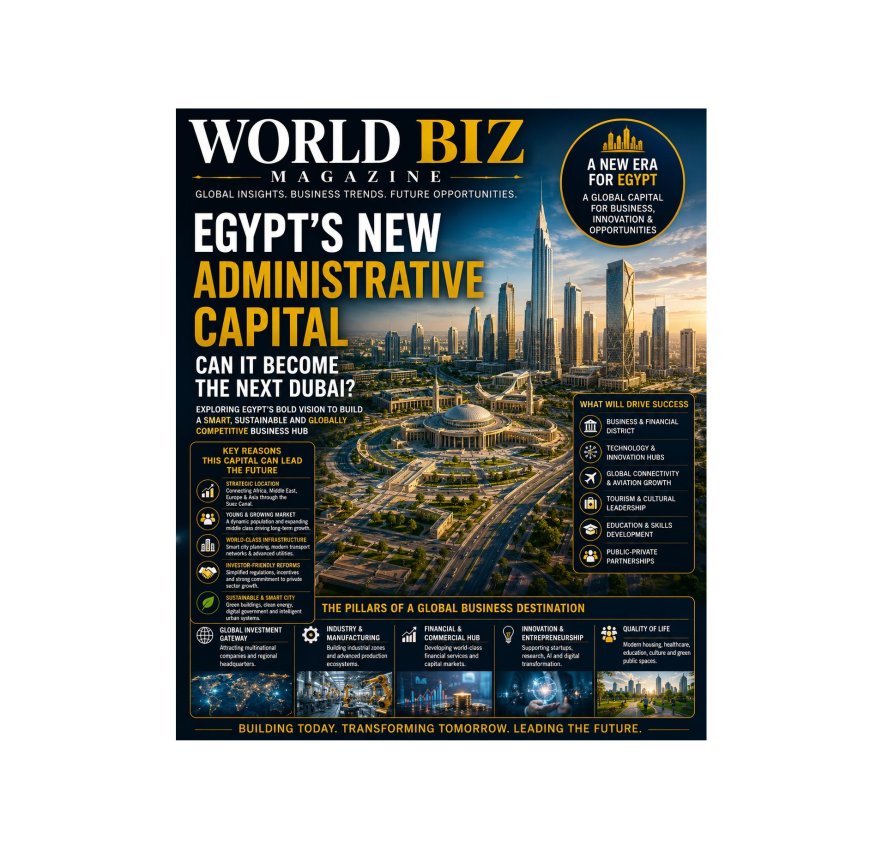
Egypt's New Administrative Capital
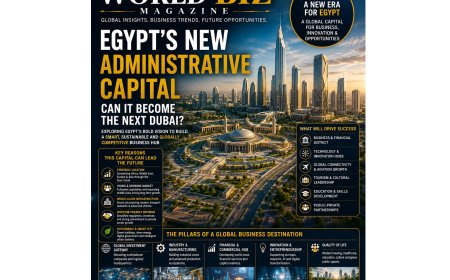
Can Egypt's New Capital Become the Next Dubai? Opportunities, Challenges, and the Road Ahead
World Biz Magazine | Global Economy, Infrastructure & Urban Development
The construction of Egypt's New Administrative Capital (NAC) represents one of the largest urban development projects in modern history. Designed to transform governance, reduce congestion in Cairo, attract foreign investment, and create a world-class business environment, the new city reflects Egypt's ambition to become a leading regional economic hub. Yet one question continues to dominate international discussions: Can Egypt's New Capital become the next Dubai? The answer depends not only on impressive infrastructure, but also on long-term economic policies, global competitiveness, private-sector growth, innovation, and investor confidence.
Understanding Egypt's New Administrative Capital
Located approximately 45 kilometers east of Cairo, Egypt's New Administrative Capital is being developed as a smart, sustainable, and globally connected city. The project aims to relocate government ministries, parliament, diplomatic missions, financial institutions, corporate headquarters, universities, hospitals, residential communities, and cultural attractions into a purpose-built modern metropolis.
Rather than simply creating a new city, Egypt is attempting to build an entirely new economic ecosystem that supports future population growth, digital government, business expansion, and international investment.
The development includes advanced transportation systems, smart infrastructure, green spaces, financial districts, innovation hubs, and modern urban planning designed to compete with leading global cities.
Why Egypt Built a New Capital
Greater Cairo has experienced decades of rapid population growth, traffic congestion, infrastructure pressure, and urban expansion.
The New Administrative Capital seeks to:
- Reduce congestion in Cairo
- Modernize government operations
- Improve public services
- Create new employment opportunities
- Encourage private investment
- Expand housing availability
- Develop international business districts
- Strengthen Egypt's regional competitiveness
The project also represents a long-term strategy to diversify economic activity beyond traditional urban centers.
Can Egypt Become the Next Dubai?
The comparison between Egypt's New Capital and Dubai is inevitable.
Both projects aim to attract international investment, multinational companies, tourism, financial services, technology firms, and global talent.
However, becoming "the next Dubai" requires much more than constructing impressive skyscrapers.
Dubai's success was built through decades of consistent economic policy, investor confidence, world-class logistics, global aviation, business-friendly regulation, tax competitiveness, political stability, and exceptional government efficiency.
Egypt possesses enormous advantages, including a large domestic market, strategic geography, historical significance, access to Africa, the Middle East, Europe, and the Suez Canal. These strengths provide significant potential if matched with sustained reforms and execution.
Egypt's Competitive Advantages
Egypt already possesses several natural advantages that many countries cannot replicate.
Strategic Geographic Location
Egypt connects Europe, Africa, Asia, and the Middle East.
The Suez Canal remains one of the world's most important trade routes, making Egypt a strategic logistics and maritime center.
Large Domestic Market
With one of the largest populations in the Middle East and Africa, Egypt offers investors access to a substantial consumer market alongside an expanding workforce.
Young Workforce
A large proportion of Egypt's population is under the age of 35, creating opportunities for technology, entrepreneurship, manufacturing, digital services, and innovation.
Tourism Leadership
Egypt's globally recognized historical heritage, Red Sea resorts, cultural attractions, and archaeological sites continue to attract millions of visitors annually.
Industrial Potential
Manufacturing, agriculture, renewable energy, pharmaceuticals, textiles, automotive assembly, and construction continue to offer considerable growth opportunities.
What Egypt Must Do to Become a Global Business Hub
1. Simplify Business Regulations
Ease of doing business remains one of the most important factors influencing international investment.
Egypt should continue simplifying:
- Company registration
- Licensing
- Digital approvals
- Construction permits
- Customs procedures
- Cross-border trade documentation
Reducing bureaucracy can significantly improve investor confidence.
2. Build a Competitive Tax Environment
Global investors compare jurisdictions based on taxation, predictability, and incentives.
Competitive corporate tax policies, investment incentives, double taxation agreements, and transparent tax administration can encourage multinational companies to establish regional headquarters.
3. Create World-Class Financial Services
Dubai became a financial hub through internationally competitive banking, capital markets, fintech regulation, wealth management, and investment services.
Egypt's New Capital could further strengthen its position by expanding:
- Investment banking
- Venture capital
- Private equity
- Islamic finance
- Digital banking
- FinTech ecosystems
- International arbitration services
4. Develop an International Business District
A globally competitive financial district should attract:
- Regional headquarters
- Fortune 500 companies
- Technology firms
- Consulting companies
- Law firms
- Investment funds
- Family offices
- International organizations
The concentration of high-value businesses creates long-term economic momentum.
5. Attract Global Technology Companies
Technology will define future economic leadership.
Egypt should encourage investment in:
- Artificial Intelligence
- Cloud Computing
- Cybersecurity
- Software Development
- Data Centers
- Digital Payments
- Robotics
- Semiconductor Design
- Research & Development
Technology clusters generate high-income employment while attracting global innovation.
6. Strengthen Startup Ecosystems
Innovation drives long-term competitiveness.
Government-supported startup programs, venture capital funding, accelerators, incubators, university partnerships, and simplified regulations can position Egypt as one of Africa's leading entrepreneurial ecosystems.
7. Expand Aviation Connectivity
Dubai's global success was accelerated by exceptional aviation connectivity.
Egypt could strengthen its position through:
- Expanded international routes
- Transit passenger growth
- Cargo logistics
- Airport modernization
- Aviation maintenance services
- Regional airline partnerships
Better connectivity directly supports tourism, trade, and investment.
8. Improve Logistics and Supply Chains
The combination of the Suez Canal, ports, highways, railways, industrial zones, and logistics centers gives Egypt significant competitive advantages.
Continued investment in integrated logistics infrastructure could position Egypt as one of the world's leading trade gateways.
9. Create a Stable Investment Environment
Long-term investors prioritize predictability.
Important factors include:
- Policy consistency
- Transparent regulations
- Efficient dispute resolution
- Strong contract enforcement
- Intellectual property protection
- Independent commercial courts
Investor confidence grows when regulations remain stable over time.
10. Invest in Education and Skills
Human capital determines long-term competitiveness.
Future workforce priorities include:
- Artificial Intelligence
- Engineering
- Software Development
- Financial Services
- Healthcare
- Renewable Energy
- Digital Manufacturing
- Data Science
A highly skilled workforce attracts global employers.
Building a Smart Capital
Technology should become the foundation of the New Administrative Capital.
Key priorities include:
- Smart transportation
- AI traffic management
- Digital government
- IoT infrastructure
- Smart utilities
- Digital healthcare
- Intelligent energy management
- Public safety systems
- Environmental monitoring
A digitally integrated city enhances both quality of life and business efficiency.
Tourism Beyond Ancient History
Egypt's tourism strategy can expand beyond historical attractions.
Future opportunities include:
- Business tourism
- Medical tourism
- Luxury tourism
- Conference tourism
- Sports tourism
- Entertainment districts
- Cultural festivals
- International exhibitions
The New Administrative Capital can become a destination for international conferences, corporate events, and regional business gatherings.
Sustainability Will Define Future Competitiveness
Global investors increasingly evaluate cities based on sustainability.
Future priorities include:
- Renewable energy
- Green buildings
- Water management
- Electric mobility
- Carbon reduction
- Circular economy initiatives
- Urban green spaces
Environmental performance is becoming a competitive economic advantage.
Challenges Egypt Must Address
Despite enormous potential, several challenges require continued attention.
These include:
- Inflation and macroeconomic stability
- Public debt management
- Currency confidence
- Private-sector expansion
- Affordable housing
- Employment creation
- Digital skills development
- Administrative efficiency
- International competitiveness
Successfully addressing these issues will strengthen investor confidence and support long-term economic growth.
The Role of Public-Private Partnerships
Large-scale urban development cannot rely solely on government investment.
Public-private partnerships (PPPs) can accelerate growth in:
- Transportation
- Airports
- Utilities
- Housing
- Healthcare
- Education
- Digital infrastructure
- Renewable energy
Private-sector participation also brings innovation, operational expertise, and additional capital.
Looking Toward 2040
If Egypt continues implementing structural reforms while strengthening private-sector participation, improving ease of doing business, investing in technology, and maintaining macroeconomic stability, the New Administrative Capital could evolve into one of the Middle East and Africa's most influential business centers.
Rather than replicating Dubai, Egypt has the opportunity to create its own distinctive model one that combines strategic geography, industrial capacity, digital transformation, historical heritage, and a large domestic market. Success will ultimately depend on sustained execution, investor confidence, and long-term policy consistency.
World Biz Magazine Insights
The New Administrative Capital represents more than a construction project it is a strategic effort to redefine Egypt's role in the global economy. While world-class infrastructure provides a strong foundation, long-term success will depend on creating an environment where businesses can innovate, investors can operate with confidence, and talent can thrive. Cities become global economic leaders not only through iconic skylines, but through efficient institutions, competitive regulations, technological innovation, and sustainable economic growth. If Egypt continues to strengthen these pillars, its new capital has the potential to emerge as one of the region's most important commercial and investment destinations.
Conclusion
Egypt's New Administrative Capital is one of the world's most ambitious urban development initiatives, offering a rare opportunity to reshape the nation's economic future. With its strategic location, expanding infrastructure, young workforce, and growing investment potential, the city possesses many of the ingredients needed for long-term success. However, becoming a globally recognized business hub will require more than physical development. Continued regulatory reform, private-sector empowerment, technological advancement, sustainable planning, and consistent economic governance will determine whether the New Administrative Capital becomes not merely a modern city, but a globally competitive center for business, finance, innovation, and international investment.
Disclaimer
This article is published by World Biz Magazine for informational, educational, and editorial purposes only. The views and analysis presented are intended to provide a general overview of Egypt's New Administrative Capital, economic development, and investment landscape. They should not be interpreted as legal, financial, investment, tax, or professional advice. Economic conditions, government policies, regulations, incentives, and market dynamics may change over time. Readers should conduct independent due diligence and seek advice from qualified legal, financial, and investment professionals before making business or investment decisions. World Biz Magazine, its publisher, editors, contributors, and affiliates accept no liability for any loss or damages arising from reliance on the information contained in this publication.
What's Your Reaction?
 Like
0
Like
0
 Dislike
0
Dislike
0
 Love
0
Love
0
 Funny
0
Funny
0
 Angry
0
Angry
0
 Sad
0
Sad
0
 Wow
0
Wow
0