




































































































































































































How Governments Can Build Smarter Infrastructure Budget Frameworks
From project selection to financing and risk management, learn how governments can maximize infrastructure investment outcomes.

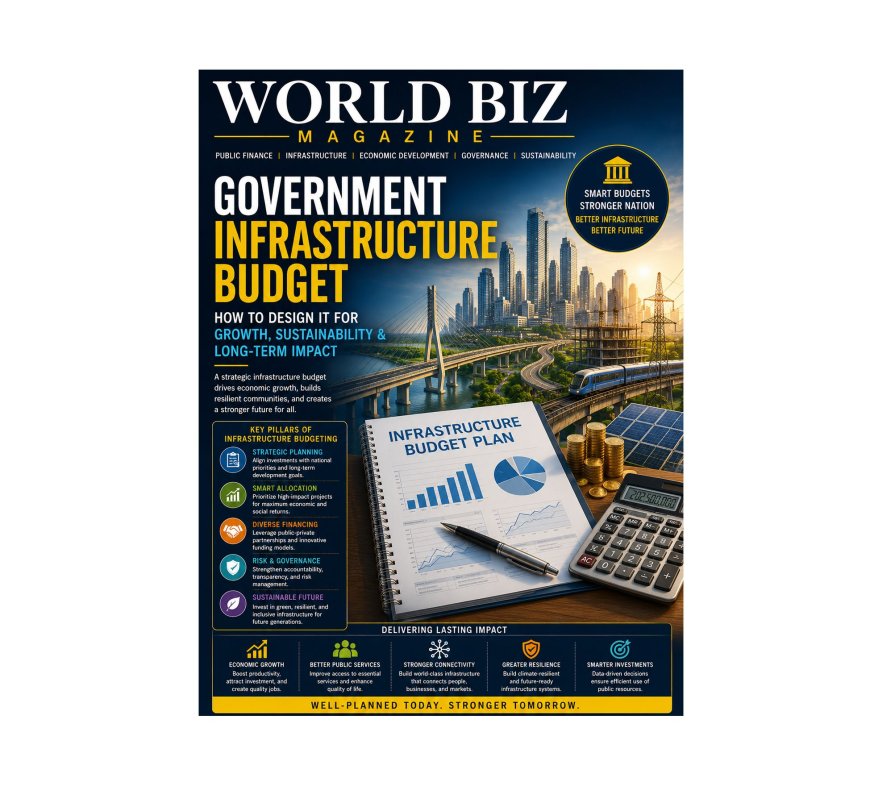
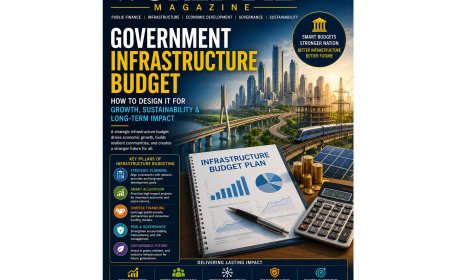
Government Infrastructure Budget: How to Design It
Building a Strategic Framework for Sustainable Growth, Economic Development, and National Competitiveness
World Biz Magazine | Public Finance, Infrastructure & Economic Development
Effective infrastructure budgeting is one of the most powerful tools governments possess to drive economic growth, improve public services, strengthen national competitiveness, and create long-term prosperity. The success of infrastructure investments often depends not only on how much is spent, but how strategically those resources are allocated, managed, and monitored.
Why Infrastructure Budgeting Matters
Infrastructure forms the foundation of every modern economy. Roads, highways, railways, airports, seaports, power systems, water networks, digital infrastructure, schools, hospitals, and public facilities support economic activity and improve quality of life. Without adequate infrastructure investment, economies struggle to maintain productivity, attract investment, and support population growth.
A government infrastructure budget serves as the financial blueprint that determines how public resources are allocated to develop, maintain, and modernize national assets. Well-designed infrastructure budgets create lasting economic value, while poorly planned spending can result in cost overruns, underutilized assets, delayed projects, and fiscal inefficiencies.
As governments face increasing demands for infrastructure modernization, strategic budgeting has become essential to maximize returns on public investment and ensure long-term sustainability.
Establishing a National Infrastructure Vision
The first step in designing an effective infrastructure budget is establishing a clear national development vision. Infrastructure spending should not be driven solely by political considerations or short-term pressures. Instead, investments should align with broader economic, social, and environmental objectives.
Governments must identify long-term priorities such as economic diversification, industrial development, regional connectivity, urban modernization, digital transformation, climate resilience, energy security, and social inclusion. Infrastructure budgets should directly support these priorities through targeted investments that generate measurable outcomes.
A national infrastructure strategy provides the foundation upon which budget decisions can be evaluated and prioritized. Without a clear vision, infrastructure spending risks becoming fragmented and ineffective.
Conducting Comprehensive Infrastructure Assessments
Before allocating funds, governments must understand the current condition of existing infrastructure assets. Comprehensive infrastructure assessments help identify maintenance needs, capacity constraints, service gaps, and future demand requirements.
Asset inventories, condition assessments, demographic trends, economic forecasts, and infrastructure performance data provide critical information for budget planning. Governments should evaluate transportation networks, utilities, public facilities, digital infrastructure, healthcare systems, educational institutions, and environmental infrastructure to determine investment priorities.
Data-driven assessments help ensure resources are directed toward projects that deliver the greatest economic and social impact.
Prioritizing Projects Based on Strategic Value
One of the most important challenges in infrastructure budgeting is project selection. Resources are always limited, while infrastructure demands are virtually unlimited. Effective budgeting requires prioritizing projects based on objective criteria rather than political influence or short-term considerations.
Governments should evaluate projects based on economic return, social impact, environmental sustainability, urgency, regional development benefits, and alignment with national objectives. Cost-benefit analysis, economic impact assessments, and multi-criteria evaluation frameworks can support informed decision-making.
Projects that generate significant economic activity, improve productivity, enhance connectivity, and address critical public needs should receive higher priority within the budget framework.
Balancing New Development and Asset Maintenance
Many governments focus heavily on funding new infrastructure projects while neglecting existing assets. However, maintaining infrastructure often delivers greater value than constructing entirely new facilities.
A balanced infrastructure budget should allocate resources for both capital development and asset preservation. Preventive maintenance programs extend asset lifecycles, reduce future repair costs, improve reliability, and protect public investments.
Neglecting maintenance can lead to infrastructure deterioration, increased operating costs, service disruptions, and expensive reconstruction requirements. Sustainable budgeting requires treating maintenance as a strategic investment rather than a discretionary expense.
Adopting Multi-Year Budget Planning
Infrastructure projects typically require years or even decades to complete. Annual budgeting cycles often fail to reflect the long-term nature of infrastructure development, creating uncertainty and implementation challenges.
Multi-year infrastructure budgeting frameworks provide greater stability and predictability. Governments can establish medium-term expenditure frameworks spanning three to five years while aligning major projects with long-term infrastructure plans extending ten to twenty years.
Long-term planning improves project continuity, enhances investor confidence, and enables better coordination among government agencies, contractors, and financing partners.
Diversifying Infrastructure Financing Sources
Modern infrastructure development often requires financing beyond traditional government budgets. Designing an effective infrastructure budget involves identifying multiple funding sources to maximize investment capacity.
Potential funding mechanisms include:
· Government budget allocations
· Infrastructure bonds
· Public-private partnerships (PPPs)
· Development bank financing
· Sovereign wealth funds
· Multilateral institutions
· User fees and toll systems
· Municipal financing programs
· Infrastructure investment funds
· Asset monetization strategies
Diversified financing reduces pressure on public finances while accelerating project delivery and increasing infrastructure investment capacity.
Integrating Public-Private Partnerships
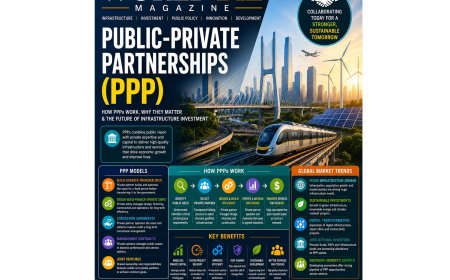
Public-private partnerships have become increasingly important in infrastructure financing and delivery. PPP models enable governments to leverage private sector capital, technical expertise, operational efficiency, and innovation.
When properly structured, PPPs can improve project delivery timelines, reduce financial risks, and enhance operational performance. However, governments must establish transparent procurement frameworks, risk allocation mechanisms, performance standards, and accountability systems to ensure successful outcomes.
Infrastructure budgets should identify projects suitable for PPP participation while maintaining clear oversight and governance responsibilities.
Embedding Sustainability into Budget Design
Sustainability is becoming a central consideration in infrastructure planning and budgeting. Governments must design infrastructure investments that support environmental objectives while maintaining economic viability.
Climate-resilient infrastructure, renewable energy systems, sustainable transportation networks, water conservation technologies, and green building standards should be incorporated into budget frameworks. While sustainable projects may require higher initial investment, they often generate long-term savings through reduced operating costs and improved resilience.
Environmental and social impact assessments should be integrated into project evaluation processes to ensure infrastructure investments support broader sustainability goals.
Strengthening Risk Management and Oversight
Infrastructure projects face numerous risks including cost overruns, delays, regulatory challenges, financing constraints, supply chain disruptions, and economic uncertainty. Effective infrastructure budgets include mechanisms for managing these risks.
Governments should establish contingency reserves, risk assessment frameworks, project monitoring systems, and independent oversight mechanisms. Regular performance reviews help identify potential issues early and enable corrective action before problems escalate.
Transparency and accountability are critical components of effective budget management. Public reporting and performance measurement strengthen confidence among stakeholders and improve project outcomes.
Leveraging Technology for Better Budget Management
Digital technologies are transforming how governments plan, manage, and monitor infrastructure investments. Advanced analytics, artificial intelligence, geographic information systems (GIS), digital twins, and project management platforms provide valuable insights for decision-makers.
Technology enables governments to model infrastructure scenarios, forecast future demand, optimize resource allocation, and track project performance in real time. These capabilities improve budgeting accuracy and support evidence-based policy decisions.
As infrastructure systems become increasingly complex, digital tools will play an increasingly important role in budget planning and asset management.
Measuring Infrastructure Performance
Successful infrastructure budgeting does not end when funds are allocated. Governments must continuously evaluate project outcomes and infrastructure performance to ensure investments deliver intended benefits.
Key performance indicators may include:
· Economic impact
· Job creation
· Travel time reductions
· Service reliability
· Infrastructure utilization rates
· Environmental performance
· Cost efficiency
· Citizen satisfaction
· Return on investment
Performance-based budgeting allows governments to refine future investment decisions and improve overall infrastructure effectiveness.
World Biz Magazine Insights
The most successful governments recognize that infrastructure budgeting is not simply a financial exercise it is a strategic tool for shaping a nation's future. Effective infrastructure budgets align investments with long-term development goals, prioritize projects based on measurable impact, leverage diverse financing sources, and maintain a strong focus on sustainability and accountability. In an increasingly competitive global economy, infrastructure investment decisions will play a defining role in determining national prosperity and resilience.
Conclusion
Designing an effective government infrastructure budget requires vision, discipline, data-driven planning, and long-term commitment. By aligning investments with national priorities, prioritizing high-impact projects, embracing innovative financing models, integrating sustainability principles, and strengthening governance frameworks, governments can maximize the value of infrastructure spending. The result is a more productive economy, stronger communities, improved public services, and a foundation for sustainable growth that benefits future generations.
Disclaimer
This article is published by World Biz Magazine for informational and educational purposes only. The content reflects general perspectives on public finance, infrastructure planning, and government budgeting practices. It does not constitute financial, investment, legal, engineering, policy, or governmental advice. Readers should consult qualified professionals and relevant authorities before making decisions regarding public infrastructure investments, budgeting frameworks, financing strategies, or policy implementation. World Biz Magazine assumes no responsibility for actions taken based on the information contained in this publication.
What's Your Reaction?
 Like
1
Like
1
 Dislike
0
Dislike
0
 Love
0
Love
0
 Funny
0
Funny
0
 Angry
0
Angry
0
 Sad
0
Sad
0
 Wow
1
Wow
1