









































































































































































































The Role of Asset Managers in Capital Markets: Strategy, Risk & Growth
how asset managers influence capital markets through portfolio strategy, risk management, liquidity creation, and long-term wealth generation in the global financial ecosystem.


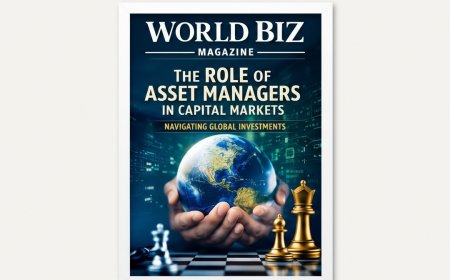
The Role of Asset Managers in Capital Markets
How Institutional Capital Is Allocated, Grown, and Stabilized Globally
World Biz Magazine | Global Finance & Investment Insights
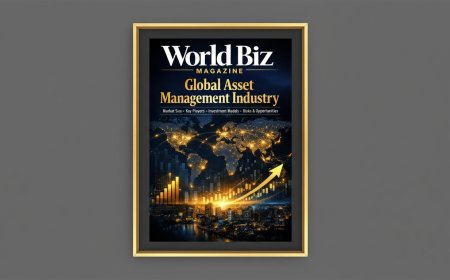
Asset managers play a central and indispensable role in modern capital markets, acting as intermediaries between capital providers (investors) and capital seekers (companies, governments, and projects). By professionally managing large pools of capital, asset managers influence market liquidity, price discovery, corporate governance, economic growth, and financial stability.
From equities and bonds to real estate, infrastructure, private equity, and alternative assets, asset managers shape how capital flows across sectors, geographies, and economic cycles. Their decisions affect not only returns for investors but also the direction of global development, innovation, and industrial expansion.
What Are Asset Managers?
Asset managers are financial institutions or firms that manage investments on behalf of clients, aiming to achieve specific financial objectives within defined risk parameters. They invest capital across public and private markets, using active, passive, or hybrid strategies.
Primary Clients of Asset Managers
· Pension funds
· Insurance companies
· Sovereign wealth funds
· Mutual funds and ETFs
· Corporations and institutions
· High-net-worth individuals (HNWIs)
· Family offices
· Governments and public entities
Asset managers operate under fiduciary responsibility, meaning they are legally and ethically required to act in the best interests of their clients.
Capital Markets Overview
Capital markets are platforms where long-term financial instruments are issued and traded, enabling capital formation and investment.
Key Segments of Capital Markets
· Equity Markets (stocks, shares)
· Debt Markets (government bonds, corporate bonds)
· Money Markets (short-term instruments)
· Private Markets (private equity, private credit)
· Derivatives Markets
· Alternative Investment Markets
Asset managers operate across all these segments, often acting as major institutional participants.
Core Roles of Asset Managers in Capital Markets
1. Capital Allocation
Asset managers decide where capital flows, selecting:
· Countries and regions
· Industries and sectors
· Asset classes and instruments
· Growth vs defensive strategies
Their allocation decisions influence:
· Corporate funding access
· Sectoral growth trends
· Infrastructure and real-economy development
2. Market Liquidity Provider
Large asset managers:
· Buy and sell securities at scale
· Improve market depth and liquidity
· Reduce transaction costs
· Stabilize volatile markets through long-term capital
Passive asset managers (ETFs, index funds) are particularly significant liquidity providers in modern markets.
3. Price Discovery & Market Efficiency
Through research, analysis, and trading:
· Asset managers help determine fair market value
· Reflect macroeconomic data in prices
· Reward efficient, well-managed companies
· Penalize weak governance or poor performance
Active managers play a key role in correcting mispricing in capital markets.
4. Risk Management & Portfolio Construction
Asset managers design portfolios using:
· Diversification strategies
· Asset correlation analysis
· Hedging instruments
· Scenario and stress testing
This helps:
· Reduce systemic risk
· Protect investor capital
· Maintain long-term market stability
5. Corporate Governance & Stewardship
Major asset managers are among the largest shareholders in global corporations. Their role includes:
· Voting on shareholder resolutions
· Engaging with company boards
· Influencing executive compensation
· Promoting transparency and governance standards
This stewardship role directly impacts corporate behavior and accountability.
6. Capital Formation & Economic Growth
By investing in:
· IPOs and public equity
· Corporate bonds
· Infrastructure and project finance
· Private businesses
Asset managers enable:
· Business expansion
· Job creation
· Technological innovation
· Public infrastructure development
Asset Classes Managed by Asset Managers
Traditional Asset Classes
· Public equities
· Government bonds
· Corporate bonds
· Cash and money market instruments
Alternative & Private Assets
· Private equity
· Private credit
· Real estate
· Infrastructure assets
· Hedge funds
· Commodities
· Venture capital
The growth of alternatives has significantly expanded asset managers’ influence beyond public markets.
Key Types of Asset Management Firms
1. Traditional Asset Managers
Focus on mutual funds, segregated mandates, and ETFs.
· Active and passive strategies
· Retail and institutional clients
2. Alternative Asset Managers
Specialize in private markets and complex strategies.
· Higher risk-return profiles
· Longer investment horizons
3. Institutional Asset Managers
Serve large institutions exclusively.
· Pension funds
· Insurance balance sheets
· Sovereign funds
4. Multi-Asset & Global Managers
Provide diversified, cross-asset solutions.
Major Global Asset Management Players
Leading Global Firms
· BlackRock - World’s largest asset manager
· Vanguard Group - Leader in passive investing
· Fidelity Investments
· State Street Global Advisors
· J.P. Morgan Asset Management
· Goldman Sachs Asset Management
Alternative & Private Market Leaders
· Blackstone
· Brookfield Asset Management
· Apollo Global Management
· KKR
· Carlyle Group
These firms collectively manage tens of trillions of dollars, giving them significant influence over global capital markets.
Key Countries & Financial Hubs Supporting Asset Management
United States
· Largest asset management market globally
· Deep capital markets and institutional investor base
United Kingdom
· Major global asset management and fund domicile hub
European Union
· Germany, France, Netherlands, Luxembourg, Ireland
· Strong regulatory frameworks and cross-border funds
Asia-Pacific
· Japan, China, Hong Kong, Singapore, Australia
· Rapid growth in institutional and retail investing
Middle East
· UAE and Saudi Arabia
· Growing sovereign wealth funds and asset platforms
These regions provide regulatory clarity, investor protection, and capital depth essential for asset managers.
Regulatory Framework & Compliance
Asset managers operate under strict regulation to protect investors and ensure market integrity.
Key Regulatory Authorities
· SEC (USA)
· FCA (UK)
· ESMA (EU)
· MAS (Singapore)
· SEBI (India)
Core Regulatory Requirements
· Licensing and registration
· Capital adequacy
· Risk disclosure
· Compliance reporting
· Anti-money laundering (AML)
· Know-Your-Customer (KYC)
How Asset Managers Operate: Process Overview
1. Client Mandate & Investment Objective Definition
2. Asset Allocation Strategy
3. Security Selection & Due Diligence
4. Portfolio Construction
5. Execution & Trading
6. Ongoing Monitoring & Risk Management
7. Performance Reporting & Client Communication
Impact on Market Stability & Systemic Risk
Positive Contributions
· Long-term capital stability
· Professional risk management
· Diversification across markets
Potential Risks
· Market concentration among large managers
· Herd behavior in passive investing
· Liquidity mismatches in open-ended funds
Regulators increasingly monitor asset managers due to their systemic importance.
Future Trends in Asset Management & Capital Markets
· Growth of passive and ETF investing
· Expansion of private markets and private credit
· ESG and sustainable investing integration
· AI-driven portfolio management
· Tokenization of assets and digital securities
· Increased regulatory scrutiny
Asset managers are evolving from pure investment firms into capital allocators, infrastructure partners, and long-term economic stakeholders.
Conclusion
Asset managers are foundational pillars of capital markets, directing the flow of capital across economies, industries, and generations. Their role extends far beyond portfolio returns—shaping corporate governance, economic development, and financial stability worldwide. As capital markets grow more complex and interconnected, asset managers will remain critical in balancing risk, return, and responsibility in the global financial system.
Disclaimer
This article is intended for general informational purposes only and does not constitute financial, investment, legal, or regulatory advice. The roles, regulations, and practices of asset managers vary by jurisdiction and market conditions. Readers should consult qualified financial professionals or regulatory authorities before making investment or strategic decisions.
What's Your Reaction?
 Like
0
Like
0
 Dislike
0
Dislike
0
 Love
0
Love
0
 Funny
0
Funny
0
 Angry
0
Angry
0
 Sad
0
Sad
0
 Wow
0
Wow
0