


































































































































































Experience Economy & Retail Evolution: Global Consumer Market Report 2026-2030
Global consumer trends and lifestyle economy forecast to 2030, including market size, country rankings, inflation trends, policy impact, and investment shifts.

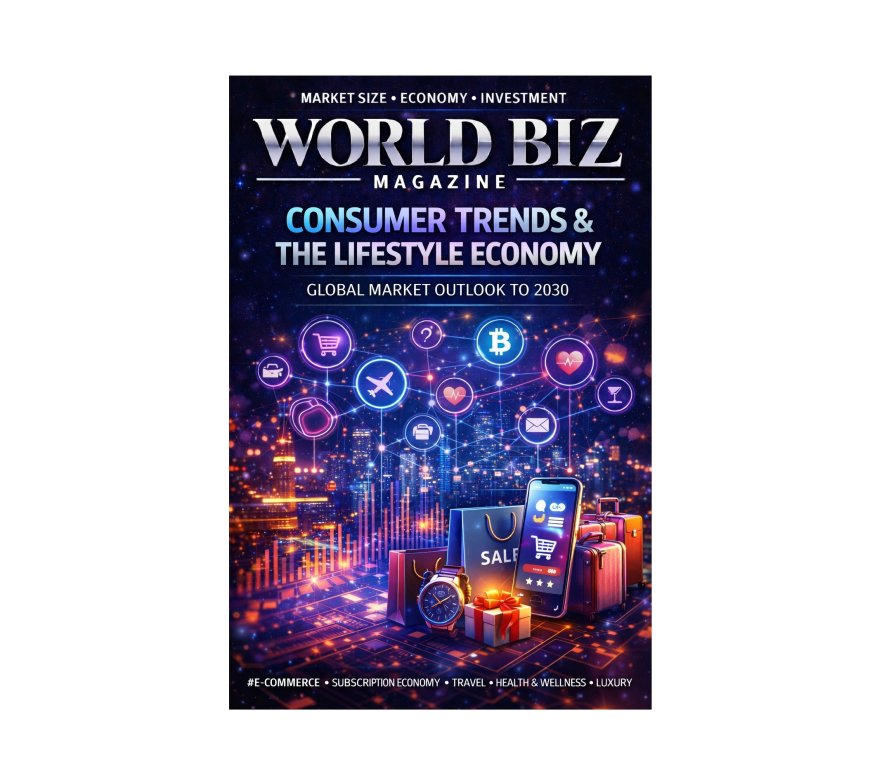
The Consumer Trends & Lifestyle Economy
Global Market Today, Investment Dynamics & Forecast to 2030
World Biz Magazine | Industry Today Special Report
The Consumer Trends & Lifestyle Economy has emerged as a cornerstone of global economic activity spanning retail, digital services, experiences, wellbeing, luxury, fashion, travel, entertainment, and personal technology. Fueled by shifting consumer behaviors, urbanization, digital transformation, and evolving cultural preferences, the lifestyle economy now represents a multi-trillion-dollar ecosystem influencing production, employment, investment, and global trade.
In a world where experiences increasingly matter as much as products, and where digital connectivity shapes consumption patterns, understanding consumer trends is critical for investors, policymakers, brands, and global markets.
What Is the Consumer & Lifestyle Economy?
The lifestyle economy refers to the portion of the marketplace driven by consumer preferences that reflect values, identities, and aspirations. It includes:
- Retail & E-commerce
- Digital subscriptions & services
- Travel & hospitality experiences
- Health & wellness products
- Luxury goods & fashion
- Entertainment & content platforms
- Personal tech & wearables
- Food & beverage leisure spending
This economy is deeply sensitive to income growth, cultural trends, social norms, and technological adoption.
Global Market Size & Growth
2025 Global Estimates
- Consumer & Lifestyle Market Size: $27 trillion
- E-commerce Retail: $6.5 trillion
- Experiential Spending (travel, entertainment): $4.2 trillion
- Luxury & Personal Goods: $1.3 trillion
- Digital Services Subscriptions: $1.8 trillion
Historical Growth (2015-2024)
|
Segment |
2015 |
2020 |
2024 |
|
Global Consumer GDP Contribution |
$20T |
$24T |
$27T |
|
E-commerce Share |
$2.5T |
$4.0T |
$6.5T |
|
Experiential / Travel |
$2.8T |
$2.0T |
$4.2T |
|
Subscription Services |
$0.6T |
$1.2T |
$1.8T |
Consumer spending rebounded strongly post-pandemic, with experiences and digital subscriptions leading growth.
Price & Inflation Trends (2015-2024)
- Consumer prices for goods increased cumulatively by 20-28% globally.
- Experience categories faced higher inflation (25-35%) due to labor and energy costs.
- Digital services saw moderate price increases (10-15%).
Key Contacts & Industry Bodies
- Organisation for Economic Co-operation and Development (OECD) - Consumer statistics
- World Travel & Tourism Council (WTTC) - Travel impact
- International Council of Shopping Centers (ICSC) - Retail ecosystem
- Global Web Index (GWI) - Digital trends research
- International Luxury Goods Association (LUXE) - Luxury market standards
Key Players in the Lifestyle Economy
Global Consumer & Retail
- Walmart
- Amazon
- Alibaba Group
Digital Services
- Netflix
- Spotify
- Apple
Travel & Hospitality
- Marriott International
- Airbnb
Luxury & Fashion
- LVMH
- Kering
Emerging digital lifestyle brands and niche tech-enabled startups are also reshaping the competitive landscape.
Political & Policy Landscape
The lifestyle economy intersects with public policy in several ways:
Consumer Protection & Competition
- Strong antitrust measures in EU & US to protect consumers.
- Digital marketplaces regulated to ensure fair pricing.
Trade & Tariffs
- Import duties affect fashion & luxury goods.
- Digital trade agreements shape e-commerce flows.
Tourism Policy
- Visa reforms and travel facilitation laws influence tourism spending.
- Infrastructure investment (airports, hotels) shapes regional competitiveness.
Data & Digital Services Regulation
- Data privacy laws (GDPR, CCPA) affecting digital marketing.
- Digital taxation frameworks impact subscription services.
Political decisions on taxes, regulation, tourism policy, and digital trade shape industry growth.
Investment Trends & Major Investors
Investment Landscapes
- E-commerce infrastructure receives massive capital inflows.
- Subscription service platforms attract private equity and VC interest.
- Travel tech and hospitality digitization garner investment post-pandemic.
- Luxury branding and direct-to-consumer models see sustained funding.
Major Investors
- BlackRock
- SoftBank Vision Fund
- Sequoia Capital
- Silver Lake
- Saudi, UAE & Singapore sovereign wealth funds
Funding cycles slowed in 2022-2023 due to macroeconomic uncertainty but rebounded by 2025 as digital resiliency became a market premium.
Country-by-Country Dynamics
United States
- Largest consumer market globally.
- Strong spending on digital services, experiences, and luxury segments.
- Mature e-commerce penetration.
China
- Rapid growth in middle-class spending.
- Strong digital ecosystem with mobile commerce dominance.
- Tourism, luxury and experiential spending accelerating.
European Union
- Stable consumption patterns.
- High regulation affecting digital services.
- Luxury & fashion hubs (France, Italy).
Brazil
- Robust experiential economy.
- Rising discretionary spending among urban populations.
Saudi Arabia & UAE
- Tourism diversification driving lifestyle economy growth.
- Luxury retail, entertainment and digital payments growth.
Countries Gaining vs Losing Investment
Gains
- China
- India
- UAE & Saudi Arabia
- Southeast Asia (Vietnam, Indonesia)
- Brazil
Relative Slow / Loss Momentum
- Some EU economies with high regulation and slower digital adoption rates
- Regions with weak digital infrastructure and low tourism recoveries
Consumer Price & Inflation Impact
Over the last decade:
- Retail goods inflation elevated due to supply chain costs (2018-2021).
- Experience inflation rose due to labor and energy costs.
- Digital subscription pricing remained resilient with premium tiers.
Future Outlook & Forecast to 2030
Market Size Forecast
- Global Consumer Economy (2030): $34-38 Trillion
- E-commerce Retail: $9.5-11T
- Experiential Spending: $6-8T
- Digital & Subscription Services: $3-4T
Growth Drivers
- Urbanization & middle-class expansion
- Digital penetration & mobile commerce
- Gen Z & Millennial preference for experiences
- Personalization & AI-enabled services
- Health, wellbeing & sustainability trends
Structural Shifts
- Ongoing shift from ownership to access economy (streaming, rentals)
- Integration of AR/VR experiences enhancing consumption
- Rise of hyper-local retail and “phygital” experiences
- Consumer data ethics regimes shaping business models
Industry Benchmarks & Comparisons
|
Sector |
2025 Size |
2030 Forecast |
Key Growth Driver |
|
Consumer & Lifestyle |
$27T |
$34-38T |
Digital + Experiences |
|
Telecom |
$2.3T |
$3.2T |
5G & AI Networks |
|
Automotive |
$3T |
$3.6T |
EV & Software |
|
Energy |
$6T+ |
$7T+ |
Renewables |
|
Beauty |
$550B |
$750B+ |
Skincare + Digital |
The lifestyle economy dwarfs many traditional sectors due to its broader base and direct link to global consumption.
10-Year Consumer Trends in Detail (2015-2030)
Executive Snapshot
Between 2015 and 2025, the global consumer & lifestyle economy evolved from traditional retail dominance into a digitally integrated, experience-driven, and value-conscious ecosystem. By 2030, consumption patterns will be shaped by AI personalization, sustainability demands, geopolitical trade shifts, and demographic transformation.
Below is a year-by-year breakdown, structural shifts, pricing flows, and forward-looking forecasts.
Phase 1: Digital Acceleration & Retail Transformation (2015-2019)
2015
- Global consumer economy: $20T
- E-commerce penetration: 10% of retail
- Rise of mobile payments in Asia
- Subscription streaming begins scaling
2016
- Social commerce emerges
- Influencer marketing becomes mainstream
- Luxury demand grows in China
2017
- Experience spending rises (travel, dining, entertainment)
- Subscription economy expands
- Early AI-driven personalization appears in retail
2018
- Fast fashion peaks globally
- Cross-border e-commerce accelerates
- Private label brands gain share
2019
- Peak globalization consumption cycle
- Travel & tourism at record highs
- Omnichannel retail becomes standard
Trend Summary (2015-2019)
Consumers prioritized convenience, price efficiency, and digital access. Inflation remained moderate. Experience economy strengthened.
Phase 2: Shock & Digital Surge (2020-2021)
2020
- Pandemic disruption
- Physical retail declines sharply
- E-commerce jumps 30-40% in many markets
- Travel collapses
- Home fitness, streaming, gaming surge
2021
- Digital subscriptions stabilize
- Revenge spending begins
- Hybrid shopping behavior forms
- Supply chain disruptions raise prices
Key Shift:
Permanent digital behavior adoption. Consumer trust shifts toward online platforms.
Phase 3: Inflation & Value Realignment (2022-2024)
2022
- Global inflation spike
- Consumers trade down to value brands
- Private label growth accelerates
2023
- Experience rebound (travel, hospitality)
- Luxury shows resilience among high-income consumers
- Subscription fatigue emerges
2024
- AI personalization becomes mainstream
- Health & wellness spending increases
- Consumers demand sustainability transparency
Trend Insight:
Consumers became more price-sensitive but still prioritized experiences.
Market Size Growth (2015–2024)
|
Year |
Global Consumer Economy |
|
2015 |
$20T |
|
2018 |
$23T |
|
2020 |
$24.5T |
|
2022 |
$26T |
|
2024 |
$27T |
Average annual growth (2015-2024): 3-4%
Digital segments: 8-12% CAGR
Key Structural Trends (Last 10 Years)
1️. Experience Over Ownership
- Travel, concerts, dining out grew faster than durable goods.
- Younger generations prioritize lifestyle spending.
2️. Digital-First Commerce
- E-commerce share nearly doubled in a decade.
- Mobile transactions dominate in Asia & emerging markets.
3️. Subscription Economy
- Streaming, SaaS, fitness apps scaled rapidly.
- Subscription fatigue emerging after 2023.
4️. Sustainability Purchasing
- Growth in eco-friendly goods.
- Premium pricing tolerated for ethical products.
5️. Personalization & AI
- Data-driven marketing improved retention.
- AI chat commerce expected to reshape shopping by 2030.
Price Flow & Inflation (2015-2024)
|
Category |
10-Year Price Increase |
|
Consumer Goods |
20-28% |
|
Travel & Experiences |
25-35% |
|
Digital Services |
10-15% |
|
Luxury |
30-40% |
Luxury pricing outpaced inflation due to brand power and wealth concentration.
Regional Trends
United States
- Mature market
- High discretionary spending
- Subscription penetration high
China
- Strong middle class expansion
- Luxury growth leader
- Mobile-first commerce
India
- Fastest growth rate
- Youth-led digital adoption
- Expanding middle-income households
Middle East
- Tourism-driven growth
- Luxury retail & entertainment investments
Europe
- Stable but slower growth
- High regulatory impact
Forecast 2025-2030
Market Size Outlook
|
Year |
Estimated Global Consumer Economy |
|
2025 |
$28T |
|
2026 |
$29.5T |
|
2027 |
$31T |
|
2028 |
$33T |
|
2029 |
$35T |
|
2030 |
$37–38T |
Projected CAGR (2025-2030): 5-6%
Major Drivers Toward 2030
1️. AI Shopping & Hyper-Personalization
- Predictive demand modeling
- Automated subscription management
2️. Emerging Market Middle Class
- India, Southeast Asia, Africa key contributors
3️. Experience Economy 2.0
- AR/VR immersive events
- Digital + physical blended commerce
4️. Sustainability Mandates
- Carbon labeling
- ESG-driven consumption
5️. Demographic Shifts
- Gen Z drives digital-first, ethical consumption
- Aging populations increase health spending
Countries Gaining Investment
- India
- UAE & Saudi Arabia
- Vietnam
- Indonesia
- Brazil
Countries Slowing in Momentum
- Some Western Europe markets
- Economies facing demographic decline
- Regions with high taxation and slow digital reforms
Comparison With Other Sectors (2030 Forecast)
|
Sector |
Size |
|
Consumer & Lifestyle |
$37-38T |
|
Energy |
$7-8T |
|
Telecom |
$3-4T |
|
Automotive |
$4T |
|
Beauty |
$800B |
Consumer spending remains the backbone of GDP globally.
Future Risks
- Geopolitical trade fragmentation
- Inflation resurgence
- Consumer debt pressures
- Digital regulation tightening
World Biz Magazine Insights
The consumer economy is becoming platform-driven and data-centered.
Experiences will outperform physical goods.
Emerging markets will supply most incremental growth.
AI will redefine brand loyalty and purchasing cycles.
Sustainability will evolve from trend to regulation-driven necessity
World Biz Magazine Strategic Insights
- Experiences are growing faster than goods.
- Digital subscription models are more inflation-resilient.
- Emergent markets will dominate incremental growth.
- Regulation can be both a barrier and a trust-builder (data privacy).
- Platforms and ecosystems provide competitive advantage.
Conclusion
The Consumer Trends & Lifestyle Economy is reshaping global economic structures. From digital marketplaces to luxury experiences, from wellness spending to travel and entertainment, consumer preferences are now the main drivers of economic direction.
As digital platforms, personalization, and technology converge with human preferences, the lifestyle economy is poised to expand dramatically through 2030 requiring governments, brands, and investors to anticipate not just what consumers want, but how they want to experience it.
Disclaimer
This article is intended for informational purposes only and does not constitute financial, investment, or trading advice. Readers should conduct independent due diligence before making investment decisions.
What's Your Reaction?
 Like
0
Like
0
 Dislike
0
Dislike
0
 Love
0
Love
0
 Funny
0
Funny
0
 Angry
0
Angry
0
 Sad
0
Sad
0
 Wow
0
Wow
0