




























































































































































































What Is Robotics? A Complete Overview of the Global Robotics Industry
How robotics is transforming manufacturing, logistics, healthcare, and automation systems worldwide.

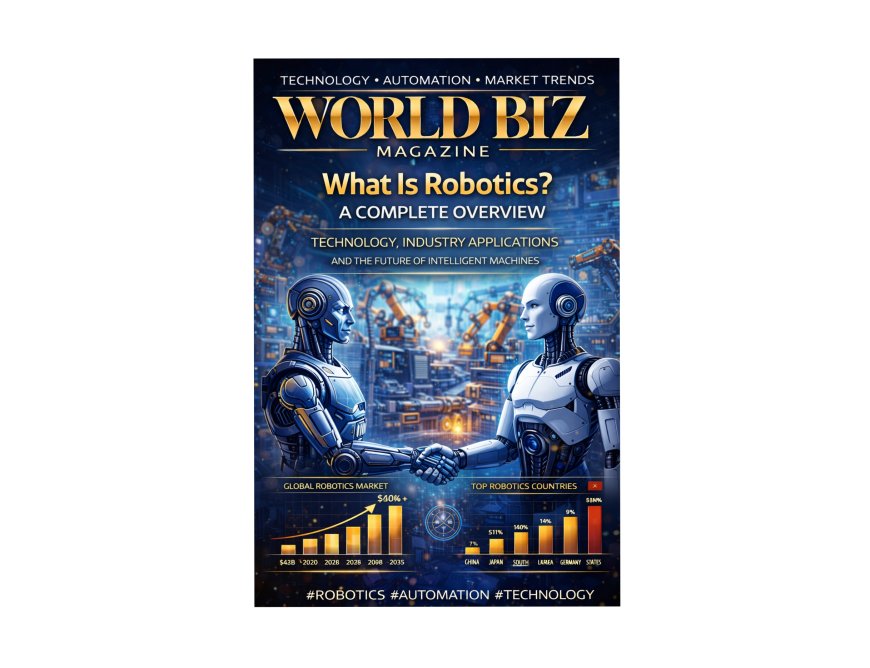
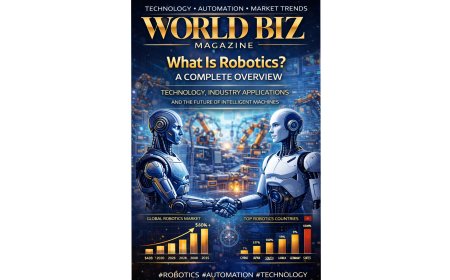
What Is Robotics? A Complete Overview
Technology, Industry Applications, and the Future of Intelligent Machines
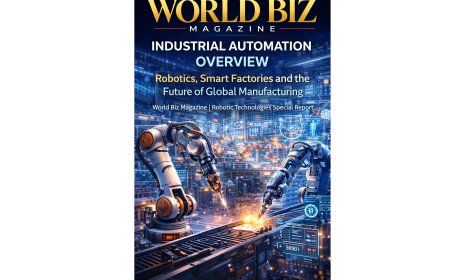
World Biz Magazine | Robotic Technologies Special Report
Robotics has emerged as one of the most transformative technologies shaping the modern world. From manufacturing factories and logistics warehouses to healthcare systems and space exploration, robots are increasingly performing tasks that once required human labor.
Advances in artificial intelligence, sensors, machine learning, and computing power have dramatically expanded the capabilities of robots. Today, robots can assemble cars, perform surgical procedures, inspect infrastructure, and even assist in disaster response operations.
As industries continue to adopt automation technologies, robotics is becoming a critical component of the global digital economy.
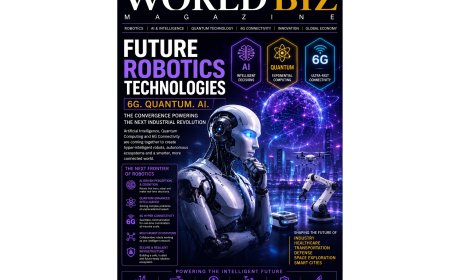
This World Biz Magazine Robotic Technologies report explores robotics as a technology field, including its history, market size, industry applications, major companies, global adoption trends, policy influence, investment activity, and the future outlook through 2035.
What Is Robotics?
Robotics is an interdisciplinary field that combines engineering, computer science, artificial intelligence, and mechanical design to create machines capable of performing tasks autonomously or semi-autonomously.
A robot typically consists of several key components:
· mechanical structure (body and actuators)
· sensors for environmental perception
· control systems for movement and decision-making
· software and algorithms to process data and perform tasks
Robots are designed to perform repetitive, dangerous, or highly precise tasks more efficiently than humans.
Evolution of Robotics
Robotics technology has evolved significantly over the past century.
Early Mechanical Automation (1900-1950)
Early automation involved mechanical devices designed to assist in industrial production.
Industrial Robotics Era (1960-1990)
The introduction of industrial robots transformed manufacturing processes.
Intelligent Robotics (2000-Present)
Modern robots use artificial intelligence, sensors, and machine learning to perform complex tasks.
Today, robotics systems can operate in dynamic environments and collaborate with human workers.
Global Robotics Market
The robotics industry has experienced rapid expansion due to advances in automation and AI technologies.
Market Size
|
Year |
Market Value |
|
2015 |
$25B |
|
2020 |
$45B |
|
2025 |
$80B |
|
2035 forecast |
$200B+ |
Industrial robots account for a significant share of the robotics market, while service robots represent the fastest-growing segment.
Types of Robots
Robots can be categorized into several types based on their applications.
Industrial Robots
Used in manufacturing environments for tasks such as welding, assembly, painting, and packaging.
Service Robots
Assist humans in sectors like healthcare, hospitality, and logistics.
Medical Robots
Used in surgical procedures and healthcare support systems.
Autonomous Robots
Self-operating robots used in transportation, exploration, and military applications.
Collaborative Robots (Cobots)
Designed to work safely alongside humans in shared environments.
Key Robotics Technologies
Several technologies power modern robotics systems.
Artificial Intelligence
AI enables robots to interpret data, recognize patterns, and make decisions.
Machine Vision
Computer vision systems allow robots to identify objects and navigate environments.
Sensors
Sensors help robots detect temperature, pressure, distance, and movement.
Actuators
Actuators convert energy into mechanical motion.
Edge Computing
Real-time data processing enables faster robotic decision-making.
Global Robotics Industry Leaders
The robotics industry includes several leading technology companies.
Major Robotics Companies
· Fanuc
· ABB
· KUKA
· Yaskawa Electric
· Boston Dynamics
These companies develop robots used in industries worldwide.
Countries Leading Robotics Adoption
Several countries are leading the global robotics revolution.
Top Robotics Markets
|
Country |
Industry Strength |
|
China |
largest robotics market |
|
Japan |
robotics innovation leader |
|
Germany |
advanced manufacturing |
|
South Korea |
highest robot density |
|
United States |
AI robotics development |
Asia dominates global industrial robot installations.
Industrial Applications of Robotics
Robotics technologies are used across numerous industries.
Manufacturing
Robots assemble vehicles, electronics, and industrial machinery.
Logistics
Automated warehouses use robots to manage inventory and shipping.
Healthcare
Medical robots assist surgeons and hospital staff.
Agriculture
Agricultural robots help farmers with harvesting and crop monitoring.
Defense and Security
Military robots perform surveillance and hazardous operations.
Economic Impact of Robotics
Robotics technologies significantly influence productivity and industrial competitiveness.
Key Benefits
· improved production efficiency
· reduced labor costs
· enhanced workplace safety
· improved product quality
Automation technologies help companies remain competitive in global markets.
Investment Trends in Robotics
Investment in robotics startups and technology companies has surged in recent years.
Major Investors
· venture capital firms
· technology companies
· industrial manufacturers
· government innovation programs
Robotics investment is expected to continue rising as industries adopt automation technologies.
Policy and Government Initiatives
Many governments support robotics innovation through national technology programs.
Major Initiatives
· China’s robotics industry development strategy
· Japan’s robotics innovation programs
· European Union robotics research initiatives
· United States robotics and AI research funding
These policies aim to strengthen national technology leadership.
Challenges in Robotics Development
Despite its growth, the robotics industry faces several challenges.
Key Challenges
· high development costs
· complex software systems
· workforce retraining needs
· cybersecurity risks
Addressing these challenges will be important for future robotics adoption.
Emerging Trends in Robotics
Several trends will shape the future of robotics.
Autonomous Systems
Fully autonomous robots capable of performing tasks without human intervention.
Human-Robot Collaboration
Cobots working alongside humans in factories and workplaces.
AI-Powered Robotics
Machine learning systems enabling robots to adapt to changing environments.
Robotics in Everyday Life
Service robots may become common in homes, offices, and public spaces.
Industry Outlook to 2035
Growth Drivers
1. industrial automation demand
2. AI technology advancements
3. labor shortages in manufacturing
4. logistics automation growth
5. government innovation programs
Market Forecast
|
Segment |
2035 Forecast |
|
robotics industry |
$200B+ |
|
service robots |
rapid expansion |
|
AI robotics |
strong growth |
Robotics will play a central role in the next generation of global technology systems.
World Biz Magazine Insights
Robotics represents one of the most important technological revolutions of the 21st century. As machines become more intelligent and autonomous, robotics will increasingly reshape industries, labor markets, and global economic structures.
Countries and companies that lead robotics innovation will gain significant advantages in the global technology race.
Conclusion
Robotics is transforming how industries operate and how societies interact with technology. From manufacturing automation to healthcare innovation and space exploration, robots are becoming essential tools in the modern economy.
As artificial intelligence and advanced engineering continue to evolve, robotics will remain one of the most influential technologies shaping the future of work and industry.
Disclaimer
The information presented in this article is intended for informational and educational purposes only. Market statistics, projections, and forecasts are based on publicly available industry data and analytical estimates at the time of publication. While every effort has been made to ensure accuracy, World Biz Magazine does not guarantee future market performance or investment outcomes. Readers should consult professional advisors before making financial or strategic decisions based on the information contained in this report. All trademarks and company names referenced remain the property of their respective owners.
What's Your Reaction?
 Like
0
Like
0
 Dislike
0
Dislike
0
 Love
0
Love
0
 Funny
0
Funny
0
 Angry
0
Angry
0
 Sad
0
Sad
0
 Wow
0
Wow
0