












































































































































































































Understanding Software Licensing and Intellectual Property Rights
A complete guide to software licensing, intellectual property, and global legal frameworks.

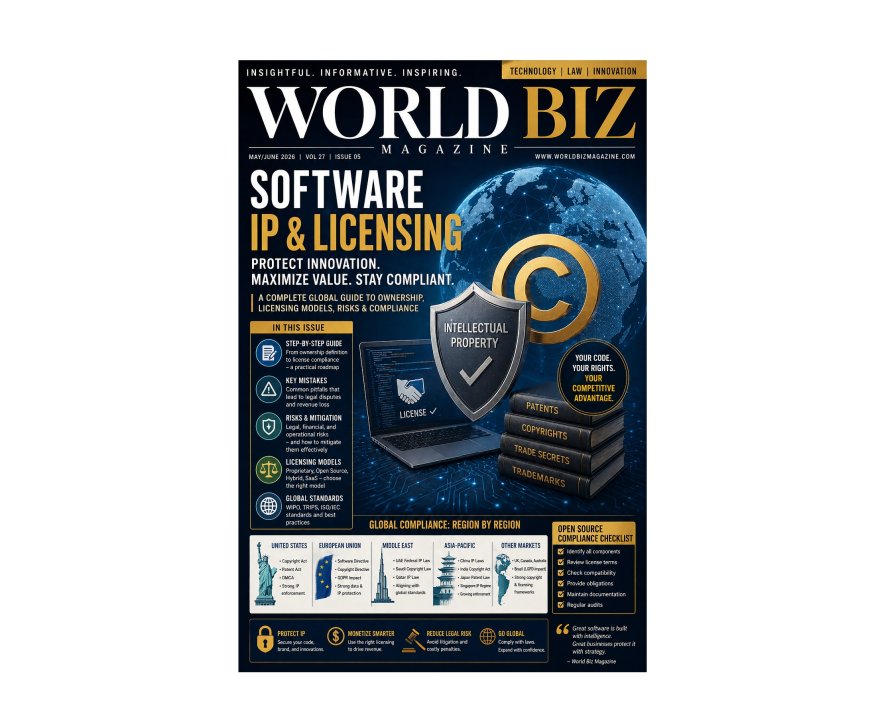
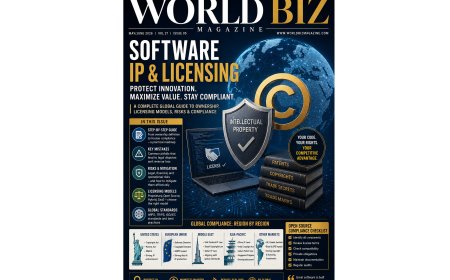
Software IP & Licensing
Ownership, Compliance, and Monetization in a Global Digital Economy
World Biz Magazine | Intellectual Property, Legal Strategy & Software Business Models
Software is no longer just a product it is intellectual property (IP), a revenue engine, and a strategic asset. Yet many companies underestimate the complexity of licensing, ownership rights, and global compliance requirements.
From open-source obligations to proprietary licensing models, mismanaging software IP can lead to lawsuits, revenue loss, blocked market entry, and even loss of ownership rights.
This article delivers a comprehensive, step-by-step guide to software IP and licensing, including key risks, common mistakes, global regulatory frameworks, and strategic insights.
What Is Software IP?
Software IP refers to the legal rights protecting software code, architecture, algorithms, and design.
Core IP Protections:
- Copyright - Protects source code
- Patents - Protects unique algorithms or innovations
- Trademarks - Protects brand identity
- Trade Secrets - Protects proprietary logic and processes
Global frameworks include:
- World Intellectual Property Organization
- TRIPS Agreement
Step-by-Step Guide to Software IP & Licensing
Step 1: Define Ownership Clearly
- Ensure employment contracts assign IP to the company
- Clarify ownership in outsourcing agreements
- Avoid ambiguous joint ownership structures
Risk: Developers or contractors may claim rights to code.
Step 2: Choose the Right Licensing Model
Common Licensing Types:
1. Proprietary Licensing
- Full control by owner
- Revenue through subscriptions or licenses
2. Open-Source Licensing
- Free use with conditions
- Examples:
- GNU General Public License
- MIT License
3. Hybrid Licensing
- Open core + paid enterprise features
4. SaaS Licensing
- Access-based model (no ownership transfer)
Step 3: Audit Third-Party Components
- Identify all external libraries
- Ensure compliance with license terms
- Avoid “license contamination” from copyleft licenses
Example Risk:
Using GPL code in proprietary software may force disclosure of source code.
Step 4: Implement License Compliance Systems
- Maintain Software Bill of Materials (SBOM)
- Use automated license tracking tools
- Conduct periodic compliance audits
Step 5: Protect IP Technically
- Code obfuscation
- Encryption
- Secure APIs
- Access control systems
Step 6: Register and Enforce IP Rights
- Register copyrights and patents where applicable
- Monitor for infringement
- Take legal action when necessary
Common Mistakes Companies Make
Ignoring Open-Source Obligations
Failure to comply with licenses like GNU General Public License can result in legal action.
Unclear Ownership Agreements
Startups often fail to secure IP rights from early developers.
Mixing Incompatible Licenses
Combining different open-source licenses can create legal conflicts.
No License Documentation
Lack of proper documentation leads to compliance failures during audits.
Assuming SaaS Eliminates IP Risk
Even SaaS platforms must comply with licensing and IP laws.
Risks & Mitigation Strategies
Key Risks
Legal Liability
- Lawsuits for license violations
- IP infringement claims
Financial Loss
- Fines and penalties
- Loss of licensing revenue
Product Restrictions
- Forced open-sourcing of proprietary code
- Market access denial
Reputation Damage
- Loss of customer and investor trust
Mitigation Strategies
- Conduct regular IP audits
- Implement compliance automation tools
- Train development teams on licensing
- Use legal review before product release
- Maintain clear documentation
Global Standards & Regional Regulations
Global Frameworks
- World Intellectual Property Organization
- TRIPS Agreement
These frameworks harmonize IP protection across countries.
United States
Key Laws:
- Copyright Act
- Patent Act
- Digital Millennium Copyright Act (DMCA)
Key Features:
- Strong IP enforcement
- Software patents widely recognized
- Strict penalties for infringement
European Union
Key Regulations:
- Software Directive
- Copyright Directive
- General Data Protection Regulation (affects software data handling)
Key Features:
- Strong user rights
- Data protection integration with software licensing
Middle East
Key Countries:
- UAE: Federal IP laws
- Saudi Arabia: Copyright Law
- Qatar: IP protection frameworks
Key Features:
- Increasing enforcement
- Alignment with global IP standards
- Focus on digital transformation
Asia-Pacific
Key Countries:
- China
- Strong IP laws but complex enforcement
- Data and software control regulations
- India
- Copyright Act + IT Act
- Growing SaaS ecosystem
- Japan
- Strong patent and copyright system
- Singapore
- Business-friendly IP regime
Other Key Markets
- UK - Post-Brexit IP laws aligned with EU
- Canada - Strong copyright protection
- Australia - Strict software licensing enforcement
- Brazil - Growing IP regulation (LGPD influence)
Strategic Insights
IP Is a Core Business Asset
Software licensing directly impacts valuation and revenue.
Open Source Is Not Risk-Free
It requires strict compliance management.
Global Expansion Requires Legal Alignment
Different regions impose different IP rules.
Compliance Drives Investor Confidence
Investors evaluate IP ownership and licensing clarity.
World Biz Magazine Insights
- Software IP is the foundation of digital business models
- Licensing strategy defines revenue scalability
- Poor IP management can destroy enterprise value
- The future lies in automated compliance and hybrid licensing models
- Companies that master IP governance gain global competitive advantage
Conclusion
Software IP and licensing are no longer back-office legal concerns they are frontline strategic priorities. As businesses expand globally, they must navigate a complex landscape of legal frameworks, licensing obligations, and compliance requirements.
Organizations that establish clear ownership, adopt the right licensing models, and proactively manage risks will not only protect their innovations but also unlock new revenue streams and market opportunities.
In the digital economy, control over code is control over business value.
Disclaimer
Editorial Notice:
This article is for informational purposes only and does not constitute legal advice.
Legal Advisory Clause:
Software IP and licensing laws vary by jurisdiction and are subject to change. Organizations should consult qualified legal professionals for specific guidance.
Third-Party References:
All frameworks and licenses, including GNU General Public License and MIT License, are referenced for educational purposes and remain the property of their respective authorities.
What's Your Reaction?
 Like
0
Like
0
 Dislike
0
Dislike
0
 Love
0
Love
0
 Funny
0
Funny
0
 Angry
0
Angry
0
 Sad
0
Sad
0
 Wow
0
Wow
0