






































































































































The Future of Fashion: Global Market Size, Export Leaders and Industry Forecast to 2035
A comprehensive World Biz Magazine report on the global fashion market, covering country-by-country exports, industry investments, policy impact, and long-term outlook to 2035.

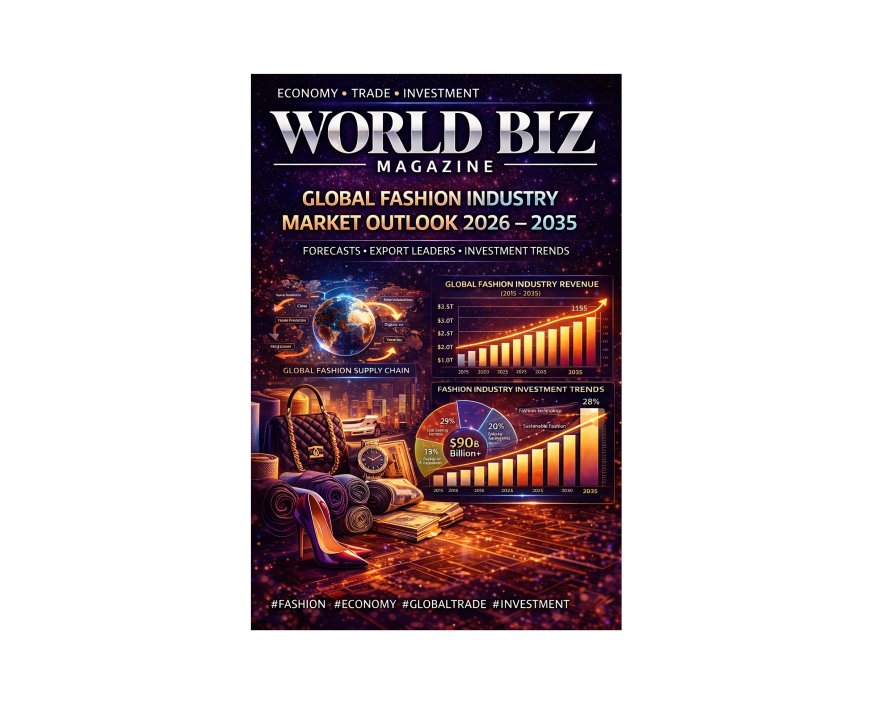
Global Fashion Industry Market Outlook (2026-2035)
World Biz Magazine | Industry Today Special Report
The global fashion industry spanning apparel, footwear, accessories, and luxury brands remains one of the most influential consumer sectors worldwide. It directly impacts global manufacturing, retail, cultural trends, and employment, while influencing international trade flows and economic development.
Despite supply-chain disruptions, geopolitical tensions, inflation, and sustainability pressures, the industry continues to expand due to e-commerce growth, rising middle-class consumption, and digital transformation in fashion design and retail.
This World Biz Magazine Industry Today report explores the global fashion market outlook from 2026 to 2035, covering market size, key players, investment flows, political and regulatory factors, global exports, price trends, and the long-term future of fashion.
Global Fashion Industry Overview
The global fashion ecosystem includes:
- Apparel manufacturing
- Textile production
- Luxury fashion brands
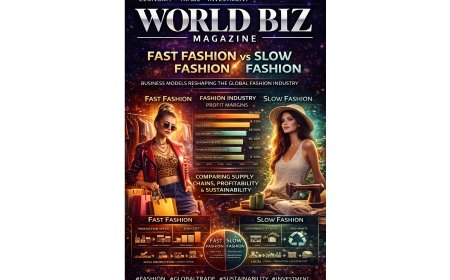
- Fast fashion companies
- E-commerce apparel marketplaces
- Fashion technology platforms
The industry combines creativity, technology, and global logistics networks. Fashion is also one of the largest employers globally, particularly in emerging markets.
The global fashion market was estimated at approximately $2.5 trillion in 2024, with steady growth expected in the coming decade.
Meanwhile, the global apparel market alone was valued at about $1.77 trillion in 2024 and is expected to reach $2.26 trillion by 2030, growing at around 4.2% annually.
By 2035, the broader fashion sector including apparel, footwear, luxury, and fashion tech is projected to exceed $3-3.5 trillion globally.
Market Size and Growth Forecast (2015-2035)
Global Fashion Market Evolution
|
Year |
Market Size |
|
2015 |
$1.7 trillion |
|
2018 |
$2.0 trillion |
|
2020 |
$1.9 trillion (pandemic impact) |
|
2022 |
$2.3 trillion |
|
2024 |
$2.5 trillion |
|
2030 |
$3.0-3.3 trillion |
|
2035 |
$3.5 trillion+ |
The industry suffered its only major contraction in 2020 due to pandemic lockdowns, but demand recovered quickly as global consumption resumed.
Growth drivers include:
- E-commerce fashion platforms
- Digital marketing and social commerce
- Luxury brand expansion in Asia
- Rising middle-class consumers
- Fashion technology adoption
Key Contacts and Global Fashion Institutions
The fashion industry interacts with numerous international institutions:
- World Trade Organization (WTO)
- International Textile Manufacturers Federation
- Council of Fashion Designers
- International Apparel Federation
- Global Fashion Agenda (sustainability body)
These organizations influence trade standards, sustainability frameworks, and global supply-chain policies.
Key Players in the Global Fashion Industry
Major fashion corporations include:
- LVMH
- Inditex (Zara)
- Nike
- Adidas
- H&M Group
- Kering
- PVH Corporation
- Fast Retailing (Uniqlo)
Luxury conglomerates dominate profitability, while fast-fashion retailers lead volume sales.
Luxury fashion alone is expected to exceed $364 billion by 2030, supported by affluent consumers and brand exclusivity.
Global Production and Export Leaders
Fashion manufacturing is geographically distributed across several major economies.
Largest Textile and Apparel Exporters
- China
- Bangladesh
- Vietnam
- Germany
- Italy
- Turkey
- India
China alone accounts for more than 30% of global textile exports, making it the largest supplier of garments worldwide.
The United States remains the largest apparel importer, reflecting its massive consumer market.
Country-by-Country Fashion Market Influence
United States
- Largest fashion consumer market
- Dominates retail and luxury demand
- Home to major brands and digital platforms
China
- Largest manufacturing base
- Rapidly growing domestic luxury market
European Union
- Center for luxury fashion (France, Italy)
- Strong export-oriented fashion houses
Bangladesh and Vietnam
- Global apparel manufacturing hubs
- Strong export dependence on fashion
India
- Expanding textile and garment exports
- Large domestic fashion market
Countries Gaining Investment
- Vietnam
- Bangladesh
- India
- Indonesia
- Turkey
These countries benefit from lower labor costs, expanding manufacturing capacity, and supportive trade policies.
Countries Losing Relative Momentum
- Some European manufacturing hubs with high labor costs
- Countries with unstable political environments
- Regions lacking modern manufacturing infrastructure
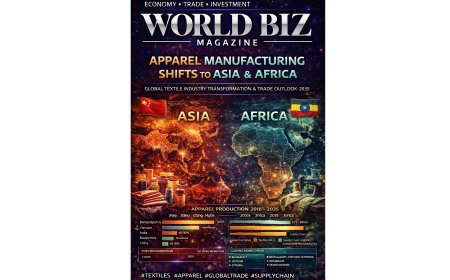
Manufacturing shifts toward Southeast Asia as brands diversify supply chains.
Policies and Political Influence
Government policies significantly affect fashion industry growth.
Key policy drivers include:
- Trade tariffs and import duties
- Labor regulations
- Environmental sustainability rules
- Textile export incentives
- Intellectual property protection
Tariffs and geopolitical tensions have already reshaped fashion supply chains, pushing companies to diversify manufacturing beyond traditional hubs.
Investment Landscape and Major Investors
Major investors in the fashion sector include:
- Private equity firms
- Sovereign wealth funds
- Luxury conglomerates
- Venture capital funds
- Technology investors
Recent investment trends focus on:
- sustainable textiles
- fashion technology
- digital retail platforms
- circular fashion models
Fashion tech alone reached $239 billion in 2024 and may exceed $345 billion by 2030, driven by AI design tools and virtual try-on technology.
New Expansions and Projects
Key innovation areas include:
- AI-driven fashion design
- virtual fashion and metaverse clothing
- sustainable materials
- digital fashion marketplaces
- blockchain-based product authentication
Fast fashion continues expanding globally, with the sector projected to grow strongly through the next decade.
Inflation and Price Trends
Fashion prices have steadily increased due to:
- rising labor costs
- supply chain disruptions
- energy costs
- logistics inflation
Luxury brands have driven much of their revenue growth through price increases rather than volume expansion in recent years.
10-Year Fashion Price Flow
|
Year |
Trend |
|
2015-2018 |
Moderate price growth |
|
2019 |
Luxury expansion |
|
2020 |
Market contraction |
|
2021-2023 |
Supply chain inflation |
|
2024-2025 |
Premium pricing growth |
|
2026-2030 |
Stabilization with innovation |
|
2030-2035 |
Sustainability-driven pricing |
Comparison with Other Global Industries
|
Sector |
Estimated Size 2030 |
|
Consumer Economy |
$35+ trillion |
|
Energy |
$7–8 trillion |
|
Automotive |
$4 trillion |
|
Telecom |
$3–4 trillion |
|
Fashion |
$3 trillion |
Fashion remains one of the largest consumer industries worldwide.
Global Fashion Industry Revenue Trend (2015-2035)
|
Year |
Estimated Industry Revenue |
Price Trend Index* |
|
2015 |
$1.7T |
100 |
|
2016 |
$1.8T |
101 |
|
2017 |
$1.9T |
103 |
|
2018 |
$2.0T |
105 |
|
2019 |
$2.2T |
107 |
|
2020 |
$1.9T |
104 |
|
2021 |
$2.1T |
110 |
|
2022 |
$2.3T |
115 |
|
2023 |
$2.4T |
118 |
|
2024 |
$2.5T |
121 |
|
2025 |
$2.6T |
124 |
|
2026 |
$2.7T |
127 |
|
2027 |
$2.8T |
130 |
|
2028 |
$2.9T |
133 |
|
2029 |
$3.0T |
136 |
|
2030 |
$3.1T |
140 |
|
2031 |
$3.2T |
143 |
|
2032 |
$3.3T |
146 |
|
2033 |
$3.35T |
149 |
|
2034 |
$3.4T |
152 |
|
2035 |
$3.5T+ |
155 |
*Price Trend Index reflects global fashion product pricing relative to 2015.
Key Trend Phases
2015-2019: Expansion Era
- Fast fashion boom
- Global supply chains optimized
- E-commerce fashion platforms rise
- Luxury brands expand in Asia
Revenue growth averaged 6-7% annually.
2020: Pandemic Shock
- Retail shutdowns
- Supply chain disruptions
- Fashion demand decline
Industry revenue dropped 12% globally.
2021-2024: Recovery & Digital Shift
- Online fashion retail surged
- Luxury demand rebounded strongly
- Sustainability became a central theme
Prices rose due to logistics and energy inflation.
2025-2030: Structural Industry Transformation
Growth drivers include:
- AI fashion design
- Direct-to-consumer (DTC) brands
- Digital fashion marketplaces
- Circular fashion & sustainability
Market expected to exceed $3.1T by 2030.
2030-2035: Next Generation Fashion Economy
Key industry developments expected:
- Metaverse fashion & digital clothing
- Blockchain authentication for luxury goods
- AI-driven inventory optimization
- Sustainable textile innovation
Revenue forecast $3.5T+ globally by 2035.
Fashion Price Inflation (2015-2035)
|
Segment |
10-Year Price Increase |
|
Luxury Fashion |
+35-45% |
|
Fast Fashion |
+15-20% |
|
Premium Brands |
+25-30% |
|
Sustainable Apparel |
+30-50% |
Luxury fashion prices rose fastest due to brand positioning and demand from affluent consumers.
Regional Revenue Contribution (2030 Forecast)
|
Region |
Market Share |
|
Asia-Pacific |
38% |
|
North America |
25% |
|
Europe |
22% |
|
Middle East |
7% |
|
Latin America |
5% |
|
Africa |
3% |
Asia remains the fastest-growing fashion market.
Future Industry Outlook (2026-2035)
Key trends shaping the next decade:
Sustainability
The industry faces pressure to reduce its environmental impact.
Digital Fashion
Virtual clothing and metaverse commerce may redefine fashion consumption.
AI and Data-Driven Design
Artificial intelligence will influence product development and forecasting.
E-commerce Growth
Online apparel retail is expected to exceed $1.6 trillion by 2033, driven by digital marketplaces.
Supply Chain Diversification
Manufacturing will continue shifting toward Southeast Asia and emerging markets.
World Biz Magazine Industry Insights
- Fashion will increasingly integrate technology and sustainability.
- Emerging markets will dominate production growth.
- Digital platforms will reshape fashion retail distribution.
- Luxury brands will remain the most profitable segment.
- Sustainability regulations will transform manufacturing methods.
Conclusion
The global fashion industry stands at a pivotal moment. While demand continues to grow, the sector faces structural changes driven by technology, sustainability, and geopolitical shifts.
Between 2026 and 2035, fashion companies that embrace innovation, digital transformation, and responsible production will dominate the market.
Fashion is not merely an industry it is a reflection of global culture, technology, and economic evolution.
Disclaimer
The information presented in this report is intended for informational and educational purposes only. Market statistics, projections, and forecasts are based on publicly available data and industry estimates at the time of publication. While every effort has been made to ensure accuracy, World Biz Magazine does not guarantee future market performance or investment outcomes. Readers should consult professional advisors before making financial or strategic decisions based on the information contained in this article. All trademarks, company names, and brand references remain the property of their respective owners.
What's Your Reaction?
 Like
0
Like
0
 Dislike
0
Dislike
0
 Love
0
Love
0
 Funny
0
Funny
0
 Angry
0
Angry
0
 Sad
0
Sad
0
 Wow
0
Wow
0