






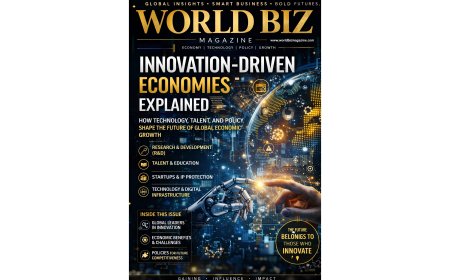













































































































































Inside Innovation-Driven Economies: Global Trends, Strategies, and Opportunities
A detailed World Biz Magazine research report on innovation economies, highlighting global trends, policies, and future opportunities.

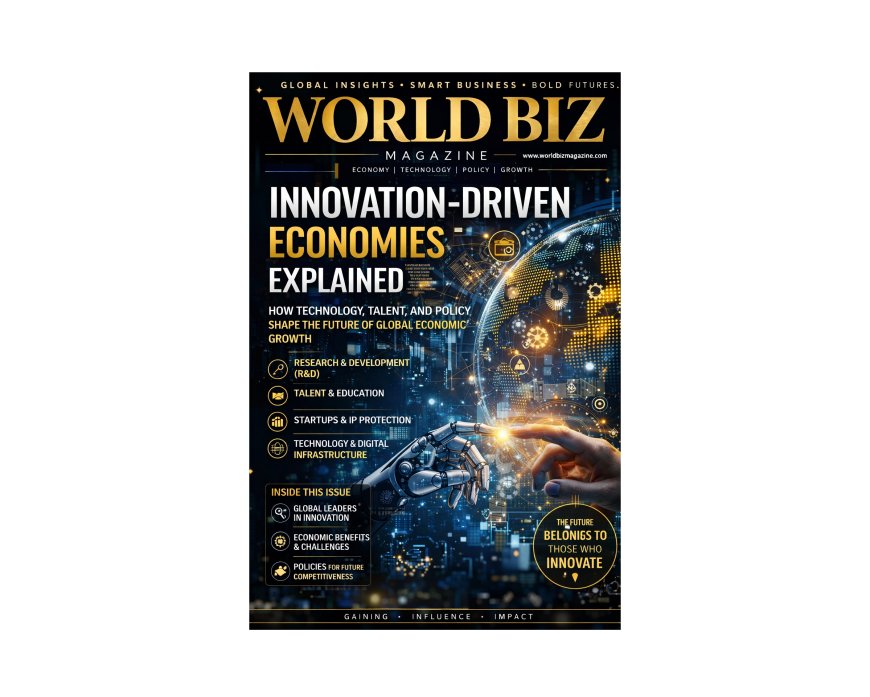
Innovation-Driven Economies Explained
How Technology, Talent, and Policy Shape the Future of Global Economic Growth
By World Biz Magazine Editorial Board
“World Biz Magazine is a leading global publication delivering in-depth analysis on economic transformation, technological innovation, investment trends, and emerging global markets. Through research-driven insights and expert editorial perspectives, the magazine provides strategic intelligence for policymakers, investors, entrepreneurs, and business leaders.”
This article is part of World Biz Magazine’s Global Innovation & Economic Transformation Series, focusing on how nations are transitioning toward knowledge-based, technology-driven economic models in an increasingly competitive global landscape.
The Shift Toward Innovation Economies
In the 21st century, economic power is no longer defined solely by natural resources or industrial output. Instead, nations are increasingly measured by their ability to innovate, adapt, and create knowledge-based value. Countries such as United States, South Korea, and Israel have demonstrated how innovation-driven strategies can transform economies into global leaders in technology, entrepreneurship, and productivity.
An innovation-driven economy is one where growth is primarily fueled by research, technological advancement, intellectual capital, and entrepreneurial ecosystems rather than traditional factors like labor or raw materials. This shift reflects a broader transformation in global economics from industrial production to knowledge creation.
What is an Innovation-Driven Economy?
An innovation-driven economy is characterized by its reliance on continuous innovation, advanced technologies, and high-value industries to drive growth and competitiveness. Unlike factor-driven or efficiency-driven economies, innovation-driven systems emphasize:
- Research and Development (R&D)
- Intellectual property creation
- Startup ecosystems
- Advanced education and skills
- Digital infrastructure
In such economies, value is generated not just by producing goods, but by creating new ideas, technologies, and business models that can scale globally.
Core Pillars of Innovation-Driven Economies
Research & Development (R&D)
R&D is the foundation of innovation. Governments and corporations invest heavily in research to develop new technologies and solutions. Countries like Germany and Japan allocate significant portions of their GDP to R&D, enabling breakthroughs in engineering, manufacturing, and technology.
Strong R&D ecosystems involve:
- Universities and research institutions
- Corporate innovation labs
- Public-private partnerships
Human Capital & Education
Innovation thrives on talent. Education systems in innovation-driven economies prioritize:
- STEM (Science, Technology, Engineering, Mathematics)
- Critical thinking and problem-solving
- Entrepreneurial skills
For example, Finland is known for its world-class education system, which emphasizes creativity and innovation from an early age.
Technology & Digital Infrastructure
Advanced digital infrastructure is essential for scaling innovation. High-speed internet, cloud computing, AI capabilities, and data ecosystems enable businesses to innovate rapidly and operate globally.
Countries like Singapore have built highly connected digital ecosystems that support startups and multinational corporations alike.
Startup Ecosystem & Entrepreneurship
Startups are the engines of innovation. Innovation-driven economies foster:
- Access to venture capital
- Incubators and accelerators
- Business-friendly regulations
Israel, often called the “Startup Nation,” exemplifies how a strong entrepreneurial culture can drive economic growth.
Intellectual Property (IP) Protection
Protecting innovation is critical. Strong IP laws ensure that creators and companies can:
- Safeguard their inventions
- Monetize innovations
- Attract investment
Government Policy & Regulation
Governments play a strategic role by:
- Funding research
- Providing tax incentives
- Creating innovation-friendly policies
Public policy can either accelerate or hinder innovation depending on its structure and implementation.
Stages of Economic Development
Economies typically evolve through three stages:
- Factor-Driven (labor, natural resources)
- Efficiency-Driven (industrialization, productivity)
- Innovation-Driven (technology, knowledge, creativity)
Innovation-driven economies represent the most advanced stage, where competitive advantage comes from unique ideas and technological leadership.
Global Leaders in Innovation
United States
The U.S. leads in:
- Technology innovation
- Venture capital
- Startup ecosystems (Silicon Valley)
Companies like Apple and Microsoft are products of this ecosystem.
South Korea
South Korea transformed from a manufacturing economy to a global innovation hub through:
- Heavy R&D investment
- Strong industrial policy
Israel
Israel’s innovation success is driven by:
- Military technology transfer
- Venture capital ecosystem
- High startup density
Benefits of Innovation-Driven Economies
Sustainable Economic Growth
Innovation creates long-term growth by continuously generating new industries and markets.
Global Competitiveness
Countries can compete globally through unique technologies and solutions.
High-Value Job Creation
Innovation-driven industries create skilled, high-paying jobs.
Technological Leadership
Nations can lead in emerging fields like AI, biotech, and clean energy.
Challenges Facing Innovation Economies
Inequality
Innovation can widen the gap between skilled and unskilled workers.
High Costs of R&D
Research investments require significant capital with uncertain returns.
Rapid Technological Disruption
Industries can become obsolete quickly, requiring constant adaptation.
Regulatory Complexity
Balancing innovation with regulation remains a major challenge.
Emerging Markets and Innovation
Countries like India, Pakistan, and Indonesia are:
- Investing in digital infrastructure
- Encouraging startups
- Attracting global investors
These economies are transitioning toward innovation-driven models, creating new opportunities for growth.
The Role of Technology in Future Economies
Technologies shaping innovation-driven economies include:
- Artificial Intelligence (AI)
- Blockchain
- Biotechnology
- Renewable energy
These technologies will define the next phase of global economic competition.
World Biz Magazine Insight
At World Biz Magazine, our analysis highlights:
“Innovation is no longer a competitive advantage it is the foundation of economic survival in a rapidly evolving global landscape.”
Countries that fail to innovate risk:
- Economic stagnation
- Loss of global competitiveness
Conclusion: Building the Economies of Tomorrow
Innovation-driven economies represent the future of global growth. They are built on:
- Knowledge
- Technology
- Human creativity
For governments, businesses, and entrepreneurs, the path forward is clear:
Invest in innovation or risk being left behind.
Final Thought
“The nations that lead in innovation today will define the global economy of tomorrow.”
Disclaimer
This article is intended for informational and educational purposes only and does not constitute financial, economic, policy, or investment advice. The analysis presented reflects general global trends and research-based insights, which may vary depending on country-specific conditions, regulatory environments, and market dynamics.
Readers are advised to consult qualified economic advisors, policy experts, and financial professionals before making decisions related to investments, economic strategy, or business expansion.
World Biz Magazine does not guarantee the accuracy, completeness, or future outcomes of the information presented and shall not be held liable for any decisions made based on this content.
What's Your Reaction?
 Like
0
Like
0
 Dislike
0
Dislike
0
 Love
0
Love
0
 Funny
0
Funny
0
 Angry
0
Angry
0
 Sad
0
Sad
0
 Wow
0
Wow
0