
























































































































































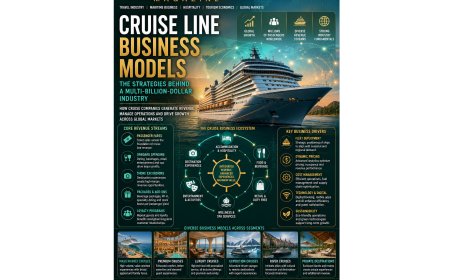


















Cruise Line Business Models: How Global Cruise Companies Generate Revenue, Scale Operations, and Drive Growth
A detailed analysis of how global cruise companies build profitable operations through hospitality, tourism, entertainment, and destination experiences.

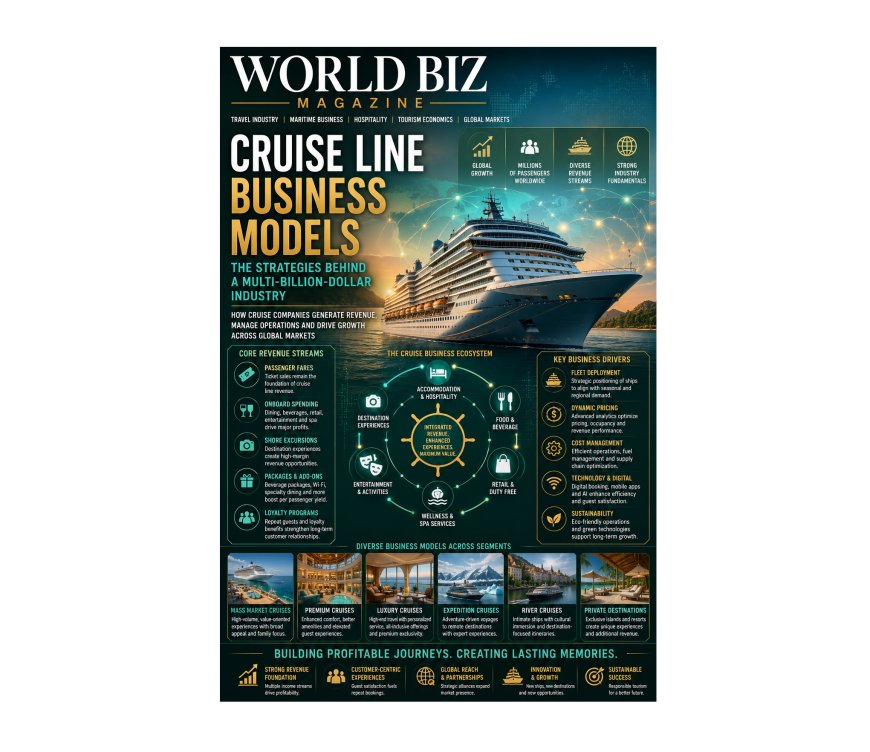
Cruise Line Business Models
Understanding How Cruise Companies Generate Revenue, Manage Operations, and Build Sustainable Growth in the Global Cruise Industry
World Biz Magazine | Travel, Tourism & Maritime Business
The global cruise industry has transformed into one of the most sophisticated sectors within international tourism, combining hospitality, transportation, entertainment, real estate, retail, technology, and destination management into a single integrated business ecosystem. Modern cruise lines are no longer simply transportation providers carrying passengers from one destination to another. Instead, they operate complex floating resorts that generate revenue through multiple channels while managing large-scale maritime operations across international markets.
Over the past several decades, cruise companies have evolved their business models to maximize profitability, improve customer experiences, diversify revenue streams, and adapt to changing consumer preferences. Today's leading operators manage fleets worth billions of dollars, serve millions of passengers annually, and oversee global networks of destinations, ports, suppliers, travel agents, and tourism partners.
Understanding cruise line business models is essential for investors, tourism professionals, hospitality operators, maritime stakeholders, and business leaders seeking insights into one of the world's most dynamic travel industries. The success of cruise companies depends not only on ticket sales but also on their ability to optimize onboard spending, control operational costs, manage fleet deployment, and create memorable passenger experiences.
As the industry continues expanding through technological innovation, sustainability initiatives, and emerging travel trends, cruise business models are becoming increasingly sophisticated and diversified.
This article explores how cruise lines generate revenue, manage costs, structure operations, and position themselves for long-term growth within the global tourism economy.
Understanding the Cruise Line Business
At its core, a cruise line operates as a hospitality and tourism company that utilizes ships as floating destinations.
Unlike airlines, which primarily focus on transportation, cruise companies combine multiple services into a single travel product.
These services include:
- Accommodation
- Transportation
- Dining
- Entertainment
- Recreation
- Excursions
- Retail experiences
- Wellness services
Passengers purchase access to a complete vacation experience rather than a simple transportation service.
This integrated approach creates numerous revenue-generating opportunities.
The Evolution of Cruise Business Models
Historically, cruise companies relied heavily on ticket sales.
Today, revenue generation has become significantly more diversified.
Modern cruise operators increasingly focus on:
- Ancillary revenue
- Premium experiences
- Destination partnerships
- Loyalty programs
- Digital services
- Private island developments
This evolution has improved profitability while reducing dependence on fare revenue alone.
The Core Revenue Model
Cruise lines typically operate under a multi-revenue-stream business structure.
Revenue is generated both before and during the cruise experience.
Ticket Sales and Passenger Fares
Passenger fares remain the primary source of revenue.
Ticket pricing varies based on:
- Cabin category
- Itinerary
- Duration
- Seasonality
- Destination popularity
- Brand positioning
Cruise operators use sophisticated revenue management systems to adjust pricing based on demand patterns.
Similar to airlines and hotels, dynamic pricing plays a critical role in maximizing occupancy and revenue.
Onboard Revenue Streams
One of the defining characteristics of cruise business models is the importance of onboard spending.
Many operators generate significant revenue after passengers board the ship.
Food and Beverage Sales
While basic dining is typically included in cruise fares, premium dining experiences often generate additional revenue.
Examples include:
- Specialty restaurants
- Fine dining venues
- Wine programs
- Beverage packages
- Private culinary experiences
These offerings enhance passenger experiences while improving profitability.
Entertainment and Activities
Cruise ships increasingly function as entertainment destinations.
Revenue opportunities include:
- Premium shows
- Gaming facilities
- Exclusive events
- Adventure attractions
- VIP experiences
Entertainment diversification has become a major competitive differentiator.
Retail and Duty-Free Shopping
Modern cruise vessels feature extensive retail operations.
Popular categories include:
- Luxury goods
- Jewelry
- Fashion
- Cosmetics
- Souvenirs
Retail spending contributes significantly to onboard revenue.
Wellness and Spa Services
Wellness tourism continues influencing cruise business strategies.
Revenue sources include:
- Spa treatments
- Fitness programs
- Beauty services
- Wellness packages
Premium wellness offerings appeal to high-spending travelers.
Shore Excursions and Destination Experiences
Excursions represent one of the industry's most profitable ancillary revenue streams.
Cruise companies partner with local operators to offer:
- Cultural tours
- Adventure activities
- Wildlife experiences
- Historical excursions
- Luxury destination packages
These experiences enhance customer satisfaction while generating substantial revenue.
Beverage Packages and Subscription Models
Many cruise operators have adopted package-based pricing models.
Examples include:
- Unlimited beverage packages
- Internet subscriptions
- Dining packages
- Entertainment upgrades
These products improve revenue predictability and increase customer spending.
Loyalty Programs and Customer Retention
Repeat passengers are highly valuable to cruise operators.
Loyalty programs encourage repeat bookings through:
- Exclusive benefits
- Priority services
- Discounts
- Reward points
- VIP experiences
Strong customer retention reduces acquisition costs and supports long-term profitability.
Fleet Deployment Strategies
Cruise lines maximize profitability through strategic fleet deployment.
Ships are positioned based on:
- Seasonal demand
- Regional market conditions
- Destination popularity
- Competitive dynamics
For example:
- Caribbean deployment often increases during winter.
- Mediterranean deployment expands during summer.
- Expedition vessels focus on seasonal adventure markets.
Effective fleet management improves vessel utilization and revenue performance.
Private Island Business Models
An increasingly important trend is the development of private cruise destinations.
Many operators invest in:
- Private islands
- Exclusive beach resorts
- Controlled destination experiences
Benefits include:
- Enhanced passenger experiences
- Additional spending opportunities
- Operational control
- Higher profit margins
Private destinations have become a major strategic asset for several cruise brands.
Luxury Cruise Business Models
Luxury cruise operators follow a different economic structure than mass-market brands.
Characteristics include:
- Smaller ships
- Higher fares
- Premium service levels
- All-inclusive experiences
- Higher passenger spending
Luxury operators prioritize yield per passenger rather than volume.
Expedition Cruise Business Models
Expedition cruises focus on exploration and adventure travel.
Revenue drivers include:
- Premium pricing
- Specialized experiences
- Educational programming
- Remote destinations
Growing demand for experiential travel continues supporting this segment.
River Cruise Business Models
River cruise operators emphasize cultural immersion and destination access.
Their business models often feature:
- Smaller vessels
- Premium pricing
- Destination-focused itineraries
- Higher service levels
River cruising remains one of the fastest-growing sectors within cruise tourism.
Cost Structure of Cruise Operations
Cruise companies manage substantial operational expenses.
Major cost categories include:
Fuel Costs
Energy expenses remain among the largest operating costs.
Labor Costs
Cruise ships require extensive staffing across hospitality, operations, engineering, and entertainment functions.
Food and Beverage Costs
Supplying thousands of passengers requires sophisticated procurement systems.
Maintenance and Repairs
Fleet upkeep is critical for safety and customer satisfaction.
Port Fees
Cruise operators pay docking, passenger, and infrastructure charges.
Marketing and Sales
Customer acquisition remains a major investment area.
Effective cost management is essential for profitability.
Technology and Digital Transformation
Technology is increasingly central to cruise business models.
Investments focus on:
Mobile Applications
Supporting bookings, onboard services, and guest experiences.
Artificial Intelligence
Enhancing personalization and operational efficiency.
Data Analytics
Improving pricing, forecasting, and customer insights.
Smart Ship Technologies
Optimizing energy consumption and operational performance.
Digital transformation is becoming a key competitive advantage.
Sustainability as a Business Strategy
Environmental responsibility is no longer solely a regulatory requirement.
It has become a strategic business priority.
Cruise operators are investing in:
- Alternative fuels
- LNG-powered vessels
- Shore power systems
- Waste reduction programs
- Energy-efficient technologies
Sustainability initiatives increasingly influence consumer perceptions and investment decisions.
Emerging Trends Reshaping Cruise Business Models
Several trends are expected to influence future business strategies.
These include:
- Personalized travel experiences
- AI-driven customer engagement
- Luxury travel expansion
- Private destination development
- Sustainable operations
- Digital commerce growth
- Emerging source markets
- Hybrid tourism experiences
Operators that successfully adapt to these trends will be better positioned for long-term growth.
Risks and Challenges
Despite strong growth prospects, cruise companies face several challenges.
These include:
- Economic volatility
- Fuel price fluctuations
- Regulatory compliance
- Environmental pressures
- Geopolitical disruptions
- Changing consumer expectations
Managing these risks remains essential for sustainable success.
World Biz Magazine Insights
Cruise line business models have evolved into highly diversified revenue ecosystems that extend far beyond passenger fares. The industry's most successful operators increasingly generate value through ancillary services, destination development, technology integration, customer loyalty programs, and premium experience offerings. As competition intensifies and traveler expectations evolve, future growth will depend on a cruise company's ability to balance operational efficiency, customer experience, sustainability, and innovation within a rapidly changing tourism landscape.
Conclusion
The modern cruise industry represents one of the most sophisticated business ecosystems in global tourism. Cruise lines have transformed their operating models from simple transportation services into integrated hospitality, entertainment, and destination platforms capable of generating revenue from multiple sources.
From passenger fares and onboard spending to private destinations and digital services, cruise operators continuously innovate to improve profitability and enhance customer experiences. At the same time, they must navigate challenges related to costs, sustainability, regulation, and changing market dynamics.
As global tourism demand continues expanding, cruise lines that successfully combine operational excellence, technological innovation, and customer-centric strategies will be best positioned to capture future growth opportunities. Understanding these business models provides valuable insight into how one of the world's most dynamic travel sectors creates value for passengers, investors, destinations, and stakeholders alike.
Disclaimer
This article is published for informational, educational, and industry analysis purposes only and does not constitute financial, investment, legal, tourism, maritime, or professional advice. Market conditions, regulatory environments, consumer trends, and business performance vary across companies and regions. Readers should conduct independent research and consult qualified professionals before making investment, strategic, or operational decisions related to the cruise industry or tourism sector.
What's Your Reaction?
 Like
1
Like
1
 Dislike
0
Dislike
0
 Love
0
Love
0
 Funny
0
Funny
0
 Angry
0
Angry
0
 Sad
0
Sad
0
 Wow
0
Wow
0