
























































































































































































Airport PPP Models & Investment Strategies: The Future of Airport Development | World Biz Magazine
A comprehensive executive guide to airport PPP models, aviation infrastructure investment, airport concessions, financing, and future growth strategies.

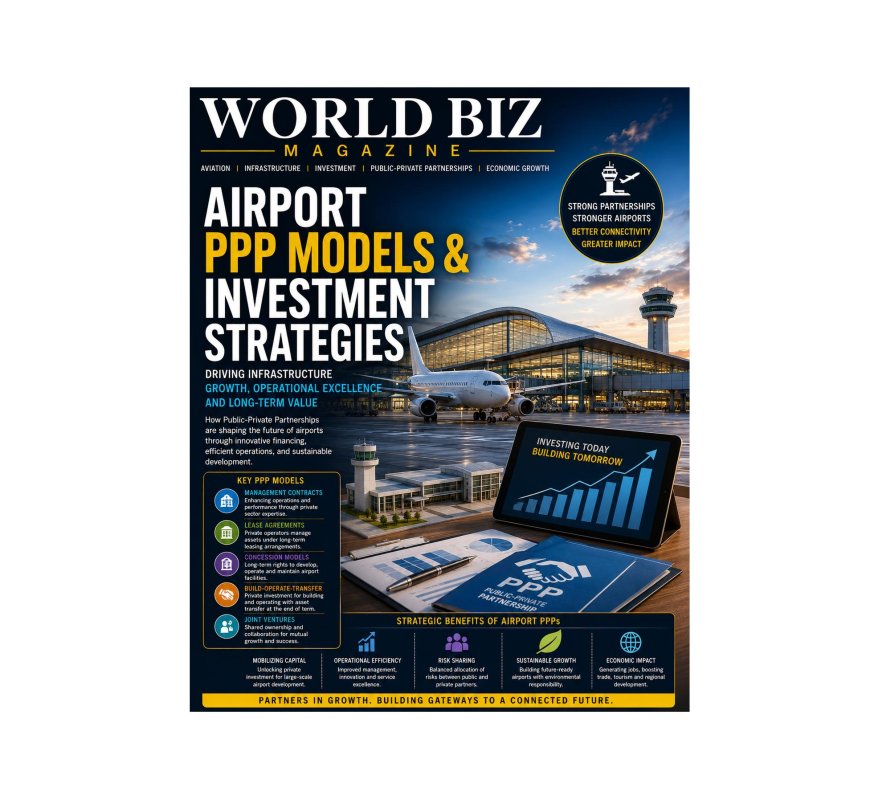
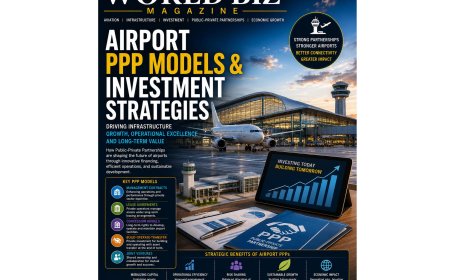
Airport PPP Models & Investment Strategies
How Public-Private Partnerships Are Transforming Airport Development, Financing, and Long-Term Aviation Growth
World Biz Magazine | Aviation Infrastructure, Investment & Transportation Development
As global air travel demand continues to expand and aviation infrastructure requirements become increasingly complex, governments and airport authorities are turning to Public-Private Partnership (PPP) models to accelerate airport development, attract private capital, improve operational efficiency, and support long-term economic growth.
The Growing Need for Airport Investment
Airports play a critical role in the global economy. They serve as gateways for tourism, international trade, business travel, logistics, and economic development. As passenger traffic grows and aviation technologies evolve, airports face increasing pressure to expand capacity, modernize facilities, improve passenger experiences, and enhance operational efficiency.
Many governments, however, face budget constraints that limit their ability to fully fund large-scale airport projects through public resources alone. Airport development often requires billions of dollars in capital investment, making alternative financing models increasingly attractive.
Public-Private Partnerships have emerged as a powerful solution, enabling governments to leverage private sector expertise, financing capabilities, and operational efficiencies while maintaining strategic oversight of critical transportation assets.
Understanding Airport PPP Models
Public-Private Partnerships involve long-term contractual arrangements between public authorities and private sector organizations for the financing, development, operation, or maintenance of airport infrastructure.
Unlike traditional government-funded projects, PPP models allocate responsibilities, risks, and rewards between public and private stakeholders. The specific structure depends on project objectives, regulatory frameworks, financing requirements, and operational considerations.
Airport PPPs can range from management contracts and operational concessions to full-scale Build-Operate-Transfer (BOT) arrangements and long-term infrastructure concessions. These models allow governments to attract investment while benefiting from private sector innovation and management expertise.
Why Governments Are Embracing Airport PPPs
The increasing adoption of airport PPPs is driven by several strategic factors. First, private sector participation helps bridge infrastructure funding gaps by providing access to capital that may not be available through government budgets.
Second, private operators often bring specialized expertise in airport management, technology implementation, commercial development, customer service, and operational efficiency. These capabilities can significantly improve airport performance and passenger satisfaction.
Third, PPP structures enable governments to transfer specific project risks—including construction risks, operational risks, and maintenance responsibilities—to private partners better equipped to manage them.
By combining public oversight with private sector efficiency, PPP models can deliver infrastructure projects more quickly and cost-effectively than traditional procurement methods.
Common Airport PPP Structures
Airport PPP models vary significantly depending on project requirements and policy objectives.
Management Contracts
Under management contracts, private operators manage airport operations while ownership and major investment responsibilities remain with the public sector. These agreements typically focus on improving operational performance and service quality.
Lease Agreements
Lease arrangements allow private entities to operate airport facilities and collect revenues for a specified period while paying lease fees to government authorities. The public sector retains ownership of airport assets.
Concession Models
Concessions are among the most common airport PPP structures. Private investors receive rights to finance, operate, maintain, and develop airport facilities over a long-term concession period. Revenue generated from airport operations supports investment recovery and profitability.
Build-Operate-Transfer (BOT)
Under BOT arrangements, private partners finance and construct airport infrastructure, operate the facilities for a defined period, and eventually transfer ownership back to the government. This model is particularly effective for terminal expansions and greenfield airport developments.
Joint Ventures
Joint venture structures involve shared ownership and governance between public and private stakeholders. These partnerships align incentives while allowing governments to retain significant influence over strategic decisions.
Investment Drivers in Airport PPP Projects
Several factors make airport PPP investments attractive to private investors and infrastructure funds.
Air travel demand continues to grow in many regions due to population growth, rising incomes, tourism expansion, and globalization. This creates strong long-term revenue potential for airport operators.
Airports also generate diversified income streams beyond passenger services. Retail concessions, food and beverage operations, advertising, parking facilities, cargo operations, real estate development, hospitality services, and commercial leasing opportunities contribute significantly to airport revenues.
Many investors view airports as resilient infrastructure assets capable of generating stable, long-term cash flows, making them attractive additions to infrastructure investment portfolios.
Airport Commercialization and Revenue Diversification
Modern airports are increasingly evolving into commercial ecosystems rather than simply transportation hubs. Successful PPP strategies often emphasize non-aeronautical revenue generation as a key component of investment performance.
Retail centers, business parks, logistics zones, hotels, conference facilities, entertainment venues, and airport city developments create additional revenue opportunities while enhancing passenger experiences.
Airport commercialization strategies help reduce dependence on airline-related income and improve overall financial sustainability. Private investors frequently leverage their commercial expertise to maximize these opportunities and enhance asset value.
Financing Strategies for Airport Development
Large-scale airport projects typically require sophisticated financing structures that combine multiple funding sources.
Common financing mechanisms include:
- Equity investments from infrastructure funds
- Commercial bank financing
- Development bank participation
- Infrastructure bonds
- Sovereign wealth fund investments
- Pension fund allocations
- Export credit financing
- Institutional investor participation
A diversified financing approach reduces risk while improving project viability and financial flexibility. Financial structuring plays a crucial role in ensuring long-term project sustainability and investor confidence.
Risk Allocation in Airport PPP Agreements
Effective PPP design depends on appropriate risk allocation between public and private stakeholders. Risks should generally be assigned to the party best positioned to manage them.
Construction risks, operational performance risks, maintenance responsibilities, and technology implementation risks are often transferred to private partners. Governments typically retain regulatory oversight, airspace management responsibilities, and certain policy-related risks.
Balanced risk-sharing frameworks improve project outcomes while encouraging private sector participation. Poorly structured agreements can lead to disputes, financial challenges, and underperformance.
Technology and Innovation in Airport PPP Projects
Private sector participation often accelerates the adoption of advanced technologies within airport environments. Investors recognize that digital transformation can improve efficiency, enhance passenger experiences, and create new revenue opportunities.
Modern PPP-driven airport projects frequently incorporate:
- Biometric passenger processing
- Artificial intelligence applications
- Smart security systems
- Automated baggage handling
- Digital passenger services
- Predictive maintenance platforms
- Data analytics solutions
- Smart terminal management systems
Technology investments improve operational performance while supporting long-term competitiveness in increasingly demanding aviation markets.
Sustainability as an Investment Priority
Environmental sustainability is becoming a central consideration in airport investment strategies. Governments, investors, airlines, and passengers increasingly expect airports to align with broader climate and sustainability goals.
Modern airport PPP projects often include:
- Renewable energy systems
- Green building standards
- Energy-efficient terminal designs
- Sustainable aviation fuel infrastructure
- Carbon reduction programs
- Electric ground transportation systems
- Water conservation technologies
Sustainability initiatives not only support environmental objectives but can also reduce operating costs and improve long-term asset value.
Global Trends in Airport PPP Investment
Airport PPP activity continues to expand across developed and emerging markets. Asia-Pacific remains one of the fastest-growing regions for airport infrastructure investment due to rising passenger demand and large-scale airport expansion programs.
The Middle East is investing heavily in aviation infrastructure as part of broader economic diversification strategies. Europe and North America continue to utilize PPP models for modernization, expansion, and operational improvement initiatives.
Emerging economies increasingly view PPPs as essential mechanisms for accelerating airport development while attracting international investment and aviation expertise.
Challenges and Considerations
Despite their advantages, airport PPPs face several challenges. Regulatory complexity, political risk, traffic forecasting uncertainties, financing costs, stakeholder coordination, and long-term contractual obligations require careful management.
Successful PPP projects depend on transparent procurement processes, strong governance frameworks, realistic financial assumptions, effective risk allocation, and clear performance metrics.
Governments must balance investor interests with public service obligations while ensuring that airport infrastructure continues to support national transportation and economic objectives.
World Biz Magazine Insights
Airport PPP models are reshaping the future of aviation infrastructure by combining public oversight with private sector capital, innovation, and operational expertise. As air travel demand grows and infrastructure requirements become increasingly complex, PPPs offer governments a powerful tool for accelerating development while enhancing efficiency and financial sustainability. The most successful airport investments will be those that integrate commercial excellence, technological innovation, sustainability, and long-term strategic planning.
Conclusion
Airport Public-Private Partnerships have become one of the most important financing and development models in modern aviation infrastructure. By leveraging private investment, operational expertise, and innovative financing strategies, governments can accelerate airport modernization while improving passenger experiences and supporting economic growth. As aviation continues to evolve, PPP models will play an increasingly significant role in shaping the next generation of global airport infrastructure and transportation connectivity.
Disclaimer
This article is published by World Biz Magazine for informational and educational purposes only. The content reflects general industry perspectives related to airport infrastructure, public-private partnerships, aviation investment, and transportation development. It does not constitute financial, legal, investment, aviation, or policy advice. Readers should conduct independent research and consult qualified professionals before making decisions related to infrastructure investments, PPP agreements, airport development projects, or financial transactions. World Biz Magazine assumes no responsibility for actions taken based on the information presented in this publication.
What's Your Reaction?
 Like
0
Like
0
 Dislike
0
Dislike
0
 Love
0
Love
0
 Funny
0
Funny
0
 Angry
0
Angry
0
 Sad
0
Sad
0
 Wow
0
Wow
0