









































































































































































































Smart Highway Technology Integration: Transforming the Future of Transportation Infrastructure
Smart highway technologies are creating safer, more sustainable, and highly connected transportation systems for future mobility.

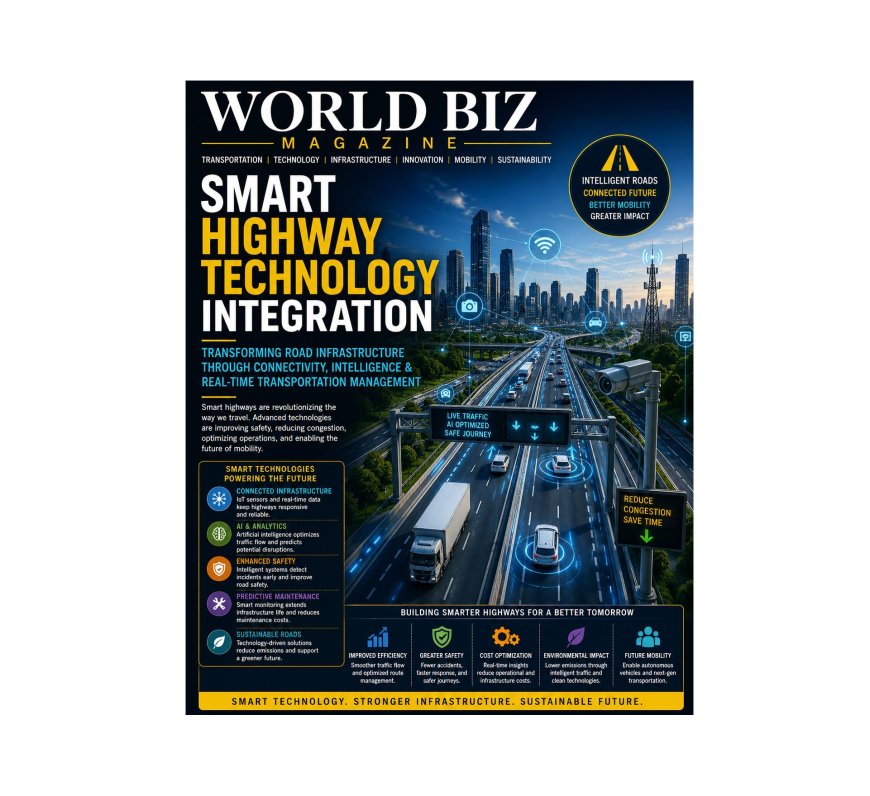
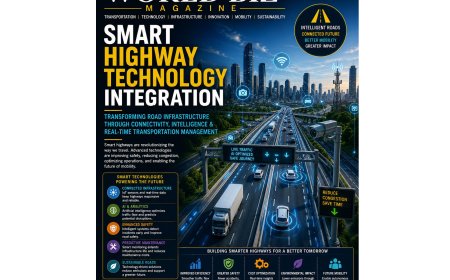
Smart Highway Technology Integration
Transforming Road Infrastructure Through Connectivity, Intelligence, and Real-Time Transportation Management
World Biz Magazine | Transportation Technology, Infrastructure & Smart Mobility
As transportation systems evolve to meet the demands of growing populations, increasing vehicle volumes, and future mobility innovations, smart highway technology integration is emerging as one of the most transformative developments in modern infrastructure. By combining digital intelligence, connectivity, automation, and real-time data analysis, smart highways are reshaping how people and goods move across national transportation networks.
The Evolution of Highway Infrastructure
For decades, highways have served as essential components of economic development, connecting cities, industries, ports, airports, and communities. Traditional highway systems were primarily designed to facilitate vehicle movement and support commerce. However, modern transportation challenges including congestion, safety concerns, environmental pressures, and increasing traffic demand require more advanced infrastructure solutions.
Smart highway technology integration represents the next stage in transportation evolution. Rather than functioning solely as physical roadways, highways are becoming intelligent transportation ecosystems capable of collecting, analyzing, and responding to real-time conditions. These systems enable governments, transportation agencies, and road users to make more informed decisions while improving efficiency, safety, and sustainability.
As digital transformation accelerates across industries, transportation infrastructure is increasingly adopting technologies that create smarter, more connected mobility networks.
Understanding Smart Highway Technology
Smart highways integrate advanced technologies into road infrastructure to enhance transportation operations and user experiences. These technologies include Internet of Things (IoT) sensors, artificial intelligence (AI), cloud computing, machine learning, edge computing, connected vehicle systems, advanced telecommunications, and intelligent transportation platforms.
The goal is to create infrastructure capable of monitoring traffic conditions, communicating with vehicles, managing road operations, and supporting future transportation innovations. Through continuous data collection and analysis, smart highways provide transportation authorities with valuable insights that improve traffic management, infrastructure maintenance, and overall network performance.
Unlike traditional road systems that operate passively, smart highways actively participate in transportation management by adapting to changing conditions and supporting real-time decision-making.
Internet of Things as the Foundation of Smart Highways
The Internet of Things serves as one of the most important components of smart highway technology integration. IoT devices embedded throughout transportation infrastructure collect and transmit data regarding traffic flow, vehicle speed, weather conditions, pavement performance, structural health, and environmental factors.
Roadside sensors, smart cameras, connected traffic signals, and monitoring stations provide continuous visibility into highway operations. This real-time information enables transportation authorities to identify congestion, accidents, maintenance requirements, and potential safety hazards more quickly and accurately.
As sensor technologies become more affordable and connectivity improves, IoT deployments are expanding rapidly across transportation networks worldwide.
Artificial Intelligence Enhancing Traffic Management
Artificial intelligence is transforming how transportation systems operate. Smart highway platforms use AI algorithms to process massive volumes of traffic data and generate actionable insights.
AI-powered traffic management systems can optimize lane usage, adjust speed limits dynamically, predict congestion patterns, and improve incident response times. By analyzing traffic conditions in real time, these systems help reduce bottlenecks, improve travel efficiency, and enhance overall road network performance.
Machine learning models can also forecast traffic demand based on historical patterns, weather conditions, special events, and seasonal trends. These predictive capabilities enable transportation agencies to proactively manage road networks rather than simply reacting to disruptions.
Connected Vehicle Infrastructure
One of the most significant advancements in smart highway development is the integration of connected vehicle technologies. Vehicle-to-Infrastructure (V2I) communication systems allow highways and vehicles to exchange information in real time.
Connected highways can provide drivers with updates regarding traffic conditions, accidents, road closures, weather hazards, construction zones, and emergency situations. Vehicles can receive warnings and navigation guidance that improve safety and reduce travel delays.
As connected vehicle adoption increases, transportation systems will become more coordinated and responsive. This connectivity forms a critical foundation for future autonomous transportation ecosystems.
Supporting Autonomous Vehicle Deployment
Autonomous vehicles are expected to play a growing role in future transportation networks. Smart highway technology integration is helping prepare infrastructure for this transition by providing the digital support systems required for automated driving.
High-definition mapping, vehicle communication networks, intelligent traffic management systems, and advanced sensor infrastructure enable autonomous vehicles to operate more safely and efficiently. Smart highways can communicate road conditions, traffic information, and infrastructure status directly to autonomous systems.
While widespread autonomous vehicle adoption may still be years away in many regions, infrastructure investments made today are laying the groundwork for future transportation innovation.
Enhancing Road Safety Through Intelligent Systems
Road safety remains one of the primary motivations behind smart highway investments. Traffic accidents continue to result in significant economic costs, injuries, and fatalities worldwide.
Smart highways improve safety through real-time monitoring, automated incident detection, dynamic warning systems, and predictive risk assessment. Intelligent transportation platforms can identify accidents, hazardous driving conditions, and infrastructure issues more quickly than traditional monitoring methods.
Dynamic message signs, adaptive lighting systems, weather-responsive traffic controls, and emergency communication networks help inform drivers and reduce accident risks. These technologies contribute to safer road environments while supporting faster emergency response efforts.
Smart Maintenance and Infrastructure Monitoring
Maintaining transportation infrastructure is a major challenge for governments and road operators. Traditional maintenance approaches often rely on periodic inspections that may fail to identify emerging issues before they become serious problems.
Smart highways utilize sensors and predictive analytics to continuously monitor pavement conditions, bridge structures, tunnels, drainage systems, and roadside assets. These technologies provide early warnings regarding wear, damage, or performance degradation.
Predictive maintenance strategies allow transportation agencies to address issues proactively, reducing repair costs, minimizing service disruptions, and extending infrastructure lifecycles. This data-driven approach improves asset management while maximizing infrastructure investment returns.
Sustainability and Environmental Benefits
Environmental sustainability is becoming increasingly important in transportation planning. Smart highway technology integration supports sustainability objectives by improving traffic efficiency, reducing congestion, and lowering vehicle emissions.
Intelligent traffic management systems help minimize stop-and-go driving patterns that contribute to fuel consumption and pollution. Smart lighting systems reduce energy usage, while environmental monitoring technologies support air quality management and climate adaptation efforts.
Many smart highway projects also incorporate renewable energy technologies, electric vehicle charging infrastructure, and sustainable construction practices. These initiatives align transportation modernization with broader environmental and climate goals.
The Role of 5G and Advanced Connectivity
Reliable communication networks are essential for smart highway operations. The deployment of 5G technology is significantly enhancing transportation connectivity by enabling faster data transmission, lower latency, and greater network capacity.
5G infrastructure supports real-time communication between vehicles, roadside systems, traffic management centers, and emergency services. These capabilities improve responsiveness, reliability, and overall system performance.
As transportation ecosystems become increasingly connected, advanced telecommunications infrastructure will play a central role in supporting future mobility solutions.
Investment Trends in Smart Highway Development
Governments worldwide are increasing investments in smart transportation infrastructure as part of broader digital transformation and economic development strategies. Highway modernization programs increasingly include intelligent transportation systems, connected infrastructure, and advanced data platforms.
Public-private partnerships are playing an important role in financing and implementing smart highway projects. Technology providers, telecommunications companies, infrastructure developers, and transportation agencies are collaborating to deploy innovative solutions that improve mobility and infrastructure performance.
As transportation demands continue to evolve, investment in smart highway technologies is expected to grow significantly over the coming decades.
Challenges and Implementation Considerations
Despite their significant benefits, smart highway projects face several challenges. High implementation costs, cybersecurity concerns, interoperability requirements, data privacy considerations, and technological complexity must be carefully managed.
Transportation agencies must establish strong governance frameworks, cybersecurity protocols, and technology standards to ensure successful deployment. Long-term planning and stakeholder collaboration are essential to maximizing the value of smart infrastructure investments.
Effective implementation requires balancing innovation with reliability, security, affordability, and operational practicality.
World Biz Magazine Insights
Smart highway technology integration is transforming transportation infrastructure from passive road networks into intelligent mobility ecosystems. By combining artificial intelligence, IoT connectivity, advanced analytics, and real-time communication systems, smart highways are creating safer, more efficient, and more sustainable transportation environments. As governments continue investing in digital infrastructure, smart highways will play a critical role in supporting economic growth, future mobility, and next-generation transportation innovation.
Conclusion
The integration of smart technologies into highway infrastructure represents one of the most important developments in modern transportation. From intelligent traffic management and connected vehicle systems to predictive maintenance and autonomous vehicle support, smart highways are redefining how transportation networks operate. As technology continues to advance, these intelligent infrastructure systems will become increasingly central to creating safer, more connected, and more efficient mobility ecosystems that support future economic and societal needs.
Disclaimer
This article is published by World Biz Magazine for informational and educational purposes only. The content reflects general industry perspectives regarding transportation technology, smart infrastructure, intelligent transportation systems, and mobility innovation. It does not constitute engineering, legal, investment, transportation, or policy advice. Readers should conduct independent research and consult qualified professionals before making decisions related to infrastructure projects, transportation technologies, public investments, or regulatory matters. World Biz Magazine assumes no responsibility for actions taken based on the information presented in this publication.
What's Your Reaction?
 Like
0
Like
0
 Dislike
0
Dislike
0
 Love
0
Love
0
 Funny
0
Funny
0
 Angry
0
Angry
0
 Sad
0
Sad
0
 Wow
0
Wow
0