












































































































































































Real Estate Investment Trusts (REITs): Benefits, Risks & Investment Strategies
A detailed World Biz Magazine guide explaining REITs, commercial real estate investing, dividend income opportunities, and the future of global property markets.

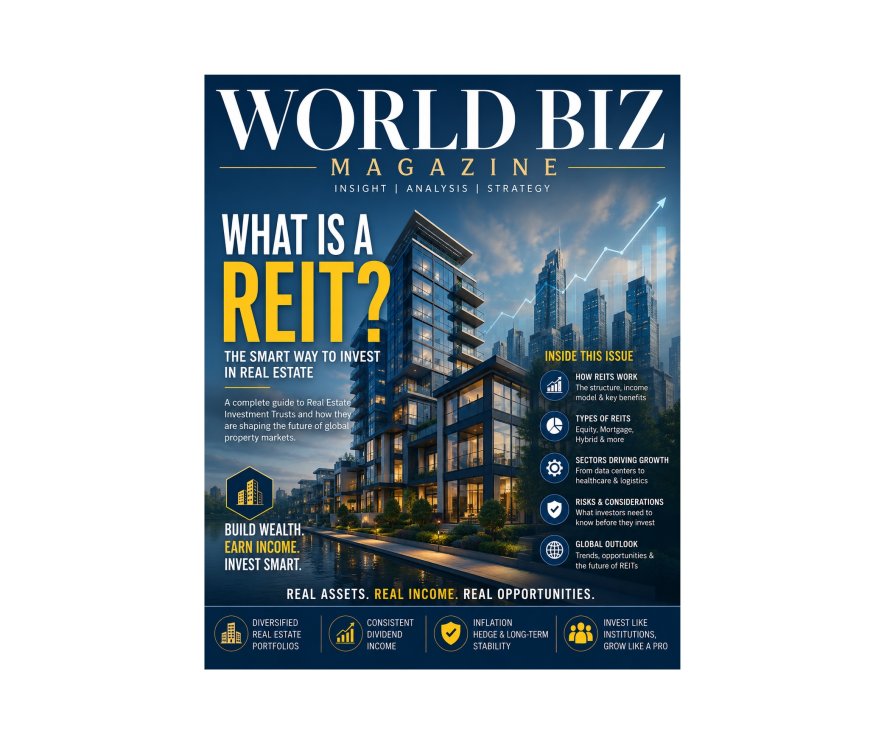
What Is a Real Estate Investment Trust (REIT)?
World Biz Magazine | Global Business Insights • Financial Intelligence • Investment Strategies • Real Estate & Infrastructure Analysis
The Rise of REITs in the Global Investment Economy
Real estate has historically been considered one of the most powerful wealth-building assets in the world. From commercial skyscrapers and shopping malls to apartment complexes and industrial warehouses, property ownership has generated fortunes for individuals, corporations, and institutions for centuries. However, direct real estate ownership often requires massive capital, complex management structures, legal oversight, and long-term financial commitments. This barrier prevented many ordinary investors from participating in large-scale real estate opportunities. The introduction of the Real Estate Investment Trust, commonly known as a REIT, transformed the investment landscape by democratizing access to income-generating real estate assets.
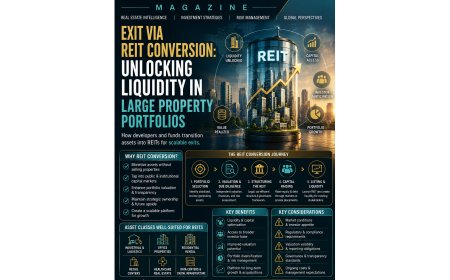
A Real Estate Investment Trust (REIT) is a company that owns, operates, finances, or manages income-producing real estate across various sectors. These entities pool capital from multiple investors and invest that money into real estate portfolios that generate rental income, lease revenue, or property appreciation. Investors purchase shares of the REIT much like buying stocks in a publicly traded company. In return, they receive a portion of the profits generated by the trust, usually distributed through regular dividends. REITs have become one of the most influential structures in global capital markets because they allow individuals to invest in large-scale real estate without directly purchasing or managing property themselves.
The concept of REITs was first introduced in the United States in 1960 when Congress established legislation allowing small investors to access diversified portfolios of commercial real estate assets. The structure was inspired by mutual funds, which enabled ordinary citizens to invest collectively in stock portfolios. REITs brought the same concept into the real estate sector. Over the decades, REIT legislation spread worldwide, with countries across Europe, Asia, the Middle East, and emerging markets adopting similar frameworks to encourage real estate investment and stimulate capital markets.
Today, REITs represent a multi-trillion-dollar global industry. They are traded on major stock exchanges, held by pension funds, institutional investors, sovereign wealth funds, and retail investors alike. REITs now own some of the most valuable real estate assets in the world, including luxury hotels, healthcare facilities, logistics hubs, data centers, office towers, shopping centers, and residential communities. As global urbanization and infrastructure development continue to expand, REITs are playing an increasingly central role in shaping the modern property economy.
How REITs Work
At its core, a REIT functions as an income-generating real estate corporation designed to produce returns for shareholders. Investors buy shares in the trust, and the REIT uses that capital to acquire or finance real estate properties. The properties generate income through rent, leasing agreements, mortgage interest, or operational revenue. The majority of this income is then distributed back to investors in the form of dividends.
One of the defining features of REITs is their dividend structure. In many countries, REIT regulations require these companies to distribute a significant percentage of taxable income to shareholders annually. In the United States, for example, REITs must distribute at least 90% of taxable income to maintain their favorable tax status. This makes REITs particularly attractive to income-focused investors seeking consistent cash flow and long-term portfolio stability.
REITs typically generate revenue from tenants occupying their properties. For instance, a retail REIT may own shopping malls leased to major brands and retailers, while an office REIT may generate rental income from corporations occupying commercial office buildings. Industrial REITs earn revenue from warehouses and logistics facilities leased to e-commerce companies, while hospitality REITs profit from hotel operations and tourism activity.
The value of a REIT is influenced by several factors including property performance, occupancy rates, economic growth, interest rates, inflation, market demand, and management efficiency. Because many REITs are publicly traded, their shares can fluctuate similarly to stocks based on investor sentiment and broader market conditions. However, unlike many traditional equities, REITs are heavily tied to physical assets and real estate fundamentals.
Types of REITs
The REIT industry consists of multiple categories designed to serve different investment objectives and sectors of the property market.
Equity REITs
Equity REITs are the most common form of REIT. These trusts own and operate physical income-producing properties. Revenue is generated primarily through rent collection and property appreciation. Equity REITs may specialize in residential apartments, office buildings, healthcare facilities, retail centers, industrial warehouses, self-storage units, hotels, or mixed-use developments.
Mortgage REITs (mREITs)
Mortgage REITs operate differently from equity REITs. Instead of owning physical property, they provide financing for real estate through mortgages and mortgage-backed securities. Their income comes from interest payments on real estate loans. Mortgage REITs can offer higher dividend yields but are often more sensitive to interest rate changes and financial market volatility.
Hybrid REITs
Hybrid REITs combine both equity and mortgage investment strategies. They may own physical properties while also investing in real estate financing instruments. This diversification can provide broader exposure across different segments of the real estate market.
Publicly Traded REITs
Publicly traded REITs are listed on stock exchanges and can be bought and sold like ordinary shares. These REITs offer liquidity, transparency, and regulatory oversight, making them highly accessible to retail investors.
Private REITs
Private REITs are not publicly traded and are generally offered to institutional or high-net-worth investors. They may provide different return structures but usually involve lower liquidity and higher investment thresholds.
Major Sectors Within the REIT Industry
The global REIT industry spans numerous specialized sectors that reflect changing economic trends and consumer behavior.
Residential REITs
Residential REITs invest in apartment complexes, student housing, senior living facilities, and rental communities. These REITs benefit from population growth, urbanization, and housing demand.
Retail REITs
Retail REITs own shopping malls, retail centers, and commercial storefronts. Their performance depends heavily on consumer spending trends and retailer occupancy.
Office REITs
Office REITs focus on commercial office spaces leased to corporations and businesses. Hybrid work trends and evolving workplace strategies have significantly impacted this sector in recent years.
Industrial REITs
Industrial REITs have experienced substantial growth due to the rise of e-commerce and global logistics demand. These REITs own warehouses, fulfillment centers, manufacturing facilities, and distribution hubs.
Healthcare REITs
Healthcare REITs invest in hospitals, medical offices, senior care facilities, and healthcare infrastructure. Aging populations and expanding healthcare systems continue to drive demand for this sector.
Data Center REITs
Data center REITs are among the fastest-growing segments of the industry. They own facilities that store and process digital information for cloud computing, artificial intelligence, streaming services, and global internet infrastructure.
Hospitality REITs
Hospitality REITs own hotels, resorts, and tourism-related properties. Their performance is closely linked to travel demand, tourism activity, and economic cycles.
Advantages of Investing in REITs
REITs provide several advantages that have contributed to their growing popularity among investors worldwide.
Accessibility
REITs allow ordinary investors to participate in large-scale real estate markets without purchasing expensive properties directly. Investors can gain exposure to commercial real estate with relatively small amounts of capital.
Liquidity
Unlike physical property ownership, publicly traded REIT shares can be bought and sold quickly through stock exchanges. This provides flexibility and liquidity for investors.
Diversification
REITs often hold diversified property portfolios across multiple sectors and geographic regions, reducing concentration risk.
Dividend Income
REITs are known for generating consistent dividend payments due to mandatory income distribution requirements. This makes them attractive for retirees and income-oriented investors.
Inflation Hedge
Real estate assets often appreciate during inflationary periods, while rental income may increase over time. REITs can therefore provide a degree of inflation protection.
Professional Management
REITs are managed by experienced real estate professionals who oversee acquisitions, operations, leasing, financing, and strategic growth.
Risks Associated With REITs
Despite their advantages, REITs also carry risks that investors must carefully consider.
Interest Rate Sensitivity
REIT performance can be affected by rising interest rates, which increase borrowing costs and may reduce investor demand for income-producing assets.
Market Volatility
Publicly traded REITs are subject to stock market fluctuations and investor sentiment, even when underlying property assets remain stable.
Economic Downturns
Recessions can reduce occupancy rates, lower rental income, and negatively impact property valuations.
Sector-Specific Risks
Different REIT sectors face unique challenges. Retail REITs may suffer from declining mall traffic, while office REITs face uncertainty related to remote work trends.
Regulatory and Tax Changes
Changes in tax laws, zoning regulations, or government policies can influence REIT profitability and operational structures.
REITs and the Modern Global Economy
REITs have become deeply integrated into modern financial systems. Governments and policymakers often support REIT structures because they encourage infrastructure development, stimulate construction industries, create jobs, and improve capital allocation within real estate markets.
Institutional investors such as pension funds and insurance companies frequently allocate significant portions of their portfolios to REITs due to their long-term income potential and diversification benefits. Additionally, technological transformation is reshaping the industry, particularly through sectors like data center REITs, digital infrastructure REITs, and logistics-focused property trusts.
The growth of sustainable investing has also influenced the REIT industry. Environmental, Social, and Governance (ESG) standards are becoming increasingly important as investors demand energy-efficient buildings, green certifications, and sustainable urban development practices.
Emerging markets are now exploring REIT frameworks to attract foreign investment, modernize infrastructure, and increase transparency in property ownership structures. Countries across Asia, Africa, and the Middle East are witnessing growing interest in REIT legislation and public real estate investment vehicles.
World Biz Magazine Insights
At World Biz Magazine, we view REITs as one of the most transformative financial instruments connecting traditional real estate with modern capital markets. Their ability to combine income generation, portfolio diversification, and large-scale infrastructure participation makes them highly relevant in an increasingly urbanized and digitally connected global economy.
The future of REITs is expected to evolve beyond traditional commercial properties into technology-driven sectors including data centers, smart cities, logistics automation, renewable energy infrastructure, healthcare expansion, and digital communication networks. Investors are no longer viewing REITs solely as property holdings but as strategic participation in the infrastructure powering future economies.
As financial markets continue to globalize, REITs may become even more significant for developing nations seeking investment inflows and urban development funding. Their transparency, accessibility, and regulatory structure position them as powerful tools for both economic development and long-term wealth generation.
Conclusion
A Real Estate Investment Trust (REIT) represents far more than a simple property investment vehicle. It is a financial structure that transformed real estate ownership into an accessible, liquid, and globally scalable investment opportunity. By allowing investors to participate in professionally managed real estate portfolios, REITs have bridged the gap between institutional property markets and individual wealth creation.
Whether through residential housing, industrial logistics, healthcare infrastructure, hospitality assets, or digital data centers, REITs continue to shape the future of global real estate investment. Their importance is likely to grow as cities expand, digital economies evolve, and infrastructure demand accelerates worldwide.
For investors seeking long-term income, diversification, and exposure to real-world assets, REITs remain one of the most influential and resilient components of modern investment portfolios.
Disclaimer
This article is published for informational, educational, and editorial purposes only and does not constitute financial, investment, legal, or tax advice. Readers should conduct independent research and consult licensed financial advisors, legal professionals, or investment specialists before making any investment decisions related to Real Estate Investment Trusts (REITs) or other financial instruments. World Biz Magazine and its affiliates are not responsible for any financial losses, investment outcomes, or decisions made based on the information presented in this publication.
What's Your Reaction?
 Like
0
Like
0
 Dislike
0
Dislike
0
 Love
0
Love
0
 Funny
0
Funny
0
 Angry
0
Angry
0
 Sad
0
Sad
0
 Wow
0
Wow
0