











































































































































































Taxi & Rideshare Market Insights: The Future of On-Demand Mobility and Smart Urban Transportation
Learn how rideshare services are changing consumer transportation habits and shaping the future of smart city mobility worldwide.

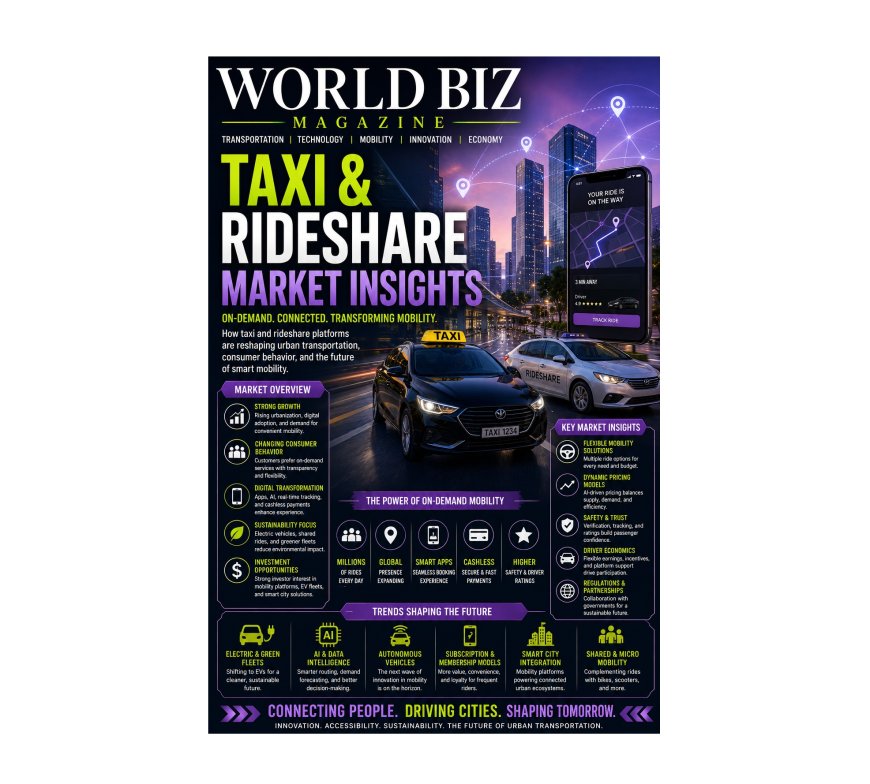
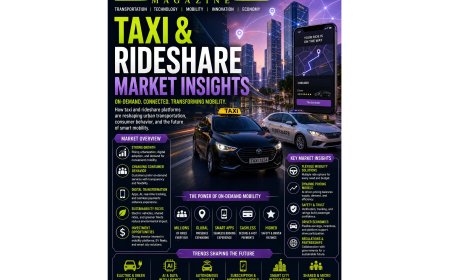
Taxi & Rideshare Market Insights
How On-Demand Mobility Platforms Are Transforming Urban Transportation, Consumer Behavior, and the Future of Mobility
World Biz Magazine | Transportation, Technology & Smart Mobility
The global transportation industry has undergone one of the most significant transformations in its history over the past two decades. Traditional taxi services, once dominated by local operators and regulated fleets, have increasingly been complemented and in many markets disrupted by digital rideshare platforms that connect passengers and drivers through mobile applications. The emergence of ridesharing has fundamentally changed how people move within cities, access transportation services, and make mobility decisions.
Today, the taxi and rideshare market represents a multi-billion-dollar global industry serving hundreds of millions of passengers each year. Digital mobility platforms have introduced unprecedented levels of convenience, transparency, pricing flexibility, and service accessibility. Consumers can now book rides within seconds, track vehicles in real time, choose from multiple service categories, and make cashless payments through integrated digital ecosystems.
At the same time, the industry faces growing competition, evolving regulations, technological disruption, labor market debates, sustainability challenges, and increasing pressure to improve profitability. Governments, transportation authorities, technology companies, investors, and mobility operators are closely monitoring the sector as it continues evolving into a central component of modern urban transportation systems.
As smart cities, digital mobility platforms, autonomous vehicle technologies, and electric transportation solutions advance, the taxi and rideshare market is expected to remain at the forefront of transportation innovation. Understanding the economic dynamics, competitive landscape, growth drivers, and future opportunities within this sector provides valuable insight into one of the world's most rapidly evolving mobility industries.
Understanding the Taxi and Rideshare Industry
The taxi and rideshare market consists of transportation services that provide passengers with on-demand point-to-point mobility.
The sector includes:
- Traditional taxi operators
- App-based rideshare platforms
- Luxury ride services
- Carpooling solutions
- Corporate transportation services
- Airport transportation
- Mobility subscription services
Unlike fixed-route public transportation systems, rideshare and taxi services offer personalized transportation tailored to individual passenger needs.
The industry plays a vital role in urban mobility by providing flexible transportation options that complement buses, rail systems, and other public transit networks.
Evolution of the Taxi Industry
For decades, traditional taxi services operated through regulated licensing systems.
Typical characteristics included:
- Licensed taxi fleets
- Meter-based pricing
- Dispatch centers
- Street-hailing services
- Local market regulations
While traditional taxi services remain important in many cities, technological innovation has dramatically altered industry dynamics.
The introduction of smartphone-based transportation platforms revolutionized how passengers access transportation services.
Digital platforms created a more convenient and scalable mobility model that significantly expanded market demand.
The Rise of Ridesharing Platforms
The rideshare revolution began with the integration of mobile technology, GPS tracking, digital payments, and data-driven transportation management.
Key advantages included:
- Instant ride booking
- Real-time vehicle tracking
- Dynamic pricing
- Driver ratings
- Cashless transactions
- Route optimization
These innovations improved customer experiences while creating new income opportunities for drivers.
The convenience and accessibility of rideshare platforms rapidly accelerated consumer adoption worldwide.
Today, ridesharing has become an essential part of urban transportation ecosystems across numerous markets.
Market Size and Growth Potential
The taxi and rideshare industry continues to experience significant growth.
Several factors contribute to market expansion.
Urbanization
Growing urban populations increase transportation demand.
Smartphone Penetration
Mobile connectivity supports platform accessibility.
Changing Consumer Preferences
Consumers increasingly prioritize convenience over vehicle ownership.
Tourism Growth
Travelers frequently rely on rideshare services for local transportation.
Digital Payment Adoption
Cashless transactions enhance customer experiences.
These trends continue supporting long-term market growth across both developed and emerging economies.
Consumer Behavior and Mobility Preferences
Consumer expectations have changed dramatically in recent years.
Modern passengers increasingly value:
- Convenience
- Speed
- Transparency
- Safety
- Affordability
- Digital integration
The ability to compare prices, track rides, and access transportation on demand has transformed mobility behavior.
Many younger consumers now view transportation as a service rather than a product, reducing dependence on private vehicle ownership.
This shift is influencing broader mobility trends worldwide.
Business Models Within the Industry
The market includes several distinct operating models.
Traditional Taxi Services
Regulated fleets continue serving major urban centers.
These services often benefit from:
- Established infrastructure
- Regulatory protections
- Airport licenses
- Local market familiarity
App-Based Rideshare Platforms
Technology platforms connect independent drivers with passengers.
Advantages include:
- Scalability
- Data-driven operations
- Flexible driver participation
- Dynamic pricing capabilities
Premium Mobility Services
Luxury transportation services target higher-income customers.
Features may include:
- Executive vehicles
- Professional drivers
- Corporate accounts
- Enhanced customer experiences
Shared Ride Services
Passengers traveling similar routes share transportation resources.
Benefits include:
- Lower costs
- Reduced congestion
- Improved efficiency
Business model diversification helps operators address different customer segments.
Technology Driving Industry Transformation
Technology remains the industry's most significant growth catalyst.
Major innovations include:
Artificial Intelligence
AI supports route optimization, demand forecasting, and pricing strategies.
GPS and Navigation Systems
Real-time navigation improves operational efficiency.
Mobile Applications
Digital platforms facilitate seamless booking and payment processes.
Data Analytics
Operators use customer and traffic data to improve performance.
Cloud Computing
Supports large-scale platform operations and service scalability.
Technology continues creating competitive advantages across the sector.
Dynamic Pricing and Revenue Optimization
One of the most distinctive features of rideshare platforms is dynamic pricing.
Prices may adjust based on:
- Demand levels
- Traffic conditions
- Weather events
- Special events
- Vehicle availability
Dynamic pricing helps balance supply and demand while maximizing operational efficiency.
Although sometimes controversial, it has become a widely adopted revenue optimization strategy.
Driver Economics and Workforce Dynamics
Drivers remain central to industry operations.
The sector provides flexible income opportunities through:
- Full-time driving
- Part-time work
- Supplemental income generation
However, workforce-related issues remain important considerations.
Industry discussions often focus on:
- Compensation models
- Benefits
- Labor regulations
- Driver retention
Balancing driver satisfaction with business profitability remains a major challenge.
Integration with Public Transportation
Increasingly, cities view rideshare services as complementary rather than competitive to public transportation.
Integration opportunities include:
- First-mile connectivity
- Last-mile solutions
- Transit station access
- Shared mobility ecosystems
Collaboration between public and private transportation providers can improve overall mobility outcomes.
This integration is becoming a key element of smart city transportation strategies.
Sustainability and Environmental Considerations
Environmental performance is becoming increasingly important.
Industry participants are pursuing sustainability initiatives through:
Electric Vehicle Adoption
Many operators are encouraging EV fleet growth.
Shared Mobility Models
Carpooling reduces total vehicle usage.
Route Optimization
Technology minimizes unnecessary travel distances.
Carbon Reduction Programs
Companies are investing in sustainability initiatives.
Environmental objectives are increasingly influencing transportation policies and consumer preferences.
The Future of Autonomous Mobility
Autonomous vehicle technology has the potential to transform the rideshare market.
Potential benefits include:
- Reduced operating costs
- Improved efficiency
- Enhanced safety
- Expanded service availability
While widespread adoption may still require significant technological and regulatory progress, autonomous mobility remains a major area of investment and innovation.
The future structure of the industry may be heavily influenced by autonomous transportation systems.
Challenges Facing the Industry
Despite strong growth, the sector faces several challenges.
Regulatory Uncertainty
Governments continue adapting regulations to new mobility models.
Driver Supply Constraints
Maintaining adequate driver availability remains important.
Profitability Pressures
Balancing growth with sustainable financial performance can be challenging.
Competitive Intensity
Numerous transportation options compete for passengers.
Rising Operating Costs
Fuel prices, insurance costs, and vehicle expenses impact profitability.
Successfully navigating these challenges will shape future industry leaders.
Emerging Trends Shaping the Future
Several trends are expected to influence industry development.
These include:
- Electric vehicle fleets
- Autonomous transportation
- Mobility-as-a-Service (MaaS)
- Subscription-based mobility
- AI-powered transportation platforms
- Integrated smart city systems
- Shared mobility expansion
- Sustainable transportation initiatives
These developments are likely to redefine urban mobility over the coming decades.
Investment Opportunities in Mobility
The taxi and rideshare market continues attracting significant investment.
Growth opportunities exist across:
- Mobility platforms
- Transportation technology
- Electric vehicle infrastructure
- Fleet management systems
- Autonomous driving technologies
- Smart city mobility solutions
Investors increasingly view mobility as a major long-term growth sector.
The convergence of technology and transportation continues creating new opportunities for innovation and value creation.
World Biz Magazine Insights
The taxi and rideshare industry represents one of the most successful examples of digital disruption in modern transportation. By leveraging technology, data analytics, mobile connectivity, and platform-based business models, rideshare operators have fundamentally changed how consumers access mobility services. While regulatory challenges, profitability pressures, and technological disruptions remain important considerations, the industry's future appears closely aligned with broader trends in smart cities, sustainable transportation, and connected mobility ecosystems. Companies that successfully integrate innovation, customer experience, and operational efficiency will be best positioned to lead the next generation of urban transportation services.
Conclusion
The global taxi and rideshare market has evolved into a critical component of modern transportation systems. Through digital innovation, flexible mobility solutions, and customer-centric service models, the industry continues expanding its role within urban transportation ecosystems.
Technological advancements, changing consumer preferences, sustainability initiatives, and emerging mobility trends are creating both opportunities and challenges for operators. As cities become smarter and transportation networks increasingly interconnected, rideshare and taxi services will remain important enablers of urban mobility.
For investors, policymakers, transportation providers, and technology companies, understanding the dynamics of the taxi and rideshare industry is essential for navigating the future of mobility in an increasingly connected world.
Disclaimer
This article is published for informational, educational, and industry analysis purposes only and does not constitute investment, financial, legal, transportation, technology, or professional advice. Market conditions, regulations, technology adoption rates, and business performance vary across jurisdictions and may change over time. Readers should conduct independent research and consult qualified professionals before making investment, business, transportation, or policy decisions related to the mobility sector.
What's Your Reaction?
 Like
1
Like
1
 Dislike
0
Dislike
0
 Love
0
Love
0
 Funny
0
Funny
0
 Angry
0
Angry
0
 Sad
0
Sad
0
 Wow
1
Wow
1