











































































































































































Global Cruise Demand Cycles: Growth Drivers, Risks, and Strategic Opportunities
A comprehensive analysis of cruise demand cycles, including booking trends, pricing strategies, demographic shifts, and future market opportunities.

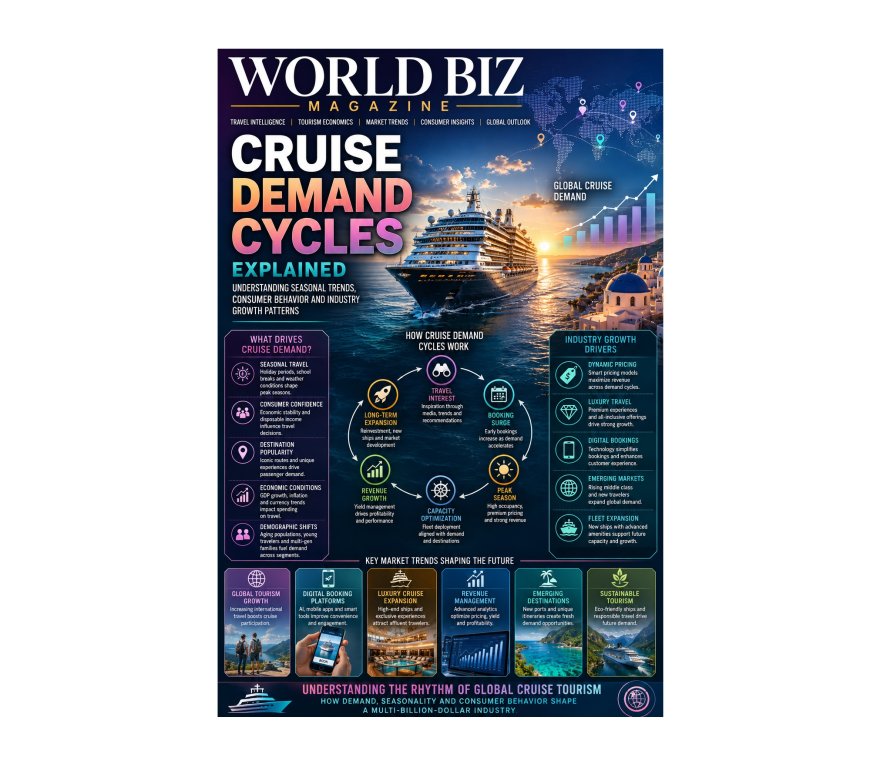
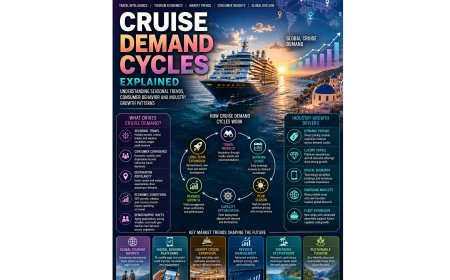
Cruise Demand Cycles Explained
Understanding Seasonal Trends, Economic Drivers, Consumer Behavior, and Long-Term Growth Patterns in the Global Cruise Industry
World Biz Magazine | Travel, Tourism & Cruise Industry
The global cruise industry is one of the most dynamic sectors within international tourism, attracting millions of travelers annually across ocean, river, luxury, expedition, and specialty cruise segments. While cruise tourism has demonstrated remarkable long-term growth over the past several decades, demand for cruise travel is far from constant. Instead, the industry operates through a series of demand cycles influenced by economic conditions, seasonal travel patterns, consumer confidence, destination popularity, pricing strategies, geopolitical developments, and broader tourism trends.
Understanding these demand cycles is essential for cruise operators, investors, tourism authorities, port operators, hospitality providers, and travel businesses. Demand fluctuations directly affect pricing, occupancy rates, fleet deployment, revenue generation, profitability, infrastructure investment, and long-term strategic planning.
Like airlines, hotels, and other travel sectors, cruise companies continuously adapt their operations to changing demand conditions. Successful operators use advanced forecasting models, market intelligence, dynamic pricing systems, and fleet management strategies to maximize performance throughout different phases of the demand cycle.
As cruise tourism continues expanding into new markets and demographic segments, understanding how demand cycles function has become increasingly important for industry stakeholders seeking sustainable growth and competitive advantage.
This article explores the major factors that influence cruise demand cycles, examines seasonal and economic patterns, and analyzes how the industry manages fluctuations in passenger demand worldwide.
Understanding Cruise Demand Cycles
A cruise demand cycle refers to the recurring patterns of growth, stabilization, decline, and recovery that influence passenger bookings and travel activity over time.
These cycles may occur on:
- Seasonal timelines
- Annual timelines
- Economic timelines
- Regional timelines
- Long-term industry timelines
Demand cycles influence:
- Passenger volumes
- Occupancy rates
- Cruise pricing
- Revenue generation
- Fleet utilization
- Destination planning
Understanding these patterns allows industry participants to make informed operational and investment decisions.
Why Demand Cycles Matter
Demand fluctuations directly affect the economics of cruise operations.
When demand rises:
- Occupancy increases
- Pricing power improves
- Revenue expands
- Profitability strengthens
When demand weakens:
- Discounts increase
- Occupancy declines
- Revenue pressure grows
- Operational efficiency becomes critical
The ability to manage these fluctuations often determines long-term competitiveness.
Seasonal Demand Cycles
Seasonality remains one of the most significant drivers of cruise demand.
Travel patterns vary considerably throughout the year.
Peak Season
Peak demand periods typically coincide with:
- School holidays
- Summer vacations
- Major public holidays
- Favorable weather conditions
During these periods:
- Occupancy rates increase
- Ticket prices rise
- Premium cabins sell quickly
- Revenue reaches annual highs
Cruise operators often deploy additional capacity to popular regions during peak seasons.
Shoulder Season
The shoulder season refers to periods between peak and low-demand cycles.
These periods often provide:
- Balanced pricing
- Moderate occupancy
- Attractive value propositions
Many experienced travelers prefer shoulder-season cruises due to reduced crowds and competitive pricing.
Off-Peak Season
Demand typically softens during certain parts of the year.
Characteristics include:
- Lower occupancy levels
- Promotional pricing
- Increased marketing activity
- Flexible itinerary offerings
Cruise lines frequently use discounts and special packages to stimulate demand during slower periods.
Regional Demand Variations
Demand cycles differ significantly across geographic markets.
Caribbean Market
The Caribbean remains one of the world's most popular cruise destinations.
Demand is influenced by:
- Winter travel patterns
- North American vacation schedules
- Weather conditions
The region experiences strong seasonal fluctuations.
Mediterranean Market
Mediterranean cruising generally peaks during warmer months.
Demand often rises during:
- Spring
- Summer
- Early autumn
Weather and destination accessibility play important roles.
Alaska Market
Alaska operates within a highly seasonal framework.
The cruising season is typically concentrated within a limited annual window due to climate conditions.
Asia-Pacific Market
Asian demand cycles are increasingly influenced by:
- Regional holidays
- Growing middle-class populations
- Expanding tourism infrastructure
The region continues evolving as a major growth market.
Economic Cycles and Cruise Demand
The cruise industry is closely connected to broader economic conditions.
Consumer confidence often influences travel spending decisions.
Economic Expansion
During periods of economic growth:
- Disposable incomes increase
- Consumer confidence improves
- Leisure spending rises
- Cruise bookings strengthen
Demand often grows across multiple market segments.
Economic Slowdowns
During downturns:
- Consumers reduce discretionary spending
- Travel budgets tighten
- Booking lead times shorten
Cruise operators may respond through promotional pricing and flexible booking policies.
Inflation and Interest Rates
Higher inflation can affect:
- Consumer purchasing power
- Travel affordability
- Cruise operating costs
Interest rate changes may also influence broader economic conditions and travel demand.
Consumer Confidence and Travel Behavior
Cruise bookings are highly sensitive to consumer sentiment.
Travelers tend to spend more freely when they feel financially secure.
Key influences include:
- Employment conditions
- Household income growth
- Economic stability
- Stock market performance
Positive sentiment often supports stronger booking activity.
Demographic Trends Influencing Demand
The cruise industry serves a wide range of traveler groups.
Different demographics contribute to demand in different ways.
Retirees
Retirees represent a significant cruise customer base.
Factors supporting demand include:
- Flexible schedules
- Travel experience
- Higher discretionary income
Families
Family travel remains a major driver of mainstream cruise demand.
School calendars strongly influence booking patterns.
Younger Travelers
Millennials and younger generations increasingly seek:
- Experiential travel
- Adventure tourism
- Social experiences
Cruise operators continue adapting products to attract younger demographics.
Luxury Travelers
Affluent travelers often drive demand within premium and luxury segments.
Their booking patterns may be less sensitive to economic fluctuations.
Pricing Cycles and Revenue Management
Cruise companies actively manage pricing based on demand conditions.
Advanced revenue management systems analyze:
- Booking pace
- Occupancy levels
- Market demand
- Competitor pricing
These systems help optimize revenue throughout the booking cycle.
Early Booking Incentives
Many operators encourage advance reservations through:
- Lower fares
- Cabin selection benefits
- Promotional packages
Early bookings improve demand visibility.
Last-Minute Pricing
When occupancy targets are not achieved, operators may offer:
- Discounts
- Special promotions
- Value-added packages
These strategies help maximize vessel utilization.
The Role of Fleet Expansion
New ship deliveries can influence industry demand cycles.
Additional capacity requires:
- Increased passenger demand
- Expanded marketing efforts
- New destination development
Successful capacity management is essential for maintaining healthy occupancy levels.
External Factors Affecting Demand
Several external variables can influence cruise demand.
Fuel Prices
Energy costs impact operational expenses and pricing strategies.
Geopolitical Events
Regional instability may affect destination demand and itinerary planning.
Public Health Considerations
Health-related concerns can influence traveler confidence and booking behavior.
Weather Patterns
Severe weather events occasionally impact operations and seasonal demand trends.
Long-Term Growth Cycles
Despite short-term fluctuations, the cruise industry has demonstrated strong long-term growth.
Several factors continue supporting expansion.
These include:
- Rising global tourism demand
- Growing middle-class populations
- Emerging source markets
- Fleet modernization
- Luxury travel growth
- Technological innovation
Long-term industry fundamentals remain positive.
How Cruise Operators Manage Demand Cycles
Leading cruise companies utilize multiple strategies to manage fluctuations.
These include:
Dynamic Pricing
Adjusting fares based on market demand.
Fleet Deployment
Positioning ships in markets with stronger demand.
Marketing Campaigns
Stimulating bookings during slower periods.
Product Diversification
Offering different cruise experiences for multiple traveler segments.
Destination Expansion
Developing new itineraries and emerging markets.
These strategies help balance demand throughout the year.
Future Trends Influencing Cruise Demand
Several emerging trends are expected to shape future demand patterns.
These include:
- Personalized travel experiences
- Sustainable tourism preferences
- Digital booking technologies
- AI-powered customer engagement
- Luxury segment expansion
- Expedition cruising growth
- Multigenerational travel
- Emerging market participation
Operators that successfully adapt to evolving consumer preferences are likely to capture future growth opportunities.
World Biz Magazine Insights
Cruise demand cycles reflect the intersection of tourism trends, economic conditions, consumer confidence, and destination attractiveness. While seasonal fluctuations remain a defining characteristic of the industry, modern cruise operators have become increasingly sophisticated in managing demand through dynamic pricing, advanced analytics, fleet optimization, and customer segmentation. The industry's ability to balance capacity with changing market conditions will remain one of the most important drivers of profitability and long-term growth in the years ahead.
Conclusion
Cruise demand cycles are a fundamental aspect of the global cruise industry, influencing everything from pricing and occupancy rates to fleet deployment and investment strategies. Seasonal travel patterns, economic conditions, consumer confidence, demographic shifts, and destination popularity all contribute to the industry's cyclical nature.
While short-term fluctuations are inevitable, the cruise industry's long-term outlook remains supported by growing global tourism demand, expanding consumer markets, and continuous innovation. Understanding demand cycles allows operators, investors, and tourism stakeholders to make more informed decisions and better position themselves for future opportunities.
As the cruise sector continues evolving, those that effectively anticipate and respond to changing demand patterns will be best positioned to navigate future growth and industry transformation.
Disclaimer
This article is published for informational, educational, and industry analysis purposes only and does not constitute financial, investment, tourism, maritime, legal, or professional advice. Market conditions, travel trends, economic factors, and industry performance may vary by region and over time. Readers should conduct independent research and consult qualified professionals before making business, investment, tourism, or strategic decisions related to the cruise industry.
What's Your Reaction?
 Like
0
Like
0
 Dislike
0
Dislike
0
 Love
0
Love
0
 Funny
0
Funny
0
 Angry
0
Angry
0
 Sad
0
Sad
0
 Wow
0
Wow
0