










































































How a U.S.-Iran Breakthrough Could Transform Pakistan’s Economy
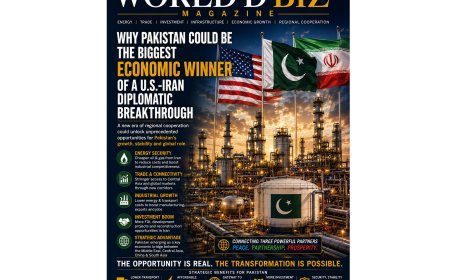
A potential U.S.-Iran diplomatic breakthrough could reshape Pakistan’s economy through cheaper Iranian energy, revived pipeline and trade opportunities, stronger access to Central Asian markets, and lower transport and industrial costs if regional stability holds.

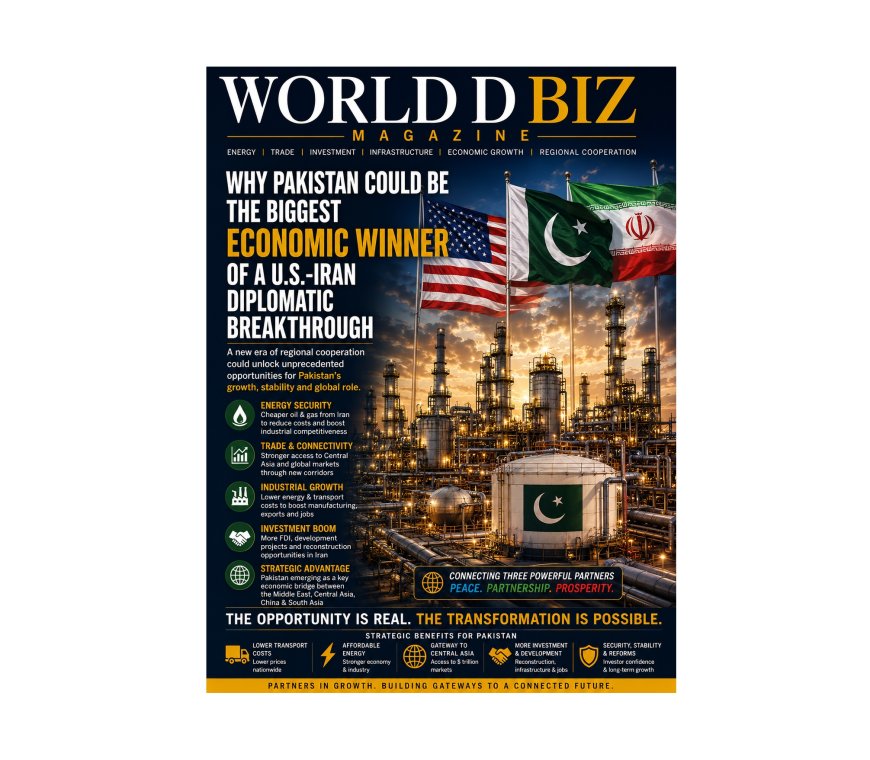
Could Pakistan Be the Biggest Economic Winner of a U.S.-Iran Diplomatic Breakthrough?
How Regional Stability, Energy Security, Trade Expansion, and Strategic Positioning Could Transform Pakistan's Economic Future
World Biz Magazine | International Trade, Energy & Geopolitical Risk
As diplomatic momentum between Washington and Tehran raises the possibility of a new regional reset, Pakistan may find itself uniquely positioned to benefit from one of the most consequential geopolitical shifts in recent years. From lower-cost Iranian energy and the long-delayed Iran-Pakistan Gas Pipeline to expanded trade corridors, Central Asian market access, and renewed investor interest, a sustained U.S.-Iran breakthrough could reshape Pakistan's economic outlook far beyond its western border.
For decades, relations between the United States and Iran have been defined by sanctions, diplomatic tensions, regional conflicts, and economic restrictions. Any major diplomatic breakthrough between Washington and Tehran would not only reshape Middle Eastern geopolitics but could also create significant economic opportunities across the region.
While global attention would naturally focus on Iran and the United States, a strong case can be made that Pakistan could emerge as one of the most significant indirect beneficiaries of a normalization process, particularly if sanctions are eased, trade routes reopen, and regional economic cooperation expands.
Pakistan's unique geographical position, longstanding relationship with Iran, growing strategic importance in the Muslim world, and proximity to major energy corridors place it in a potentially advantageous position should regional stability improve.
A Regional Reset Could Elevate Pakistan’s Strategic Value
Pakistan sits at the crossroads of South Asia, Central Asia, the Middle East, and Western China. Few countries possess such a strategically important geographic location.
Over the past several years, Pakistan has increasingly positioned itself as a diplomatic bridge between competing regional powers. Islamabad has maintained relations with Iran while simultaneously strengthening ties with Gulf Cooperation Council (GCC) nations, China, Türkiye, and Western countries.
This balanced foreign policy approach could become increasingly valuable if tensions between Iran and the West decrease.
A more stable Middle East would likely increase Pakistan's importance as a logistics hub, transit corridor, manufacturing destination, and regional trading partner.
Energy Could Be Pakistan's Biggest Economic Opportunity
Pakistan's economy has long been constrained by high energy costs.
Expensive fuel imports have contributed to inflation, industrial inefficiencies, balance-of-payment pressures, and rising transportation costs. Energy remains one of the most significant challenges facing Pakistan's economic growth.
If sanctions on Iran were eased significantly, Pakistan could gain access to one of the world's largest energy reserves located directly across its western border.
Iran possesses some of the largest proven oil and natural gas reserves on the planet. Access to these resources through shorter transportation routes could potentially reduce Pakistan's energy import costs compared with importing energy from more distant suppliers.
The economic implications would be enormous.
Lower Transportation Costs
Pakistan’s transportation sector depends heavily on diesel-powered vehicles. Trucks move food, agricultural products, construction materials, industrial goods, and consumer products across the country, making diesel one of the most economically important fuels in Pakistan’s domestic supply chain.
Pakistan does refine a significant share of the diesel it consumes domestically, but it still relies on imports to bridge the gap between refinery output and national demand. Industry data indicates that in FY2023–24, local refineries produced around 4.47 million tonnes of high-speed diesel (HSD), while national consumption reached approximately 6.23 million tonnes. In practical terms, domestic production covered roughly seven-tenths of demand, leaving the balance to be met through imports. In earlier years, the local share was lower, highlighting Pakistan’s continued exposure to international fuel prices, freight costs, and foreign exchange pressures. Kuwait has historically remained one of Pakistan’s major diesel suppliers through long-term procurement arrangements, particularly via Pakistan State Oil.
This is why access to lower-cost diesel from neighboring Iran could matter economically even if Pakistan continues refining a substantial portion of its own fuel. Iranian supply would not replace domestic refinery production, but it could reduce reliance on more expensive imported cargoes, diversify sourcing, strengthen supply security, and lower the blended cost of diesel feeding Pakistan’s transport economy.
The economic effects of lower diesel costs would extend well beyond the transport sector. Reduced freight and distribution costs could benefit:
• Agricultural products
• Food distribution
• Manufacturing supply chains
• Construction materials
• Consumer goods
• Export logistics
• Retail operations
Because transportation costs are embedded in the price of almost every product, even a moderate reduction in diesel costs could ease inflationary pressure across multiple sectors. Consumers could ultimately benefit from lower prices for everyday goods ranging from vegetables and fruit to household products, industrial inputs, and construction materials.
In a country where road freight remains central to the movement of goods between farms, factories, ports, wholesale markets, and urban centers, the multiplier effect could be substantial. Lower diesel costs can improve margins for transporters, reduce distribution expenses for businesses, ease cost pressures on retailers, and gradually feed through to the wider economy. Over time, cheaper logistics can strengthen industrial competitiveness, improve market efficiency, and support broader economic stability.
Impact on Pakistan's Industrial Sector
Affordable energy has historically been one of the strongest drivers of industrial growth.
Countries that enjoy low-cost energy often gain a competitive advantage in manufacturing, exports, and industrial production.
If Pakistan gained access to more affordable fuel and energy resources from Iran, several sectors could benefit:
Manufacturing
Lower operating costs would improve competitiveness for:
· Textile industries
· Steel manufacturers
· Cement producers
· Chemical industries
· Food processing facilities
· Export-oriented manufacturing
Agriculture
Agriculture remains a major pillar of Pakistan's economy.
Lower diesel prices would reduce operating costs for:
· Tractors
· Water pumps
· Harvesting equipment
· Transportation of crops
· Cold-chain logistics
This could improve farm profitability and potentially lower food inflation.
Small and Medium Enterprises
SMEs are often hit hardest by energy price increases.
Lower fuel and electricity costs could improve profitability, encourage expansion, and support job creation across Pakistan.
Could Electricity Costs Also Fall?
One of Pakistan's most persistent economic challenges has been the cost of electricity generation.
If sanctions relief allowed broader energy cooperation with Iran, opportunities could emerge in:
· Natural gas imports
· Cross-border electricity trade
· Pipeline development
· Energy infrastructure partnerships
Lower-cost energy sources could help reduce electricity generation expenses and support industrial expansion.
Affordable electricity would enhance productivity while improving Pakistan's attractiveness to foreign investors seeking manufacturing destinations.
Access to Broader Regional Energy Markets
While Iranian energy supplies may attract the most attention, improved regional cooperation could also unlock broader energy opportunities for Pakistan.
Greater connectivity with Iran may facilitate future energy projects involving Central Asian countries, many of which possess substantial reserves of natural gas, hydroelectric capacity, and other energy resources.
Long-term opportunities could include:
• Regional electricity trading networks
• Natural gas pipeline projects
• Cross-border energy infrastructure
• Joint energy investments
• Strategic petroleum reserves
• Renewable energy cooperation
A diversified energy strategy would strengthen Pakistan's energy security while reducing reliance on distant suppliers and volatile global shipping routes.
For a country that has historically struggled with energy shortages and high import costs, access to multiple regional energy sources could become one of the most transformative economic developments of the next decade.
The Iran-Pakistan Gas Pipeline Could Return to the Agenda
One of the most discussed regional energy projects is the Iran-Pakistan Gas Pipeline.
For years, sanctions and geopolitical concerns limited progress.
A significant easing of restrictions could revive discussions surrounding pipeline development.
If completed, such a project could provide Pakistan with a long-term source of natural gas while helping address chronic energy shortages.
Reliable gas supplies could support industrial development, power generation, fertilizer production, and economic growth.
Reconstruction and Development Opportunities in Iran
Any period of regional conflict is often followed by reconstruction and redevelopment.
If Iran enters a new phase of economic openness, the country may require substantial investments in:
· Infrastructure
· Transportation networks
· Housing
· Telecommunications
· Technology systems
· Healthcare facilities
· Industrial modernization
· Renewable energy projects
Pakistani companies could potentially participate in these opportunities.
Construction firms, engineering consultancies, IT companies, telecommunications providers, and professional service organizations may find new opportunities in an expanding Iranian market.
For Pakistan's growing technology sector, Iran's modernization efforts could create demand for software development, cybersecurity solutions, digital transformation services, and business process outsourcing.
Trade Between Pakistan and Iran Could Expand Rapidly
Current trade volumes between Pakistan and Iran remain significantly below their potential.
A more open economic environment could encourage growth in:
Pakistani Exports
Pakistan could increase exports of:
· Textiles
· Agricultural products
· Pharmaceuticals
· Sports goods
· Surgical instruments
· Information technology services
· Construction materials
Iranian Exports
Iran could increase exports of:
· Energy products
· Petrochemicals
· Industrial raw materials
· Fertilizers
· Construction inputs
The result could be a more integrated regional economic relationship benefiting businesses on both sides of the border.
Gwadar's Potential Strategic Advantage
Pakistan's Gwadar Port could become increasingly important in a more stable regional environment.
Improved connectivity between Iran, Pakistan, Central Asia, and China could transform regional logistics patterns.
Gwadar may benefit from:
· Increased trade flows
· Energy imports
· Regional transit activity
· Industrial development
· Warehousing and logistics investments
Combined with CPEC infrastructure, Pakistan could strengthen its role as a regional trade and transportation hub.
Pakistan's Gateway to Central Asia
One of the most overlooked opportunities arising from improved regional relations is Pakistan's potential role as a gateway connecting the Middle East with Central Asia.
The Central Asian republics including Kazakhstan, Uzbekistan, Turkmenistan, Kyrgyzstan, and Tajikistan possess significant reserves of oil, natural gas, minerals, rare earth elements, and agricultural resources. These countries have long sought greater access to international markets through shorter and more efficient trade corridors.
A more stable regional environment involving Iran could strengthen transport connectivity between Pakistan, Iran, and Central Asia. Such connectivity would provide Pakistani businesses with access to markets containing more than 80 million consumers while opening opportunities for trade, logistics, banking, transportation, and industrial cooperation.
Pakistan's ports, particularly Gwadar and Karachi, could serve as key maritime gateways for Central Asian exports heading toward Africa, the Middle East, and South Asia.
For Pakistan, this would represent more than a trade opportunity it would position the country as a regional economic bridge connecting several of the world's most strategically important regions.
Growing Trust from the Middle East
Beyond Iran, Pakistan's diplomatic standing across the Middle East has improved in recent years.
Saudi Arabia, Qatar and other Gulf nations have expanded cooperation with Pakistan in various sectors.
If Pakistan successfully maintains balanced relations across competing regional blocs, it could emerge as a preferred economic partner for multiple Middle Eastern countries simultaneously.
This positioning could attract:
· Foreign direct investment
· Infrastructure financing
· Industrial partnerships
· Technology investments
· Labor market opportunities
· Tourism development
Challenges Pakistan Must Still Address
While opportunities are substantial, benefits would not arrive automatically.
Pakistan would still need to address several structural challenges:
Infrastructure Modernization
Transport, logistics, ports, and energy infrastructure must continue improving to handle increased trade volumes.
Regulatory Reforms
Investors require predictable regulations, efficient bureaucracy, and transparent business environments.
Energy Distribution
Affordable imports alone are insufficient without efficient distribution systems and reduced transmission losses.
Industrial Competitiveness
Pakistan must improve productivity, innovation, and value-added exports to maximize regional opportunities.
Financial Stability
Macroeconomic stability remains essential for attracting long-term investment.
Security Will Be the Deciding Factor
Despite the significant opportunities that may emerge from regional stability and expanded economic cooperation, Pakistan's ability to fully capitalize on these opportunities will depend heavily on domestic security.
International investors evaluate countries not only on economic potential but also on predictability, stability, and security.
Pakistan has made substantial progress in improving its security environment over the past two decades. However, isolated terrorist incidents and security concerns continue to influence investor perceptions.
If Pakistan seeks to position itself as a regional trade, logistics, manufacturing, and energy hub, continued efforts will be required to:
• Strengthen border security
• Protect major infrastructure projects
• Safeguard trade corridors
• Ensure investor confidence
• Maintain political and economic stability
Global investors often compare opportunities across multiple countries. Capital tends to flow toward environments where risks are perceived to be lower and returns more predictable.
A secure and stable Pakistan would significantly improve the country's ability to attract foreign direct investment, multinational corporations, industrial projects, and regional headquarters operations.
In many respects, security could become the single most important factor determining whether Pakistan merely benefits from regional opportunities or fully transforms into a major economic power.
Could Pakistan Enter a New Phase of Regional Economic Relevance?
If regional tensions decline, sanctions are eased, trade expands, energy costs fall, and Pakistan successfully implements economic reforms, the country could experience a period of accelerated growth.
The combination of:
· Strategic geography
· Access to regional energy markets
· Expanding Middle Eastern partnerships
· Growing technology capabilities
· CPEC infrastructure
· Rising industrial potential
could position Pakistan as one of the most important economic connectors between South Asia, the Middle East, Central Asia, and China.
Whether Pakistan becomes a major regional economic power over the next five years will ultimately depend not only on geopolitical developments but also on domestic reforms, governance improvements, infrastructure investment, and the ability to capitalize on emerging opportunities.
Potential Obstacles and Risks
While the opportunities are substantial, several challenges could limit the scale of economic benefits:
Geopolitical Uncertainty
Relations between major powers can change rapidly. Future political shifts could affect sanctions policies, regional cooperation, or investment flows.
Competition from Regional Economies
Pakistan would not be the only country seeking to capitalize on a more stable regional environment. Countries such as India, Türkiye, and the United Arab Emirates would also look to expand their positions in new trade routes, energy partnerships, logistics networks, and investment flows emerging from a post-sanctions Iran and a more connected regional economy.
China, however, occupies a different category altogether. Rather than acting solely as a competing regional economy, Beijing would likely be both a strategic partner and a powerful economic stakeholder in any new regional order. Through the Belt and Road Initiative, CPEC, Gwadar, energy financing, industrial investment, and broader Eurasian trade ambitions, China could benefit significantly from improved Iran connectivity and regional stability. For Pakistan, this creates both opportunity and pressure: opportunity because Chinese-backed infrastructure and trade corridors could strengthen Pakistan's role as a regional connector, and pressure because Islamabad would need to ensure that it captures real industrial, trade, and energy gains rather than functioning only as a transit geography within larger Chinese-led regional plans.
Infrastructure Constraints
Pakistan must continue modernizing roads, railways, ports, customs systems, and logistics networks to handle increased trade volumes efficiently.
Energy Sector Challenges
Pakistan's domestic energy infrastructure will require upgrades to fully utilize additional imports and cross-border energy projects.
Security Risks
Persistent security challenges could discourage international investors and reduce the pace of economic expansion.
Policy Continuity
Long-term economic transformation requires consistent policies that extend beyond political cycles.
World Biz Magazine Insights
Key Takeaways
• Pakistan could emerge as one of the largest indirect beneficiaries of improved U.S.-Iran relations.
• Access to lower-cost Iranian diesel and petroleum products could reduce transportation costs, support industrial growth, and ease inflationary pressures across multiple sectors.
• The Iran-Pakistan Gas Pipeline could become one of the most important energy projects in Pakistan's modern history if sanctions barriers are removed.
• Affordable Iranian natural gas could help address Pakistan's chronic gas shortages while supporting power generation, manufacturing, fertilizer production, and industrial expansion.
• Reduced energy costs could improve the competitiveness of Pakistani exports and attract greater industrial investment.
• Expanded trade with Iran could unlock new opportunities for Pakistani exporters, manufacturers, logistics providers, and service industries.
• Pakistan's geographic position could strengthen its role as a gateway connecting the Middle East, Central Asia, China, and South Asia.
• The revival of regional energy projects, including pipelines, electricity trade, and cross-border infrastructure, could significantly improve Pakistan's long-term energy security.
• The Iran-Pakistan Gas Pipeline could potentially evolve into a larger regional energy corridor connecting additional markets in South Asia, creating economic benefits for multiple countries.
• Reconstruction and modernization efforts inside Iran may create opportunities for Pakistani construction firms, engineers, technology companies, and service providers.
• Greater regional stability could increase foreign direct investment and strengthen Pakistan's attractiveness as a manufacturing and logistics hub.
• Access to Central Asian markets could provide long-term opportunities in trade, transportation, energy, and infrastructure development.
• Continued improvements in domestic security will remain essential for attracting global investors and maximizing economic benefits.
• Economic reforms, governance improvements, and infrastructure modernization will ultimately determine how much Pakistan gains from changing regional dynamics.
Strategic Outlook
• Pakistan's greatest advantage may not be energy alone, but its ability to become a regional connector between multiple economic blocs.
• The combination of CPEC infrastructure, Iranian energy access, regional trade routes, Middle Eastern partnerships, and Central Asian connectivity could create powerful new growth engines for the economy.
• If the Iran-Pakistan Gas Pipeline becomes operational, Pakistan could significantly strengthen its energy security while reducing dependence on more expensive imported energy sources.
• A stable and cooperative regional environment would strengthen Pakistan's position as a future trade, logistics, manufacturing, and energy hub.
Risk Assessment
• The opportunities outlined in this analysis depend heavily on sustained diplomatic progress between Iran and the United States.
• The current diplomatic environment remains uncertain and could change depending on future political and security developments.
• If the current peace arrangement remains temporary and regional tensions re-emerge, many expected economic benefits could be delayed, suspended, or significantly reduced.
• Renewed conflict, sanctions, military escalation, or disruptions in regional trade routes would negatively impact investment confidence and economic cooperation.
• Any future progress on the Iran-Pakistan Gas Pipeline would remain dependent on long-term geopolitical stability and international acceptance.
• Investors should view current opportunities as conditional upon long-term stability rather than guaranteed outcomes.
Conclusion
Pakistan's potential economic gains from a U.S.-Iran diplomatic breakthrough extend far beyond access to cheaper oil. Lower fuel costs, expanded regional trade, stronger connectivity with Central Asia, infrastructure opportunities, industrial growth, energy security, and increased foreign investment could collectively reshape Pakistan's economic trajectory over the coming decade.
Among the most transformative opportunities is the long-delayed Iran-Pakistan Gas Pipeline. For years, the project remained stalled due to sanctions, geopolitical pressures, and financial uncertainties. Iran has repeatedly argued that Pakistan failed to fully implement portions of the agreement, while Pakistan cited sanctions-related constraints and international considerations.
If a broader U.S.-Iran understanding ultimately leads to long-term sanctions relief and normalization, the pipeline could return to the center of regional energy discussions.
For Pakistan, the benefits could be substantial.
The country continues to face natural gas shortages that affect households, power generation, manufacturing industries, fertilizer production, and commercial activity. Access to large volumes of relatively affordable Iranian natural gas could help address energy deficits, support industrial expansion, reduce electricity generation costs, and improve long-term energy security.
Beyond Pakistan, the pipeline could eventually become part of a larger regional energy corridor. Some analysts have long envisioned the possibility of extending energy connectivity toward India under favorable political conditions. If regional relations improve over time, Iran could gain access to one of the world's largest energy markets, potentially creating a significant boost to Iranian export revenues and regional economic integration.
The broader economic implications could be enormous.
Lower transportation costs, improved industrial competitiveness, reduced energy shortages, stronger regional trade, increased investment, and expanded energy cooperation could collectively create a new economic growth cycle for Pakistan.
Few countries are positioned as strategically as Pakistan. Located at the crossroads of South Asia, the Middle East, Central Asia, and China, Pakistan could become a critical economic bridge linking some of the world's most important markets.
However, opportunity alone does not guarantee success.
Pakistan's ability to capitalize on these developments will depend on continued economic reforms, infrastructure modernization, improved security, policy consistency, and its ability to attract long-term investment.
Most importantly, virtually every opportunity discussed in this analysis depends on the continuation and expansion of diplomatic progress between Iran and the United States.
At the time of writing, any peace arrangement remains vulnerable to political shifts, strategic disagreements, and regional tensions. If diplomatic progress proves temporary and conflict returns, many of the opportunities outlined in this article could be delayed, reduced, or disappear entirely.
The opportunity is significant, but so are the uncertainties.
For Pakistan, the coming years could represent either one of the most transformative economic periods in its modern history or a missed opportunity if regional stability proves short-lived.
World Biz Magazine Bottom Line
Pakistan may possess one of the strongest economic upside opportunities emerging from a potential U.S.-Iran diplomatic breakthrough.
The country's strategic location, access to Iranian energy resources, potential revival of the Iran-Pakistan Gas Pipeline, growing connectivity with Central Asia, and expanding regional partnerships could position Pakistan at the center of a new era of economic cooperation.
However, all projections ultimately depend upon one critical factor:
The continuation of peace.
If diplomacy evolves into a lasting framework for regional cooperation, Pakistan could emerge as one of the most important trade, energy, logistics, and industrial hubs across South Asia, Central Asia, and the Middle East.
If conflict returns and the current diplomatic progress collapses, many of today's opportunities could quickly become tomorrow's unrealized ambitions.
In geopolitics, peace creates opportunity.
For Pakistan, the scale of that opportunity may be larger than at any point in recent decades.
Editorial Disclaimer
This article is a forward-looking geopolitical and economic analysis based on potential scenarios arising from improved diplomatic relations between Iran and the United States. The views expressed are analytical in nature and should not be interpreted as predictions, guarantees, investment advice, or official policy assessments.
Economic outcomes, trade opportunities, investment flows, energy cooperation, and geopolitical developments discussed in this article remain subject to evolving political, diplomatic, security, and market conditions.
World Biz Magazine recognizes that regional dynamics can change rapidly. Any future benefits described herein are dependent upon the continuation of diplomatic engagement, sustained regional stability, and successful implementation of economic cooperation initiatives by all parties involved.
Readers should evaluate developments based on official announcements, verified information, and evolving geopolitical circumstances.
Quote
"Geography has given Pakistan an opportunity. Regional stability could turn that opportunity into prosperity. Whether that transformation occurs will depend on decisions made not only in Islamabad, but across Tehran, Washington, and the wider region."
By World Biz Magazine Editorial Team
What's Your Reaction?
 Like
1
Like
1
 Dislike
0
Dislike
0
 Love
0
Love
0
 Funny
0
Funny
0
 Angry
0
Angry
0
 Sad
0
Sad
0
 Wow
1
Wow
1