














































































































































Cruise Ports as Economic Engines: Tourism, Infrastructure, and Investment Growth
Understand how modern cruise ports are evolving into major tourism and investment gateways that generate significant economic value worldwide.

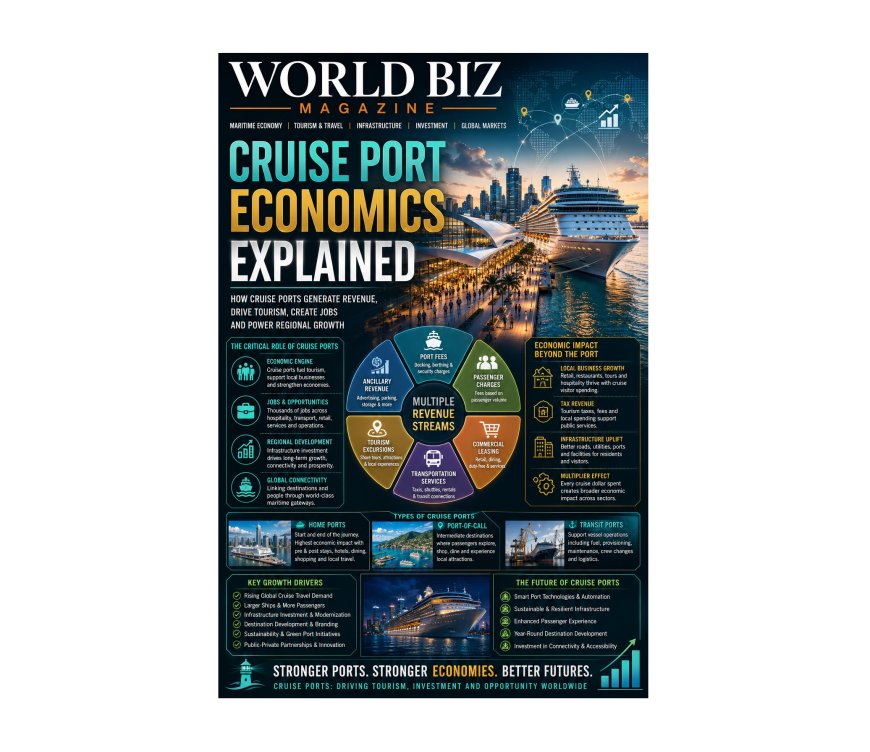
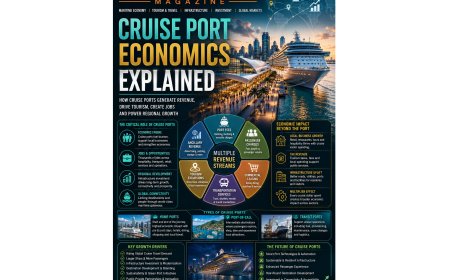
Cruise Port Economics Explained
How Cruise Ports Generate Revenue, Drive Regional Development, and Power the Global Cruise Tourism Economy
World Biz Magazine | Travel, Tourism & Maritime Infrastructure
The global cruise industry is often viewed through the lens of luxury ships, passenger experiences, and exotic destinations. However, behind every successful cruise itinerary lies a complex economic ecosystem centered around one of the industry's most critical assets: cruise ports. These maritime gateways serve as the operational backbone of cruise tourism, facilitating passenger movement, supporting vessel operations, generating substantial economic activity, and creating opportunities for local businesses and governments.
As global cruise tourism continues expanding, cruise ports have evolved from simple docking facilities into sophisticated economic hubs capable of attracting investment, supporting employment, stimulating tourism spending, and driving regional development. Major cruise destinations increasingly recognize that modern port infrastructure is not merely a transportation asset but a strategic economic engine capable of generating long-term benefits across multiple industries.
From passenger terminals and transportation services to retail centers, hospitality businesses, and destination attractions, cruise ports influence a wide range of economic activities. Understanding how these facilities generate value provides insight into why governments, investors, tourism authorities, and private operators continue investing billions of dollars into port expansion and modernization projects worldwide.
This article examines the economic foundations of cruise ports, explores their revenue models, analyzes their broader economic impact, and evaluates their role in shaping the future of global tourism and maritime commerce.
Understanding Cruise Ports
Cruise ports are specialized maritime facilities designed to accommodate passenger cruise vessels and facilitate the movement of travelers between ships and destinations.
Unlike cargo ports, which focus primarily on freight handling, cruise ports are designed around passenger experiences and tourism activities.
Modern cruise ports typically include:
- Passenger terminals
- Customs and immigration facilities
- Transportation connections
- Retail and commercial spaces
- Security infrastructure
- Baggage handling systems
- Hospitality services
- Tourism information centers
These facilities function as both transportation hubs and tourism gateways.
The Role of Cruise Ports in the Tourism Economy
Cruise ports play a critical role in connecting travelers with local destinations.
Every arriving vessel generates demand for:
- Transportation services
- Tour operators
- Restaurants
- Hotels
- Retail businesses
- Entertainment venues
- Cultural attractions
Passengers often spend money both inside and outside port facilities.
This spending creates a multiplier effect throughout local economies.
For many coastal cities and island destinations, cruise tourism represents a significant source of economic activity.
Types of Cruise Ports
Different ports perform different functions within cruise networks.
Home Ports
Home ports serve as the starting and ending points of cruise itineraries.
Passengers typically:
- Arrive before departure
- Stay in nearby hotels
- Use local transportation
- Spend additional time in the destination
Because travelers often extend their visits, home ports generally generate the highest economic impact.
Examples include major international cruise hubs that attract passengers from multiple regions.
Port-of-Call Destinations
These ports serve as intermediate stops during cruise itineraries.
Passengers disembark temporarily to explore local attractions.
Economic activity often centers around:
- Excursions
- Retail shopping
- Dining
- Cultural experiences
Although passenger stays are shorter than at home ports, visitor volumes can be substantial.
Transit Ports
Transit ports primarily support vessel operations and logistical requirements.
Services may include:
- Fuel supply
- Maintenance
- Waste management
- Crew changes
- Provisioning
These ports contribute to operational efficiency within cruise networks.
How Cruise Ports Generate Revenue
Cruise ports generate income through multiple revenue streams.
Port Fees
Cruise operators pay various fees associated with vessel arrivals.
These may include:
- Docking fees
- Berthing charges
- Passenger fees
- Security fees
- Infrastructure charges
Port fees often represent a major source of direct revenue.
Passenger Charges
Many ports collect fees based on passenger volume.
These charges help support:
- Terminal operations
- Infrastructure maintenance
- Security services
- Tourism development initiatives
Higher passenger volumes generally increase revenue generation.
Commercial Leasing
Modern cruise terminals frequently include commercial areas.
Revenue may come from:
- Retail leases
- Restaurants
- Duty-free stores
- Tourism service providers
- Advertising opportunities
Commercial activity can significantly enhance overall profitability.
Transportation Services
Cruise passengers rely heavily on local transportation.
Revenue opportunities include:
- Taxi services
- Shuttle operations
- Car rentals
- Public transportation partnerships
These services generate economic benefits beyond the port itself.
Tourism Excursions
Many cruise destinations derive substantial revenue from organized shore excursions.
Popular offerings include:
- Historical tours
- Adventure activities
- Wildlife experiences
- Cultural attractions
- Luxury excursions
Tourism operators often depend heavily on cruise passenger traffic.
Economic Impact Beyond the Port
The economic value of cruise tourism extends far beyond terminal facilities.
Employment Generation
Cruise ports support jobs across multiple sectors.
These include:
- Port operations
- Hospitality
- Tourism services
- Transportation
- Security
- Retail
- Food services
Employment opportunities often benefit both skilled and entry-level workers.
Local Business Growth
Small and medium-sized businesses frequently benefit from cruise passenger spending.
Examples include:
- Souvenir shops
- Restaurants
- Tour operators
- Cultural attractions
- Local artisans
Cruise tourism can provide a significant customer base for local entrepreneurs.
Tax Revenue
Governments often benefit through:
- Tourism taxes
- Sales taxes
- Port-related fees
- Corporate taxes
These revenues may support public infrastructure and community development.
Why Home Ports Generate Greater Economic Value
Among all cruise port categories, home ports typically produce the greatest economic benefits.
Passengers often:
- Arrive several days early
- Stay after cruises
- Book local accommodations
- Use airports and transportation systems
- Visit local attractions
As a result, home ports generate spending across a much broader economic ecosystem.
Many cities actively compete to attract home-port status due to its substantial economic impact.
Infrastructure Investments and Port Expansion
As cruise tourism grows, ports must continually expand and modernize infrastructure.
Investments often focus on:
Larger Terminals
Accommodating growing passenger volumes.
Deep-Water Facilities
Supporting next-generation cruise ships.
Transportation Connectivity
Improving access to airports, hotels, and urban centers.
Smart Port Technologies
Enhancing operational efficiency and passenger experiences.
Environmental Infrastructure
Supporting sustainability initiatives.
These investments often require public-private partnerships and long-term planning.
The Rise of Cruise Port Real Estate Development
Many modern ports are evolving into mixed-use destinations.
Developments increasingly include:
- Waterfront retail districts
- Entertainment complexes
- Hotels
- Convention facilities
- Residential projects
- Tourism attractions
This transformation allows ports to generate year-round economic activity rather than relying solely on cruise arrivals.
Sustainability and Environmental Considerations
Cruise ports face increasing pressure to balance economic growth with environmental responsibility.
Key initiatives include:
Shore Power Systems
Allowing ships to connect to local electrical grids while docked.
Emission Reduction Programs
Reducing environmental impact from vessel operations.
Waste Management Infrastructure
Supporting responsible disposal and recycling practices.
Sustainable Tourism Strategies
Managing visitor volumes while protecting local communities and ecosystems.
Environmental stewardship is becoming an increasingly important factor in port competitiveness.
Challenges Facing Cruise Ports
Despite strong growth prospects, cruise ports face several challenges.
Infrastructure Costs
Port expansion projects require substantial capital investment.
Seasonality
Some destinations experience significant fluctuations in passenger traffic.
Environmental Regulations
Compliance costs continue increasing.
Geopolitical Risks
Regional instability can impact cruise itineraries and passenger demand.
Overtourism Concerns
Popular destinations must balance tourism growth with community needs.
Successfully addressing these challenges is essential for long-term sustainability.
Future Trends in Cruise Port Economics
Several trends are expected to shape the future of cruise ports.
These include:
- Smart port technologies
- AI-driven passenger management
- Sustainable infrastructure investments
- Integrated tourism ecosystems
- Larger cruise vessels
- Digital passenger experiences
- Public-private partnerships
- Enhanced destination development
Ports that successfully adapt to these trends will be better positioned to attract future cruise traffic and investment.
World Biz Magazine Insights
Cruise ports have evolved far beyond their traditional role as maritime docking facilities. Today, they function as economic development platforms that influence tourism, transportation, hospitality, retail, real estate, and regional investment. The most successful ports are no longer competing solely on location; they are competing on infrastructure quality, passenger experience, sustainability, and their ability to integrate into broader destination ecosystems. As cruise tourism continues expanding globally, ports capable of delivering both operational efficiency and economic value creation will emerge as strategic assets within the future tourism economy.
Conclusion
Cruise ports represent one of the most important yet often overlooked components of the global cruise industry. Their economic influence extends well beyond passenger terminals, generating employment, supporting local businesses, attracting investment, and contributing to regional development.
As governments and private operators continue investing in infrastructure modernization, sustainability initiatives, and destination enhancement, cruise ports are becoming increasingly sophisticated economic engines. Their ability to connect travelers, facilitate tourism spending, and stimulate broader economic activity ensures they will remain central to the future growth of cruise tourism worldwide.
In an era where tourism destinations compete for global travelers and investment capital, cruise ports have become far more than transportation facilities they are gateways to economic opportunity.
Disclaimer
This article is published for informational, educational, and industry analysis purposes only and does not constitute investment, financial, legal, maritime, tourism, infrastructure, or professional advice. Economic conditions, tourism trends, regulatory frameworks, and port development strategies vary by jurisdiction and may change over time. Readers should consult qualified professionals before making investment, business, infrastructure, or policy decisions related to cruise ports, tourism development, or maritime operations.
What's Your Reaction?
 Like
1
Like
1
 Dislike
0
Dislike
0
 Love
0
Love
0
 Funny
0
Funny
0
 Angry
0
Angry
0
 Sad
0
Sad
0
 Wow
1
Wow
1