




















































































Bus Rapid Transit (BRT) Systems: The Future of Cost-Effective, High-Capacity Urban Transportation
Understand why cities worldwide are investing in BRT systems to enhance transportation efficiency, sustainability, and economic growth.

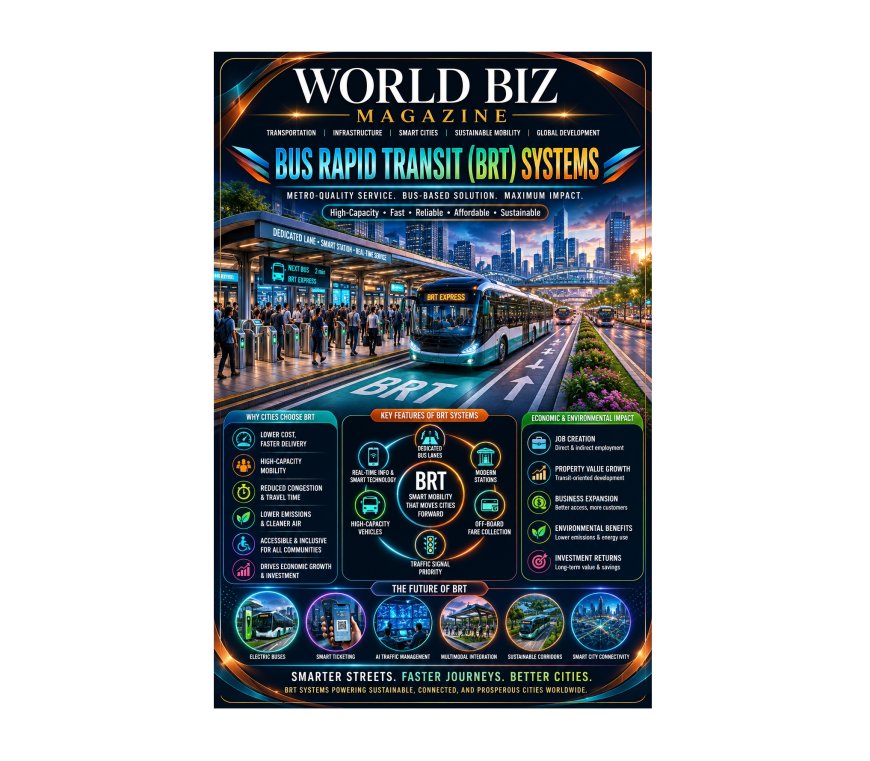
Bus Rapid Transit (BRT) Systems
How High-Capacity Bus Networks Are Transforming Urban Mobility, Reducing Congestion, and Delivering Cost-Effective Mass Transit Solutions
World Biz Magazine | Transportation, Infrastructure & Smart Cities
As cities continue expanding and urban populations grow at unprecedented rates, transportation infrastructure faces increasing pressure to move people efficiently, sustainably, and affordably. Traffic congestion, rising vehicle ownership, environmental concerns, and limited public budgets have compelled city planners and policymakers to explore innovative transit solutions capable of delivering high-capacity mobility without the substantial costs associated with rail infrastructure.
Among the most successful transportation innovations of recent decades is the Bus Rapid Transit (BRT) system. Often described as "metro-quality service on wheels," BRT combines the flexibility of buses with the speed, reliability, and efficiency typically associated with rail transit. Through dedicated lanes, modern stations, intelligent transportation systems, and integrated network planning, BRT systems have emerged as a powerful tool for addressing urban mobility challenges across both developed and emerging markets.
Today, cities around the world are increasingly adopting BRT as a strategic transportation investment. From major metropolitan regions to rapidly growing urban centers, BRT networks are improving accessibility, reducing congestion, lowering emissions, and supporting economic development while offering a significantly lower capital cost compared to rail-based alternatives.
As governments seek sustainable mobility solutions and smarter urban transportation systems, Bus Rapid Transit is becoming an increasingly important component of future city planning strategies.
This article explores the fundamentals of BRT systems, their economic benefits, operational advantages, challenges, technological evolution, and growing role in shaping the future of urban transportation.
Understanding Bus Rapid Transit
Bus Rapid Transit is a high-capacity public transportation system designed to deliver fast, efficient, reliable, and cost-effective urban mobility through dedicated infrastructure and advanced operational practices.
Unlike conventional bus services, BRT systems operate within specially designed corridors that prioritize public transportation movement.
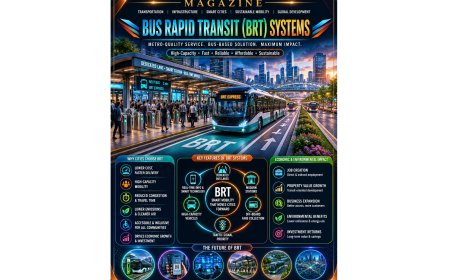
Core characteristics typically include:
- Dedicated bus lanes
- High-capacity vehicles
- Modern stations
- Off-board fare collection
- Priority signaling systems
- Real-time passenger information
- Integrated transportation networks
These features enable buses to operate with greater speed and reliability while minimizing delays caused by mixed traffic conditions.
The objective is to provide rail-like performance using bus-based infrastructure.
Why Cities Are Investing in BRT
Urban transportation challenges continue intensifying worldwide.
Cities increasingly face:
- Traffic congestion
- Population growth
- Environmental pressures
- Infrastructure constraints
- Rising transportation demand
Many municipalities require transportation solutions that can be deployed relatively quickly and cost-effectively.
Compared with metro or light rail systems, BRT often offers:
- Lower construction costs
- Faster implementation
- Operational flexibility
- Scalability
- Reduced infrastructure requirements
These advantages have made BRT attractive to both developed and developing economies.
Key Components of BRT Systems
The success of a BRT network depends on the integration of multiple infrastructure and operational elements.
Dedicated Bus Lanes
Dedicated lanes are among the most important features of BRT systems.
These corridors separate transit vehicles from general traffic.
Benefits include:
- Faster travel times
- Improved reliability
- Reduced congestion impacts
- Higher service frequency
Dedicated lanes help ensure predictable operations even during peak traffic periods.
Modern Stations
BRT stations are designed to provide efficient passenger experiences.
Features often include:
- Platform-level boarding
- Sheltered waiting areas
- Digital information displays
- Accessibility accommodations
- Security systems
Well-designed stations improve convenience and reduce boarding times.
High-Capacity Vehicles
BRT systems frequently utilize larger buses capable of carrying significant passenger volumes.
Examples include:
- Articulated buses
- Bi-articulated buses
- Electric buses
- Hybrid vehicles
These vehicles increase capacity while supporting sustainability objectives.
Off-Board Fare Collection
Passengers typically pay before boarding.
This approach reduces dwell times and improves service efficiency.
Benefits include:
- Faster boarding
- Reduced delays
- Improved passenger flow
Fare system modernization contributes significantly to operational performance.
Traffic Signal Priority
Many BRT systems use intelligent transportation technologies.
Signal priority systems allow buses to move through intersections more efficiently.
Advantages include:
- Reduced travel times
- Improved schedule adherence
- Increased operational efficiency
Technology integration enhances overall network performance.
Economic Benefits of BRT
One of the primary reasons cities adopt BRT is its favorable economic profile.
Lower Capital Costs
Rail infrastructure projects often require substantial investment.
By comparison, BRT systems generally require significantly lower capital expenditures.
Savings result from:
- Reduced infrastructure complexity
- Lower construction requirements
- Flexible deployment models
This makes BRT particularly attractive for rapidly growing cities with budget constraints.
Faster Project Delivery
BRT corridors can often be developed more quickly than rail projects.
Shorter implementation timelines provide:
- Faster public benefits
- Reduced construction disruption
- Earlier economic returns
Rapid deployment supports urban development objectives.
Increased Productivity
Efficient transportation improves workforce mobility.
Benefits include:
- Reduced commuting times
- Expanded labor market access
- Enhanced economic participation
Improved mobility contributes directly to economic productivity.
Urban Development and Property Values
Transit infrastructure often influences surrounding real estate markets.
BRT corridors may stimulate:
- Commercial development
- Residential investment
- Mixed-use projects
- Transit-oriented development
Improved accessibility frequently increases the attractiveness of adjacent areas.
Environmental Benefits
Sustainability is becoming a major driver of transportation policy.
BRT contributes to environmental objectives through:
Reduced Vehicle Congestion
Encouraging public transportation usage.
Lower Emissions
Particularly when combined with electric or low-emission fleets.
Improved Air Quality
Supporting healthier urban environments.
Energy Efficiency
Mass transit typically consumes less energy per passenger than private vehicles.
Environmental benefits often strengthen the long-term value proposition of BRT investments.
BRT and Smart Cities
Bus Rapid Transit is increasingly integrated into smart city initiatives.
Modern systems utilize:
Real-Time Passenger Information
Providing accurate service updates.
Mobile Ticketing
Enhancing convenience and accessibility.
Data Analytics
Supporting operational optimization.
Artificial Intelligence
Improving scheduling and traffic management.
Connected Infrastructure
Enhancing system coordination and efficiency.
Technology is helping transform BRT into a key component of intelligent urban mobility ecosystems.
Integration with Other Transit Modes
Successful BRT systems rarely operate in isolation.
Integration often includes:
- Metro networks
- Commuter rail systems
- Light rail transit
- Public buses
- Cycling infrastructure
- Pedestrian networks
Multi-modal connectivity improves accessibility and overall transportation efficiency.
Challenges Facing BRT Systems
Despite their advantages, BRT systems face several challenges.
Dedicated Lane Enforcement
Unauthorized vehicle access can reduce operational effectiveness.
Capacity Constraints
High-demand corridors may eventually require rail solutions.
Public Perception
Some travelers may perceive rail systems as more prestigious.
Funding Requirements
Although less expensive than rail, BRT still requires significant investment.
Urban Space Allocation
Dedicated lanes may require reallocating existing road capacity.
Addressing these challenges is critical for long-term success.
Global Adoption of BRT
BRT systems have gained popularity worldwide.
Governments continue investing in:
- Corridor expansion
- Fleet modernization
- Electrification programs
- Smart mobility technologies
Growing urban populations and sustainability goals are expected to support continued adoption.
Many transportation planners view BRT as one of the most scalable and adaptable urban transit solutions available today.
Future Trends in BRT Development
Several trends are shaping the next generation of BRT systems.
These include:
- Electric bus fleets
- Autonomous vehicle technologies
- AI-powered traffic management
- Mobility-as-a-Service integration
- Smart ticketing platforms
- Sustainable infrastructure development
- Digital passenger engagement tools
These innovations are expected to further improve efficiency, sustainability, and passenger experiences.
World Biz Magazine Insights
Bus Rapid Transit represents one of the most practical and economically efficient solutions available to cities seeking to modernize urban transportation. By combining dedicated infrastructure, intelligent technologies, and high-capacity operations, BRT systems provide many of the benefits of rail transit while maintaining greater flexibility and lower capital costs. As cities pursue smart mobility strategies and sustainable growth objectives, BRT is likely to remain a critical component of future urban transportation networks worldwide.
Conclusion
Bus Rapid Transit systems have emerged as a powerful transportation solution capable of addressing many of the mobility challenges facing modern cities. Through dedicated corridors, advanced technologies, efficient operations, and scalable infrastructure, BRT provides reliable, affordable, and sustainable public transportation services.
Its ability to deliver high-capacity transit at a lower cost than rail alternatives has made BRT particularly attractive to cities seeking rapid improvements in urban mobility. Beyond transportation benefits, BRT supports economic development, environmental sustainability, social inclusion, and smarter urban planning.
As urban populations continue expanding and transportation demands increase, Bus Rapid Transit is expected to play an increasingly important role in shaping the future of sustainable and connected cities worldwide.
Disclaimer
This article is published for informational, educational, and industry analysis purposes only and does not constitute investment, financial, legal, engineering, transportation, infrastructure, or professional advice. Transportation policies, project economics, regulatory frameworks, and infrastructure outcomes vary across jurisdictions and may change over time. Readers should consult qualified professionals before making transportation, infrastructure, investment, or policy decisions related to Bus Rapid Transit systems or urban mobility projects.
What's Your Reaction?
 Like
0
Like
0
 Dislike
0
Dislike
0
 Love
0
Love
0
 Funny
0
Funny
0
 Angry
0
Angry
0
 Sad
0
Sad
0
 Wow
0
Wow
0