

























































































































































































Insurance Protection Against Natural Disasters: What Property Owners Need to Know
Learn how flood insurance, earthquake insurance, and storm coverage protect homes, businesses, and investments from catastrophic natural disasters.

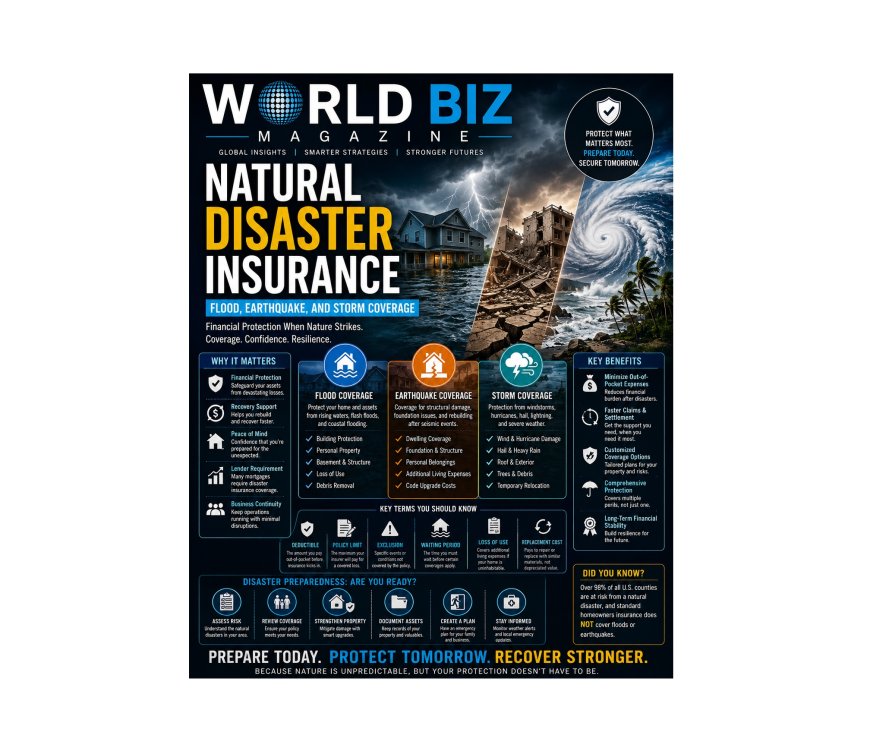
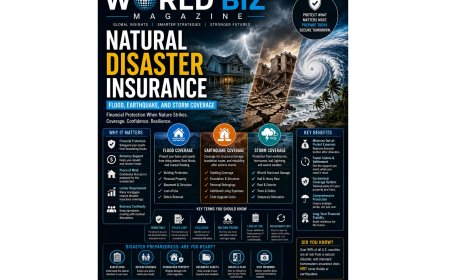
Natural Disaster Insurance: Flood, Earthquake, and Storm Coverage
Understanding How Specialized Insurance Protects Homes, Businesses, and Communities from Catastrophic Natural Events
World Biz Magazine | Insurance, Risk Management & Disaster Resilience
Natural disasters have become one of the most significant financial risks facing property owners, businesses, governments, and insurers worldwide. From devastating floods and powerful hurricanes to destructive earthquakes and severe storms, catastrophic events can cause billions of dollars in damage within a matter of hours. As climate patterns evolve, urban populations expand, and property values continue to rise, the economic consequences of natural disasters have reached unprecedented levels. For homeowners, commercial property owners, investors, and business operators, understanding how natural disaster insurance works has become an essential component of financial planning and risk management.
While many property owners assume their standard insurance policies provide comprehensive protection against all forms of damage, this is often not the case. In reality, flood damage, earthquake destruction, and certain storm-related losses may require separate or specialized insurance coverage. Failure to understand these distinctions can result in significant financial exposure following a disaster. Natural disaster insurance is designed to address these gaps by providing targeted protection against specific catastrophic risks that may otherwise be excluded from standard property policies.
The global insurance industry plays a critical role in disaster recovery and economic resilience. Insurance helps individuals and organizations rebuild properties, replace damaged assets, restore operations, and recover financially following major events. Without adequate insurance coverage, many property owners would face overwhelming financial burdens that could take years to overcome. As natural disasters become more frequent and costly in many regions, insurance protection is increasingly viewed as a necessity rather than an optional safeguard.
Understanding flood insurance, earthquake insurance, storm coverage, policy structures, exclusions, deductibles, and claims processes allows property owners to make informed decisions regarding disaster preparedness and long-term financial security.
Understanding Natural Disaster Insurance
Natural disaster insurance refers to insurance coverage designed to protect policyholders against financial losses resulting from catastrophic natural events.
These events may include:
- Floods
- Earthquakes
- Hurricanes
- Tornadoes
- Windstorms
- Hailstorms
- Severe weather events
- Coastal storm surges
Unlike traditional property insurance, disaster-related coverage often requires separate policies or endorsements.
Coverage structures vary depending on geographic location, risk exposure, insurer requirements, and regulatory frameworks.
The primary purpose is to reduce financial losses associated with catastrophic damage.
Why Natural Disaster Insurance Matters
Natural disasters can cause extensive destruction to homes, businesses, infrastructure, and communities.
Financial losses often include:
- Structural damage
- Personal property losses
- Business interruptions
- Temporary relocation expenses
- Reconstruction costs
Without insurance protection, these expenses can create severe financial hardship.
Insurance helps transfer disaster-related risks from property owners to insurers.
This financial protection supports recovery and resilience following major events.
For many families and businesses, insurance serves as the difference between rebuilding and financial collapse.
The Growing Impact of Natural Disasters
The frequency and severity of natural disasters have become major concerns globally.
Several factors contribute to increasing losses:
- Population growth
- Urban development
- Rising property values
- Coastal expansion
- Climate-related weather patterns
As more assets become concentrated in disaster-prone areas, economic exposure continues increasing.
Insurance markets have responded by developing specialized products and advanced risk assessment models.
Disaster insurance now represents one of the most important segments of the global insurance industry.
Flood Insurance Explained
Flood insurance protects property owners against losses caused by flooding.
Flood damage is one of the most commonly misunderstood areas of insurance coverage.
Many standard homeowners insurance policies do not cover flood-related losses.
Flooding may result from:
- Heavy rainfall
- River overflow
- Coastal storm surges
- Flash floods
- Infrastructure failures
Specialized flood insurance is typically required to obtain protection against these risks.
Coverage generally applies to direct physical damage caused by floodwaters.
What Flood Insurance Covers
Flood insurance policies often cover:
Building Coverage
Protection for:
- Foundations
- Walls
- Electrical systems
- Plumbing systems
- HVAC equipment
- Structural components
Contents Coverage
Protection for:
- Furniture
- Electronics
- Appliances
- Personal belongings
- Business equipment
Coverage limits vary depending on policy terms and property characteristics.
Policyholders should review limits carefully to ensure adequate protection.
Common Flood Insurance Exclusions
Flood insurance may not cover every loss associated with flooding.
Common exclusions can include:
- Temporary housing expenses
- Landscaping damage
- Currency and securities
- Certain outdoor property
Policy wording varies significantly among insurers.
Understanding exclusions is essential when evaluating coverage needs.
Earthquake Insurance Explained
Earthquake insurance protects against losses resulting from seismic activity.
Earthquake damage is frequently excluded from standard property insurance policies.
As a result, property owners in earthquake-prone regions often purchase separate earthquake coverage.
Earthquakes can cause:
- Structural collapse
- Foundation damage
- Cracked walls
- Utility disruptions
- Property displacement
Repair and reconstruction costs following major earthquakes can be substantial.
Insurance helps reduce the financial burden associated with these events.
What Earthquake Insurance Covers
Earthquake policies generally provide protection for:
Structural Damage
Repair or rebuilding of damaged structures.
Personal Property
Coverage for belongings damaged by seismic events.
Additional Living Expenses
Temporary housing costs if the property becomes uninhabitable.
Debris Removal
Expenses associated with cleanup and recovery efforts.
Coverage specifics vary among insurers and jurisdictions.
Earthquake Deductibles and Risk Considerations
· Earthquake insurance often includes higher deductibles than traditional property insurance.
· Deductibles may be calculated as a percentage of property value rather than a fixed amount.
· This structure reflects the potentially severe losses associated with major seismic events.
· Property location significantly influences pricing and coverage availability.
· Risk assessments often consider local geological conditions and historical earthquake activity.
Storm Insurance Coverage
Storm-related coverage typically addresses damage resulting from severe weather events.
Examples include:
- Hurricanes
- Tornadoes
- Windstorms
- Hailstorms
- Lightning strikes
Coverage may be provided through standard property policies or specialized endorsements.
The scope of protection depends on policy language and geographic considerations.
Storm coverage remains particularly important in coastal and severe-weather regions.
Wind and Hurricane Coverage
Wind-related losses represent a major source of insurance claims worldwide.
Coverage may include:
- Roof damage
- Structural damage
- Broken windows
- Water intrusion caused by storm damage
- Detached structures
Certain high-risk coastal regions may require separate windstorm policies.
Insurers often implement specialized underwriting standards in hurricane-prone areas.
Storm Surge and Coastal Risks
· Storm surges can cause extensive property damage during hurricanes and coastal storms.
· However, storm surge damage may sometimes be classified as flooding rather than wind damage.
· This distinction can significantly affect claim outcomes.
· Property owners should understand how their policies classify storm surge events.
· Coverage gaps may exist if appropriate flood insurance is not in place.
Business Disaster Insurance
Natural disasters can significantly disrupt business operations.
Commercial insurance solutions often include:
- Property protection
- Business interruption coverage
- Equipment coverage
- Revenue loss protection
Business interruption insurance helps compensate for income losses resulting from disaster-related closures.
This protection supports operational continuity during recovery periods.
For many organizations, business interruption coverage is as important as property protection.
Claims Process Following a Natural Disaster
Disaster-related insurance claims often involve several steps.
Typical procedures include:
- Reporting the loss
- Documenting damages
- Property inspections
- Claim evaluation
- Settlement determination
- Repair or rebuilding efforts
Accurate documentation can improve claim efficiency.
Photographs, inventories, receipts, and maintenance records are valuable during the claims process.
Preparation before disasters occur can significantly improve recovery outcomes.
Risk Assessment and Insurance Pricing
Insurance premiums are heavily influenced by risk exposure.
Insurers evaluate factors such as:
- Geographic location
- Historical disaster frequency
- Construction quality
- Building age
- Property value
- Mitigation measures
Higher-risk properties generally face higher insurance costs.
Advanced catastrophe modeling helps insurers evaluate potential exposures.
Technology has significantly improved disaster risk assessment capabilities.
Disaster Mitigation and Insurance Benefits
Property owners can often reduce risks through mitigation efforts.
Examples include:
- Elevated construction
- Reinforced roofing
- Seismic retrofitting
- Flood barriers
- Storm-resistant windows
Many insurers offer premium incentives for proactive risk reduction measures.
Mitigation investments may improve both safety and affordability.
Risk prevention remains an important component of disaster management.
Climate Change and the Future of Disaster Insurance
Climate-related concerns are increasingly shaping insurance markets worldwide.
Insurers are closely monitoring:
- Rising sea levels
- Extreme weather events
- Flood frequency
- Wildfire risks
- Hurricane intensity
These developments may influence pricing, underwriting practices, and coverage availability.
Climate resilience has become a strategic priority throughout the insurance industry.
Future disaster insurance solutions will likely rely heavily on advanced analytics and predictive modeling.
Technology and Disaster Insurance Innovation
Technology continues transforming disaster insurance.
Emerging innovations include:
- Satellite monitoring
- Drone inspections
- Artificial intelligence
- Predictive analytics
- Parametric insurance products
- Real-time risk monitoring
These tools improve underwriting accuracy, claims processing, and disaster response capabilities.
Technology-driven insurance models are expected to play a growing role in future risk management strategies.
Choosing the Right Disaster Insurance Coverage
Selecting appropriate disaster coverage requires careful evaluation of:
- Geographic risks
- Property characteristics
- Financial resources
- Business continuity needs
- Regulatory requirements
Coverage reviews should be conducted regularly.
Risk exposures often evolve over time.
Professional guidance may help identify coverage gaps and optimize protection strategies.
Adequate disaster insurance is a critical component of comprehensive financial planning.
World Biz Magazine Insights
Natural disasters represent some of the most significant and unpredictable risks facing property owners today. Floods, earthquakes, hurricanes, and severe storms can create financial losses that extend far beyond physical damage, affecting livelihoods, business continuity, investment portfolios, and community resilience. While insurance cannot prevent disasters from occurring, it provides the financial resources necessary for recovery and rebuilding. As climate-related risks intensify and economic exposure continues expanding, disaster insurance is becoming an increasingly important pillar of risk management and long-term financial security. Organizations and individuals that proactively evaluate their disaster exposures and maintain appropriate coverage will be better positioned to withstand future uncertainties.
Conclusion
Natural disaster insurance plays a vital role in protecting homes, businesses, and investments from catastrophic losses caused by floods, earthquakes, hurricanes, and severe storms. Through specialized coverage options, policyholders can transfer significant financial risks to insurers and improve their ability to recover following devastating events.
Understanding coverage types, exclusions, deductibles, claims procedures, and evolving industry trends is essential for making informed insurance decisions. As natural disaster risks continue changing and economic exposure grows, adequate insurance protection remains one of the most effective tools available for safeguarding assets and supporting long-term resilience.
Ultimately, disaster insurance is more than a financial product it is a strategic investment in preparedness, recovery, and future stability in an increasingly unpredictable world.
Disclaimer
This article is published for informational, educational, and industry analysis purposes only and does not constitute legal, insurance, financial, investment, tax, regulatory, disaster preparedness, or professional advice. Insurance policies, coverage limits, exclusions, deductibles, and regulatory requirements vary by insurer and jurisdiction. Readers should consult qualified insurance professionals and advisors regarding specific disaster insurance needs and coverage decisions.
What's Your Reaction?
 Like
0
Like
0
 Dislike
0
Dislike
0
 Love
0
Love
0
 Funny
0
Funny
0
 Angry
0
Angry
0
 Sad
0
Sad
0
 Wow
0
Wow
0