













































































































































































































GP vs LP in Private Equity: How the Partnership Drives Investment Performance
Roles of General Partners and Limited Partners, their partnership dynamics, and how they drive private equity fund performance.

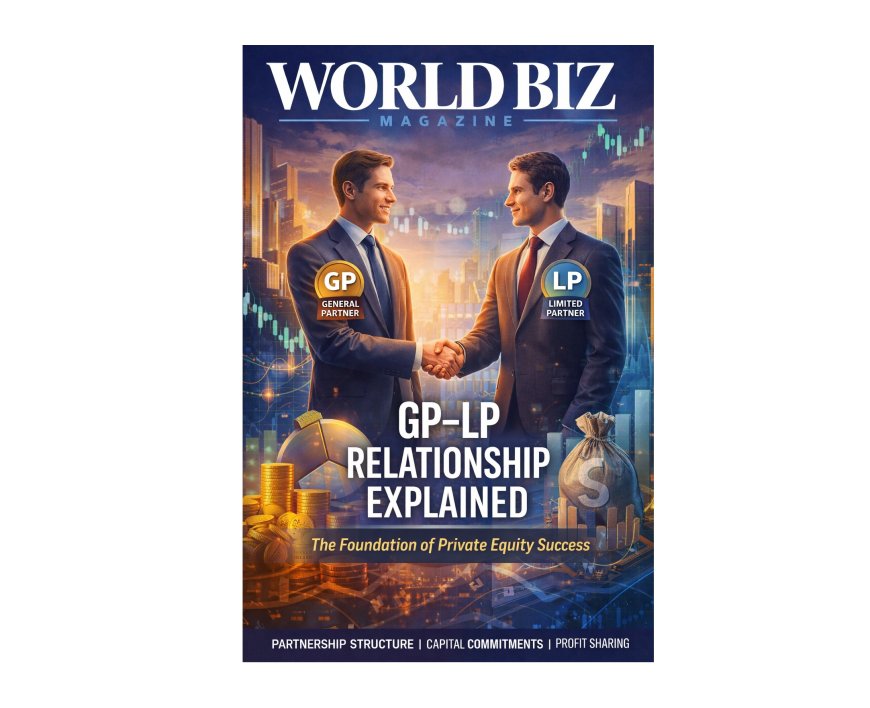
GP-LP Relationship Explained
The Strategic Partnership Powering Private Equity and Global Investment Growth
World Biz Magazine | Industry Today Special Report
Delivering global insights on the trends shaping tomorrow’s economy.
The Backbone of Private Equity
At the heart of the private equity ecosystem lies a relationship that defines the success or failure of investment strategies the partnership between General Partners (GPs) and Limited Partners (LPs). This relationship is not merely contractual; it is a carefully balanced alignment of capital, expertise, trust, and long-term vision.
As trillions of dollars flow through private markets globally, the GP-LP dynamic has evolved into a sophisticated framework governing how capital is raised, deployed, and returned. In an increasingly competitive and transparent investment landscape, understanding this relationship is essential for fund managers, institutional investors, and stakeholders navigating private equity.
Who Are General Partners (GPs)?
General Partners are the managers and decision-makers of private equity funds. They are responsible for:
- Raising capital from investors
- Identifying and executing investment opportunities
- Managing portfolio companies
- Driving value creation
- Executing exit strategies
GPs bring expertise, strategy, and operational control, acting as the architects of investment performance.
Who Are Limited Partners (LPs)?
Limited Partners are the capital providers in private equity funds. They include:
- Pension funds
- Sovereign wealth funds
- Insurance companies
- Family offices
- Endowments
LPs commit capital but do not participate in day-to-day management. Their liability is limited to their investment, hence the term “limited partners.”
The Core Structure of the GP-LP Relationship
The GP-LP relationship is governed by a Limited Partnership Agreement (LPA), which defines:
- Capital commitments
- Investment strategy
- Fee structure
- Profit distribution
- Governance rights
This structure ensures clarity, alignment, and accountability between both parties.
How the GP-LP Relationship Works: Step-by-Step
Step 1: Fund Formation
GPs establish a private equity fund and define its strategy, target size, and focus areas.
Step 2: Capital Commitment
LPs commit a certain amount of capital to the fund, typically over a multi-year period.
Step 3: Capital Calls
GPs call capital from LPs as investment opportunities arise.
Step 4: Investment Execution
GPs deploy capital into portfolio companies, managing operations and growth.
Step 5: Value Creation
Through strategic initiatives, GPs enhance the value of investments.
Step 6: Exit & Distribution
Returns are generated through exits (IPO, sale), and profits are distributed to LPs.
Fee and Profit Structure
The GP-LP relationship is often summarized by the “2 and 20” model:
- Management Fee (2%) - Covers operational costs
- Carried Interest (20%) - GP’s share of profits
This structure aligns incentives, rewarding GPs for strong performance.
Alignment of Interests: The Key to Success
Successful GP-LP relationships depend on alignment:
- GPs seek high returns and long-term value
- LPs seek stable, risk-adjusted returns
Alignment is achieved through:
- Co-investment by GPs
- Performance-based compensation
- Transparent reporting
Without alignment, conflicts can arise, undermining trust and performance.
Risks in the GP-LP Relationship
Misalignment of Incentives
GPs may pursue aggressive strategies that do not align with LP risk tolerance.
Lack of Transparency
Insufficient reporting can reduce investor confidence.
Performance Risk
Underperforming funds affect LP returns and future fundraising.
Liquidity Constraints
LP capital is locked for long periods (10–12 years).
Governance Issues
Weak oversight can lead to poor decision-making.
Mitigation Strategies
- Strong governance frameworks
- Regular and transparent reporting
- Clear alignment of incentives
- Diversification across funds and strategies
- Active communication between GPs and LPs
These measures strengthen trust and ensure long-term partnership success.
The Evolution of GP-LP Dynamics
Over the past decade, the GP-LP relationship has become more sophisticated:
- Increased demand for transparency and reporting
- Greater focus on ESG (Environmental, Social, Governance)
- Rise of co-investment opportunities
- Expansion into global and emerging markets
LPs are no longer passive investors they are strategic partners.
The Role of Technology and Data
Technology is transforming the GP-LP relationship:
- Digital reporting platforms
- Real-time performance tracking
- Data-driven investment decisions
This enhances transparency and improves decision-making efficiency.
Future Outlook: GP-LP Relationships in 2035
Greater Transparency
Real-time reporting and data sharing will become standard.
Increased Customization
Funds tailored to specific LP needs and strategies.
Expansion of Co-Investments
LPs will take more direct roles in deals.
ESG Integration
Sustainability will become central to investment decisions.
Technology-Driven Collaboration
AI and analytics will reshape how GPs and LPs interact.
World Biz Magazine Insights
- The GP-LP relationship is the core engine of private equity
- Alignment and transparency are critical to long-term success
- LPs are becoming more active and strategic
- Technology and ESG will redefine future partnerships
Conclusion: A Partnership Built on Trust and Performance
The GP-LP relationship is the foundation of private equity success. It is a partnership defined by:
- Trust
- Alignment
- Transparency
- Performance
As private markets continue to expand globally, the strength of this relationship will determine how effectively capital is deployed and value is created.
Because in private equity, success is not just about capital it’s about partnership.
Disclaimer
This article is for informational purposes only and does not constitute financial or investment advice. Readers should consult professional advisors before making investment decisions.
What's Your Reaction?
 Like
0
Like
0
 Dislike
0
Dislike
0
 Love
0
Love
0
 Funny
0
Funny
0
 Angry
0
Angry
0
 Sad
0
Sad
0
 Wow
0
Wow
0