











































































































































































































Social Commerce Business Models by Platform: How Digital Platforms Monetize Retail
An in-depth analysis of social commerce business models, market size, global players, and industry outlook to 2030.

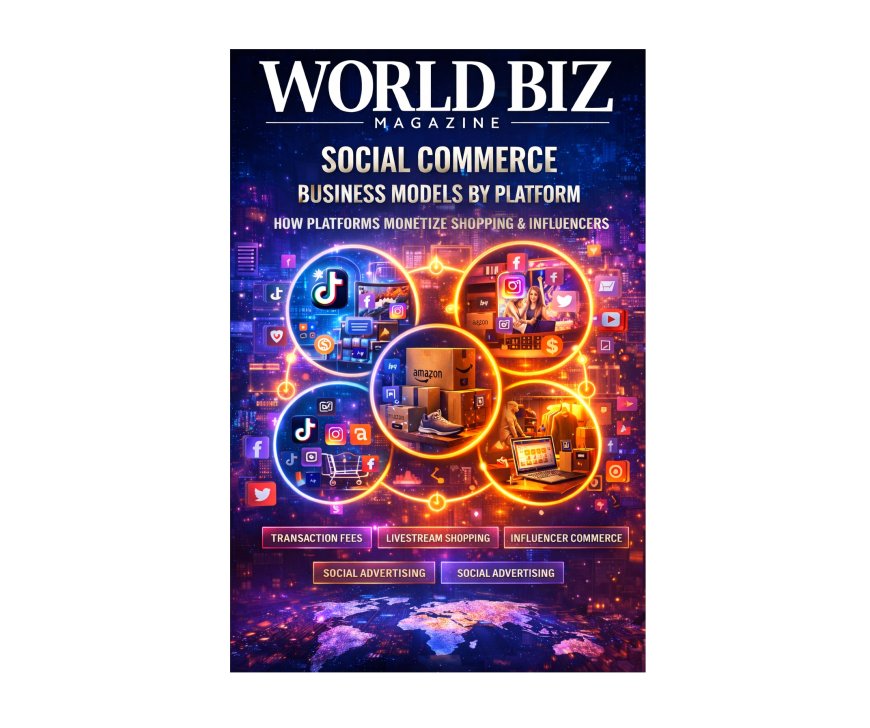
Social Commerce Business Models by Platform
World Biz Journals | Global Business Intelligence | Social Commerce | Digital Platforms
As shopping behavior shifts from search-driven to content-driven discovery, global platforms are transforming social engagement into a powerful commerce engine. This World Biz Journals analysis explores how leading digital ecosystems are monetizing social commerce through creator economies, live shopping, AI-driven recommendations, integrated payments, and platform-native retail experiences reshaping the future of global consumer spending.
How Global Platforms Are Monetizing the Next Trillion-Dollar Retail Revolution
Social commerce has evolved from a marketing tactic into a major global retail industry where digital platforms serve as both media networks and marketplaces. Over the last decade, companies such as ByteDance, Meta Platforms, Alibaba Group, Amazon, and Tencent have created integrated commerce ecosystems that combine content, entertainment, payments, logistics, and influencer marketing.
In this new model, consumers no longer simply browse social media they discover products, interact with creators, and complete purchases without leaving the platform.
For investors, policymakers, and businesses, understanding the business models behind social commerce platforms is essential to understanding the future of global retail.
Global Industry Overview
Social commerce refers to the buying and selling of products directly through social media platforms, where discovery, marketing, and checkout occur within the same ecosystem.
The industry has grown rapidly due to:
- mobile-first consumers
- influencer marketing
- livestream shopping
- integrated payment systems
- AI-driven product recommendations
The global social commerce market is estimated at around $1.63 trillion in 2025, with forecasts suggesting it could exceed $6.23 trillion by 2030 due to rapid adoption of in-app shopping and digital payments.
Other forecasts estimate the industry could reach over $7 trillion by the early 2030s, highlighting the scale of opportunity for platforms and investors.
Core Social Commerce Business Models
Social commerce platforms rely on several key revenue structures.
Transaction-Based Marketplaces
Platforms generate revenue by taking a percentage of each sale completed through their system.
Example platforms:
- TikTok Shop
- Facebook Marketplace
- Instagram Checkout
This model resembles traditional e-commerce marketplaces but integrates content-driven discovery.
Influencer Affiliate Commerce
Creators promote products and receive commissions from sales generated through their content.
This model has become central to the creator economy.
Typical revenue flows:
Brand - Influencer - Platform - Consumer
Affiliate commerce is widely used on:
- TikTok
- Instagram
- YouTube
Affiliate programs and creator partnerships are among the most effective revenue drivers in social commerce.
Livestream Commerce
Livestream shopping allows creators or brands to sell products during live broadcasts.
This model originated in China and has spread globally.
Key features include:
- real-time product demonstrations
- limited-time deals
- interactive audience engagement
Chinese platforms pioneered this model and continue to dominate global livestream retail.
Social Advertising + Commerce
Most social platforms still earn the majority of revenue from advertising.
Advertising combined with social shopping creates a powerful hybrid revenue engine.
Social platforms typically generate revenue from:
- advertising
- transaction fees
- subscriptions
- data services
Advertising alone accounts for 80-95% of revenue for many large platforms.
Platform-Specific Social Commerce Models
TikTok Commerce Ecosystem
Platform: TikTok
TikTok’s commerce model focuses on:
- short-form video product discovery
- livestream shopping
- creator-driven retail
TikTok Shop allows businesses to sell products directly inside videos and livestreams.
This system has become one of the fastest-growing retail channels globally.
Instagram and Facebook Commerce
Platforms:
- Instagram
- Facebook
Meta integrates commerce into social networks through:
- product tags in posts
- influencer marketing
- integrated checkout
Meta’s revenue model focuses on advertising combined with product discovery.
Chinese Super-App Commerce
Platform: WeChat
China has developed the most advanced social commerce ecosystem.
WeChat integrates:
- messaging
- payments
- e-commerce
- social media
This “super-app” model enables businesses to operate mini-stores directly inside the platform.
Marketplace + Social Hybrid
Platform: Amazon
Amazon combines:
- marketplace infrastructure
- influencer storefronts
- livestream shopping
Amazon Live allows creators to promote products directly through video streams.
Global Market Size by Region
Asia-Pacific
Asia dominates global social commerce.
The region holds around 70% of the global market share due to strong adoption of mobile payments and livestream shopping.
Major markets include:
- China
- Indonesia
- Vietnam
- Thailand
China remains the global leader in livestream commerce.
North America
The United States is rapidly expanding its social commerce ecosystem.
Growth drivers include:
- influencer marketing
- creator-driven brands
- digital advertising
Europe
Europe is a growing market but faces stricter digital regulations.
The European social commerce sector is projected to exceed $300 billion by 2030.
Emerging Markets
The fastest growth is occurring in:
- Southeast Asia
- Latin America
- Middle East
These markets benefit from high smartphone adoption and growing digital payments infrastructure.
Key Players and Industry Leaders
The social commerce ecosystem is dominated by large technology companies.
Major players include:
- ByteDance
- Meta Platforms
- Alibaba Group
- Amazon
- Tencent
- Pinterest
These companies control global digital advertising, data analytics, and social discovery algorithms.
Political and Regulatory Influence
Social commerce platforms operate under increasing government scrutiny.
Key regulatory issues include:
Data Privacy
Governments are implementing stricter rules regarding consumer data.
Example regulations include:
- GDPR in Europe
- U.S. antitrust investigations
Platform Ownership
Political tensions have also influenced platform operations.
Several governments have debated restrictions on foreign social media platforms due to national security concerns.
Investment and Capital Flows
The social commerce industry has attracted billions in venture capital and corporate investment.
Major investors include:
- SoftBank Group
- Sequoia Capital
- Tiger Global Management
Investments are focused on:
- creator economy infrastructure
- AI recommendation systems
- influencer marketing platforms
- livestream commerce technology
New Projects and Emerging Platforms
New startups and media companies are entering the social commerce space.
For example, media company Condé Nast is launching a creator-led shopping platform called Vette, which allows influencers to operate curated online stores with integrated logistics and analytics.
This trend reflects the shift toward creator-owned retail ecosystems.
Countries Benefiting Most
Several countries are experiencing major economic gains from the social commerce industry.
China
China leads global livestream shopping and influencer commerce.
Indonesia
Indonesia is Southeast Asia’s largest social commerce market.
United States
Strong creator economy and advertising infrastructure.
Vietnam
The Vietnamese social commerce market is projected to grow from $3.99 billion in 2024 to over $10 billion by 2030.
Countries Losing Market Share
Countries with stricter digital regulation or slower platform adoption may lose influence.
Examples include:
- Japan (slow influencer commerce adoption)
- some European markets with heavy digital restrictions
However, these markets still maintain strong traditional e-commerce sectors.
Price Trends and Market Growth (2015-2030)
Social Commerce Market Growth
|
Year |
Market Size |
|
2015 |
$50B |
|
2018 |
$200B |
|
2020 |
$480B |
|
2024 |
$1.1T |
|
2025 |
$1.63T |
|
2030 (forecast) |
$6T+ |
Growth is driven by mobile shopping, influencer marketing, and integrated digital payments.
Industry Comparison with Other Digital Sectors
|
Sector |
Market Size |
|
Global E-commerce |
$6-7T |
|
Social Commerce |
$1.6T |
|
Digital Advertising |
$700B |
|
Creator Economy |
$250B |
Social commerce is becoming the fastest-growing segment of digital retail.
Future Outlook: 2025-2030
The next decade will reshape the social commerce ecosystem.
Major trends include:
AI Shopping Assistants
AI algorithms will recommend personalized products based on user behavior.
Creator-Owned Brands
Influencers will launch independent retail brands.
Live Shopping Expansion
Livestream commerce will spread globally beyond Asia.
Decentralized Commerce
Blockchain-based identity and payment systems may challenge centralized platforms.
World Biz Magazine Industry Insights
Social commerce represents the convergence of media, technology, and retail.
For governments and investors, the sector offers:
- high digital employment potential
- export opportunities for small businesses
- new channels for consumer engagement
Countries investing in digital payments, logistics infrastructure, and creator ecosystems will dominate the next phase of global retail.
Conclusion
Social commerce platforms are redefining how products are discovered and sold in the digital age. By combining entertainment, community, and retail into one ecosystem, these platforms have created entirely new business models.
From influencer-driven retail to livestream shopping and integrated payments, the industry continues to evolve rapidly.
As the global social commerce market moves toward multi-trillion-dollar valuations, platforms, creators, and brands will compete for control of the most valuable asset in the digital economy the customer relationship.
Disclaimer
World Biz Magazine provides industry insights, market analysis, and business commentary for informational purposes only. Market forecasts, financial estimates, and industry projections discussed in this article are based on available research and public data sources and should not be interpreted as financial or investment advice. Businesses and investors should conduct independent analysis and consult professional advisors before making strategic decisions.
What's Your Reaction?
 Like
0
Like
0
 Dislike
0
Dislike
0
 Love
0
Love
0
 Funny
0
Funny
0
 Angry
0
Angry
0
 Sad
0
Sad
0
 Wow
0
Wow
0