













































































































































































































The Rise of Social Commerce: How Social Media Is Transforming E-Commerce
A World Biz Magazine report on social commerce, covering market growth, social media shopping trends, and the future of e-commerce.


Social Commerce: The Future of Digital Retail
How Social Media Platforms Are Transforming Global E-Commerce
World Biz Magazine | Digital Economy & E-Commerce Special Report
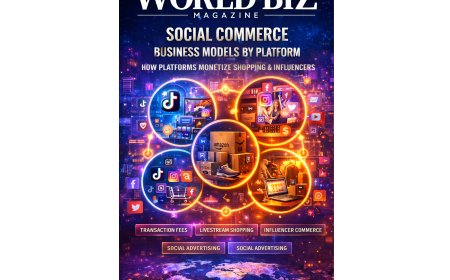
The rapid growth of social media has reshaped how consumers discover, evaluate, and purchase products. Traditional online shopping once relied heavily on e-commerce websites and search engines. Today, social media platforms have evolved into powerful retail ecosystems where users can browse products, watch demonstrations, interact with brands, and complete purchases without leaving the platform.
This new model known as “social commerce” combines the influence of social media engagement with the convenience of online shopping. Platforms such as Instagram, TikTok, Facebook, and Pinterest now integrate shopping features directly into their apps, enabling businesses to reach customers through interactive content, influencer marketing, and live-stream selling.
This World Biz Magazine Industry Today report explores the social commerce ecosystem, including market size, key platforms, consumer behavior trends, industry players, investment patterns, regulatory considerations, and future outlook through 2030.
What Is Social Commerce?
Social commerce refers to the buying and selling of products directly within social media platforms.
Unlike traditional e-commerce, where consumers visit a separate online store, social commerce allows transactions to occur within the social platform itself.
Key Features of Social Commerce
- in-app product discovery
- influencer marketing promotions
- integrated checkout systems
- live-stream product demonstrations
- community-driven product recommendations
Social commerce blends entertainment, social interaction, and shopping into a single digital experience.
Evolution of Social Commerce
The concept of social commerce evolved alongside the growth of social media platforms.
Phase 1: Social Media Marketing (2005-2015)
Brands used social media primarily for marketing and customer engagement.
Phase 2: Influencer Marketing (2015-2020)
Influencers began promoting products directly to followers, driving online sales.
Phase 3: Integrated Social Shopping (2020-Present)
Platforms introduced built-in shopping features, enabling direct purchases within social apps.
Today, social commerce represents one of the fastest-growing segments of the global digital retail industry.
Global Social Commerce Market Size
Social commerce has grown rapidly in recent years.
Market Growth
|
Year |
Market Size |
|
2018 |
$89B |
|
2022 |
$724B |
|
2025 |
$1.2T |
|
2030 forecast |
$2T+ |
The growth of mobile shopping and influencer marketing has significantly accelerated this market.
Major Social Commerce Platforms
Several global technology companies dominate the social commerce ecosystem.
Leading Platforms
- Meta Platforms
- TikTok
- Pinterest
- Snap Inc.
- Alibaba Group
These platforms are integrating advanced commerce tools to capture the rapidly growing social retail market.
The Role of Influencers
Influencers play a central role in social commerce.
Social media personalities often promote products to highly engaged audiences. Their recommendations can significantly influence purchasing decisions.
Influencer Marketing Impact
- higher engagement compared to traditional advertising
- strong consumer trust
- authentic product demonstrations
- targeted audience reach
Influencer marketing has become a major driver of social commerce growth.
Consumer Behavior in Social Commerce
Consumer behavior is shifting toward social shopping experiences.
Key Trends
- mobile-first shopping habits
- video-based product discovery
- peer recommendations and reviews
- real-time engagement with brands
Consumers increasingly expect interactive and personalized shopping experiences.
Live Commerce and Video Shopping
One of the most significant trends in social commerce is live-stream shopping.
During live commerce events:
- influencers demonstrate products in real time
- viewers can ask questions
- customers can purchase products instantly
Live commerce is particularly popular in Asian markets.
Regional Social Commerce Markets
Adoption rates vary across global regions.
Leading Markets
|
Region |
Market Strength |
|
China |
global leader in live commerce |
|
United States |
strong influencer economy |
|
Southeast Asia |
rapid mobile commerce growth |
|
Europe |
growing social shopping adoption |
|
India |
expanding digital consumer market |
China remains the largest social commerce market globally.
Benefits of Social Commerce for Businesses
Social commerce offers several advantages for businesses.
Key Benefits
- direct customer engagement
- lower marketing costs
- faster purchasing decisions
- stronger brand communities
- improved customer insights
Brands can use social platforms to build deeper relationships with consumers.
Challenges in Social Commerce
Despite its growth, social commerce faces several challenges.
Key Challenges
- data privacy concerns
- counterfeit product risks
- platform algorithm changes
- regulatory scrutiny
Businesses must navigate these risks carefully while expanding social commerce operations.
Investment and Industry Growth
Investment in social commerce technologies continues growing rapidly.
Key Investment Areas
- AI-powered recommendation engines
- influencer marketing platforms
- live-stream commerce tools
- social payment systems
Technology companies and venture capital firms are investing heavily in the future of social commerce.
Integration with E-Commerce Ecosystems
Social commerce increasingly integrates with traditional e-commerce infrastructure.
Key Integrations
- payment gateways
- logistics and delivery systems
- customer relationship management platforms
- inventory management systems
These integrations enable seamless shopping experiences for consumers.
Future Trends in Social Commerce
Several emerging trends will shape the future of social commerce.
Artificial Intelligence
AI systems will personalize product recommendations and shopping experiences.
Augmented Reality Shopping
AR tools will allow customers to visualize products before purchasing.
Creator Economy Expansion
Content creators will increasingly operate their own digital storefronts.
Integrated Digital Payments
Social platforms will expand payment services to streamline transactions.
Social Commerce vs Traditional E-Commerce
|
Feature |
Traditional E-Commerce |
Social Commerce |
|
product discovery |
search engines |
social feeds |
|
marketing strategy |
ads and SEO |
influencers and content |
|
customer interaction |
limited |
highly interactive |
|
purchasing process |
external websites |
in-app checkout |
Social commerce creates a more engaging shopping experience.
Industry Outlook to 2030
Growth Drivers
- mobile commerce adoption
- influencer economy expansion
- live-stream shopping growth
- digital payment innovation
- global social media penetration
Market Forecast
|
Segment |
2030 Outlook |
|
social commerce market |
$2T+ |
|
influencer economy |
rapid expansion |
|
live-stream shopping |
major global growth |
Social commerce will likely become a dominant retail channel.
World Biz Magazine Insights
Social commerce represents a fundamental shift in digital retail. By merging entertainment, community engagement, and shopping, social platforms are transforming how consumers interact with brands and products.
Businesses that successfully integrate social commerce strategies will gain a significant competitive advantage in the evolving digital marketplace.
Conclusion
Social commerce is redefining the future of online retail by combining the power of social media influence with seamless digital shopping experiences. As social platforms continue expanding their commerce capabilities, the boundary between social networking and online retail will continue to blur.
Companies that adapt to this new commerce model leveraging influencers, live content, and personalized digital experiences will play a major role in shaping the next generation of global e-commerce.
Disclaimer
The information presented in this article is intended for informational and educational purposes only. Market statistics, projections, and forecasts are based on publicly available industry data and analytical estimates at the time of publication. While every effort has been made to ensure accuracy, World Biz Magazine does not guarantee future market performance or investment outcomes. Readers should consult professional advisors before making financial or strategic decisions based on the information contained in this report. All trademarks and company names mentioned belong to their respective owners.
What's Your Reaction?
 Like
0
Like
0
 Dislike
0
Dislike
0
 Love
0
Love
0
 Funny
0
Funny
0
 Angry
0
Angry
0
 Sad
0
Sad
0
 Wow
0
Wow
0