












































































































































































































How Biometric Technology is Transforming Airline Operations
A detailed analysis of biometric boarding technology, digital travel credentials, and smart airport infrastructure.


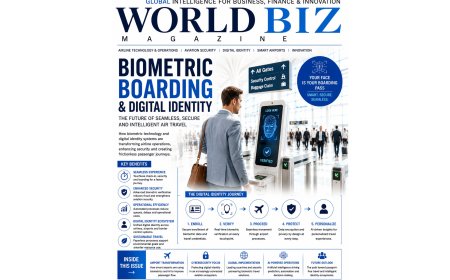
Biometric Boarding & Digital Identity
How Intelligent Identity Systems Are Transforming the Future of Airline Operations and Passenger Travel
From facial recognition and touchless boarding to AI-powered digital identity ecosystems, the aviation industry is redefining security, efficiency, and passenger experience
World Biz Magazine | Airline Technology, Aviation Operations & Digital Infrastructure Intelligence
The End of Traditional Travel Identity Systems
The global aviation industry is entering a new era where passports, boarding passes, and manual identity verification are increasingly being replaced by intelligent digital identity ecosystems.
Airports and airlines worldwide are rapidly adopting:
- Facial recognition
- Biometric authentication
- Digital travel credentials
- AI-powered identity verification systems
to create:
Faster, safer, and frictionless passenger journeys.
Biometric boarding has evolved from an experimental technology into a strategic operational infrastructure for modern aviation.
Driven by:
- Rising passenger volumes
- Security demands
- Contactless travel expectations
- Operational efficiency pressures
digital identity systems are becoming central to the future of airline operations.
What is Biometric Boarding?
Biometric boarding is a passenger verification process that uses biological characteristics to confirm identity during travel procedures.
Common biometric technologies include:
- Facial recognition
- Fingerprint scanning
- Iris recognition
- Voice authentication
Instead of presenting physical documents repeatedly, passengers can move through:
- Check-in
- Security
- Immigration
- Boarding gates
using biometric identity verification.
Understanding Digital Identity in Aviation
Digital identity refers to electronically verified identity credentials linked to an individual traveler.
These systems integrate:
- Government-issued documents
- Biometric data
- Travel history
- Security authorization
- Airline booking information
into a unified digital profile.
The objective:
Create a seamless “single identity journey” across the airport ecosystem.
Why Airlines and Airports Are Adopting Biometric Systems
The aviation industry faces mounting operational complexity:
- Passenger growth
- Long security lines
- Identity fraud risks
- Staffing shortages
- Regulatory pressure
Biometric systems offer solutions through:
- Automation
- Faster processing
- Reduced human error
- Enhanced security intelligence
For many airports, digital identity is becoming essential infrastructure.
How Biometric Boarding Works
The process typically follows several integrated stages.
Identity Enrollment
Passengers voluntarily enroll biometric data through:
- Airline apps
- Airport systems
- Government identity databases
The system securely links:
- Facial data
- Passport information
- Travel booking details
Biometric Verification
At airport checkpoints:
- Cameras or scanners capture biometric data
- AI systems compare live data against stored records
- Identity is verified instantly
This process often takes only seconds.
Seamless Passenger Journey
Once verified, travelers may proceed through:
- Automated check-in
- Security screening
- Immigration
- Boarding gates
without repeatedly showing physical documents.
Real-Time Data Synchronization
Digital identity systems connect:
- Airlines
- Airports
- Border agencies
- Security systems
through integrated data platforms.
Core Technologies Behind Biometric Aviation Systems
Facial Recognition Technology
Facial recognition is currently the most widely adopted biometric solution in aviation.
AI algorithms analyze:
- Facial structure
- Eye positioning
- Bone geometry
- Skin texture patterns
to verify passenger identity.
Modern systems achieve extremely high matching accuracy within seconds.
Artificial Intelligence & Machine Learning
AI powers:
- Identity verification
- Fraud detection
- Passenger flow optimization
- Risk analysis
Machine learning systems improve continuously through large-scale operational data.
Cloud Infrastructure & Digital Databases
Modern identity ecosystems rely heavily on:
- Cloud computing
- Encrypted databases
- Cross-border data exchange systems
This enables real-time identity synchronization across multiple airports and airlines.
Blockchain and Decentralized Identity
Some aviation innovators are exploring blockchain-based digital identity systems.
Potential advantages include:
- Enhanced security
- Decentralized identity ownership
- Reduced fraud risk
- Improved traveler privacy control
Blockchain could reshape how passenger identity is managed globally.
Operational Benefits of Biometric Boarding
Faster Passenger Processing
Biometric systems significantly reduce:
- Checkpoint wait times
- Boarding delays
- Manual verification processes
This improves airport throughput and operational efficiency.
Enhanced Security
Biometric verification improves:
- Identity accuracy
- Fraud detection
- Watchlist screening
- Border security integration
AI systems can detect suspicious anomalies faster than manual inspection.
Reduced Operational Costs
Automation reduces dependency on:
- Manual staffing
- Physical documentation handling
- Repetitive identity verification processes
This helps airlines and airports optimize operating costs.
Improved Passenger Experience
Passengers increasingly expect:
- Contactless travel
- Seamless airport journeys
- Mobile-first convenience
Biometric systems help eliminate friction throughout the travel process.
Real-Time Operational Intelligence
Digital identity systems provide airports with:
- Passenger movement analytics
- Congestion forecasting
- Security monitoring insights
- Boarding efficiency data
This enables more intelligent airport operations.
Global Adoption Trends
Singapore: Integrated Smart Travel Ecosystems
Singapore has emerged as a leader in biometric travel integration.
Airports in Singapore increasingly deploy:
- Facial recognition immigration systems
- Automated boarding gates
- AI-powered passenger processing
The country is positioning itself as a model for seamless digital travel.
UAE: Smart Aviation Leadership
The United Arab Emirates continues investing heavily in:
- Smart border systems
- Biometric passenger processing
- AI-powered airport operations
Airports in Dubai are rapidly expanding touchless travel infrastructure.
United States: Security-Driven Biometric Expansion
The United States aviation sector increasingly integrates biometric systems into:
- TSA screening
- International boarding
- Border security operations
The U.S. market emphasizes both operational efficiency and national security integration.
Europe: Privacy-Focused Implementation
The European Union prioritizes:
- Data protection
- Passenger consent
- Privacy governance
European implementation often balances innovation with strict regulatory oversight.
Challenges and Risks
Privacy Concerns
Biometric systems raise major concerns regarding:
- Mass surveillance
- Facial recognition misuse
- Data ownership
- Consent management
Public trust remains a critical challenge.
Cybersecurity Threats
Digital identity databases are highly sensitive targets.
Risks include:
- Identity theft
- Data breaches
- System hacking
- Cross-border cyber threats
Strong cybersecurity architecture is essential.
Regulatory Complexity
Global aviation involves multiple jurisdictions with different:
- Privacy laws
- Identity regulations
- Border security policies
Achieving international interoperability remains difficult.
Algorithmic Bias
AI recognition systems may demonstrate bias across:
- Ethnic groups
- Gender
- Lighting conditions
- Demographic datasets
This creates operational and ethical concerns.
Infrastructure Investment Costs
Biometric transformation requires significant investment in:
- Hardware
- AI infrastructure
- Cloud systems
- Cybersecurity frameworks
Smaller airports may struggle with implementation.
The Future of Digital Identity in Aviation
The next generation of airline identity systems may include:
- Fully passport-free travel
- Mobile-based digital travel credentials
- AI-driven risk scoring
- Real-time identity ecosystems
- Blockchain-secured travel identity networks
Future passengers may travel internationally using:
A unified digital identity rather than physical documentation.
Digital Identity and Smart Cities
Biometric travel systems increasingly connect with:
- Smart city infrastructure
- National digital identity platforms
- Urban mobility ecosystems
Airports may become gateways into broader digital governance systems.
ESG and Sustainability Implications
Digital identity systems also support sustainability goals by reducing:
- Paper documentation
- Manual processing infrastructure
- Physical resource consumption
Operational efficiency improvements may also reduce airport congestion and emissions.
World Biz Magazine Insights
WBJ Insight 01 - Digital Identity is Becoming Aviation Infrastructure
Biometric systems are evolving from optional innovation into core operational architecture.
WBJ Insight 02 - Passenger Experience is the New Competitive Battlefield
Airports increasingly compete through speed, convenience, and frictionless travel ecosystems.
WBJ Insight 03 - Data Governance Will Define Public Trust
The success of biometric systems depends heavily on transparency, privacy protection, and cybersecurity resilience.
WBJ Insight 04 - AI Will Transform Border Security
Future immigration systems may rely primarily on predictive identity intelligence rather than manual inspection.
WBJ Insight 05 - Aviation is Moving Toward Passport-Free Travel
The long-term direction of the industry points toward fully digital identity ecosystems.
Conclusion
Biometric boarding and digital identity systems are fundamentally reshaping the future of airline operations.
What was once a document-based travel experience is rapidly evolving into:
- Intelligent identity ecosystems
- AI-powered passenger processing
- Seamless biometric travel journeys
- Real-time operational infrastructure
As aviation demand grows and digital transformation accelerates, the airlines and airports that best integrate:
- Security
- Automation
- Privacy governance
- Passenger intelligence
- Cyber resilience
will define the next generation of global air travel.
In the future of aviation, identity itself is becoming digital infrastructure.
Disclaimer
This article is intended for informational and editorial purposes only and does not constitute aviation, cybersecurity, regulatory, privacy, legal, or technology advice. Biometric systems, digital identity regulations, and implementation frameworks vary across jurisdictions and operators. Readers should consult qualified professionals before making operational or investment decisions.
What's Your Reaction?
 Like
0
Like
0
 Dislike
0
Dislike
0
 Love
0
Love
0
 Funny
0
Funny
0
 Angry
0
Angry
0
 Sad
0
Sad
0
 Wow
0
Wow
0