
















































































































































































AI in Manufacturing Automation: The Future of Smart Factories and Industrial Robotics
A World Biz Magazine analysis of AI in manufacturing automation, covering robotics innovation, smart factory technologies, and global industry growth.

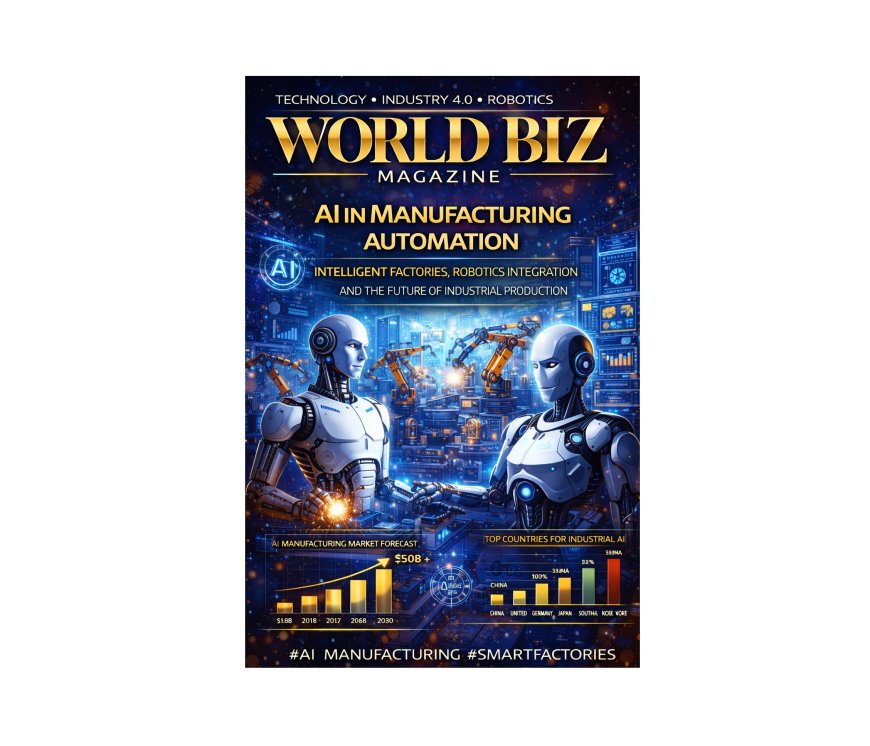
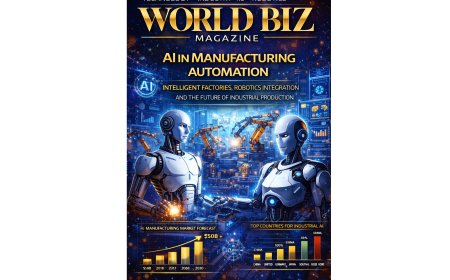
AI in Manufacturing Automation
Intelligent Factories, Robotics Integration and the Future of Industrial Production
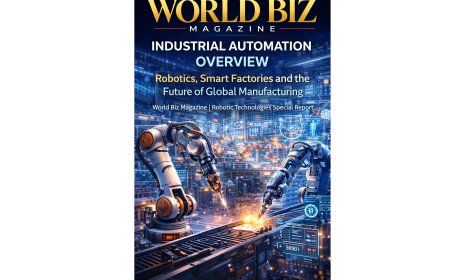
World Biz Magazine | Robotic Technologies Special Report
Artificial Intelligence (AI) is rapidly transforming manufacturing automation, enabling factories to become smarter, faster, and more efficient. By integrating machine learning algorithms, computer vision systems, predictive analytics, and robotics, manufacturers are creating highly adaptive production environments capable of optimizing operations in real time.
AI-powered automation systems allow manufacturers to reduce operational costs, improve product quality, enhance supply chain efficiency, and respond more quickly to changing market demands. As global industries compete in an increasingly digital economy, AI-driven manufacturing technologies are becoming essential for maintaining industrial competitiveness.
This World Biz Magazine Robotic Technologies report explores the growing role of artificial intelligence in manufacturing automation, including industry overview, market size, key players, policy impacts, investment trends, global adoption patterns, and the outlook for AI-powered manufacturing systems through 2030.
Understanding AI in Manufacturing
Artificial Intelligence in manufacturing refers to the use of advanced algorithms and data-driven systems to automate and optimize industrial processes.
AI technologies applied in manufacturing include:
· machine learning algorithms
· computer vision systems
· predictive maintenance software
· autonomous robotics
· intelligent supply chain management systems
· AI-powered quality control
These technologies allow factories to analyze massive volumes of operational data and make automated decisions that improve production efficiency.
The Evolution of Smart Manufacturing
Manufacturing automation has evolved through several technological stages:
Industry 1.0 - Mechanization
Production powered by steam engines and basic machinery.
Industry 2.0 - Mass Production
Electric power enabled assembly lines and large-scale manufacturing.
Industry 3.0 - Digital Automation
Computers and programmable logic controllers introduced automated control systems.
Industry 4.0 - AI-Powered Manufacturing
Artificial intelligence, IoT, and robotics now enable intelligent factories capable of self-optimizing operations.
AI is now the central technology driving Industry 4.0 transformation.
Global AI in Manufacturing Market
The adoption of AI technologies in manufacturing has accelerated rapidly.
Market Size
|
Year |
Market Value |
|
2018 |
$1.5B |
|
2022 |
$4B |
|
2025 |
$12B |
|
2030 forecast |
$60B+ |
The rapid expansion of AI manufacturing solutions reflects growing demand for automation and digital transformation.
Key AI Technologies in Manufacturing
Several AI technologies are shaping modern manufacturing systems.
Predictive Maintenance
AI systems monitor machinery and detect potential failures before they occur, reducing downtime and maintenance costs.
Computer Vision
Advanced vision systems inspect products on assembly lines, detecting defects with extremely high accuracy.
Autonomous Robotics
Robots powered by AI algorithms can perform complex tasks and adapt to changes in production environments.
Intelligent Process Optimization
AI analyzes factory data to identify inefficiencies and optimize production workflows.
Digital Twin Technology
Digital replicas of factories allow manufacturers to simulate production scenarios and improve operational performance.
Industrial Applications of AI
AI-driven automation is transforming multiple manufacturing sectors.
Automotive Manufacturing
AI robots perform welding, painting, and assembly tasks with high precision.
Electronics Manufacturing
Computer vision systems inspect microchips and circuit boards for defects.
Pharmaceutical Production
AI systems monitor chemical processes and ensure quality compliance.
Food Processing
Automation improves food safety, packaging efficiency, and supply chain logistics.
Key Industry Players
Several major technology companies lead the development of AI manufacturing solutions.
Leading Companies
· Siemens
· ABB
· Rockwell Automation
· Fanuc
· Nvidia
These companies provide AI platforms, robotics systems, and smart factory technologies used by manufacturers worldwide.
Countries Leading AI Manufacturing Adoption
Several countries are leading the global shift toward AI-driven manufacturing.
Top Markets
|
Country |
Industry Strength |
|
China |
largest industrial robotics deployment |
|
United States |
AI research and software innovation |
|
Germany |
advanced manufacturing technologies |
|
Japan |
robotics development |
|
South Korea |
highest robot density in manufacturing |
Asia and Europe remain the most advanced regions in industrial automation adoption.
Government Policies and Industrial Strategy
Many governments are investing heavily in AI manufacturing technologies.
Key Programs
· China’s Made in China 2025 strategy
· Germany’s Industry 4.0 initiative
· U.S. advanced manufacturing programs
· Japan’s robotics development strategy
These policies aim to strengthen national manufacturing competitiveness through automation.
Investment Trends in AI Manufacturing
Global investment in AI manufacturing technologies has surged in recent years.
Major Investors
· technology companies
· manufacturing corporations
· venture capital firms
· government innovation programs
Venture capital investment in industrial AI startups has grown significantly as companies seek to modernize production systems.
Benefits of AI Automation
AI automation offers several key advantages.
Operational Benefits
· higher production efficiency
· improved product quality
· reduced operational costs
· faster production cycles
· improved safety in hazardous environments
AI-driven factories can operate continuously with minimal human intervention.
Workforce Impact
The rise of AI automation has significant implications for the labor market.
Key Challenges
· potential displacement of repetitive jobs
· need for workforce retraining
· increased demand for technical skills
However, AI also creates new roles in engineering, robotics programming, and data science.
AI Manufacturing vs Traditional Manufacturing
|
Factor |
Traditional Manufacturing |
AI Manufacturing |
|
Decision Making |
manual |
automated |
|
Quality Control |
human inspection |
computer vision |
|
Maintenance |
reactive |
predictive |
|
Production Flexibility |
limited |
highly adaptive |
AI-powered systems significantly enhance operational efficiency.
Emerging Trends
Several trends will shape the future of AI-driven manufacturing.
Autonomous Factories
Factories capable of operating with minimal human supervision.
AI-Driven Supply Chains
AI systems optimize logistics, inventory management, and distribution.
Collaborative Robotics
Cobots working alongside human employees will become increasingly common.
Sustainable Manufacturing
AI helps manufacturers reduce energy consumption and environmental impact.
Market Outlook to 2030
Growth Drivers
1. rising labor costs
2. global manufacturing competition
3. supply chain digitization
4. AI technology advancement
5. government support for automation
Market Forecast
|
Segment |
2030 Forecast |
|
AI manufacturing software |
$60B+ |
|
industrial robotics |
rapid growth |
|
smart factory systems |
major expansion |
AI will become a core technology in next-generation manufacturing systems.
World Biz Magazine Insights
AI is rapidly becoming the brain of modern manufacturing systems. By integrating robotics, data analytics, and intelligent decision-making systems, AI-driven factories are redefining industrial productivity and competitiveness.
Countries and companies that adopt AI automation early will likely gain significant advantages in the global manufacturing economy.
Conclusion
Artificial Intelligence is revolutionizing manufacturing automation by enabling intelligent factories capable of optimizing production processes, reducing costs, and improving product quality. As AI technologies continue evolving, they will play an increasingly central role in shaping the future of global manufacturing.
By 2030, AI-powered automation systems could become the foundation of the world’s most advanced industrial production networks.
Magazine Disclaimer
The information presented in this article is for informational and educational purposes only. Market statistics, projections, and forecasts are based on publicly available industry data and analytical estimates at the time of publication. While every effort has been made to ensure accuracy, World Biz Magazine does not guarantee future market performance or investment outcomes. Readers should consult professional advisors before making financial or strategic decisions based on the information contained in this report. All trademarks and company names mentioned belong to their respective owners.
What's Your Reaction?
 Like
0
Like
0
 Dislike
0
Dislike
0
 Love
0
Love
0
 Funny
0
Funny
0
 Angry
0
Angry
0
 Sad
0
Sad
0
 Wow
0
Wow
0