























































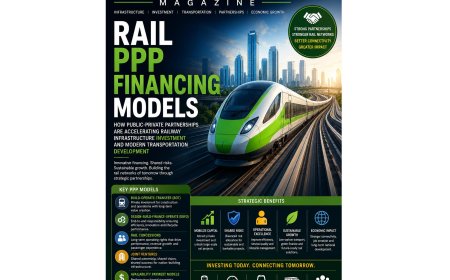
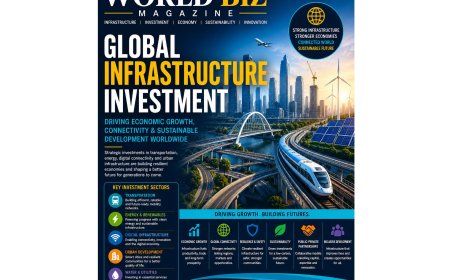





















































































































Global Rail Transport Overview: Infrastructure, Innovation, Economic Impact, and Future Growth
A comprehensive overview of the rail industry covering high-speed rail, freight corridors, smart transportation systems, and emerging investment trends.

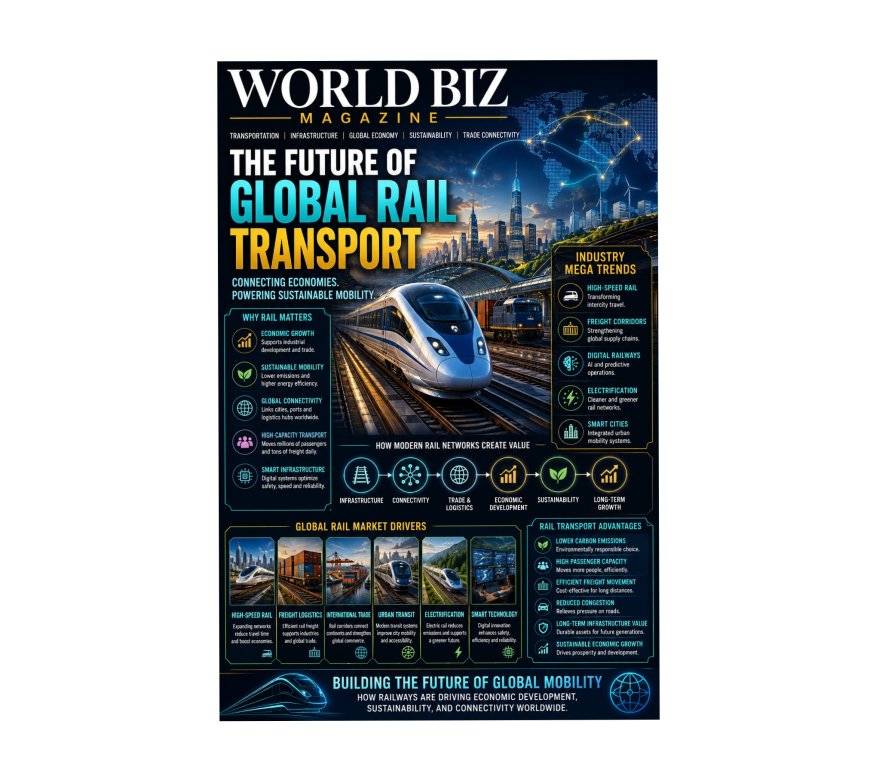
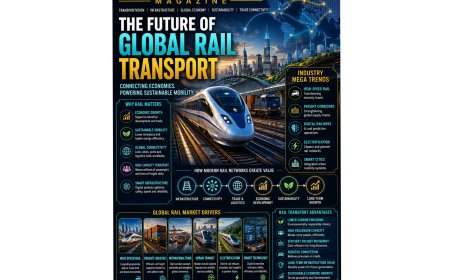
Global Rail Transport Overview
How Rail Networks Power Economic Growth, Sustainable Mobility, Trade Connectivity, and the Future of Global Transportation
World Biz Magazine | Transportation, Infrastructure & Global Mobility
Rail transport remains one of the most important pillars of the global transportation ecosystem. For nearly two centuries, railways have played a transformative role in economic development, industrialization, urban expansion, trade connectivity, and passenger mobility. Today, despite the rapid growth of aviation, road transport, and digital logistics platforms, rail continues to serve as a critical backbone of national and international transportation systems.
Modern rail networks connect cities, regions, industrial centers, ports, and economic corridors, facilitating the efficient movement of passengers and freight across vast distances. From high-speed passenger trains and urban metro systems to heavy-haul freight operations and cross-border logistics corridors, rail transport supports economic productivity, environmental sustainability, and social mobility on a global scale.
Governments worldwide are increasingly investing in rail infrastructure as they seek to reduce congestion, lower carbon emissions, improve logistics efficiency, and support long-term economic growth. Technological advancements, digital transformation, electrification, and high-speed rail developments are further strengthening rail's position as a strategic transportation solution for the twenty-first century.
As global populations grow, urbanization accelerates, and sustainability becomes a central policy objective, rail transport is emerging as a key component of future mobility strategies. Understanding the structure, economics, and evolving role of the rail industry provides valuable insight into one of the world's most essential infrastructure sectors.
Understanding Rail Transport
Rail transport refers to the movement of passengers and freight using vehicles operating on fixed rail tracks.
Unlike road transportation, rail systems offer:
- High-capacity transportation
- Energy efficiency
- Predictable schedules
- Reduced congestion
- Long-distance connectivity
Railways support both passenger and freight operations, serving urban, regional, national, and international transportation needs.
Modern rail systems include:
- High-speed rail
- Intercity rail
- Commuter rail
- Metro systems
- Light rail transit
- Freight railways
- Industrial rail networks
Together, these systems form a vital part of the global transportation infrastructure.
The Economic Importance of Rail Transport
Railways play a fundamental role in supporting economic activity.
Their impact extends across numerous sectors including:
- Manufacturing
- Agriculture
- Mining
- Retail
- Construction
- Logistics
- Tourism
- International trade
Efficient rail networks reduce transportation costs, improve supply chain performance, and enhance regional competitiveness.
Rail infrastructure also stimulates:
- Job creation
- Industrial development
- Urban growth
- Foreign investment
- Real estate development
Many of the world's most successful economies rely heavily on robust rail transportation systems.
Passenger Rail Transport
Passenger rail remains a major component of mobility in many regions.
Rail offers several advantages compared to road and air travel.
These include:
- Reduced travel times
- Greater comfort
- High capacity
- Lower emissions
- City-center connectivity
Passenger rail systems can be categorized into multiple segments.
High-Speed Rail
High-speed rail represents one of the most advanced forms of passenger transportation.
These systems operate at significantly higher speeds than conventional rail services.
Benefits include:
- Faster travel times
- Reduced airline competition on short-haul routes
- Lower environmental impact
- Increased economic connectivity
High-speed rail continues expanding across multiple regions worldwide.
Intercity Rail
Intercity rail connects major cities and economic centers.
These services provide:
- Regional mobility
- Business travel solutions
- Tourism connectivity
Intercity rail remains a crucial transportation option in many countries.
Commuter Rail
Commuter rail systems support daily transportation between suburban and urban areas.
These networks help reduce:
- Road congestion
- Urban pollution
- Travel times
They play a vital role in metropolitan mobility.
Urban Rail and Metro Systems
Urban rail networks have become essential components of modern cities.
Metro and light rail systems support:
- High-capacity transportation
- Sustainable urban development
- Improved accessibility
Many cities continue investing heavily in rail-based public transit solutions.
Freight Rail Transport
Freight rail is one of the most economically significant segments of the industry.
Railways transport large volumes of goods efficiently over long distances.
Common freight categories include:
- Coal
- Minerals
- Agricultural products
- Consumer goods
- Industrial materials
- Energy resources
- Containers
Freight rail offers significant advantages in terms of:
- Cost efficiency
- Capacity
- Fuel consumption
- Environmental performance
For many industries, rail remains an essential logistics solution.
Global Rail Markets
Rail transport plays different roles across various regions.
Asia-Pacific
Asia hosts some of the world's most advanced rail systems.
Major investments focus on:
- High-speed rail
- Urban transit networks
- Freight corridors
Rapid urbanization and economic growth continue supporting rail expansion.
Europe
Europe possesses one of the most integrated rail systems globally.
The region emphasizes:
- Cross-border connectivity
- High-speed rail
- Sustainable mobility
Rail plays a central role in European transportation policy.
North America
North America's freight rail sector is among the largest in the world.
Heavy-haul freight operations support:
- Industrial supply chains
- Agricultural exports
- Energy transportation
Passenger rail development continues evolving in selected markets.
Middle East
The Middle East is investing heavily in rail infrastructure.
Strategic objectives include:
- Economic diversification
- Regional connectivity
- Logistics development
Large-scale rail projects are reshaping transportation networks across the region.
Africa
Rail development remains a major infrastructure priority.
Investments focus on:
- Freight corridors
- Resource transportation
- Regional trade integration
Modern rail networks have significant potential to support economic growth across the continent.
Rail Infrastructure and Investment
Railways require substantial infrastructure investment.
Key components include:
Track Networks
The foundation of rail operations.
Stations and Terminals
Supporting passenger and freight services.
Signaling Systems
Ensuring safety and operational efficiency.
Electrification Infrastructure
Supporting sustainable transportation goals.
Maintenance Facilities
Maintaining operational reliability.
Governments and private investors continue allocating significant resources toward rail modernization.
High-Speed Rail: Transforming Mobility
High-speed rail has become a symbol of transportation innovation.
Benefits include:
- Economic integration
- Reduced travel times
- Lower emissions
- Enhanced regional development
Many countries view high-speed rail as a strategic national infrastructure asset.
The expansion of high-speed networks continues influencing transportation patterns globally.
Digital Transformation in Rail Transport
Technology is reshaping rail operations.
Key developments include:
Artificial Intelligence
Improving maintenance planning and operational efficiency.
Predictive Analytics
Reducing downtime and enhancing reliability.
Smart Ticketing
Improving passenger convenience.
Digital Signaling
Increasing network capacity and safety.
Autonomous Systems
Supporting future operational innovation.
Digital transformation is becoming a major driver of industry competitiveness.
Sustainability and Environmental Benefits
Rail is widely recognized as one of the most environmentally efficient transportation modes.
Benefits include:
- Lower carbon emissions
- Reduced fuel consumption
- High passenger capacity
- Efficient freight movement
Governments increasingly view rail investment as a critical component of climate and sustainability strategies.
Electrification projects continue strengthening rail's environmental advantages.
Challenges Facing the Rail Industry
Despite its advantages, the sector faces several challenges.
Infrastructure Costs
Rail projects require substantial capital investment.
Aging Networks
Many systems require modernization and upgrades.
Regulatory Complexity
Cross-border operations often involve diverse regulatory frameworks.
Competition from Other Transport Modes
Rail competes with:
- Airlines
- Trucking
- Shipping
- Ride-hailing services
Technological Adaptation
Continuous innovation requires ongoing investment.
Successfully addressing these challenges will be critical for future growth.
Emerging Trends Shaping the Future
Several trends are influencing the evolution of rail transport.
These include:
- High-speed rail expansion
- Smart mobility solutions
- Electrification projects
- Sustainable transportation policies
- Autonomous train technologies
- Integrated logistics corridors
- Urban transit development
- Digital infrastructure investments
These trends are expected to drive significant industry transformation over the coming decades.
Rail Transport and Global Trade
Railways play a vital role in international commerce.
Cross-border rail corridors support:
- Trade connectivity
- Supply chain resilience
- Regional integration
As global trade networks evolve, rail transport is increasingly viewed as a strategic logistics solution.
Investments in freight corridors continue expanding international connectivity.
World Biz Magazine Insights
Rail transport remains one of the most strategically important infrastructure sectors in the global economy. While often overshadowed by aviation and road transport, rail's unique combination of efficiency, capacity, sustainability, and economic impact makes it indispensable for future mobility and logistics systems. Governments, investors, and transportation operators are increasingly recognizing that modern rail networks are not merely transportation assets but long-term economic development platforms capable of supporting trade, urbanization, sustainability goals, and national competitiveness.
Conclusion
The global rail transport industry continues to play a critical role in connecting economies, supporting trade, facilitating mobility, and promoting sustainable development. From high-speed passenger services and urban transit systems to freight corridors and international logistics networks, railways remain essential to modern transportation infrastructure.
As technological innovation accelerates and sustainability becomes a central policy priority, rail transport is positioned to play an even greater role in the future of global mobility. Investments in digital technologies, electrification, high-speed rail, and integrated transportation networks are creating new opportunities for growth and modernization.
For governments, businesses, investors, and communities, the future of transportation will increasingly depend on the continued evolution and expansion of efficient, resilient, and sustainable rail systems.
Disclaimer
This article is published for informational, educational, and industry analysis purposes only and does not constitute investment, financial, legal, engineering, transportation, infrastructure, or professional advice. Industry conditions, regulations, infrastructure priorities, and market developments may vary by country and region. Readers should consult qualified professionals before making investment, operational, infrastructure, or policy decisions related to rail transportation or transportation infrastructure projects.
What's Your Reaction?
 Like
0
Like
0
 Dislike
0
Dislike
0
 Love
0
Love
0
 Funny
0
Funny
0
 Angry
0
Angry
0
 Sad
0
Sad
0
 Wow
0
Wow
0