







































































































Vehicle Leasing vs Ownership Models: Evaluating Cost, Flexibility, Risk, and Long-Term Value
A comprehensive analysis of vehicle acquisition strategies covering leasing economics, ownership benefits, technology adoption, and fleet modernization.

Vehicle Leasing vs Ownership Models
Evaluating Cost, Flexibility, Risk, and Long-Term Value in Modern Transportation Asset Strategies
World Biz Magazine | Automotive, Transportation & Fleet Management
The global transportation industry is experiencing significant transformation as businesses, fleet operators, governments, and individual consumers rethink how vehicles are acquired, managed, and financed. Traditionally, vehicle ownership has been viewed as the preferred model for securing transportation assets, providing long-term control and asset value. However, changing economic conditions, evolving business needs, technological innovation, and the rise of mobility-focused business models have accelerated interest in vehicle leasing as an alternative strategy.
Today, the decision between leasing and ownership is no longer simply a financial choice. It has become a strategic consideration that affects cash flow, operational flexibility, risk management, tax planning, fleet modernization, and long-term investment performance. Businesses operating large fleets, logistics providers, transportation companies, and even private consumers are increasingly evaluating which model best aligns with their financial objectives and operational requirements.
As vehicle technology advances, electrification expands, and mobility services continue evolving, leasing and ownership models are expected to play increasingly important roles in transportation economics. Understanding the advantages, disadvantages, financial implications, and strategic considerations associated with each approach is essential for organizations and individuals seeking to optimize transportation investments.
This article examines vehicle leasing and ownership models, comparing their economic impact, operational benefits, risks, and future relevance in a rapidly changing mobility landscape.
Understanding Vehicle Ownership
Vehicle ownership involves purchasing a vehicle outright or through financing arrangements that eventually transfer full ownership to the buyer.
Once ownership is established, the owner maintains control over:
- Vehicle usage
- Maintenance decisions
- Modifications
- Resale timing
- Asset management
Ownership remains the traditional model for both personal and commercial transportation.
For many organizations, owned vehicles are considered long-term assets that contribute to operational stability and balance sheet value.
Understanding Vehicle Leasing
Vehicle leasing allows individuals or organizations to use vehicles for a specified period in exchange for regular payments.
At the end of the lease term, the lessee typically:
- Returns the vehicle
- Renews the lease
- Upgrades to a newer model
- Purchases the vehicle under predefined conditions
Leasing emphasizes vehicle usage rather than asset ownership.
This approach has become increasingly popular among businesses seeking flexibility and predictable transportation costs.
Why the Leasing vs Ownership Debate Matters
Transportation assets often represent significant financial commitments.
Whether managing:
- Corporate fleets
- Logistics vehicles
- Government transportation assets
- Commercial passenger fleets
- Personal transportation
The chosen acquisition model can significantly affect:
- Cash flow
- Operating costs
- Risk exposure
- Capital allocation
- Technology adoption
Selecting the appropriate strategy requires balancing short-term operational needs with long-term financial objectives.
Financial Considerations
Financial impact is often the primary factor influencing leasing versus ownership decisions.
Upfront Capital Requirements
Vehicle ownership generally requires higher initial investment.
Costs may include:
- Purchase price
- Down payments
- Registration fees
- Financing expenses
Leasing typically requires lower upfront capital commitments.
This can preserve cash for other business activities and investments.
For organizations focused on liquidity, leasing may offer significant advantages.
Monthly Cost Structures
Ownership and leasing generate different expense profiles.
Ownership often includes:
- Loan payments
- Maintenance expenses
- Insurance
- Depreciation costs
Leasing generally involves:
- Fixed monthly payments
- Predictable budgeting
- Reduced capital expenditures
The preferred option often depends on financial planning priorities.
Asset Value and Equity
One of ownership's primary advantages is equity accumulation.
Owned vehicles retain residual value that may be recovered through resale.
Benefits include:
- Asset appreciation opportunities
- Resale proceeds
- Long-term value retention
Leased vehicles generally do not provide equity ownership.
Payments are primarily associated with vehicle usage rather than asset accumulation.
Depreciation and Residual Value Risk
Vehicle depreciation represents one of the largest ownership costs.
Factors affecting depreciation include:
- Vehicle age
- Mileage
- Market conditions
- Technology changes
- Economic trends
Ownership exposes buyers to residual value risk.
If market values decline unexpectedly, resale proceeds may be lower than anticipated.
Leasing transfers much of this risk to leasing providers.
This can provide financial protection in rapidly changing vehicle markets.
Fleet Management Perspectives
Fleet operators often evaluate acquisition models differently than individual consumers.
Ownership-Based Fleets
Advantages include:
- Full operational control
- Long-term cost optimization
- Asset ownership benefits
- Unlimited vehicle usage
However, fleet owners must manage:
- Maintenance
- Depreciation
- Vehicle replacement cycles
- Resale strategies
Ownership may be advantageous for organizations with stable transportation requirements.
Leasing-Based Fleets
Leasing offers:
- Fleet flexibility
- Faster modernization
- Predictable costs
- Reduced asset management complexity
Many organizations prefer leasing because it allows more frequent vehicle replacement.
This can improve reliability and operational efficiency.
Technology and Vehicle Obsolescence
Transportation technology is advancing rapidly.
Key developments include:
- Electric vehicles
- Autonomous driving systems
- Connected vehicle technologies
- Advanced safety features
- Smart fleet management systems
Rapid innovation increases the risk of technological obsolescence.
Leasing provides greater flexibility to adopt newer technologies as they become available.
Organizations operating in dynamic industries often view this as a major advantage.
Maintenance and Operational Costs
Vehicle maintenance represents a significant component of total transportation costs.
Ownership generally requires operators to manage:
- Repairs
- Scheduled maintenance
- Parts replacement
- Service contracts
Leasing agreements may include:
- Maintenance packages
- Service plans
- Warranty support
These features can reduce administrative complexity and cost uncertainty.
Tax Considerations
Tax treatment varies by jurisdiction.
However, common considerations include:
Ownership
Potential depreciation deductions and asset-related tax benefits.
Leasing
Lease payments may often be treated as operating expenses.
Tax implications can significantly influence acquisition decisions.
Organizations should consult professional advisors regarding local regulations.
Flexibility and Scalability
Business conditions can change rapidly.
Organizations often require transportation strategies that adapt to evolving operational needs.
Leasing offers:
- Easier fleet expansion
- Simplified vehicle replacement
- Reduced long-term commitments
Ownership may be less flexible due to asset disposal requirements.
For rapidly growing organizations, leasing may support greater operational agility.
Risk Management Considerations
Transportation asset management involves multiple risks.
These include:
- Depreciation risk
- Technology risk
- Maintenance risk
- Market value fluctuations
Leasing can reduce exposure to several of these risks.
Ownership may offer greater long-term value but typically involves higher risk retention.
Risk tolerance often influences acquisition strategies.
Sustainability and Fleet Modernization
Environmental regulations are increasingly affecting transportation decisions.
Fleet operators face growing pressure to:
- Reduce emissions
- Improve fuel efficiency
- Adopt electric vehicles
Leasing can accelerate fleet modernization by enabling more frequent vehicle replacement.
This supports sustainability goals while reducing exposure to outdated technologies.
Many organizations are using leasing to facilitate EV adoption strategies.
Industry Trends Driving Leasing Growth
Several trends are supporting increased demand for leasing solutions.
These include:
Mobility-as-a-Service (MaaS)
Shifting focus from ownership to usage.
Corporate Fleet Optimization
Improving capital efficiency.
Electrification
Accelerating vehicle replacement cycles.
Technology Innovation
Increasing demand for newer vehicle platforms.
Economic Uncertainty
Encouraging flexible financing arrangements.
These trends are reshaping transportation asset strategies worldwide.
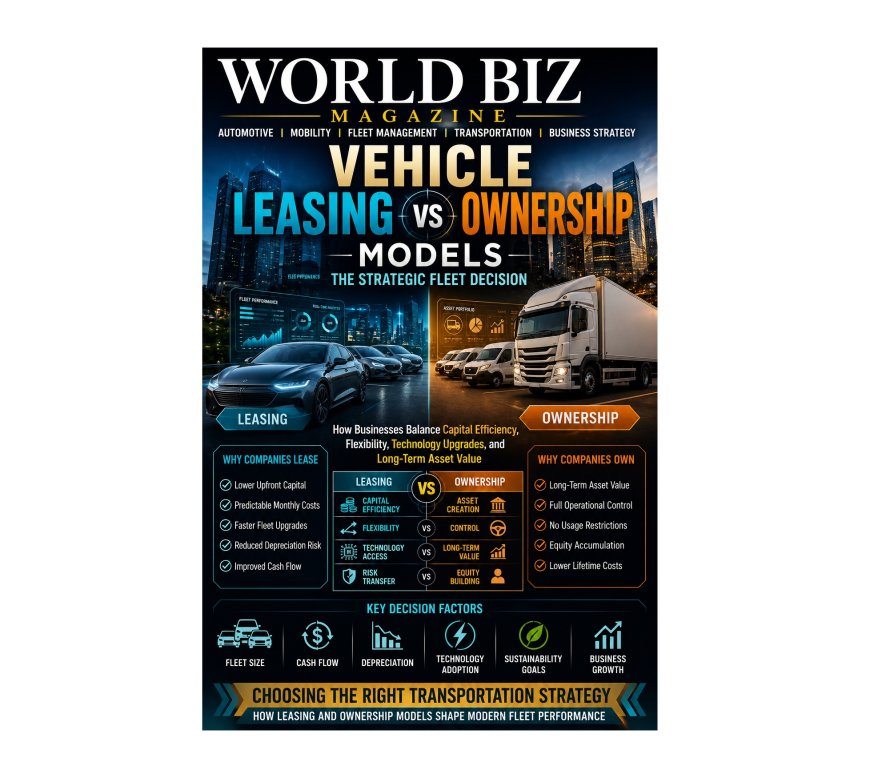
Leasing vs Ownership: Strategic Comparison
Ownership May Be Best For:
- Long-term vehicle utilization
- Stable transportation needs
- Asset accumulation objectives
- Lower annual mileage constraints
- Organizations seeking long-term cost control
Leasing May Be Best For:
- Rapid fleet modernization
- Technology adoption
- Capital preservation
- Flexible transportation requirements
- Predictable budgeting
The optimal choice depends on operational objectives and financial priorities.
Future Outlook
The future transportation landscape is likely to feature a combination of ownership and leasing models.
Factors influencing future adoption include:
- Electric vehicle growth
- Autonomous transportation
- Subscription mobility services
- Smart fleet management
- Digital asset platforms
As mobility evolves from ownership-centric models toward service-oriented ecosystems, leasing is expected to play an increasingly significant role.
However, ownership will remain attractive for organizations and consumers prioritizing long-term asset value and operational control.
World Biz Magazine Insights
The leasing versus ownership debate reflects a broader shift occurring across the global transportation sector. Increasingly, businesses are evaluating vehicles not simply as assets but as mobility solutions that support operational objectives. Leasing provides flexibility, technology access, and capital efficiency, while ownership offers control, equity accumulation, and long-term value creation. The most successful organizations will be those that align vehicle acquisition strategies with evolving market conditions, technological developments, and long-term business goals rather than relying on a single approach.
Conclusion
Vehicle leasing and ownership each offer distinct advantages and challenges. Ownership provides asset control, equity accumulation, and potential long-term cost benefits, while leasing delivers flexibility, predictable expenses, reduced risk exposure, and faster access to emerging technologies.
As transportation technologies continue evolving and business environments become increasingly dynamic, organizations must carefully evaluate which model best supports their strategic objectives. Factors such as capital availability, operational requirements, fleet size, risk tolerance, and sustainability goals all play important roles in determining the most appropriate approach.
Ultimately, the decision between leasing and ownership should be viewed as a strategic transportation investment choice rather than simply a financing decision. Those who successfully align acquisition models with business priorities will be better positioned to maximize operational performance and long-term value.
Disclaimer
This article is published for informational, educational, and industry analysis purposes only and does not constitute financial, investment, tax, accounting, legal, transportation, or professional advice. Leasing structures, financing arrangements, tax regulations, and vehicle economics vary by jurisdiction and individual circumstances. Readers should consult qualified financial, tax, legal, and transportation professionals before making vehicle acquisition or fleet management decisions.
What's Your Reaction?
 Like
0
Like
0
 Dislike
0
Dislike
0
 Love
0
Love
0
 Funny
0
Funny
0
 Angry
0
Angry
0
 Sad
0
Sad
0
 Wow
0
Wow
0