












































































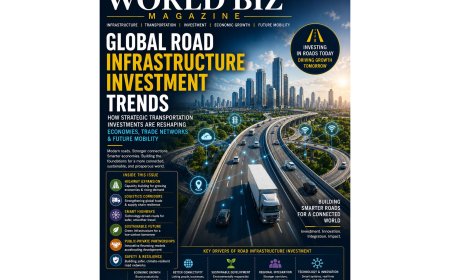





































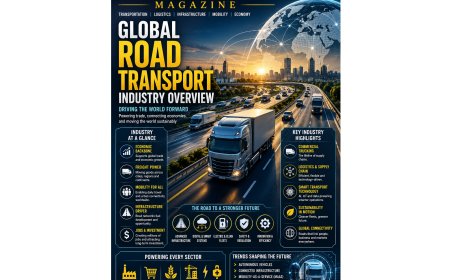
















Global Road Transport Industry Overview: Driving Trade, Mobility, Logistics, and Economic Growth Worldwide
A comprehensive overview of the road transport industry covering logistics, commercial trucking, infrastructure development, electrification, and smart mobility.

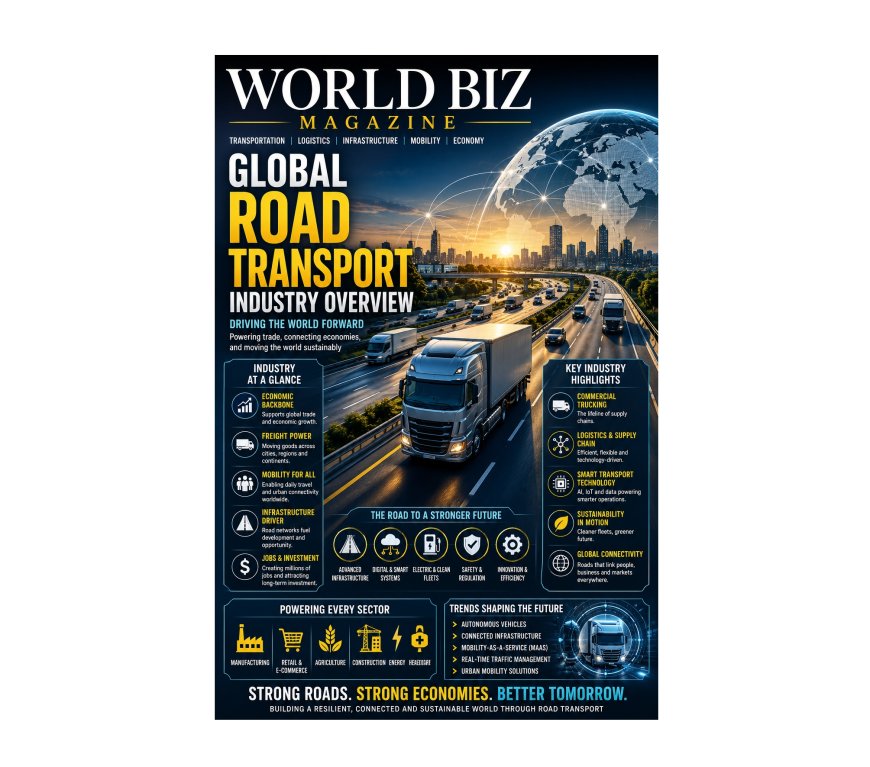
Global Road Transport Industry Overview
How Roads, Freight Networks, Commercial Vehicles, and Smart Mobility Systems Drive the Global Economy
World Biz Magazine | Transportation, Logistics & Infrastructure
Road transportation is the backbone of the global economy, serving as the primary mode of movement for people, goods, and services across cities, regions, and nations. From commercial trucking fleets and logistics operators to passenger vehicles, public buses, and emerging mobility platforms, the road transport industry supports virtually every sector of economic activity. Whether delivering consumer products to retail stores, transporting raw materials to manufacturing facilities, or enabling daily commuting for millions of workers, road transport remains an essential component of modern society.
Despite the growth of aviation, maritime shipping, and rail transportation, roads continue to handle the majority of freight and passenger movements worldwide. Their flexibility, accessibility, and extensive infrastructure networks make road transport uniquely positioned to connect businesses, communities, and markets. In both developed and emerging economies, road infrastructure is closely linked to economic productivity, trade competitiveness, employment creation, and regional development.
Today, the industry is undergoing significant transformation driven by technological innovation, sustainability objectives, digital logistics platforms, electrification, autonomous vehicle development, and smart mobility initiatives. Governments, infrastructure investors, transportation operators, and technology companies are investing heavily in next-generation road transportation systems designed to improve efficiency, reduce environmental impact, and enhance connectivity.
As urbanization accelerates and global trade becomes increasingly interconnected, understanding the structure, economics, challenges, and future direction of the road transport industry is essential for business leaders, investors, policymakers, and transportation stakeholders.
Understanding the Road Transport Industry
The road transport industry encompasses the movement of passengers and freight using road-based infrastructure and vehicles.
The sector includes:
- Commercial trucking
- Freight logistics
- Public transportation
- Passenger vehicles
- Ride-hailing services
- Last-mile delivery networks
- Bus transportation
- Specialized industrial transport
Road transport serves as the most accessible transportation mode due to its ability to provide direct origin-to-destination connectivity.
Unlike railways, airports, or ports, road networks reach virtually every populated area, making them critical for economic integration and social mobility.
The Economic Importance of Road Transport
Road transportation plays a central role in economic development.
Efficient transportation systems enable:
- Trade expansion
- Labor mobility
- Industrial growth
- Consumer access
- Supply chain efficiency
Businesses rely on road transport for the movement of raw materials, intermediate goods, and finished products.
For many economies, transportation infrastructure directly influences competitiveness, productivity, and investment attractiveness.
Road transport also supports millions of jobs globally through vehicle manufacturing, logistics operations, infrastructure construction, maintenance services, fuel supply chains, and transportation management.
Freight Transportation: The Industry's Core Segment
Freight transport represents one of the largest segments of the road transportation industry.
Commercial vehicles move goods across local, regional, national, and international markets.
Key freight categories include:
- Consumer products
- Agricultural goods
- Industrial equipment
- Construction materials
- Retail inventory
- E-commerce deliveries
- Energy products
Trucking remains the dominant mode of inland freight transportation in many countries due to its flexibility and ability to provide door-to-door service.
Modern logistics systems increasingly depend on road transport to support just-in-time inventory management and rapid distribution requirements.
Passenger Transportation and Mobility
Road networks are equally important for passenger mobility.
Passenger transportation includes:
- Private automobiles
- Taxis
- Ride-hailing services
- Public buses
- Shuttle services
- Corporate transportation fleets
Urban mobility systems rely heavily on road-based transportation infrastructure to support daily commuting and economic activity.
As cities expand, efficient passenger transport becomes critical for reducing congestion and improving quality of life.
Road Infrastructure and Economic Development
Road infrastructure serves as the foundation of transportation systems.
Major components include:
- Highways
- Expressways
- Urban roads
- Bridges
- Tunnels
- Interchanges
- Logistics corridors
Investment in transportation infrastructure often generates significant economic returns through:
- Improved connectivity
- Reduced transportation costs
- Increased productivity
- Enhanced trade flows
- Regional development
Many governments view road infrastructure as a strategic economic asset capable of supporting long-term growth.
Logistics and Supply Chain Integration
Modern supply chains depend heavily on road transportation.
Road freight serves as the connecting link between:
- Ports
- Airports
- Rail terminals
- Distribution centers
- Manufacturing facilities
- Retail outlets
This integration enables seamless movement across multimodal transportation networks.
The rapid growth of e-commerce has further increased the importance of efficient road logistics systems.
Consumers increasingly expect faster deliveries, placing additional demands on transportation providers.
The Rise of E-Commerce and Last-Mile Delivery
Digital commerce has significantly reshaped transportation patterns.
Last-mile delivery has become one of the fastest-growing segments within the industry.
Key trends include:
- Same-day delivery
- On-demand logistics
- Urban fulfillment centers
- Route optimization technologies
Transportation companies are investing in digital platforms and automation tools to improve operational efficiency and customer experiences.
The continued expansion of online retail is expected to support long-term growth in delivery services.
Technology Transforming Road Transport
Digital transformation is reshaping nearly every aspect of the industry.
Emerging technologies include:
Artificial Intelligence
Supporting route optimization, predictive maintenance, and fleet management.
Telematics
Providing real-time vehicle performance monitoring.
Internet of Things (IoT)
Enhancing asset tracking and operational visibility.
Data Analytics
Improving transportation planning and decision-making.
Autonomous Vehicles
Potentially transforming freight and passenger transportation in the future.
Technology is increasingly becoming a competitive differentiator within the sector.
Fleet Management and Operational Efficiency
Transportation operators must carefully manage large fleets of vehicles.
Fleet management focuses on:
- Fuel efficiency
- Maintenance scheduling
- Driver performance
- Asset utilization
- Route optimization
Modern fleet management systems leverage real-time data to improve efficiency and reduce costs.
Operational excellence remains critical to profitability.
Sustainability and Environmental Challenges
Road transport contributes significantly to global emissions.
Governments and industry participants are increasingly prioritizing sustainability initiatives.
Strategies include:
Vehicle Electrification
Transitioning from internal combustion engines to electric vehicles.
Alternative Fuels
Exploring hydrogen, biofuels, and low-carbon energy sources.
Fleet Optimization
Reducing unnecessary fuel consumption.
Smart Traffic Management
Improving transportation efficiency and reducing congestion.
Environmental regulations are accelerating industry transformation.
Electric Vehicles and the Future of Mobility
The adoption of electric vehicles (EVs) represents one of the most significant changes affecting the industry.
Benefits include:
- Lower emissions
- Reduced operating costs
- Improved energy efficiency
- Reduced dependence on fossil fuels
Governments worldwide are supporting EV adoption through:
- Incentives
- Infrastructure investments
- Regulatory frameworks
Commercial fleets are increasingly incorporating electric vehicles into their operations.
Smart Mobility and Connected Transportation
The concept of smart mobility is reshaping transportation ecosystems.
Smart mobility integrates:
- Connected vehicles
- Intelligent traffic systems
- Digital platforms
- Shared transportation services
Objectives include:
- Reducing congestion
- Improving safety
- Enhancing efficiency
- Supporting sustainability
Smart transportation systems are becoming central components of future urban development strategies.
Safety and Regulatory Considerations
Road transportation safety remains a major priority.
Regulatory frameworks address:
- Driver qualifications
- Vehicle standards
- Freight regulations
- Environmental compliance
- Operational safety requirements
Governments continue implementing measures designed to improve transportation safety while supporting industry growth.
Compliance remains essential for transportation operators.
Challenges Facing the Industry
Despite its importance, the road transport sector faces numerous challenges.
Infrastructure Constraints
Growing transportation demand can strain existing road networks.
Rising Fuel Costs
Fuel price volatility directly impacts operating expenses.
Driver Shortages
Many regions face challenges related to workforce availability.
Environmental Regulations
Stricter sustainability requirements are increasing compliance costs.
Urban Congestion
Traffic congestion reduces efficiency and increases costs.
Successfully addressing these challenges will be essential for future industry performance.
Emerging Trends Shaping the Industry
Several trends are expected to influence the future of road transportation.
These include:
- Vehicle electrification
- Autonomous driving technologies
- AI-powered logistics
- Smart city integration
- Connected transportation systems
- Sustainable freight solutions
- Digital logistics platforms
- Mobility-as-a-Service (MaaS)
These developments are creating new opportunities for innovation and investment.
Investment Opportunities in Road Transport
The road transport industry continues attracting significant investment.
Growth areas include:
- Logistics infrastructure
- Fleet modernization
- Electric vehicle ecosystems
- Charging networks
- Transportation technology
- Smart mobility solutions
As transportation demand continues increasing, investment opportunities are expected to expand across multiple segments.
World Biz Magazine Insights
Road transportation remains the most important and versatile component of the global mobility ecosystem. While often overlooked compared to aviation, rail, and maritime transport, roads facilitate the majority of economic activity by connecting people, businesses, industries, and markets. The future of the industry will increasingly depend on digital transformation, sustainable transportation technologies, intelligent infrastructure, and integrated mobility solutions capable of supporting growing populations and evolving supply chain requirements. Organizations that successfully embrace innovation while improving efficiency and sustainability will be best positioned to lead the next era of transportation development.
Conclusion
The global road transport industry serves as a foundational pillar of economic activity, supporting trade, logistics, mobility, and urban development across every region of the world. Its extensive infrastructure networks and unmatched accessibility make road transportation indispensable for businesses, consumers, and governments alike.
As technological innovation accelerates and sustainability becomes a strategic priority, the industry is undergoing significant transformation. Electric vehicles, smart mobility systems, autonomous technologies, and digital logistics platforms are reshaping how transportation services are delivered and managed.
Despite ongoing challenges related to infrastructure, environmental pressures, workforce availability, and urban congestion, road transport remains positioned for continued growth. The sector's ability to adapt to changing economic conditions and technological advancements will play a critical role in shaping the future of global mobility and commerce.
Disclaimer
This article is published for informational, educational, and industry analysis purposes only and does not constitute investment, financial, legal, engineering, transportation, infrastructure, logistics, or professional advice. Market conditions, regulations, technologies, and transportation policies vary by jurisdiction and may change over time. Readers should conduct independent research and consult qualified professionals before making investment, operational, infrastructure, or strategic decisions related to the transportation sector.
What's Your Reaction?
 Like
0
Like
0
 Dislike
0
Dislike
0
 Love
0
Love
0
 Funny
0
Funny
0
 Angry
0
Angry
0
 Sad
0
Sad
0
 Wow
0
Wow
0