



































































































































































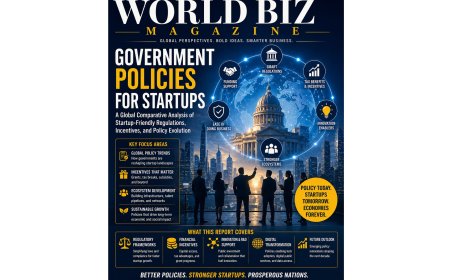








































The Impact of Startups on Economic Development and Global Markets
A detailed World Biz Magazine research analysis on the role of startups in global economic development and investment trends.


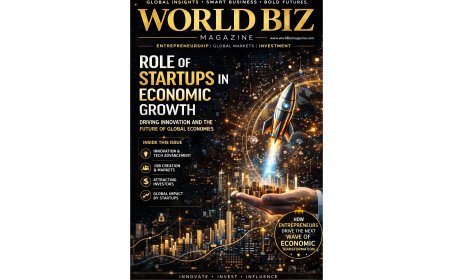
Role of Startups in Economic Growth
How Entrepreneurial Innovation is Powering the Next Generation of Global Economies
World Biz Magazine | Entrepreneurship & Startup Economy | Global Growth Insights
Startups as Engines of Modern Economies
In today’s rapidly evolving global landscape, startups have emerged as one of the most powerful drivers of economic transformation. Unlike traditional corporations, startups operate with agility, innovation, and scalability at their core, enabling them to disrupt established industries and create entirely new markets. From Silicon Valley to emerging ecosystems across Asia and Africa, startups are redefining how economies grow, compete, and innovate in the digital age.
The rise of companies like Stripe, Airbnb, and SpaceX demonstrates how startups can evolve into global giants, contributing significantly to employment, investment flows, and technological advancement. Their journey from small, innovative ventures to billion-dollar enterprises highlights the critical role startups play in shaping modern economies.
Startups as Catalysts for Innovation
Startups are fundamentally innovation-driven entities. Unlike large corporations that often operate within established frameworks, startups are built to challenge the status quo by introducing new products, services, and business models. This culture of experimentation and risk-taking leads to breakthroughs in technology, finance, healthcare, and other sectors.
Innovation generated by startups often spreads across industries, creating ripple effects that enhance productivity and efficiency. For instance, advancements in fintech, artificial intelligence, and digital platforms have not only created new markets but have also improved existing systems, making them more accessible and efficient.
Job Creation and Employment Growth
One of the most significant contributions of startups is job creation. Startups generate employment opportunities at multiple levels, from highly skilled technical roles to operational and support positions. As startups scale, their demand for talent increases, leading to the expansion of job markets.
Moreover, startups often create indirect employment by stimulating demand in related sectors such as logistics, marketing, legal services, and technology infrastructure. This multiplier effect contributes to broader economic growth and workforce development.
Attracting Investment and Capital Flow
Startups play a crucial role in attracting domestic and foreign investment. Venture capital, angel investment, and private equity funding flow into startup ecosystems, fueling innovation and business expansion. This influx of capital not only supports startups but also strengthens the overall financial ecosystem.
Countries with strong startup ecosystems tend to attract global investors, boosting their economic profile and increasing foreign direct investment (FDI). This creates a virtuous cycle where investment leads to growth, which in turn attracts more investment.
Driving Technological Advancement
Startups are at the forefront of technological innovation. They leverage emerging technologies such as AI, blockchain, and cloud computing to develop scalable solutions that address complex challenges. This technological advancement enhances productivity, reduces costs, and improves efficiency across industries.
In many cases, startups act as pioneers, introducing technologies that are later adopted by larger corporations and governments. This accelerates digital transformation and positions economies for long-term growth.
Enhancing Global Competitiveness
A strong startup ecosystem enhances a country’s global competitiveness. Nations that foster entrepreneurship are better positioned to compete in the global market, as they can quickly adapt to changing trends and technological advancements.
Startups also enable countries to diversify their economies, reducing dependence on traditional industries and creating new sources of revenue. This diversification is essential for economic resilience and sustainability.
Encouraging Entrepreneurship and Innovation Culture
Startups inspire a culture of entrepreneurship by encouraging individuals to take risks, innovate, and pursue new opportunities. This cultural shift is critical for long-term economic development, as it fosters creativity, problem-solving, and resilience.
Educational institutions, incubators, and accelerators play a key role in nurturing this culture by providing resources, mentorship, and support to aspiring entrepreneurs.
Impact on Emerging Markets
In emerging economies, startups are particularly impactful. They address local challenges such as financial inclusion, healthcare access, and digital connectivity, often providing solutions that are both innovative and scalable.
For example, fintech startups are enabling millions of people in developing countries to access financial services for the first time, contributing to economic inclusion and growth.
Challenges Faced by Startups
Despite their potential, startups face several challenges that can hinder their growth. These include limited access to funding, regulatory barriers, market competition, and scalability issues. Additionally, high failure rates remain a reality, as not all startups succeed.
Governments and policymakers must address these challenges by creating supportive environments that encourage innovation and reduce barriers to entry.
Policy and Government Support
Government policies play a crucial role in shaping startup ecosystems. Initiatives such as tax incentives, funding programs, and regulatory reforms can significantly impact startup growth. Countries that prioritize entrepreneurship through supportive policies often experience faster economic development.
Public-private partnerships also contribute to ecosystem development by combining resources and expertise to support innovation.
World Biz Magazine Insight
At World Biz Magazine, our analysis highlights:
“Startups are no longer just contributors to economic growth they are the architects of future economies.”
The most successful economies are those that:
- Encourage innovation
- Support entrepreneurship
- Invest in technology and talent
Conclusion: Building Economies Through Startups
Startups are redefining the foundations of economic growth. They drive innovation, create jobs, attract investment, and enhance global competitiveness. As the world continues to evolve, the importance of startups will only increase.
For governments, investors, and business leaders, the message is clear: Supporting startups is not just an economic strategy it is a necessity for future growth.
Final Thought
“The future of global economic growth will be written not by traditional industries alone—but by the startups that dare to innovate.”
Disclaimer
This article is published for informational and educational purposes only and does not constitute financial, investment, legal, or business advice. The views and analysis presented are based on general market trends, startup ecosystem observations, and research insights, which may vary across regions and industries.
Startup investments and entrepreneurial ventures involve inherent risks, including the potential loss of capital and business failure. Readers, investors, and entrepreneurs are advised to conduct independent due diligence and consult qualified financial advisors, legal experts, and business consultants before making any strategic or investment decisions.
World Biz Magazine does not guarantee the accuracy, completeness, or future outcomes of the information presented and shall not be held liable for any decisions or actions taken based on this content.
What's Your Reaction?
 Like
0
Like
0
 Dislike
0
Dislike
0
 Love
0
Love
0
 Funny
0
Funny
0
 Angry
0
Angry
0
 Sad
0
Sad
0
 Wow
0
Wow
0