






























































































Fast Fashion vs Slow Fashion: Business Models Reshaping the Global Fashion Industry
Key differences between fast fashion and slow fashion business models, including sustainability impact, profit margins, and global market trends shaping the fashion industry.

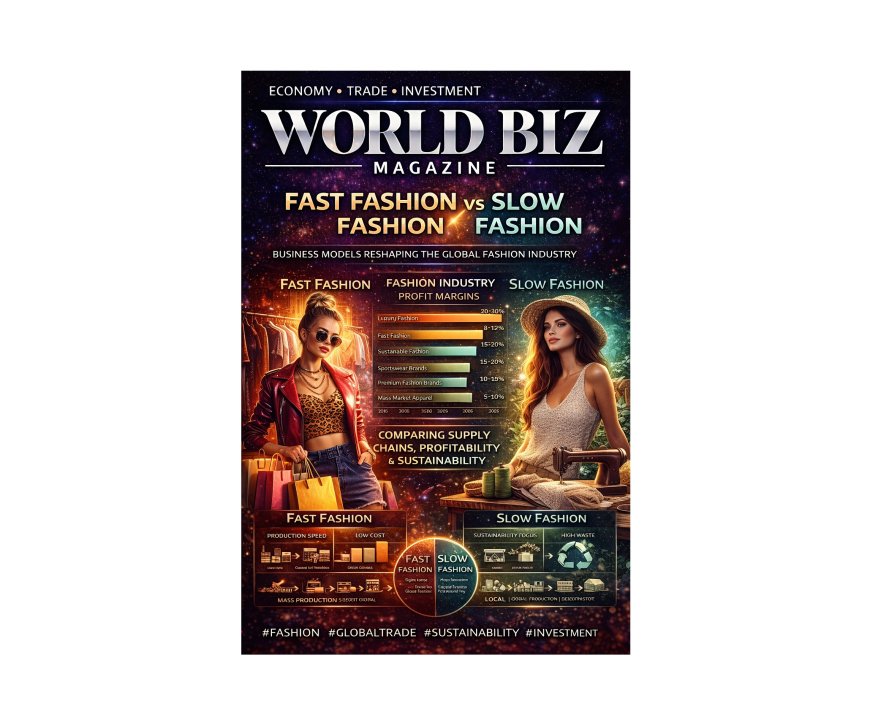
Fast Fashion vs Slow Fashion Business Models
Global Industry Today Analysis & Market Outlook to 2035
World Biz Magazine | Industry Today Special Report
The global fashion industry is experiencing a structural shift between two competing business philosophies: fast fashion and slow fashion. Fast fashion focuses on speed, mass production, and affordability, while slow fashion emphasizes sustainability, ethical production, and long product lifecycles.
As consumer awareness around environmental impact grows and regulatory pressure increases, these two models are reshaping global fashion supply chains, investment flows, and retail strategies.
This World Biz Magazine Industry Today report analyzes the fast vs slow fashion models, including global market size, economic impact, policy influence, investments, inflation effects, and forecasts to 2035.
Industry Overview
The fashion industry operates through multiple segments:
- Apparel manufacturing
- Textile production
- Retail and e-commerce
- Luxury fashion
- Sustainable fashion
Within this ecosystem, fast fashion brands dominate mass retail, while slow fashion brands are gaining traction among environmentally conscious consumers.
Fast fashion relies on rapid production cycles and high-volume sales, whereas slow fashion promotes durability, ethical sourcing, and reduced environmental impact.
Global Fashion Market Size
|
Year |
Market Size |
|
2015 |
$1.7 trillion |
|
2020 |
$1.9 trillion |
|
2024 |
$2.5 trillion |
|
2030 (forecast) |
$3.0 trillion |
|
2035 (forecast) |
$3.5 trillion |
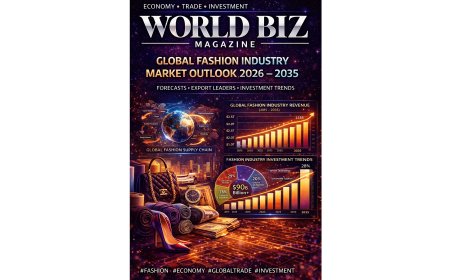
The industry is projected to grow steadily due to expanding middle-class populations, digital retail platforms, and rising fashion consumption globally.
Fast Fashion Business Model
Fast fashion companies prioritize:
- Rapid design cycles
- High production volumes
- Low production costs
- Short product lifespans
Key Characteristics
- Weekly product launches
- Trend-driven collections
- Global manufacturing supply chains
- Competitive pricing
Major Fast Fashion Brands
- Zara (Inditex)
- H&M
- Shein
- Uniqlo
- Forever 21
Fast fashion companies often rely on manufacturing hubs in Bangladesh, Vietnam, China, and Turkey, where labor costs remain lower.
Slow Fashion Business Model
Slow fashion prioritizes:
- Sustainability
- Ethical labor practices
- Durable products
- Reduced production cycles
Key Characteristics
- Limited collections
- Higher-quality materials
- Localized production
- Transparency in supply chains
Major Slow Fashion Brands
- Patagonia
- Eileen Fisher
- Stella McCartney
- Reformation
Slow fashion products typically have higher retail prices but longer lifecycles.
Core Business Model Differences
|
Factor |
Fast Fashion |
Slow Fashion |
|
Production Speed |
Extremely fast (2-6 weeks) |
Slow (months to years) |
|
Product Lifecycle |
Short (seasonal or weekly) |
Long-lasting products |
|
Price Range |
Low-cost |
Premium pricing |
|
Sustainability |
Low environmental standards |
High sustainability focus |
|
Manufacturing Scale |
Mass production |
Limited production |
|
Supply Chain |
Global low-cost factories |
Local or ethical production |
|
Consumer Behavior |
Frequent purchases |
Long-term ownership |
|
Waste Generation |
High textile waste |
Low waste / circular models |
Key Insight
Fast fashion focuses on volume and trend responsiveness, while slow fashion emphasizes durability, sustainability, and brand ethics. The global fashion market increasingly incorporates hybrid models, blending speed with sustainability.
Average Profit Margin by Segment
|
Fashion Segment |
Average Profit Margin |
|
Luxury Fashion |
20-30% |
|
Premium Fashion Brands |
12-18% |
|
Fast Fashion Retail |
8-12% |
|
Sportswear Brands |
10-15% |
|
Sustainable Fashion Brands |
15-20% |
|
Mass Market Apparel |
5-10% |
Key Profitability Drivers
Luxury Fashion
- Strong brand equity
- Limited supply and high demand
- Premium pricing power
Fast Fashion
- High sales volume
- Rapid production cycles
- Lower margins per item
Sustainable Fashion
- Higher production costs
- Premium consumer segment
- Increasing regulatory support
Economic Impact of the Two Models
|
Factor |
Fast Fashion |
Slow Fashion |
|
Production Speed |
Very high |
Low |
|
Product Price |
Low |
High |
|
Environmental Impact |
High |
Low |
|
Supply Chain Complexity |
High |
Moderate |
|
Profit Margins |
Moderate |
High |
|
Consumer Lifecycle |
Short |
Long |
Fast fashion drives volume-based revenue, while slow fashion focuses on value-based profitability.
Global Supply Chain Structure
Fast Fashion Supply Chain
- Trend identification
- Rapid design and sampling
- Low-cost mass manufacturing
- Global distribution
- Retail turnover within weeks
Slow Fashion Supply Chain
- Sustainable material sourcing
- Ethical manufacturing
- Limited production runs
- Direct-to-consumer retail
- Long product lifespan
Key Policies and Political Influence
Government regulations are increasingly shaping fashion industry models.
Key Policy Areas
- Environmental sustainability laws
- Textile waste regulations
- Labor protection standards
- Import tariffs on garments
- Carbon emission reporting requirements
The European Union has proposed circular fashion regulations requiring brands to improve sustainability practices.
Countries with strong sustainability policies may accelerate the transition toward slow fashion.
Investment Trends
Investment patterns in the fashion industry are shifting.
Major Investment Areas
- Sustainable textiles
- Circular fashion platforms
- AI-driven supply chain management
- fashion technology startups
- resale marketplaces
Private equity firms and venture capital investors are increasingly funding fashion technology and sustainable fashion companies.
Countries Gaining Investment
- Vietnam
- Bangladesh
- India
- Indonesia
- Turkey
These countries benefit from strong textile manufacturing ecosystems and export capacity.
Countries Losing Investment Momentum
- High-cost European manufacturing regions
- Countries with outdated textile infrastructure
- Regions lacking trade access to major markets
Supply chain diversification is shifting manufacturing across Southeast Asia.
Inflation and Price Trends
Fashion prices have risen over the past decade due to:
- rising labor costs
- energy price increases
- logistics inflation
- sustainability investments
Luxury brands have increased prices significantly while maintaining strong demand.
Fast fashion brands face tighter margins due to cost inflation.
Price Trend Analysis (2015-2025)
|
Segment |
Price Increase |
|
Luxury Fashion |
35-45% |
|
Sustainable Fashion |
30-40% |
|
Fast Fashion |
15-20% |
Sustainable materials often increase production costs but appeal to premium consumers.
New Players and Emerging Trends
Several new business models are emerging:
- Digital fashion platforms
- resale marketplaces
- rental fashion services
- AI-driven design tools
- blockchain supply chain tracking
These innovations are redefining fashion consumption patterns.
Industry Forecast to 2035
The next decade will likely see:
1. Growth of Sustainable Fashion
Consumer demand for ethical production will increase.
2. Digital Fashion Expansion
Virtual clothing and metaverse fashion may create new revenue streams.
3. AI Supply Chain Optimization
Technology will reduce overproduction and waste.
4. Circular Fashion Economy
Recycling and resale markets will expand.
Market Outlook (2026-2035)
|
Segment |
Growth Outlook |
|
Fast Fashion |
Moderate growth |
|
Luxury Fashion |
Strong growth |
|
Sustainable Fashion |
Rapid growth |
|
Fashion Technology |
Very high growth |
Sustainable and technology-driven models will likely dominate the future fashion economy.
World Biz Magazine Insights
The future fashion industry will likely involve a hybrid model combining elements of fast and slow fashion.
Brands must balance:
- speed and innovation
- sustainability and ethics
- profitability and environmental responsibility
Companies able to integrate digital tools, ethical sourcing, and efficient supply chains will dominate the next decade.
Conclusion
Fast fashion revolutionized the industry by making style affordable and accessible, but it also created environmental and ethical challenges. Slow fashion offers a more sustainable alternative but faces scaling and affordability challenges.
Between 2026 and 2035, the global fashion industry will likely evolve toward a balanced model incorporating sustainability, technology, and consumer demand for transparency.
Fashion companies that successfully combine speed, sustainability, and digital innovation will lead the future of the industry.
Disclaimer
The information presented in this article is for informational and educational purposes only. Market statistics, forecasts, and projections are based on publicly available industry data and research estimates at the time of publication. World Biz Magazine does not guarantee the accuracy of future market performance or investment outcomes. Readers should consult professional advisors before making financial or strategic decisions based on this report. All company names, trademarks, and brand references belong to their respective owners.
What's Your Reaction?
 Like
0
Like
0
 Dislike
0
Dislike
0
 Love
0
Love
0
 Funny
0
Funny
0
 Angry
0
Angry
0
 Sad
0
Sad
0
 Wow
0
Wow
0