


































































































































































Luxury vs Premium Brands: Market Positioning, Profit Margins and Industry Outlook
A World Biz Magazine analysis of luxury vs premium brands, covering brand strategy, profit margins, consumer behavior, and global fashion market trends.

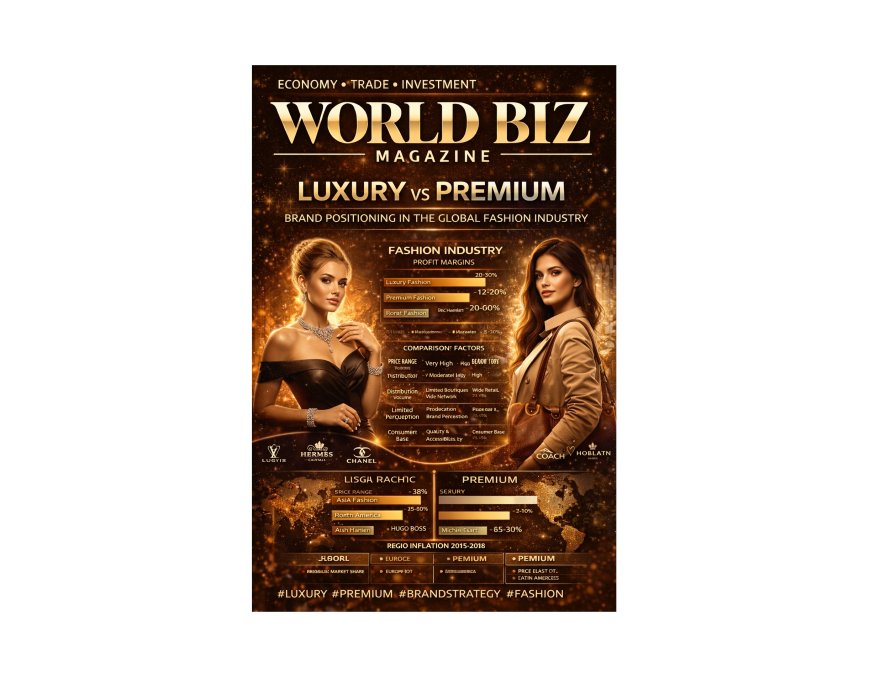
Luxury vs Premium Brand Positioning
Global Market Strategy, Consumer Psychology & Industry Outlook to 2035
World Biz Magazine | Industry Today Special Report
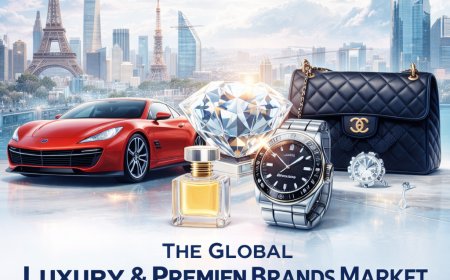
In the global consumer economy, brand positioning plays a decisive role in determining market value, pricing power, and long-term profitability. Two dominant positioning strategies luxury brands and premium brands often appear similar but represent fundamentally different business models.
Luxury brands operate at the pinnacle of exclusivity and prestige, while premium brands aim to deliver high quality and elevated experiences at relatively accessible price points. The distinction influences everything from product pricing and marketing strategy to supply chain management and consumer perception.
This World Biz Magazine Industry Today report examines the global positioning of luxury versus premium brands, analyzing market size, consumer psychology, investment trends, political and economic influences, price inflation over the last decade, and industry forecasts through 2035.
Industry Overview
The global fashion and lifestyle market consists of multiple tiers:
- Mass market brands
- Premium brands
- Luxury brands
- Ultra-luxury brands
Luxury and premium brands occupy the higher end of the consumer market, but they target different audiences and employ distinct strategies.
Global Fashion & Luxury Market Size
|
Segment |
Market Size (2024) |
Forecast 2030 |
|
Luxury Fashion |
$350B |
$500B+ |
|
Premium Fashion |
$450B |
$650B |
|
Mass Market Apparel |
$1.6T |
$2.1T |
Luxury fashion generates the highest margins, while premium brands reach larger customer bases.
What Defines a Luxury Brand?
Luxury brands are defined by exclusivity, heritage, craftsmanship, and brand prestige.
Key Characteristics
- Limited production volumes
- High price points
- Strong brand storytelling
- Exceptional craftsmanship
- High margins
Luxury brands focus on maintaining scarcity and brand prestige rather than maximizing production volume.
Major Luxury Fashion Houses
Some of the most influential luxury companies include:
- LVMH
- Kering
- Hermès
- Chanel
- Richemont
Luxury brands rely heavily on heritage, craftsmanship, and exclusivity to justify premium pricing.
What Defines a Premium Brand?
Premium brands operate between mass market and luxury segments.
Key Characteristics
- High quality products
- Wider distribution channels
- Accessible pricing compared to luxury
- Strong brand identity
- Larger production volumes
Premium brands emphasize quality and brand perception but maintain broader accessibility.
Major Premium Brands
Examples of premium fashion and lifestyle brands include:
- Ralph Lauren
- Michael Kors
- Coach
- Hugo Boss
- Tommy Hilfiger
Premium brands often rely on strong retail networks and global marketing campaigns.
Brand Positioning Comparison
|
Factor |
Luxury Brands |
Premium Brands |
|
Price Range |
Very high |
Moderately high |
|
Distribution |
Limited boutiques |
Wider retail presence |
|
Production Volume |
Low |
Moderate |
|
Brand Perception |
Exclusivity & prestige |
High quality & status |
|
Customer Base |
Affluent consumers |
Upper middle class |
Luxury brands aim for exclusivity, while premium brands aim for aspirational accessibility.
Consumer Psychology
Consumer purchasing behavior varies between the two segments.
Luxury Buyers
Luxury consumers typically seek:
- exclusivity
- brand heritage
- social status
- craftsmanship
Premium Buyers
Premium consumers focus on:
- quality products
- brand reputation
- affordability compared to luxury
- lifestyle identity
Luxury purchases are often symbolic consumption, while premium purchases are more value-oriented lifestyle choices.
Profit Margin Comparison
|
Segment |
Average Margin |
|
Luxury Fashion |
20-35% |
|
Premium Fashion |
12-20% |
|
Mass Market |
5-10% |
Luxury brands maintain higher margins due to pricing power and brand exclusivity.
Global Luxury Market by Region
|
Region |
Market Share |
|
Asia-Pacific |
38% |
|
Europe |
27% |
|
North America |
25% |
|
Middle East |
7% |
|
Latin America |
3% |
Asia has become the largest luxury consumer market, particularly due to Chinese consumers.
Policy and Political Influence
Government policies influence luxury and premium brand growth through:
- trade tariffs
- import duties
- intellectual property laws
- luxury taxation
- sustainability regulations
Some countries impose luxury taxes to discourage high-end consumption, while others promote luxury retail tourism.
Investment Trends
Investment in luxury and premium brands is dominated by:
- luxury conglomerates
- private equity firms
- sovereign wealth funds
- retail investment groups
Luxury conglomerates increasingly acquire premium brands to expand market share.
Inflation and Price Trends
Luxury brands have increased prices significantly over the past decade due to:
- rising production costs
- supply chain disruptions
- brand repositioning strategies
Price Growth (2015-2025)
|
Segment |
Price Increase |
|
Luxury Fashion |
35-50% |
|
Premium Fashion |
20-30% |
Luxury brands have successfully maintained demand despite higher prices.
Emerging Trends
Several trends are shaping the luxury and premium markets.
Digital Luxury
Luxury brands are investing heavily in:
- e-commerce platforms
- digital fashion shows
- online luxury marketplaces
Sustainability
Consumers increasingly demand sustainable production practices.
Direct-to-Consumer Retail
Premium brands are shifting toward direct online sales channels.
Countries Gaining Investment
Countries benefiting from luxury and premium brand investment include:
- France
- Italy
- United States
- United Kingdom
- China
These countries host major fashion houses and luxury retail hubs.
Countries Losing Investment Momentum
Regions losing relative momentum include:
- markets with declining luxury demand
- countries with unstable economic environments
- regions with limited retail infrastructure
Luxury brands prefer stable markets with high consumer spending.
Forecast to 2035
Luxury Segment
Projected growth driven by:
- expanding Asian consumer markets
- digital luxury commerce
- high-net-worth population growth
Premium Segment
Growth driven by:
- middle-class expansion
- global retail networks
- lifestyle brand expansion
Forecast
|
Segment |
2035 Market Outlook |
|
Luxury Fashion |
$700B+ |
|
Premium Fashion |
$900B+ |
Both segments are expected to grow, but luxury will remain the most profitable.
World Biz Magazine Insights
Luxury and premium brands represent two powerful but distinct strategies in global fashion.
Luxury brands succeed through exclusivity and heritage, while premium brands thrive on accessibility and lifestyle positioning.
The most successful companies will blend elements of both models, combining aspirational branding with scalable distribution strategies.
Conclusion
Luxury and premium brands will continue shaping the global fashion economy as consumer demand evolves. While luxury brands will maintain prestige and profitability, premium brands will expand accessibility and global reach.
By 2035, the boundary between luxury and premium positioning may blur as brands adopt hybrid strategies combining exclusivity, digital innovation, and sustainability.
The global fashion industry’s future will be defined not only by what consumers buy but by how brands position themselves in the minds of those consumers.
Disclaimer
The information presented in this article is intended for informational and educational purposes only. Market statistics, forecasts, and projections are based on publicly available industry data and analytical estimates at the time of publication. While every effort has been made to ensure accuracy, World Biz Magazine does not guarantee future market performance or investment outcomes. Readers should consult professional advisors before making financial or strategic decisions based on this report. All trademarks and brand names referenced remain the property of their respective owners.
What's Your Reaction?
 Like
0
Like
0
 Dislike
0
Dislike
0
 Love
0
Love
0
 Funny
0
Funny
0
 Angry
0
Angry
0
 Sad
0
Sad
0
 Wow
0
Wow
0