


























































































































Gulf Crisis 2026: Where Global Investors Are Moving Their Money Now
A deep analysis of how Middle East tensions are reshaping global real estate markets, highlighting key beneficiary countries and investment trends.

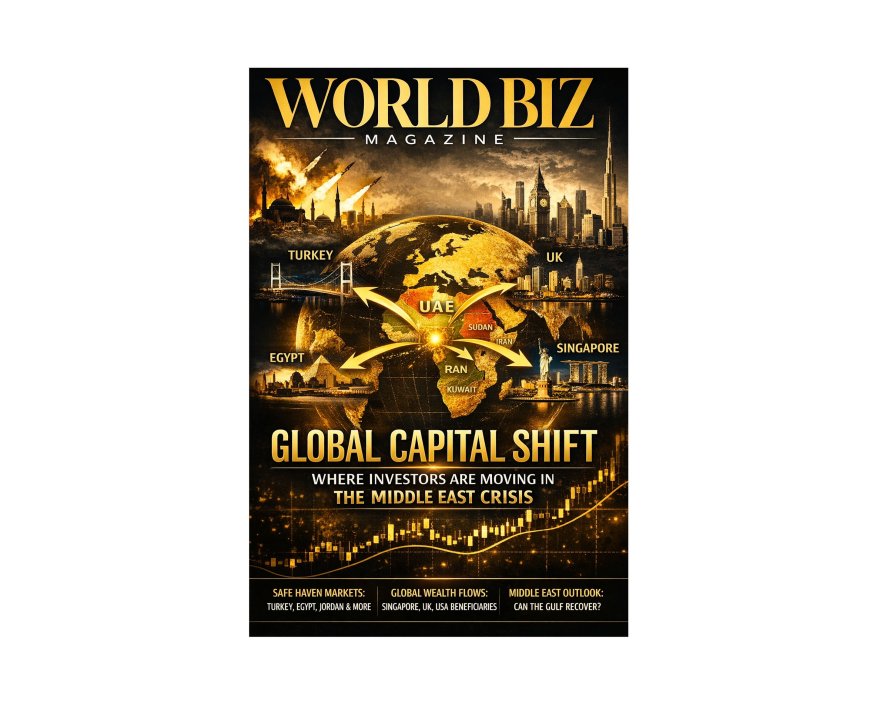
Capital Flight & Real Estate Shifts in a Middle East Conflict Scenario
Regional Safe Havens, Global Beneficiaries & the 90-Day Outlook
World Biz Magazine | Global Markets, Real Estate & Geopolitical Intelligence
Escalating geopolitical tensions involving Iran and key Gulf economies United Arab Emirates, Saudi Arabia, Qatar, Kuwait, and Oman have triggered a classic but highly strategic economic response: capital flight and relocation.
However, unlike past cycles, today’s capital movement is multi-layered and globally diversified. Investors are not simply exiting risk they are redistributing across regional and international safe havens simultaneously.
This World Biz Magazine deep analysis examines:
- Nearby countries absorbing immediate capital flows
- Global markets benefiting from high-value wealth relocation
- Real estate implications across tiers of investors
- A critical 90-day outlook that could reshape the entire trajectory
Understanding Capital Flight in Modern Conflict Economies
In high-risk geopolitical environments:
- Liquidity exits perceived danger zones
- Real estate markets face short-term corrections
- Capital reallocates into safe, stable, and accessible markets
But in today’s interconnected world, this movement is not binary it follows a tiered flow model:
Tiered Capital Movement
- Immediate (Regional Shift): Nearby countries (fast relocation, cultural familiarity)
- Secondary (Global Safe Havens): Advanced economies (wealth protection)
- Strategic (Diversified Allocation): Multi-country portfolio distribution
This creates simultaneous winners across regions
PART I: Nearby Beneficiaries (First Layer Capital Absorption)
Turkey
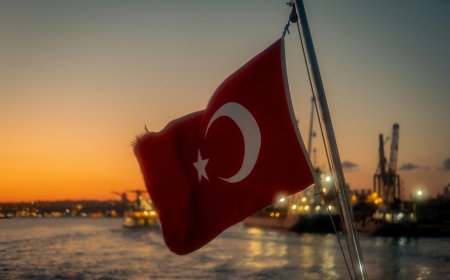
Turkey stands as the primary regional beneficiary, acting as the closest viable alternative to Gulf investment hubs.
Its combination of geographic proximity, cultural alignment, and investor-friendly residency programs makes it the first destination for capital exiting Dubai or Riyadh. Istanbul, in particular, absorbs both luxury real estate buyers and mid-tier investors, driving up demand across residential and mixed-use developments.
However, while capital inflow is strong, investors remain cautious due to currency volatility, making Turkey a high-return but medium-risk environment.
Egypt
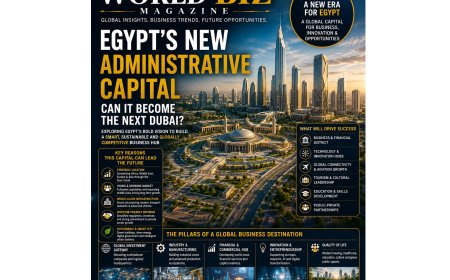
Egypt is emerging as a high-volume capital destination, particularly for Gulf investors seeking affordability and long-term growth.
Mega-projects such as the New Administrative Capital and coastal developments provide scalable investment opportunities, attracting both institutional and retail investors. Unlike Turkey, Egypt’s appeal lies in its lower entry cost and development upside, rather than immediate liquidity.
Jordan
ordan represents the stability anchor of the region.
Capital moving here is less speculative and more defensive focused on family relocation, wealth preservation, and long-term residence. The real estate market grows steadily, particularly in Amman, without the volatility seen in more aggressive markets.
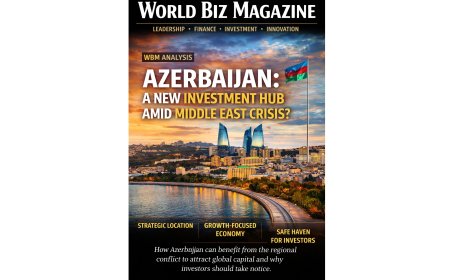
Azerbaijan & Georgia
The Caucasus region is becoming a strategic second-tier beneficiary.
These markets attract early-stage and yield-focused investors, offering:
- Low entry prices
- Flexible ownership laws
- Increasing tourism demand
While still emerging, they present significant upside potential over a 5-10 year horizon.
Cyprus
Cyprus functions as a premium bridge between the Middle East and Europe.
Its EU-aligned legal framework and coastal luxury properties make it a preferred destination for ultra-high-net-worth individuals (UHNWIs) seeking both lifestyle and asset security.
PART II: Global Beneficiaries (Second Layer Capital Destination)
While nearby countries absorb immediate capital, large-scale wealth especially institutional and ultra-high-net-worth capital moves globally.
Singapore
Singapore is the top global safe haven replacement for Dubai.
Its political neutrality, strong banking system, and wealth protection laws make it the preferred destination for:
- Family offices
- Sovereign wealth reallocations
- Crypto and financial capital
Expect sharp increases in luxury property demand
United Kingdom & United States
London and major U.S. cities remain global wealth parking hubs.
- London attracts Middle Eastern elite buyers
- U.S. markets benefit from dollar strength and economic scale
These markets see capital preservation-driven real estate demand
Canada & Australia
These countries benefit from migration-driven investment:
- Family relocation
- Long-term residency planning
- Stable housing demand
Malaysia & Indonesia
These are emerging alternatives for mid-tier investors, offering:
- Lower property costs
- Cultural familiarity
- Growing urban markets
PART III: Middle East Outlook: Not a Collapse, But a Critical 90-Day Window
While capital is temporarily shifting toward nearby markets, it is essential to emphasize a key World Biz Magazine perspective:
The Middle East is not collapsing it is entering a short-term uncertainty phase.
The next 60-90 days will be decisive in shaping investor confidence and property trends.
Why the Region Still Has Strong Recovery Potential
Despite current tensions involving Iran and Gulf economies such as United Arab Emirates, Saudi Arabia, and Qatar, several structural strengths remain intact:
Energy Dominance
- Gulf countries still control a major share of global oil and gas supply
- In times of conflict, energy prices typically rise, strengthening government revenues
- This provides financial cushioning for real estate and infrastructure sectors
Sovereign Wealth Power
- Funds like those in Saudi Arabia and UAE manage hundreds of billions in global assets
- These governments can:
- Inject liquidity into domestic markets
- Support developers and banks
- Stabilize property prices if needed
Unlike weaker economies, Gulf states have the ability to defend their markets
- Projects like Saudi giga-developments, Dubai expansions, and Qatar’s urban plans are long-term strategic investments
- These are backed by national visions (e.g., Vision 2030)
- Stopping them would cause greater economic damage than continuing them
Therefore, construction and development momentum will continue
Global Business Integration
- Dubai and Riyadh are now deeply integrated into:
- Global finance
- Trade routes
- Aviation networks
This makes a complete investor exit highly unlikely
The 3-Month Decision Window
The next 60-90 days will define market direction:
Scenario 1: De-escalation (Base Case)
- Stabilization of tensions
- Restoration of investor confidence
Result:
- Capital returns to Gulf
- Real estate rebounds sharply
Scenario 2: Prolonged Uncertainty
- No major escalation, but continued tension
Result:
- Sideways property markets
- Continued diversification into nearby countries
Scenario 3: Escalation (Low Probability)
- Direct infrastructure impact
Result:
- Sharp but temporary correction
- Accelerated capital shift
Historical Market Behavior
Real estate markets in conflict-linked economies typically follow:
- Shock Phase (0-3 months)
- Stabilization Phase (3-6 months)
- Recovery Phase (6-18 months)
Importantly, post-crisis recoveries often exceed previous peaks
Strategic Investment Insight
Modern investors no longer rely on single-market exposure. Instead, they deploy multi-country strategies:
- Short-term relocation - Turkey, Egypt
- Stability allocation - Jordan, Cyprus
- Growth exposure - Caucasus markets
- Wealth preservation - Singapore, Malaysia, UK, USA
This diversification model reduces risk while maintaining upside potential
Final Conclusion
The evolving Middle East situation is not a collapse scenario but a dynamic capital redistribution event.
Key Takeaways:
- Nearby countries (Turkey, Egypt) gain immediate inflows
- Global markets (Singapore, UK, USA) absorb large-scale wealth
- Emerging regions (Caucasus, Southeast Asia) benefit from diversification
- The Gulf retains long-term strength, with recovery potential tied to the next 90 days
World Biz Magazine Insight
“In times of geopolitical stress, capital does not retreat it reorganizes. The true winners are those positioned at the intersection of stability, accessibility, and strategic timing.”
Disclaimer:
This article is intended for informational and analytical purposes only and does not constitute financial, investment, or legal advice. The views expressed are based on current geopolitical and economic conditions, which are subject to rapid change. Readers are advised to conduct their own research or consult with qualified financial advisors before making any investment decisions. World Biz Magazine does not guarantee the accuracy, completeness, or future outcomes of any projections or analyses presented in this publication.
What's Your Reaction?
 Like
1
Like
1
 Dislike
0
Dislike
0
 Love
1
Love
1
 Funny
0
Funny
0
 Angry
0
Angry
0
 Sad
0
Sad
0
 Wow
1
Wow
1