


































































Inflation Impact on Luxury Consumption - Global Country Analysis & Outlook 2026–2030
A comprehensive World Biz Magazine analysis of how inflation is reshaping global luxury consumption. Explore country-wise insights, historical comparisons, market shifts, and outlook to 2030 across the United States, China, Europe, and emerging markets.

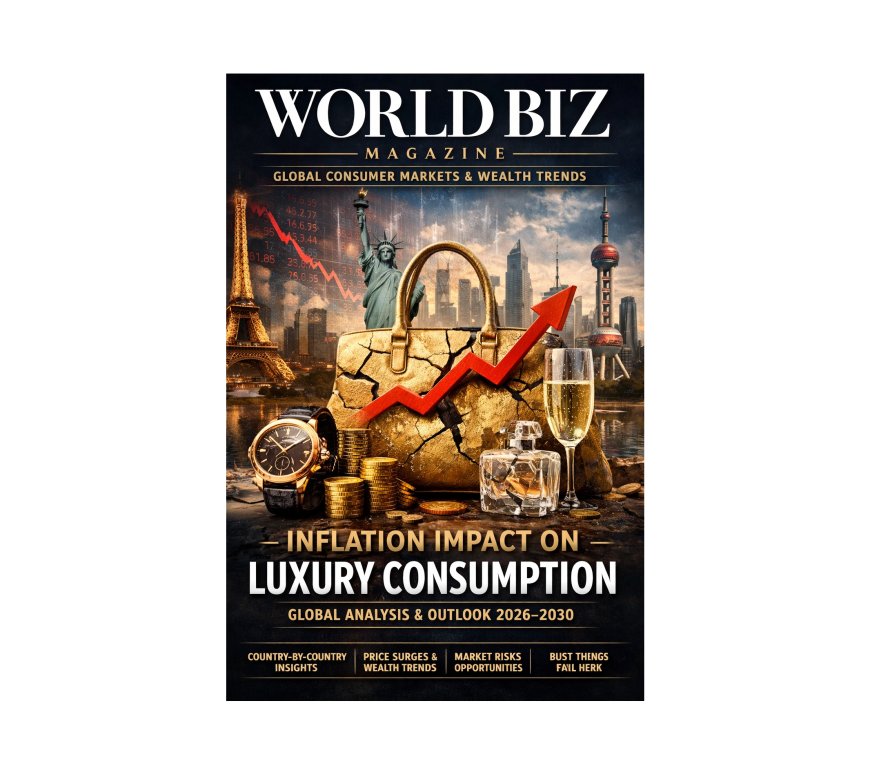
Inflation Impact on Luxury Consumption
Country-Wise Analysis, Historical Comparison & Future Outlook
World Biz Magazine | Global Consumer Markets & Wealth Trends
Luxury consumption has traditionally been considered resilient to macroeconomic volatility, largely because its core clientele high-net-worth individuals are less sensitive to price fluctuations. Yet the inflation surge following the pandemic years has reshaped consumer psychology, pricing strategies, and geographic growth patterns across the global luxury ecosystem. Rising production costs, aggressive price hikes by brands, and declining middle-class purchasing power have altered the structure of demand from 2020 onward.
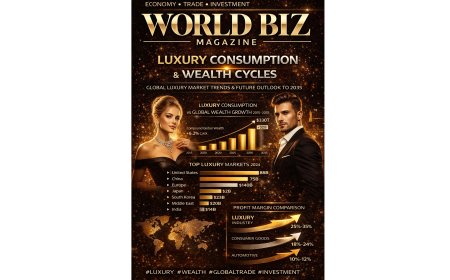
Global luxury spending has remained broadly stable at about USD 1.70 trillion in 2025, despite economic uncertainty, highlighting structural resilience while masking major internal shifts across regions and segments.
At the same time, price increases and macro headwinds have slowed value creation and weakened aspirational demand, marking the sector’s first major slowdown in years.
This article evaluates inflation’s impact on luxury consumption through a historical lens (pre-inflation vs post-inflation), country-wise analysis, and outlook toward 2030.
Understanding Inflation’s Transmission into Luxury Markets
Pricing and Cost Dynamics
Inflation affects luxury consumption through three primary channels:
Input-cost inflation
Luxury brands face higher raw material costs (metals, leather, logistics), leading to price increases. For instance, precious metal cost surges have squeezed margins in watch retail, even amid strong sales.
Strategic price escalation
Luxury houses have historically leveraged inflation to increase prices some raising them by up to 10% in recent years maintaining exclusivity while protecting margins.
Consumer behavioral shifts
Higher prices reduce aspirational demand, shifting spending toward experiences or alternative categories. Consumers globally increasingly prefer experiential luxury over conspicuous goods ownership.
Historical Comparison: Pre-Inflation vs Post-Inflation Era
2019-2021 (Pre-Inflation and Stimulus Boom)
- Post-pandemic savings and stimulus triggered a consumption boom
- Luxury industry profits nearly tripled between 2019-2024
- Rapid recruitment of new middle-class buyers expanded the customer base
- China drove annual growth exceeding 18%
These years marked expansion fueled by pent-up demand and fiscal stimulus.
2022-2025 (Inflation Shock Phase)
- Rising global inflation averaging 7% in many developed markets
- Price hikes by luxury brands accelerated
- Growth engines stalled; aspirational buyers reduced spending
- Global customer base fell significantly and demand slowed
- Industry growth decelerated or contracted in 2024-2025
Higher prices began reaching demand ceilings, particularly in major markets.
Global personal luxury sales declined and decelerated under geopolitical and economic pressures, though the sector stayed above pre-pandemic levels.
2026–2030 (Recovery and Structural Rebalancing Forecast)
- Expected global luxury growth: 2-4% annually (2025-2027)
- Long-term consumption growth: 5-9% annually to 2030
- Market expansion to €2-2.5 trillion total luxury consumption
- Personal luxury goods expected 4-6% growth annually
Emerging markets and diversified price tiers will drive expansion.
Country-Wise and Regional Analysis
United States
Trend: Resilient high-income demand but inflation-sensitive middle tier
- U.S. consumers account for roughly 22% of global luxury spending
- Spending recovery weaker than expected amid macro uncertainty
- Wealth effects (stock market gains) sustain elite spending
- Luxury hospitality rates continue rising
Ultra-wealthy consumers remain active even as broader demand softens.
Outlook:
Expected to be a major growth engine due to easing inflation and rising disposable income.
China
Trend: Most sensitive to inflation-driven confidence decline
- Chinese consumers contribute 30% of global luxury spend
- Domestic luxury spending fell 18-20% in 2024
- Market expected flat in 2025
Economic uncertainty and job concerns reduced spending intentions.
Outlook:
Recovery dependent on property market stabilization and government stimulus; remains largest long-term opportunity pool.
Europe
Trend: Stable but price-driven structural adjustment
- Luxury pricing strategies originated largely from European houses
- Inflation used as justification for price increases
- Demand relatively stable but consumer fatigue visible
Brands now expanding across price tiers to retain customers.
Outlook:
Moderate growth (3-5%), supported by tourism recovery and wealth expansion.
Poland (Representative Emerging Europe Case)
Trend: Growth despite inflation
- Luxury market grew strongly in 2023
- Spending per consumer rose significantly
- Wealth migration and tourism boosted demand
Affluent consumers proved resilient and stimulated services spending.
Implication:
Emerging European markets can outperform mature economies during inflation cycles.
Middle East, India, Japan (Growth Hotspots)
Trend: Benefiting from wealth expansion
- Rising ultra-wealthy population
- Favorable macro conditions
- Infrastructure and customer base growth
Expected to become major expansion drivers.
Global Market Structural Observations
Across regions:
- Luxury customer base shrank from 400M (2022) to 340M (2025)
- Spending leveling among top consumers
- Accessible luxury performing best
- Price hikes risk long-term brand loyalty
Yet global growth rebound expected from 2026 onward.
Behavioral Transformation Under Inflation
Shift Toward Experience-Driven Luxury
Consumers prioritize travel, dining, and wellness experiences rather than goods ownership.
Value Sensitivity and Ethical Considerations
About 30% of luxury buyers now prioritize sustainability in purchasing decisions.
Wealth Polarization Effect
Inflation widens spending divergence:
- Ultra-rich maintain or increase consumption
- Middle aspirational consumers withdraw
Visible in hotel pricing and retail demand patterns.
Strategic Implications for Luxury Businesses
Pricing Strategy Evolution
- Diversified product tiers
- Outlet and off-price channel expansion
- Inventory balancing
Geographic Diversification
- Reduced dependence on China
- Expansion into emerging wealth centers
Experience Integration
- Wellness, hospitality, and lifestyle services
- Emotional and experiential branding
Outlook to 2030
Despite inflationary disruption, luxury consumption remains structurally robust:
- Wealth creation continues globally
- Emerging markets expanding customer base
- Industry historically rebounds quickly
- New consumer segments entering market
Long-term growth trajectory remains positive, though structurally different than pre-inflation expansion models.
Conclusion
Inflation has not diminished luxury consumption it has redefined it. The sector has shifted from volume expansion through aspirational buyers toward value-driven engagement with diversified global wealth segments. Regional performance now diverges sharply, with mature markets stabilizing, China recalibrating, and emerging markets accelerating.
The defining characteristic of luxury consumption in the inflation era is polarization: resilience at the top, caution in the middle, and transformation in consumer meaning from ownership toward experience.
For investors and strategists, understanding this segmentation will determine competitive positioning over the remainder of the decade.
Disclaimer
The information presented in this article is intended solely for informational, research, and editorial purposes. While every effort has been made to ensure accuracy, completeness, and timeliness, World Biz Magazine does not guarantee the reliability of data, forecasts, or interpretations contained herein.
This publication does not constitute financial, investment, legal, or business advice. Readers, investors, and organizations should conduct independent research and consult qualified professional advisors before making strategic or financial decisions based on this material.
Market projections, forward-looking statements, and industry outlooks are based on current trends, publicly available data, and analytical modeling, and are subject to change due to economic conditions, geopolitical developments, regulatory adjustments, or market volatility.
World Biz Magazine, its affiliates, and contributors assume no liability for losses or damages arising directly or indirectly from the use of this content.
What's Your Reaction?
 Like
0
Like
0
 Dislike
0
Dislike
0
 Love
0
Love
0
 Funny
0
Funny
0
 Angry
0
Angry
0
 Sad
0
Sad
0
 Wow
0
Wow
0