















































































































































































































Payment Innovation in E-Commerce: Digital Payments, Fintech Growth & Global Market Outlook 2030
A complete analysis of global e-commerce payment systems covering PayPal, Stripe, Adyen, Square, digital wallets, policy impacts, and the future of fintech payments.

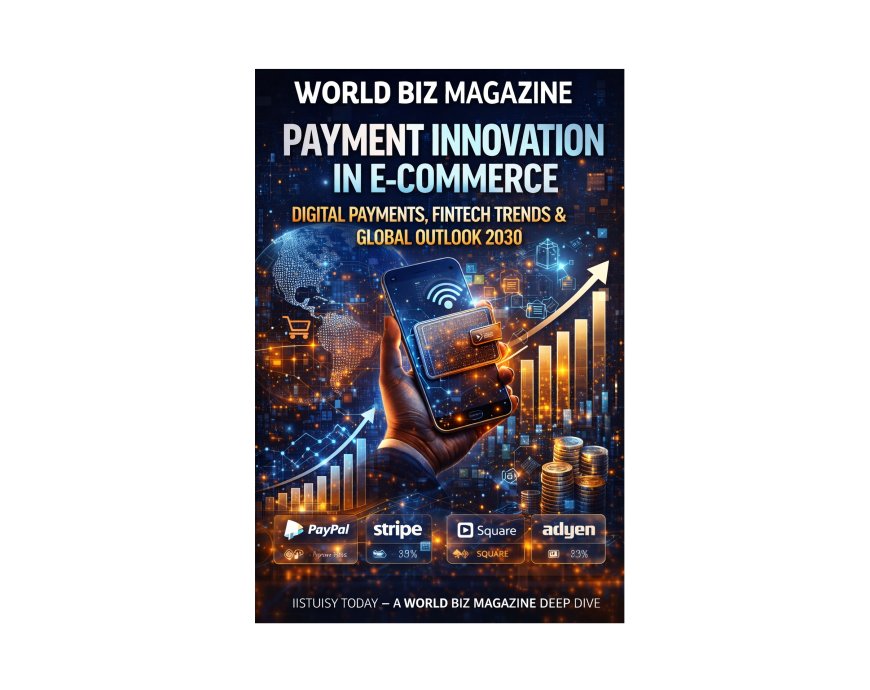
Payment Innovation in E-Commerce
Industry Today - A World Biz Magazine Deep Dive
The global e-commerce ecosystem is undergoing a transformation driven by rapid innovation in payment technologies. As digital commerce expands across borders, the way consumers and businesses exchange value online is evolving dramatically. Payment systems are becoming faster, smarter, more secure, and increasingly integrated with emerging technologies such as artificial intelligence, blockchain, digital wallets, and real-time banking networks.
In this comprehensive World Biz Magazine industry report, we analyze the payment innovation landscape shaping global e-commerce, including industry size, key players, regulatory frameworks, investment flows, geopolitical influences, regional trends, and forecasts through 2030.
Industry Overview
Payment innovation refers to new technologies and systems that enable faster, safer, and more efficient digital transactions in online commerce. These innovations include:
• Digital wallets
• Buy Now Pay Later (BNPL) solutions
• Real-time payment systems
• Blockchain-based settlements
• Mobile payment apps
• Embedded finance
• AI-driven fraud detection
• Biometric authentication systems
E-commerce payments are no longer just a transaction mechanism; they are now a strategic infrastructure layer supporting global digital trade.
Global E-Commerce Payment Market Size
The digital payments sector has grown exponentially over the last decade.
Global Market Size
|
Year |
Digital Payment Volume |
|
2015 |
$3.2 trillion |
|
2018 |
$4.9 trillion |
|
2020 |
$6.7 trillion |
|
2023 |
$9.5 trillion |
|
2025 (est.) |
$13 trillion |
The global digital payments market is expected to exceed $20 trillion by 2030, driven by rapid expansion of e-commerce, fintech platforms, and mobile banking adoption.
Key Payment Technologies Driving Innovation
Digital Wallets
Digital wallets such as mobile payment apps allow consumers to store payment credentials and make transactions instantly.
Major wallets include:
- Apple Pay
- Google Pay
- Alipay
- Paytm
- Samsung Pay
Digital wallets are projected to account for over 50% of global e-commerce transactions by 2030.
Buy Now Pay Later (BNPL)
BNPL allows consumers to split purchases into installments.
Major providers include:
- Klarna
- Afterpay
- Affirm
- Zip
- PayPal Pay in 4
The BNPL market is expected to grow rapidly as consumers demand flexible payment options.
Real-Time Payments
Real-time payment networks enable instant transfers between banks.
Examples include:
- UPI (India)
- Faster Payments (UK)
- FedNow (United States)
- PIX (Brazil)
These systems are redefining domestic payment infrastructure and accelerating digital commerce adoption.
Blockchain and Crypto Payments
Blockchain technology enables decentralized settlement systems, reducing reliance on intermediaries.
Use cases include:
- Cross-border payments
- Stablecoin settlements
- Smart contract-based payments
Although still emerging, blockchain payment systems could reshape international commerce.
Key Industry Players
The e-commerce payment ecosystem includes fintech startups, global tech companies, banks, and payment processors.
Payment Platforms
- PayPal
- Stripe
- Adyen
- Square (Block)
- Checkout.com
Digital Wallet Providers
- Apple Pay
- Google Pay
- Alipay
- WeChat Pay
Traditional Payment Networks
- Visa
- Mastercard
- American Express
Fintech Innovators
- Revolut
- Wise
- Klarna
- Affirm
These companies are investing heavily in technology infrastructure and expanding into embedded financial services.
Major Investors and Investment Trends
Payment innovation has attracted significant venture capital and institutional investment.
Key Investors
- Sequoia Capital
- Andreessen Horowitz
- SoftBank Vision Fund
- Tiger Global
- Accel Partners
Fintech funding reached record levels in the past decade, although market conditions have tightened following global interest rate increases.
However, payments remain one of the most attractive sectors in fintech due to recurring transaction revenue.
Government Policies and Regulation
Government policy plays a crucial role in shaping payment ecosystems.
Regulatory Focus Areas
• Anti-money laundering (AML) compliance
• Data protection laws
• Consumer protection regulations
• Payment licensing frameworks
• Open banking policies
Major Regulatory Frameworks
- PSD2 (European Union)
- Open Banking UK
- RBI Payment Guidelines (India)
- U.S. Fintech Regulation via CFPB
These frameworks encourage competition while ensuring security and consumer protection.
Political and Economic Impact
Payments infrastructure has become a strategic component of national economic policy.
Governments view digital payment systems as tools for:
• Financial inclusion
• Tax transparency
• Economic digitization
• Anti-corruption initiatives
Countries investing in digital payment infrastructure often experience stronger fintech ecosystems and increased innovation.
Regional Market Analysis
North America
The United States remains the largest fintech innovation hub, with strong venture capital investment and advanced payment infrastructure.
Europe
Europe leads in regulatory innovation through PSD2 and open banking frameworks that enable new fintech startups.
Asia-Pacific
Asia represents the largest user base for mobile payments, particularly in China, India, and Southeast Asia.
Middle East
The Gulf region is emerging as a fintech hub with strong government support and digital banking initiatives.
Africa
Mobile money platforms such as M-Pesa demonstrate the potential for digital payments to drive financial inclusion.
New Projects and Emerging Technologies
Several technologies are expected to redefine payment innovation in the coming years.
Artificial Intelligence
AI is being deployed to detect fraud, personalize checkout experiences, and automate payment processing.
Embedded Finance
Payments are increasingly embedded directly within digital platforms such as ride-sharing apps, marketplaces, and SaaS systems.
Biometric Authentication
Fingerprint and facial recognition technologies improve payment security and user convenience.
Central Bank Digital Currencies (CBDCs)
Many central banks are researching digital currencies that could reshape national payment systems.
Price Trends, Fees, and Inflation Impact
Payment systems rely heavily on transaction fees.
Typical fee ranges include:
|
Payment Type |
Average Fee |
|
Credit Card |
2-3% |
|
Digital Wallet |
1-2% |
|
Bank Transfer |
0-1% |
|
BNPL |
3-6% merchant fee |
Inflation and interest rate changes influence transaction costs, particularly in credit-based payment services.
Global Payment Market Forecast to 2030
Expected Growth
|
Year |
Global Payment Market |
|
2025 |
$13 trillion |
|
2026 |
$14.5 trillion |
|
2027 |
$16 trillion |
|
2028 |
$17.5 trillion |
|
2029 |
$19 trillion |
|
2030 |
$21+ trillion |
Key Growth Drivers
• Growth of cross-border e-commerce
• Mobile payment adoption
• Fintech innovation
• Regulatory modernization
• Increased digital consumer behavior
Winners and Losers in Payment Innovation
Countries Gaining Investment
- United States
- China
- Singapore
- United Kingdom
- India
These countries benefit from strong fintech ecosystems and regulatory frameworks.
Countries Losing Investment Momentum
Regions with restrictive financial regulations or underdeveloped digital infrastructure risk falling behind in payment innovation.
Comparison with Other Technology Sectors
Payment innovation intersects with multiple industries.
|
Sector |
Relationship to Payments |
|
Fintech |
Core innovation driver |
|
E-commerce |
Major payment demand source |
|
AI |
Fraud detection & automation |
|
Blockchain |
Alternative settlement systems |
|
Banking |
Financial infrastructure backbone |
Payments serve as the transactional foundation of the global digital economy.
Future Outlook
The future of payment innovation will likely be shaped by several macro trends:
• Super-apps integrating financial services
• AI-driven financial automation
• Borderless digital commerce
• Expansion of real-time payment networks
• Growth of decentralized financial systems
Payment systems will become increasingly invisible to consumers while becoming more powerful behind the scenes.
World Biz Magazine Insight
Payment innovation is not just transforming online transactions it is reshaping the architecture of global commerce. As digital economies mature, the companies and countries that control payment infrastructure will gain strategic economic advantages.
The payments industry will likely remain one of the most dynamic sectors in fintech, attracting continued investment and technological experimentation.
Conclusion
Payment innovation is a cornerstone of modern e-commerce growth. From digital wallets and real-time banking to blockchain settlements and embedded finance, the payments landscape is evolving rapidly.
Businesses that adopt flexible, secure, and globally compatible payment systems will be better positioned to compete in an increasingly digital global marketplace.
Disclaimer
This article is intended for informational and analytical purposes only. Market projections, industry insights, and financial data are based on publicly available research and industry estimates. They do not constitute financial, legal, or investment advice. Readers should conduct independent analysis and consult professional advisors before making investment or business decisions. World Biz Magazine is not responsible for outcomes influenced by economic volatility, regulatory changes, or geopolitical developments.
What's Your Reaction?
 Like
0
Like
0
 Dislike
0
Dislike
0
 Love
0
Love
0
 Funny
0
Funny
0
 Angry
0
Angry
0
 Sad
0
Sad
0
 Wow
0
Wow
0