











































































































































































































Central Reservation Systems (CRS): The Digital Backbone of Global Travel
A detailed analysis of Central Reservation Systems, digital travel infrastructure, and intelligent booking ecosystems.

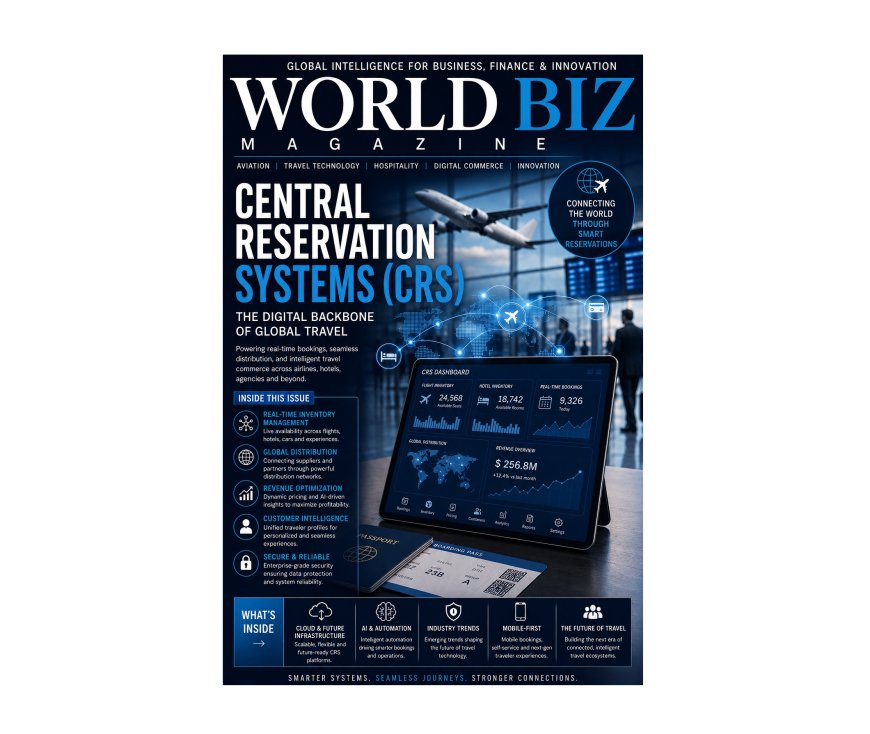
Central Reservation Systems (CRS)
The Digital Backbone Powering Global Airline, Hotel, and Travel Commerce
How Central Reservation Systems transformed travel distribution, enabled real-time booking ecosystems, and became mission-critical infrastructure for the global tourism industry
World Biz Magazine | Travel Technology, Aviation Systems & Global Digital Commerce Intelligence
The Invisible Infrastructure Behind Modern Travel
Every airline ticket booked online, hotel room reserved through a mobile app, or travel itinerary synchronized across multiple platforms depends on a highly sophisticated digital ecosystem operating behind the scenes.
At the center of this ecosystem lies the Central Reservation System (CRS).
Originally developed to automate airline booking operations, CRS platforms have evolved into one of the most important infrastructures in the global travel economy.
Today, CRS technology powers:
- Airlines
- Hotels
- Travel agencies
- Online travel platforms
- Tour operators
- Car rental companies
- Corporate travel systems
enabling:
Real-time inventory management, global booking distribution, and seamless travel coordination.
As the travel industry becomes increasingly digital, data-driven, and interconnected, CRS platforms are evolving into intelligent commerce engines for global mobility.
What is a Central Reservation System (CRS)?
A Central Reservation System is a computerized platform used to:
- Manage inventory
- Process reservations
- Distribute travel products
- Synchronize booking information across channels
A CRS acts as the central operational hub connecting:
- Suppliers
- Distribution networks
- Travel intermediaries
- Customers
The system enables real-time availability and pricing updates across multiple booking channels simultaneously.
The Evolution of CRS Technology
Early Airline Reservation Systems
The origins of CRS technology can be traced to the aviation industry.
As air travel expanded rapidly during the 20th century:
- Manual booking systems became inefficient
- Airlines required automated inventory control
This led to the creation of computerized reservation systems capable of:
- Managing seat inventory
- Automating ticket reservations
- Coordinating flight schedules
These systems revolutionized airline operations globally.
Expansion into Global Travel Distribution
Over time, CRS platforms expanded beyond airlines into:
- Hotels
- Tourism operators
- Car rental services
- Cruise lines
This evolution gave rise to integrated travel ecosystems capable of supporting global booking networks in real time.
The Rise of Online Travel Platforms
The growth of digital commerce transformed CRS infrastructure further.
Online travel platforms increasingly integrated directly with CRS systems to provide:
- Live inventory visibility
- Dynamic pricing
- Instant booking confirmation
CRS platforms became foundational infrastructure for modern travel e-commerce.
Core Functions of a Central Reservation System
Inventory Management
CRS platforms manage:
- Airline seats
- Hotel room availability
- Tour capacity
- Rental vehicle inventory
The system continuously updates availability in real time across all connected sales channels.
Booking Processing
When a customer makes a reservation:
- The CRS validates inventory
- Confirms availability
- Processes booking data
- Updates inventory instantly
This prevents:
- Double bookings
- Overselling
- Inventory conflicts
Rate & Pricing Management
CRS platforms support:
- Dynamic pricing
- Promotional campaigns
- Revenue optimization strategies
- Seasonal pricing adjustments
Pricing updates synchronize across all channels simultaneously.
Distribution Connectivity
Modern CRS systems connect with:
- Travel agencies
- Online booking platforms
- Airline systems
- Hotel websites
- Corporate travel tools
This enables global inventory distribution at scale.
Customer Data Management
CRS platforms increasingly integrate:
- Passenger profiles
- Loyalty programs
- Booking history
- Personalization systems
Customer intelligence is becoming central to travel commerce strategy.
CRS vs Global Distribution Systems (GDS)
CRS and GDS are often confused but serve different functions.
CRS:
Manages internal inventory and reservations for suppliers.
GDS:
Acts as a global marketplace connecting suppliers with travel agencies and booking platforms.
Major global travel ecosystems integrate both systems simultaneously.
How CRS Systems Support Airlines
Airlines rely heavily on CRS infrastructure for:
- Seat inventory management
- Fare distribution
- Passenger reservations
- Schedule coordination
- Loyalty integration
Modern airline CRS platforms also integrate with:
- Revenue management systems
- Biometric boarding systems
- Mobile travel applications
- AI-powered forecasting tools
Airline operations today are impossible without intelligent reservation infrastructure.
CRS in the Hotel Industry
Hotels use CRS platforms to manage:
- Room inventory
- Occupancy forecasting
- Distribution channels
- Dynamic pricing strategies
The system synchronizes bookings across:
- Direct websites
- OTAs (Online Travel Agencies)
- Corporate travel systems
- Mobile applications
CRS technology is central to modern hospitality revenue optimization.
Cloud Computing and Modern CRS Infrastructure
Traditional reservation systems relied on centralized hardware infrastructure.
Today, cloud computing enables:
- Scalable booking architecture
- Real-time synchronization
- Faster processing speed
- Global accessibility
Cloud-native CRS platforms support massive booking volumes with greater flexibility.
Artificial Intelligence and CRS Evolution
AI is rapidly transforming reservation technology.
Modern CRS platforms increasingly use:
- Predictive analytics
- AI-powered personalization
- Automated pricing optimization
- Customer behavior forecasting
AI allows travel providers to:
- Predict demand
- Improve upselling
- Optimize inventory allocation
Reservation systems are evolving into intelligent commerce ecosystems.
Mobile-First Reservation Ecosystems
The travel industry is increasingly mobile-driven.
Modern CRS systems support:
- Mobile booking applications
- Digital boarding passes
- Real-time notifications
- Mobile payment integration
- Personalized travel experiences
Passenger expectations increasingly demand seamless mobile connectivity.
Cybersecurity and Reservation Infrastructure
CRS platforms process enormous volumes of sensitive data:
- Passenger identities
- Payment information
- Travel records
- Loyalty accounts
This makes cybersecurity a critical industry priority.
Major concerns include:
- Data breaches
- Fraud attacks
- System outages
- Ransomware threats
Digital resilience is becoming central to travel infrastructure strategy.
Data Analytics and Business Intelligence
Modern CRS platforms generate enormous operational intelligence.
Travel companies analyze:
- Booking patterns
- Demand trends
- Geographic preferences
- Customer behavior
- Revenue performance
Data-driven decision-making increasingly shapes travel strategy globally.
Global CRS Market Trends
United States: Airline and Hospitality Technology Leadership
The United States remains a major center for travel technology innovation.
Large-scale CRS ecosystems increasingly integrate:
- AI forecasting
- Dynamic pricing engines
- Cloud infrastructure
- Advanced analytics systems
The U.S. market continues leading global travel software development.
Europe: Integrated Multi-Market Travel Networks
The European Union travel market emphasizes:
- Cross-border integration
- Rail-air connectivity
- Multi-language distribution systems
European CRS infrastructure often supports highly interconnected transportation ecosystems.
Asia-Pacific: Rapid Digital Expansion
Asia-Pacific markets are experiencing rapid growth in:
- Mobile travel booking
- Digital payment integration
- AI-powered travel platforms
Rising tourism demand is accelerating CRS modernization across the region.
Gulf Region: Smart Aviation and Hospitality Integration
The United Arab Emirates increasingly integrates CRS platforms into:
- Smart tourism ecosystems
- Luxury hospitality infrastructure
- Aviation technology strategies
Cities like Dubai are positioning themselves as digitally integrated travel hubs.
Challenges Facing CRS Systems
Legacy Infrastructure Complexity
Many travel organizations still rely on outdated reservation systems.
Modernization can be:
- Expensive
- Operationally risky
- Technically complex
System Downtime Risks
CRS outages can disrupt:
- Flights
- Hotel operations
- Global bookings
- Revenue flows
Operational reliability is mission-critical.
Cybersecurity Threats
Travel platforms remain major cyberattack targets due to valuable customer data.
Distribution Cost Pressures
Travel providers increasingly seek:
- Direct booking channels
- Reduced intermediary dependency
- Lower commission structures
This reshapes reservation ecosystem economics.
Data Privacy Regulation
Global privacy laws increasingly affect:
- Customer data handling
- Cross-border information sharing
- Personalization systems
Compliance complexity continues rising.
The Future of Central Reservation Systems
The next generation of CRS platforms may include:
- AI-native reservation engines
- Blockchain-based booking verification
- Autonomous travel coordination
- Real-time predictive itinerary management
- Hyper-personalized travel ecosystems
Future reservation systems may function as:
Intelligent digital mobility platforms rather than simple booking tools.
CRS and the Future of Smart Travel
Reservation systems increasingly connect with:
- Smart airports
- Digital identity platforms
- Mobility-as-a-service ecosystems
- AI-driven travel assistants
Travel technology is evolving toward fully integrated intelligent mobility networks.
World Biz Magazine Insights
WBJ Insight 01 - CRS Platforms Are Becoming Global Digital Infrastructure
Modern travel commerce depends on real-time reservation ecosystems operating continuously at global scale.
WBJ Insight 02 - AI Will Redefine Reservation Intelligence
Future CRS systems will increasingly predict customer behavior and automate travel optimization.
WBJ Insight 03 - Cybersecurity is Now a Core Reservation Priority
Digital resilience has become mission-critical for travel operations worldwide.
WBJ Insight 04 - Mobile Ecosystems Are Reshaping Travel Commerce
Reservation systems increasingly revolve around seamless mobile-first passenger experiences.
WBJ Insight 05 - Data Intelligence Will Drive Competitive Advantage
The most valuable travel companies increasingly compete through analytics, personalization, and operational intelligence.
Conclusion
Central Reservation Systems remain one of the most important digital infrastructures in global travel and aviation.
What began as simple booking automation has evolved into:
- Intelligent travel commerce systems
- AI-powered operational ecosystems
- Real-time global distribution networks
- Data-driven customer engagement platforms
As travel becomes increasingly digital, connected, and personalized, CRS technology will continue shaping the future of:
- Airlines
- Hospitality
- Tourism
- Smart mobility ecosystems
In modern travel economics, reservation intelligence is becoming as important as transportation infrastructure itself.
Disclaimer
This article is intended for informational and editorial purposes only and does not constitute operational, cybersecurity, technology, investment, aviation, or hospitality advice. Reservation technologies, regulations, and digital infrastructure frameworks vary across jurisdictions and organizations. Readers should consult qualified professionals before making strategic or investment decisions.
What's Your Reaction?
 Like
1
Like
1
 Dislike
0
Dislike
0
 Love
1
Love
1
 Funny
0
Funny
0
 Angry
0
Angry
0
 Sad
0
Sad
0
 Wow
1
Wow
1