












































































































































































































Thailand’s Rise as Southeast Asia’s Premier Medical Tourism Hub
Thailand is rapidly emerging as Southeast Asia’s leading medical tourism destination, offering world-class hospitals, affordable treatments, and integrated healthcare services.


Thailand’s Rise as Southeast Asia’s Premier Medical Tourism Destination
How Thailand Is Transforming into a Global Healthcare Hub
World Biz Magazine | Global Business, Healthcare, and Economic Insights
“World Biz Magazine delivers in-depth coverage of global industries, healthcare innovation, emerging markets, infrastructure development, and economic trends shaping the future of international business and investment”.
Over the past two decades, Thailand has steadily emerged as one of the most attractive destinations for international healthcare services. Known for its high-quality medical facilities, internationally accredited hospitals, experienced physicians, and competitive treatment costs, Thailand has positioned itself as a major player in the rapidly expanding global medical tourism industry.
Today, Thailand is widely recognized as one of Southeast Asia’s most advanced healthcare destinations, attracting millions of international patients every year. With strong government support, continued investment in hospital infrastructure, and growing demand for specialized medical treatments, the country is rapidly strengthening its reputation as a regional healthcare hub.
Thailand’s healthcare industry now represents a critical sector within the national economy, contributing significantly to tourism, foreign investment, and global healthcare services.
The Growth of Medical Tourism in Thailand
Medical tourism has become one of the fastest-growing sectors of the global healthcare industry. Patients increasingly travel across borders seeking affordable, high-quality medical treatments that may be expensive or inaccessible in their home countries.
Thailand has become a major beneficiary of this trend.
Each year, millions of international patients visit Thailand for a wide range of treatments including:
- cosmetic and plastic surgery
- dental procedures
- orthopedic treatments
- cardiac surgery
- fertility treatments
- wellness and rehabilitation services
Thailand’s combination of advanced healthcare infrastructure and world-renowned hospitality has helped the country establish a strong competitive advantage in the medical tourism market.
World-Class Hospitals and Medical Facilities
One of the key factors behind Thailand’s success in medical tourism is its network of internationally accredited hospitals and medical centers.
Many hospitals in Thailand meet global healthcare standards and are accredited by international medical organizations. These hospitals offer state-of-the-art equipment, specialized treatment programs, and multilingual medical staff to accommodate international patients.
Thailand’s major healthcare institutions have invested heavily in advanced technologies such as:
- robotic surgery systems
- advanced diagnostic imaging
- minimally invasive surgical procedures
- digital patient management systems
These technological advancements allow Thailand’s healthcare providers to deliver world-class medical care comparable to leading hospitals in Europe and North America.
Competitive Treatment Costs
Cost competitiveness remains one of Thailand’s strongest advantages in the global healthcare market.
Medical procedures in Thailand are often significantly less expensive than those in Western countries while maintaining high quality standards.
Patients traveling to Thailand can often save between 50% and 70% on major medical procedures compared with costs in countries such as the United States or the United Kingdom.
This cost advantage has made Thailand an attractive destination for international patients seeking affordable healthcare solutions.
Government Support and Healthcare Policy
The Thai government has played a crucial role in promoting the country as a global healthcare destination.
Through national healthcare development strategies, Thailand has invested in medical infrastructure, healthcare workforce training, and international marketing initiatives.
Government policies supporting medical tourism include:
- visa facilitation for medical travelers
- promotion of international healthcare partnerships
- investment incentives for healthcare providers
- development of integrated medical tourism zones
These initiatives have helped strengthen Thailand’s global healthcare competitiveness.
Integration of Healthcare and Tourism
Thailand’s unique strength lies in its ability to combine high-quality healthcare with world-class tourism experiences.
Many medical travelers choose Thailand not only for treatment but also for recovery in a relaxing environment. Hospitals and healthcare providers often offer integrated packages that include:
- medical treatment
- accommodation in luxury hotels
- wellness programs
- rehabilitation services
- tourism and leisure activities
This integration of healthcare and hospitality enhances the overall patient experience and supports Thailand’s broader tourism industry.
Emerging Medical Specializations
Thailand is increasingly focusing on specialized medical services that attract international patients.
Key areas of expertise include:
Cosmetic and Aesthetic Surgery
Thailand has become one of the world’s most popular destinations for cosmetic procedures due to experienced surgeons and advanced clinics.
Orthopedic and Rehabilitation Medicine
Sports injuries, joint replacement surgeries, and rehabilitation programs are major areas of growth.
Fertility and Reproductive Medicine
Thailand has developed advanced fertility treatment programs that attract patients from across Asia and the Middle East.
Preventive and Wellness Medicine
The country’s wellness sector combines modern healthcare with traditional therapies, creating a holistic medical tourism experience.
Economic Impact of the Medical Tourism Industry
Medical tourism contributes significantly to Thailand’s economy.
The industry generates revenue through:
- hospital services
- hotel accommodations
- travel and tourism services
- pharmaceuticals and medical equipment
- healthcare-related investments
As international demand continues to increase, the medical tourism sector is expected to remain a major contributor to Thailand’s economic growth.
Top Medical Tourism Destinations in Asia - Comparison Chart
Asia has become one of the world’s most competitive regions for medical tourism, offering advanced hospitals, skilled physicians, and lower treatment costs compared with Western countries.
|
Country |
Estimated International Patients (Annual) |
Key Medical Specialties |
Competitive Advantage |
|
Thailand |
3.5 Million |
Cosmetic surgery, orthopedics, fertility treatments |
Affordable treatment + tourism integration |
|
India |
2.0 Million |
Cardiac surgery, oncology, organ transplants |
Advanced medical expertise and lower costs |
|
Singapore |
1.0 Million |
Complex surgery, oncology, neurology |
Premium healthcare infrastructure |
|
Malaysia |
1.3 Million |
Cardiology, wellness treatments |
Government-supported medical tourism programs |
|
South Korea |
800,000 |
Cosmetic surgery, dermatology |
Advanced aesthetic procedures |
|
Turkey |
1.2 Million |
Hair transplant, dental procedures |
Competitive pricing and European accessibility |
Key Insight
Thailand remains one of the most popular medical tourism destinations in Asia, combining high-quality healthcare services with hospitality and tourism experiences.
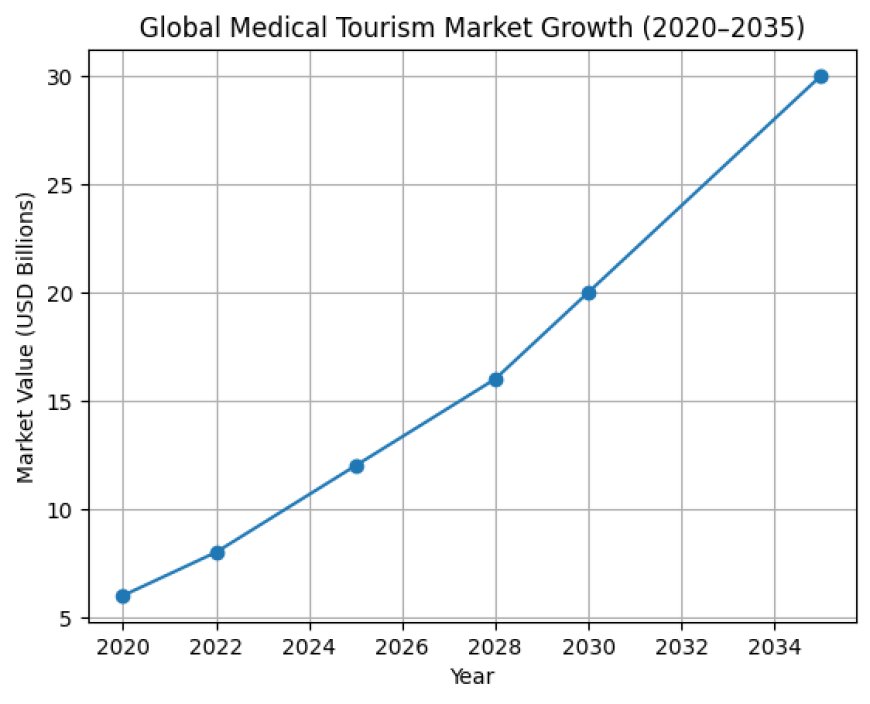
Thailand Medical Tourism Market Growth Forecast (2020-2035)
Thailand’s medical tourism sector continues to expand as international demand for affordable healthcare increases.
|
Year |
Estimated Market Value |
|
2020 |
$6 Billion |
|
2022 |
$8 Billion |
|
2025 |
$12 Billion |
|
2028 |
$16 Billion |
|
2030 |
$20 Billion |
|
2035 |
$30 Billion |
 Key Insight
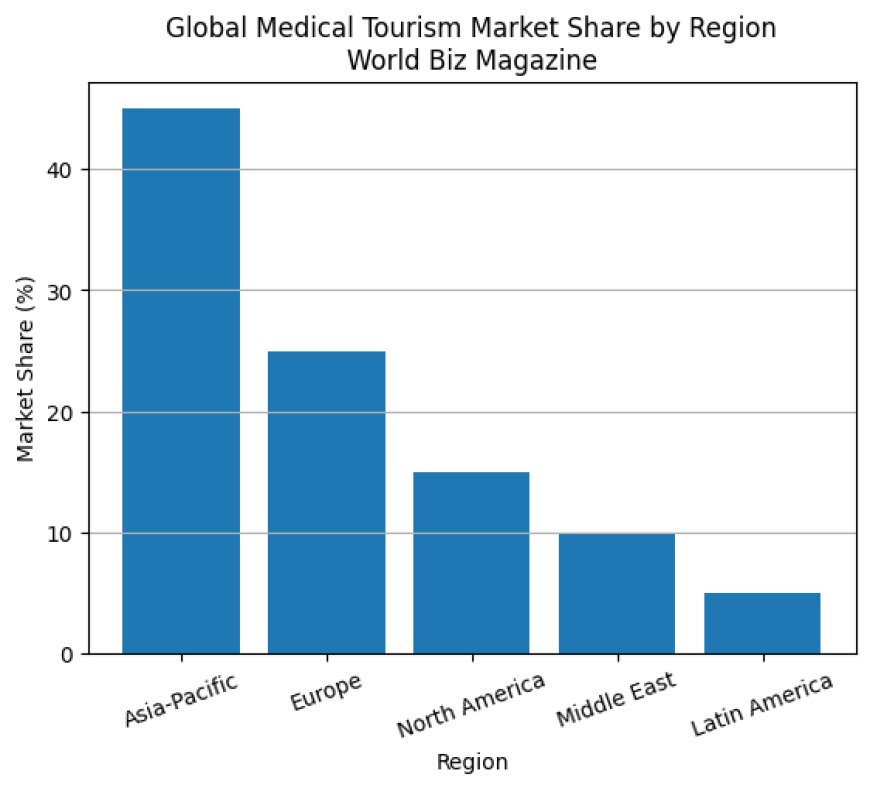
|
Region |
Estimated Market Share |
Key Destinations |
|
Asia-Pacific |
45% |
Thailand, India, Singapore, South Korea |
|
Europe |
25% |
Turkey, Germany, Spain |
|
North America |
15% |
Mexico, Costa Rica |
|
Middle East |
10% |
UAE, Jordan |
|
Latin America |
5% |
Brazil, Colombia |
 Key Insight
- rising healthcare costs
- competition from emerging medical tourism destinations
- regulatory and policy adjustments
- maintaining international quality standards
Addressing these challenges will be essential for sustaining Thailand’s leadership in the regional healthcare market.
The Future of Thailand’s Healthcare Industry
Looking ahead, Thailand is expected to continue strengthening its position as a global healthcare hub.
Future development strategies focus on:
- expanding digital healthcare technologies
- increasing international healthcare partnerships
- developing specialized medical research centers
- enhancing telemedicine and remote healthcare services
As global healthcare demand continues to rise, Thailand’s well-established medical infrastructure and strong tourism industry will likely play an important role in shaping the future of international medical travel.
World Biz Magazine Insights
Thailand’s healthcare sector demonstrates how medical excellence, tourism infrastructure, and government policy can combine to create a globally competitive medical tourism industry.
As international demand for affordable and high-quality healthcare services continues to rise, countries that successfully integrate advanced medical infrastructure, digital healthcare technologies, and patient-centered tourism experiences will gain a strategic advantage in the global healthcare economy.
Thailand’s continued investment in medical innovation, hospital infrastructure, and international healthcare partnerships positions the country as one of the most influential players in the evolving global medical tourism market.
Thailand’s rapid development as a regional healthcare destination reflects a combination of strategic government policy, world-class medical infrastructure, and strong integration with the country’s tourism industry.
By offering high-quality medical services at competitive prices while delivering exceptional hospitality experiences, Thailand has positioned itself as one of the leading destinations for international healthcare services.
As global demand for cross-border medical treatment continues to grow, Thailand’s healthcare sector is poised to play an increasingly important role in the global medical tourism industry.
The country’s journey toward becoming Southeast Asia’s premier healthcare hub represents not only a transformation of its healthcare sector but also a powerful example of how healthcare, tourism, and economic development can intersect to create new global opportunities.
Disclaimer
The information presented in this article is intended for informational and editorial purposes only. Healthcare statistics, investment trends, and industry projections are based on publicly available data and research available at the time of publication.
Healthcare regulations, medical tourism policies, and industry developments may change over time. Readers are encouraged to conduct independent research and consult qualified professionals before making healthcare, investment, or business decisions based on the information provided.
World Biz Magazine and its contributors do not assume responsibility for any outcomes resulting from the use of this information.
What's Your Reaction?
 Like
1
Like
1
 Dislike
0
Dislike
0
 Love
1
Love
1
 Funny
0
Funny
0
 Angry
0
Angry
0
 Sad
0
Sad
0
 Wow
1
Wow
1